Landscape & Leisure is reader-supported. When you buy through links on our site, including Botanical Interests seed links, we may earn a commission at no extra cost to you. Prices change, so click through to confirm current pricing.
The soil is still cool enough to sting your fingers when you push a seed in, and that is exactly when chard wants to go into the ground. This is a forgiving crop — it sprouts fast, shrugs off a light frost, and keeps handing you leaves for months — and the one job that decides whether your row thrives or stalls is a five-minute thinning pass most gardeners skip.
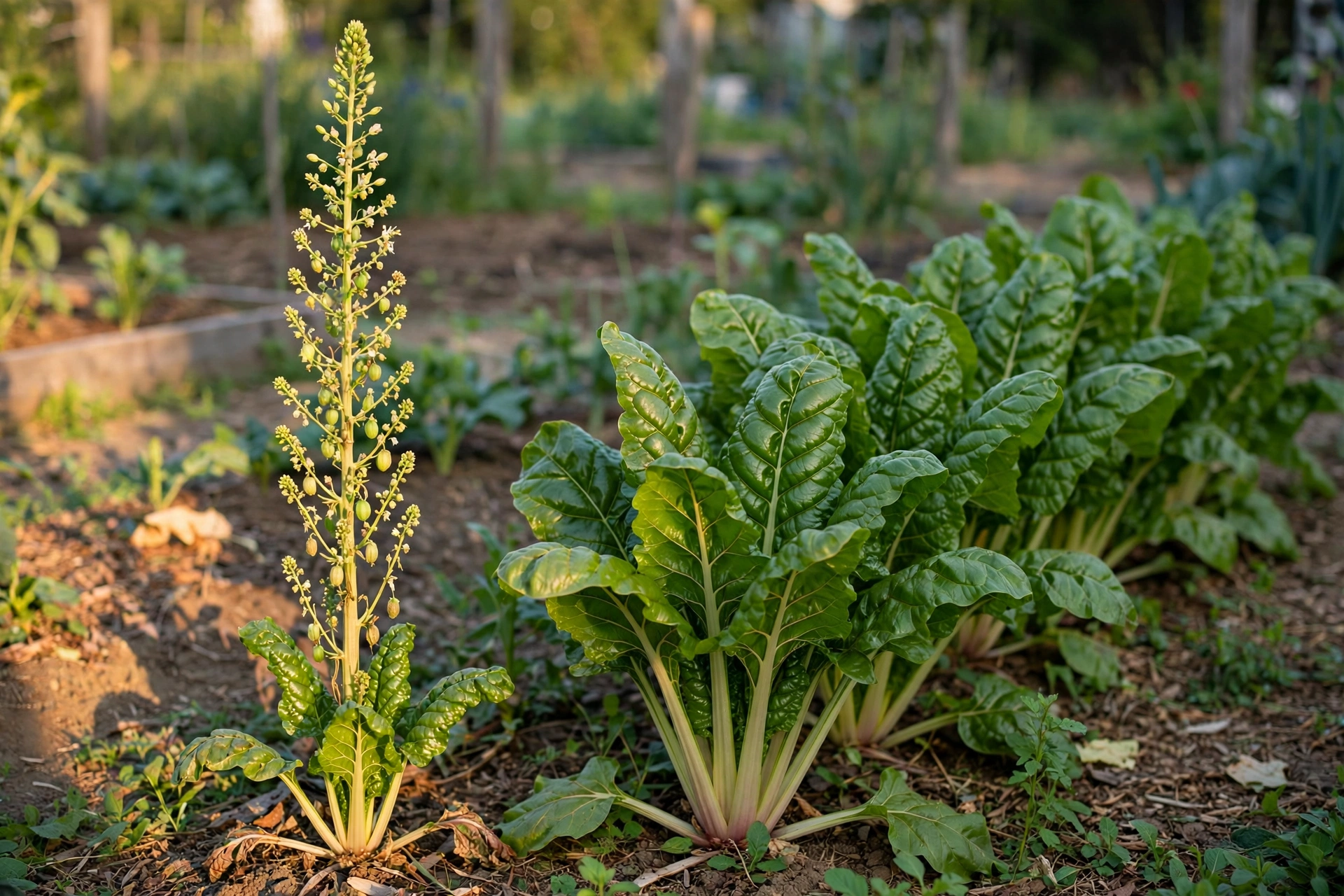
This guide works through the whole job in order: when to sow, how deep and how far apart, how to thin without flinching, and how to harvest so the same plants keep producing. The variety choices live in our Swiss chard varieties roundup, and if a plant later sends up a flower stalk or the leaves turn sharp, our bolting and bitterness FAQ walks through the causes. The same cut-and-come-again rhythm works for the greens in our salad greens guide, too.
When to Sow
Direct sow, 2 to 4 weeks before your average last frost date. Direct sowing is the recommended route for chard, and the seed will get going once the soil reaches at least 40 degrees, though it germinates fastest in soil at 75 to 90 degrees. Expect sprouts in 5 to 10 days.
Or start indoors, 4 to 6 weeks before transplanting out. Set transplants out 2 to 4 weeks before your average last frost date, and protect young plants from heavy freezes — a hard freeze on a small transplant is one of the few things that genuinely sets chard back, and chilled young plants are more prone to bolting later.
Keep sowing into summer. You can sow as late as 2 months before your first fall frost and still get a harvest, because the plants tolerate frost and sweeten their pace as the weather cools. In mild climates, sow in fall for the longest season of all.
Sowing: Depth, Spacing, and the Cluster Trick
Sow a half inch deep. Drop a group of 2 seeds every 8 inches — 2 to 3 seeds for Fordhook Giant — in rows 18 inches apart, in full sun to part shade. One packet goes further than you expect: Fordhook Giant sows up to 46 feet of row, and even the small Celebration packet covers about 15 feet.
Know what a chard seed really is. Each wrinkled chard “seed” is a dried cluster holding more than one embryo, so a single sowing spot regularly sends up two or three seedlings. That is not a mistake in your row — it is how the plant packages itself, and it is why the thinning step below is not optional.
| Step | Timing | Measurement | Note |
|---|---|---|---|
| Direct sow | 2–4 weeks before last frost | ½ inch deep | Soil at least 40°F; fastest at 75–90°F |
| Start indoors | 4–6 weeks before transplanting | ½ inch deep | Transplant out 2–4 weeks before last frost; protect from heavy freezes |
| Spacing | At sowing | Group of 2 every 8 inches; rows 18 inches | Fordhook Giant takes 2–3 seeds per group |
| Thinning | At ½ inch tall | Thin to 1 every 8 inches | Snip extras; do not pull |
| Last sowing | 2 months before first fall frost | ½ inch deep | Frost tolerant; mild climates sow in fall |
Thinning: The Five Minutes That Make the Row
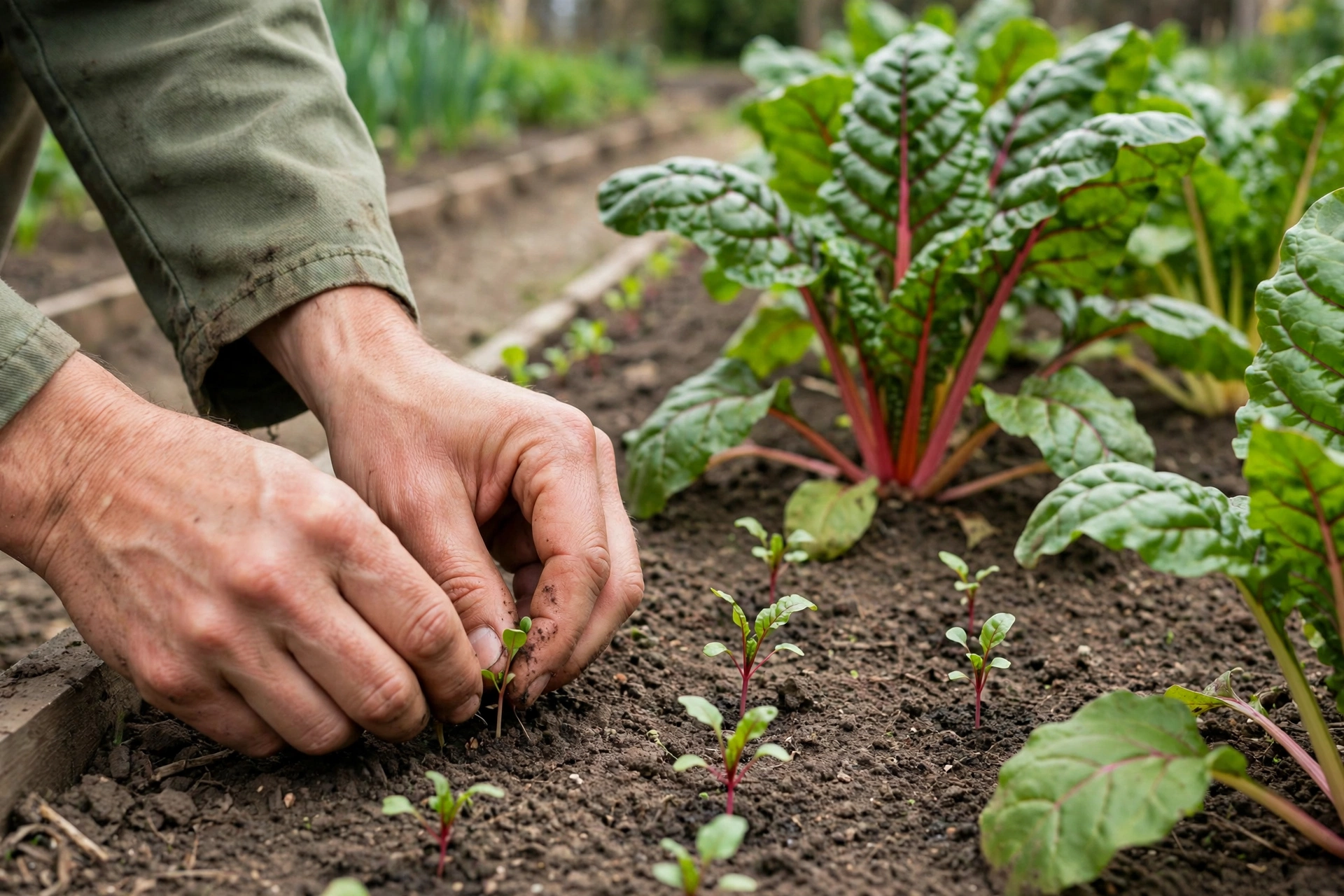
Thin when the seedlings stand a half inch tall, to one plant every 8 inches. Because each seed cluster sprouts several seedlings, an unthinned row quickly becomes a thicket of small, competing plants with thin stems and undersized leaves, and no amount of watering fixes crowding after the fact.
Snip the extras at soil level with scissors rather than pulling them, so the roots of the keeper plant stay undisturbed. The snipped seedlings are your first taste of the crop — tender, mild, and perfect scattered over a salad the same evening, still cool from the bed.
Water and Feeding Through the Season
Chard asks for steady moisture rather than heroic watering. Keep the bed evenly moist while seedlings establish, then water deeply when the top of the soil dries, so the large leaves never spend a hot afternoon wilting — a plant that wilts hard in heat is a plant under the kind of stress that pushes it toward bolting and bitter leaves.
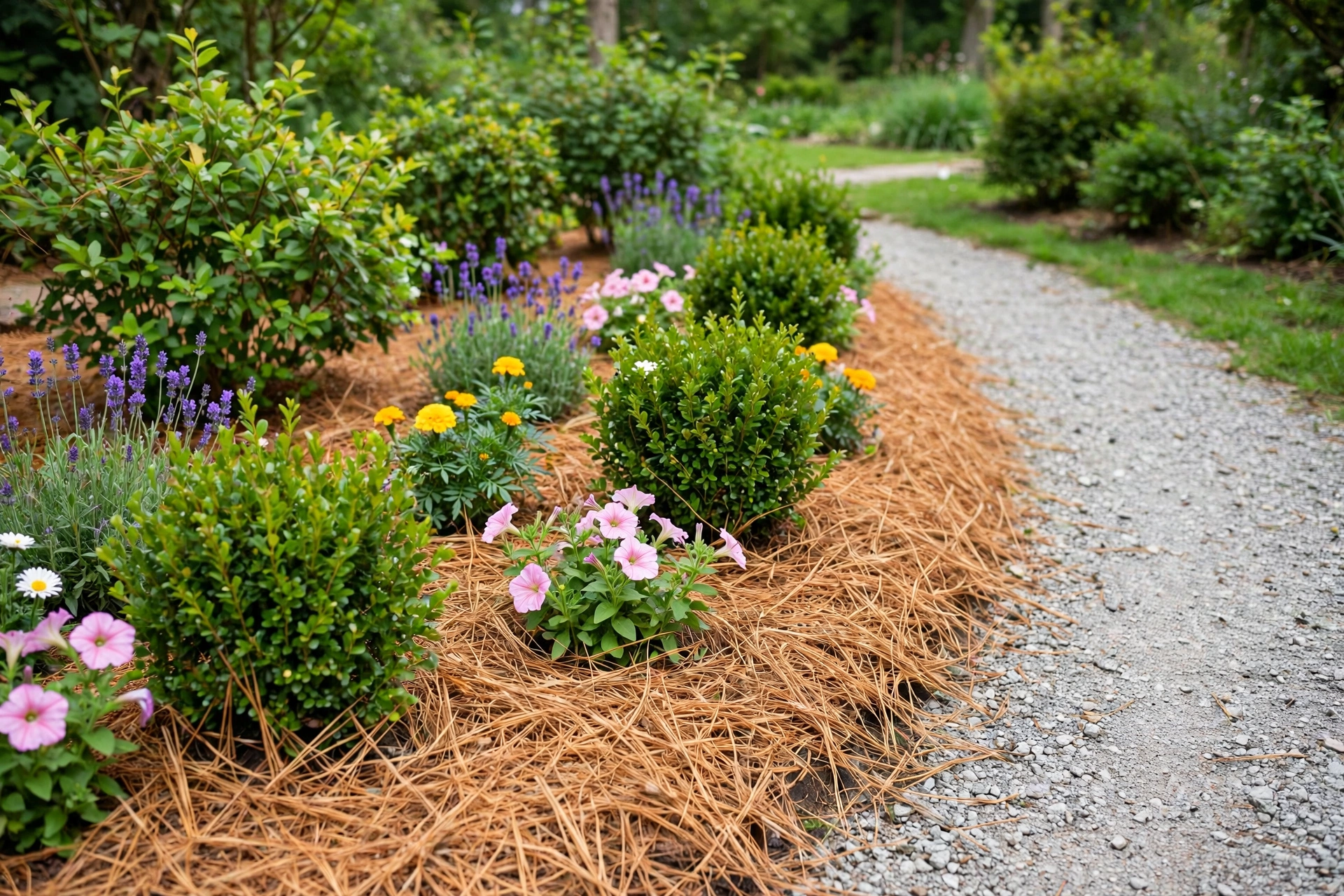
A mulch layer once the plants are up a few inches holds that moisture between waterings and keeps soil off the lower leaves. On a summer evening round, you can watch a watered row lift its leaves back up within the hour, which is the clearest signal the crop gives you that it has what it needs.
Harvest: Cut-and-Come-Again, Done Right

Pick up to a third of the outer leaves at a time. Work around the outside of the plant, cutting or snapping the oldest leaves at the base, and let new leaves keep growing from the center. Stop at a third, and the plant never loses enough leaf to slow down.
Cut baby leaves at 2 to 4 inches for salads. Young leaves are tender enough to eat fresh, while full-size leaves are better cooked, with the thick Fordhook stalks cut out and cooked separately like celery. If you ever need the bed cleared, you can cut a whole plant 2 inches above the ground and it will grow back — chard is generous that way.
Three varieties carry this guide, each for a different reason. Fordhook Giant is the row to plant for volume, Perpetual Spinach is the one that holds its flavor into hot weather, and Celebration is the one to tuck into a container by the kitchen door where you will actually cut from it daily.
Fordhook Giant Swiss Chard Seeds
The white-stemmed workhorse — big crumpled leaves, 46 feet of row from one $2.99 packet.
Perpetual Spinach Swiss Chard Seeds
A thin-ribbed Italian heirloom chard that is slower to bolt when the weather turns hot.
Celebration Swiss Chard Seeds
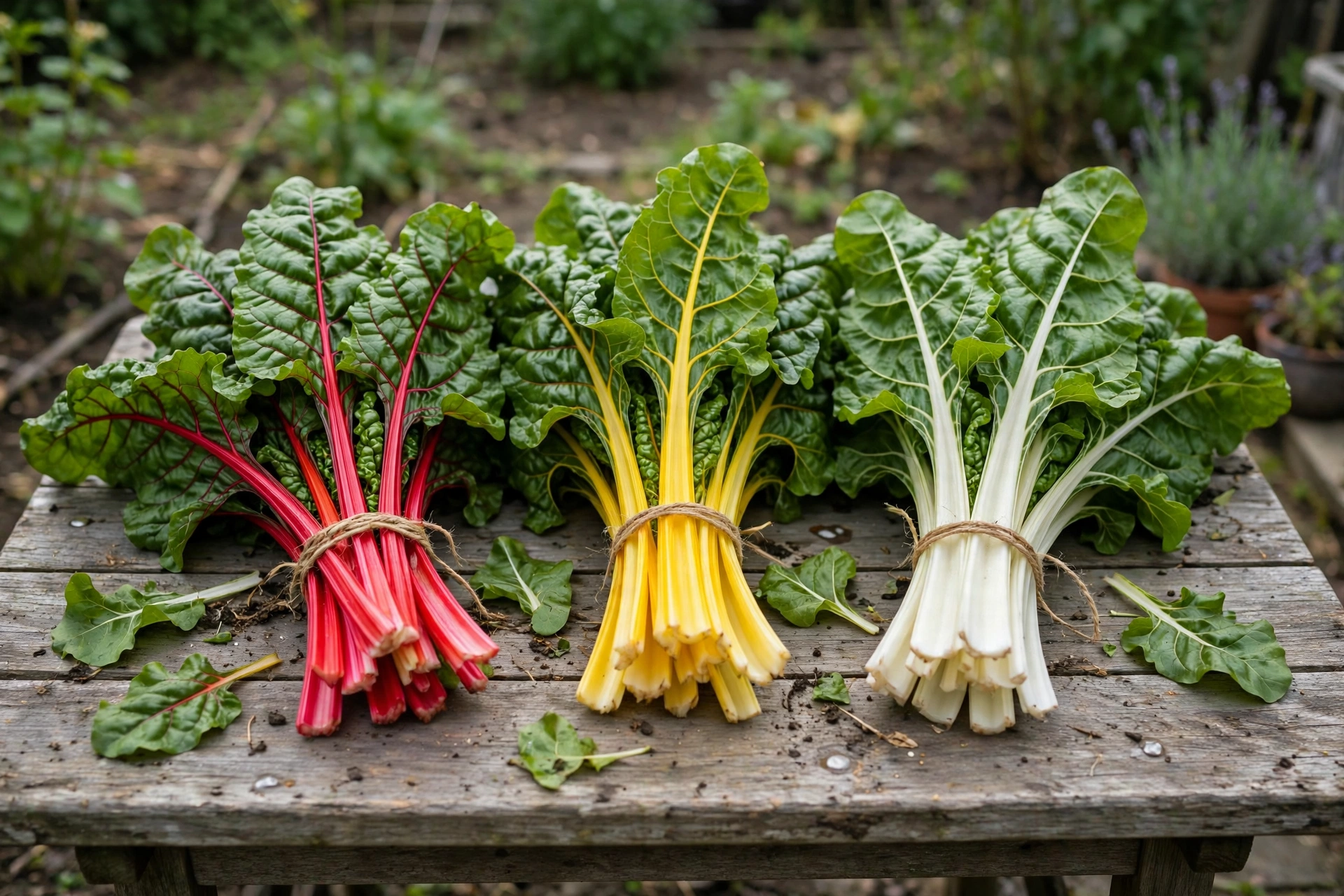
Red, magenta, orange, pink, yellow, and white stems under glossy leaves — color you can eat.
The Short Version
Sow chard a half inch deep as soon as the soil reaches 40 degrees, thin it without mercy to one plant every 8 inches, and harvest the outer third of the leaves while the center keeps growing. Do those three things and a spring sowing feeds you into fall — plant Fordhook Giant if you only have room for one packet, and let it prove the point.