Landscape & Leisure is reader-supported. When you buy through links on our site, including Botanical Interests seed links, we may earn a commission at no extra cost to you. Prices change, so click through to confirm current pricing.
You are standing at the seed rack with two cosmos packets in your hand, and they could hardly look more alike — same ferny leaves on the picture, same promise of summer color. Then July arrives, and one bed is a drift of soft apricot while the other glows scarlet-orange at the fence line. The packet choice is the whole show, so let’s make it a good one.
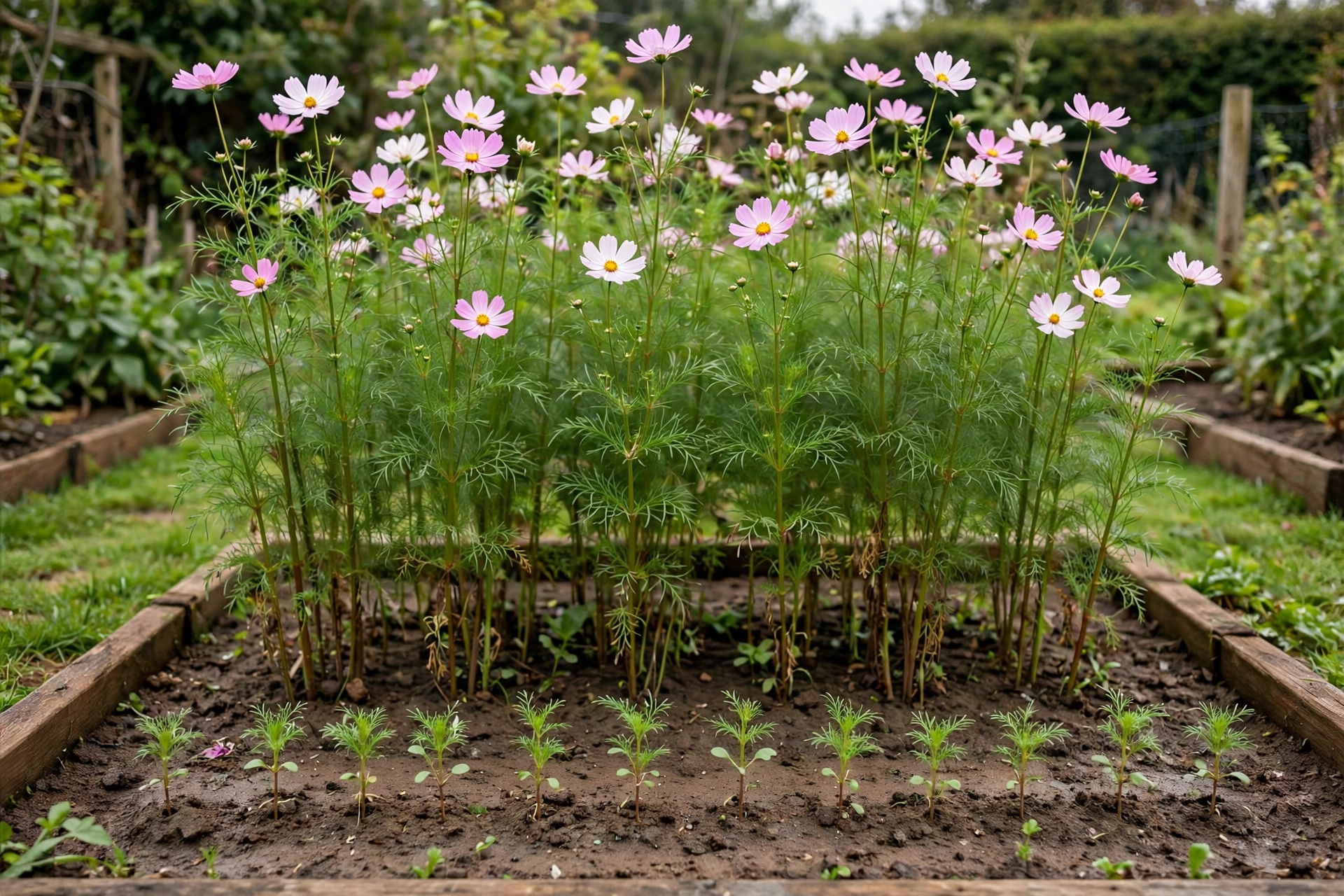
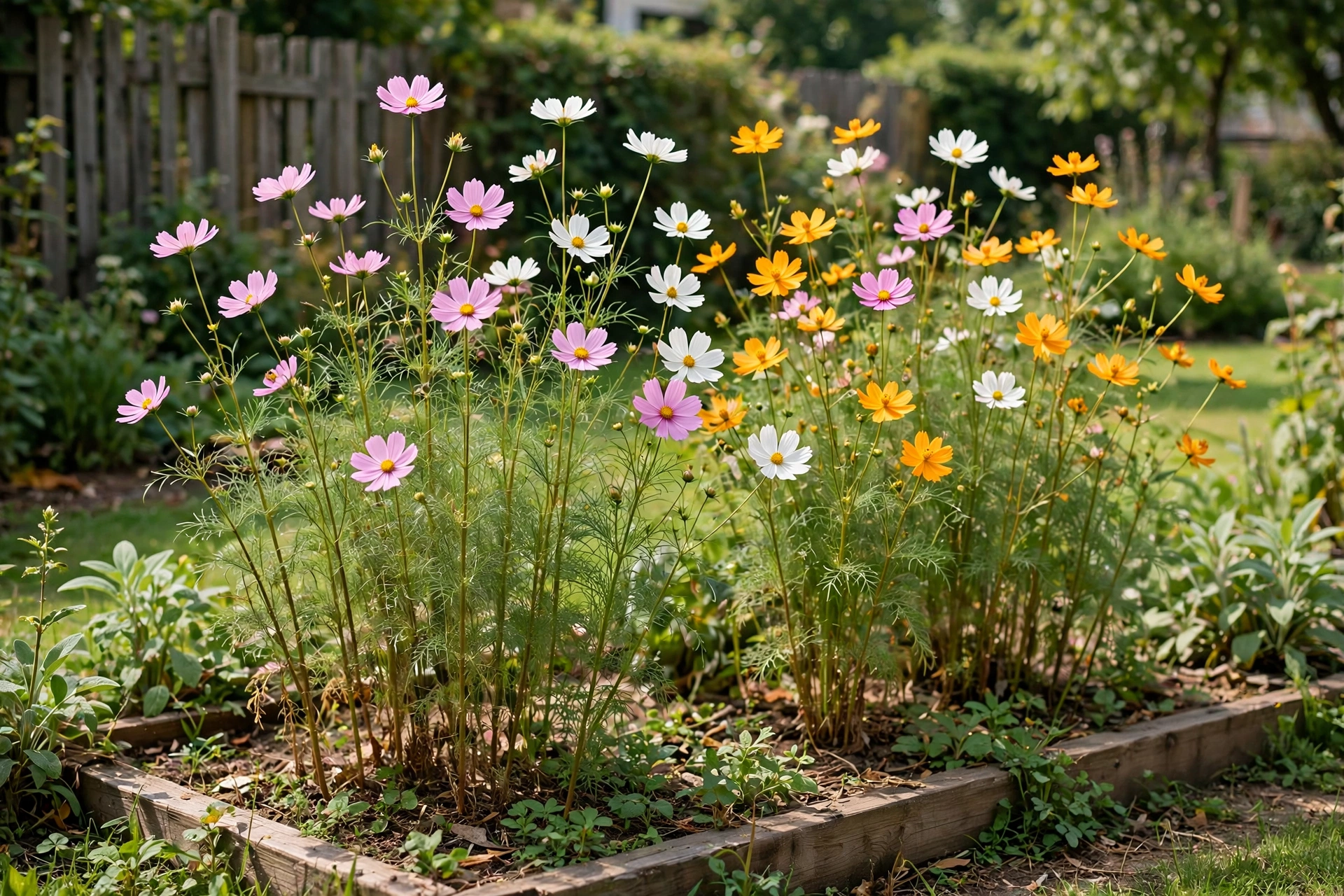
Cosmos splits into two species, and knowing which one you are holding explains almost everything that follows. Cosmos sulphureus brings the warm colors — scarlet, orange, gold — on bushier, heat-loving plants, while Cosmos bipinnatus brings the big cutting flowers in pink, white, rose, and apricot. Our sulphureus vs. bipinnatus comparison works through that split trait by trait, and our growing cosmos guide covers the sowing routine every variety here shares. If your cutting garden already runs on zinnias, our zinnia varieties roundup is the natural companion planting.
The Varieties at a Glance
| Variety | Species | Flower | Rating | Packet |
|---|---|---|---|---|
| Diablo | Sulphureus | 1–1½″ scarlet-orange | 4.9★ | $3.49 |
| Sensation Blend | Bipinnatus | 3″–4″ white, pink, rose, crimson | 4.6★ | $3.49 |
| Apricotta | Bipinnatus | 3″ apricot-pink, yellow center | 4.6★ | $3.49 |
| Candystripe | Bipinnatus | White with rosy edges and striping | 4.6★ | $2.69 |
| Sea Shells Blend | Bipinnatus | 3″–4″ rolled, quilled petals | 4.5★ | $3.49 |
| Bright Lights Blend | Sulphureus | 2½″ yellow, gold, scarlet-orange | 4.5★ | $2.69 |
| Double Click Blend | Bipinnatus | Mostly double pink, white, carmine | 4.2★ | $3.49 |

Diablo — the One to Plant First
If you only buy one packet, make it this one. Diablo is a Cosmos sulphureus with 1–1½-inch scarlet-orange blossoms on tall stems, a 1974 All-America Selections winner that still carries the highest rating in this group at 4.9 stars. The flowers are smaller than the big bipinnatus blooms, and that turns out to be the point: the plant makes up in sheer count what each flower gives up in size, and the color reads from halfway down the block.
- Pros: Highest-rated cosmos here; drought tolerant once established; a magnet for bees, hummingbirds, and butterflies; loads of cut flowers from midsummer to frost.
- Cons: Small 1–1½-inch flowers — if you want one big bloom per stem for a vase, a bipinnatus below serves you better.
Diablo Cosmos Seeds
The highest-rated cosmos in the lineup — scarlet-orange sulphureus blooms by the armful, all summer.
Sensation Blend — the Classic Cottage Mix
Sensation Blend is the cosmos most gardeners picture first: large 3–4-inch flowers in white, pink, rose, and crimson on tall, showy plants, and a 1936 All-America Selections winner still earning 4.6 stars. It is the runner-up here only because Diablo rates higher — for a traditional cutting bed, this is the packet I would hand you. Sow it where you want height at the back of the border, and cut from it freely, because the plant answers cutting with more buds.
- Pros: Big 3–4-inch blooms made for bouquets; a proven mix that has held its award pedigree for decades; drought tolerant and low-attention.
- Cons: Tall plants need room and can lean in rich soil — give them the back row and lean conditions.
Sensation Blend Cosmos Seeds
The tall, showy bipinnatus mix in white, pink, rose, and crimson — the cutting-garden standard.
Apricotta — the Bouquet Color Nobody Else Has
Apricotta does something no other cosmos in this lineup attempts: 3-inch apricot-pink blooms with yellow centers, a soft color that makes every other flower in the vase look better. It is a Cosmos bipinnatus and a 2021 Fleuroselect Novelty Award winner, rated 4.6 stars, with sturdy tall stems that were called out specifically for cutting. One honest caution from its reviews: gardeners who feed cosmos heavily report tall, leafy plants with few flowers, because cosmos bloom best in average to poor soil. Plant it lean and it rewards you.
- Pros: Unique apricot-pink color; sturdy stems bred for cutting; award winner with a 4.6-star rating.
- Cons: Sulks and goes leafy in rich, fertilized soil — skip the feeding you would give a zinnia bed.
Apricotta Cosmos Seeds
Apricot-pink 3-inch blooms on sturdy cutting stems — the color your bouquets have been missing.
Sea Shells Blend — for the Petal, Not Just the Color
Sea Shells rolls its petals into little fluted tubes, so each 3–4-inch flower in white, pink, rose, or crimson catches light differently from a flat cosmos across the bed. Up close in a vase, it is the most interesting flower in this roundup, and it carries a deer-resistant tag the others do not. Rated 4.5 stars, it asks for the same lean, sunny neglect as the rest of the family.
- Pros: Rolled, quilled petals unlike any flat cosmos; deer resistant; excellent cut flower.
- Cons: The shell shape is subtle at a distance — plant it where you walk past, not at the far fence.
Sea Shells Blend Cosmos Seeds
Fluted, seashell-shaped petals in white, pink, rose, and crimson — best appreciated up close.
Candystripe — the Sweet Bicolor
Candystripe pairs a golden center with white petals edged and striped in rose, and no two flowers mark themselves quite the same way, which is most of its charm. It reseeds readily, so one packet can stock a wildflower corner for years, and at $2.69 it ties for the cheapest pick here while holding a 4.6-star rating. Gardeners who grow it praise how casually it performs — direct-sown, largely ignored, and picked for bouquets by midsummer.
- Pros: Bicolor flowers with a golden center; reseeds readily for naturalized areas; top rating at the lowest packet price.
- Cons: That ready reseeding cuts both ways — deadhead it where you do not want volunteers next year.
Candystripe Cosmos Seeds
White petals with rosy edges and striping around a golden center — and it reseeds for an encore.
Bright Lights Blend — the Hot-Bed Workhorse
Bright Lights is Diablo’s sulphureus sibling: 2½-inch flowers in yellow, golden, golden-orange, and scarlet-orange on 36-inch plants, blooming from midsummer until first frost. Where a bed bakes all afternoon and the bipinnatus types look tired, this blend keeps producing, and butterflies and hummingbirds work it steadily. At $2.69 with a 4.5-star rating, it is the best value in the warm colors.
- Pros: Four warm shades in one packet; heat and drought tolerant; steady pollinator traffic.
- Cons: At 36 inches it is the shortest plant here — front-of-border height, not a back-row screen.
Bright Lights Blend Cosmos Seeds
Yellow, gold, and scarlet-orange sulphureus blooms on 36-inch plants that shrug off hot afternoons.
Double Click Blend — the Double-Flowered One
Double Click is the cosmos that makes visitors ask what it is: mostly double, chrysanthemum-like blooms in pink, white, and carmine red, and a Fleuroselect Novelty Award winner. It rates lowest of the carded picks at 4.2 stars, and its reviews explain why — a recurring complaint is smaller, sparser flowers than expected on some plants, alongside plenty of delighted growers. Buy it for the flower form, and sow a little extra seed to cover the variability.
- Pros: Full, double blooms no single cosmos can match; award-winning novelty form; fine cottage-garden color.
- Cons: Lowest rating among the picks here, with repeated notes about small or sparse blooms — sow generously.
Double Click Blend Cosmos Seeds
Mostly double pink, white, and carmine blooms with a chrysanthemum fullness — sow a little extra.
The One I’d Skip: Rubenza
Rubenza has a genuinely lovely idea behind it — 3-inch blooms that open red-wine colored and fade to dusky rose, a Fleuroselect winner at $2.69. It is also the lowest-rated cosmos in this lineup at 4.1 stars, and its reviews carry a pattern the others do not: germination complaints, including very low emergence in some gardens, and grumbles about sparse seed counts. If the wine-to-rose fade calls to you, it is a cheap experiment — just do not let it be the only cosmos you sow.
Bottom Line
Plant Diablo first. It is the highest-rated cosmos here, it covers the warm end of the bed by itself, and it forgives the lean soil and missed waterings that a summer garden actually gets. Add Sensation Blend behind it for big cutting flowers, Apricotta if you arrange bouquets, and Bright Lights wherever the afternoon sun is relentless — that is a full cosmos bed from four packets, and every one of them earns its space.