Landscape & Leisure is reader-supported. When you buy through links on our site, including Botanical Interests seed links, we may earn a commission at no extra cost to you. Prices change, so click through to confirm current pricing.
The packet is open, the soil has finally warmed, and cosmos asks less of you than almost any flower you will sow this year — barely cover the seed, keep your hands off the fertilizer bag, and let the bed get on with it. The few things that do matter are timing and restraint, and both are easy once you know them.
Every step below follows the packet directions Botanical Interests prints for its cosmos, whether you are sowing the varieties in our cosmos roundup or a packet already in your seed box. If you are still deciding between the two cosmos species, our sulphureus vs. bipinnatus comparison settles which habit suits your bed before a single seed goes in.
When to Sow Cosmos
Direct sow is the recommended route. Sow 1 to 2 weeks after your average last frost date, once the soil has warmed to at least 60°F. Cosmos seed germinates in 5 to 10 days in warm soil, so a bed sown in late spring is up before you have finished planting the tomatoes.
Starting indoors is the head-start option. Sow 4 to 6 weeks before your average last frost date if you want earlier blooms, and transplant out after frost danger passes. Cosmos grows fast enough that the indoor start buys you weeks, not months — worth it for a cutting bed you want producing by early summer, optional everywhere else.
| Step | Packet direction | Why it matters |
|---|---|---|
| Sowing depth | Barely cover | Buried seed sulks; surface-sown seed sprouts in 5–10 days |
| Spacing at sowing | A group of 3 seeds every 12″ | Insurance against a gap without crowding the row |
| Thinning | At 1″–2″ tall, thin to 1 every 12″ | Air between plants is what keeps stems sturdy |
| Direct sow window | 1–2 weeks after last frost, soil at least 60°F | Cold soil is the main cause of a no-show bed |
| Indoor start | 4–6 weeks before last frost | Buys earlier blooms for a cutting bed |
Sowing, Step by Step
Pick the sunniest, leanest bed you have. Cosmos wants full sun and average to poor soil. That second part is a real instruction, not a consolation: rich, heavily fed soil grows tall, leafy plants that are slow to flower, which is the single most common cosmos disappointment.
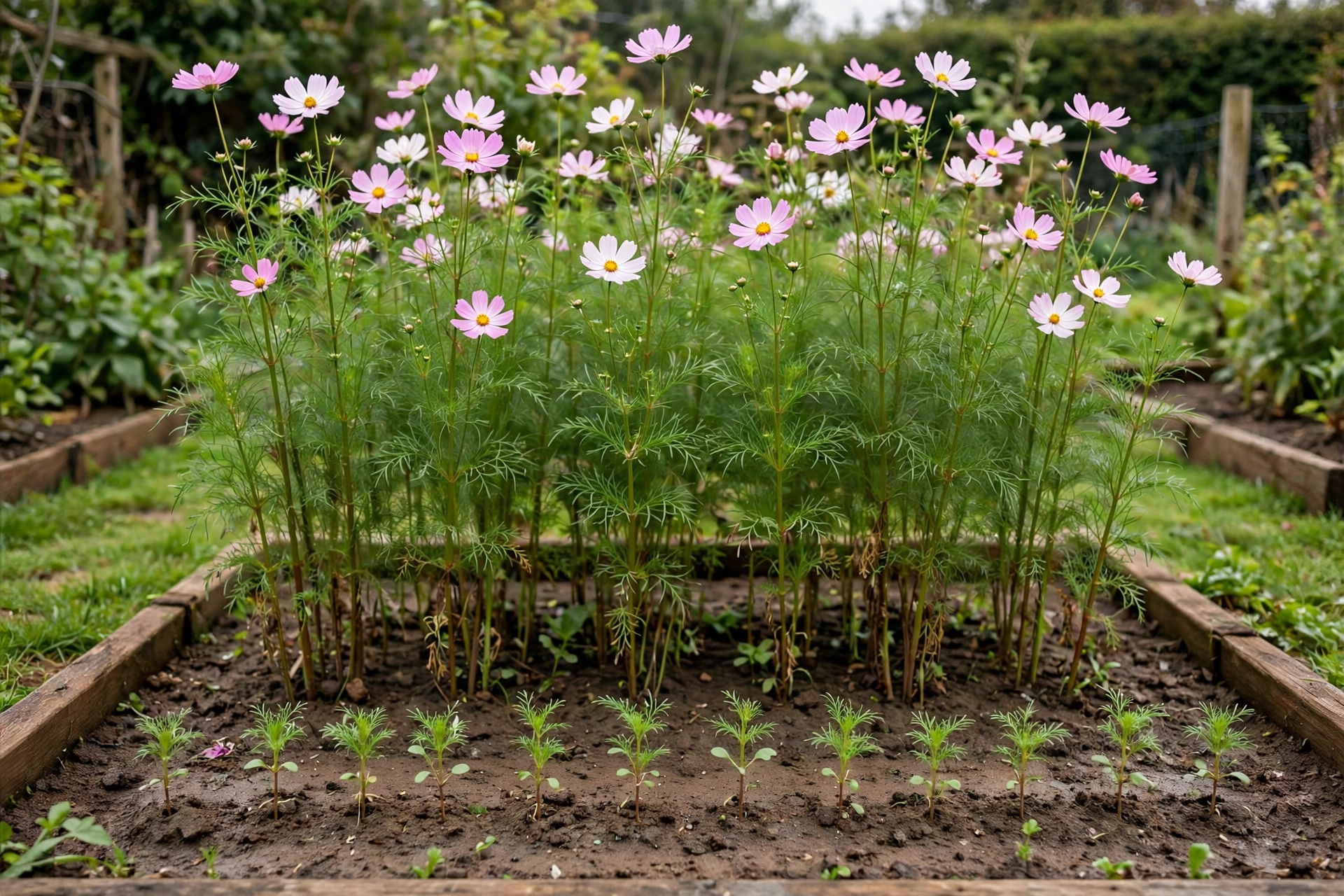
Sow in groups. Drop a group of 3 seeds every 12 inches and barely cover them — a dusting of soil, not a burial. Water the row in gently so the seed settles against the soil without washing away.
Thin without mercy. When the seedlings stand 1 to 2 inches tall, thin each group to the single strongest plant, keeping one every 12 inches. It feels wasteful for about a day, and then the kept plants branch, thicken, and thank you for the elbow room all summer.
Water, Food, and the Art of Leaving Cosmos Alone
Water seedlings while they establish, then ease off. Once established, cosmos are drought tolerant, and the packet guidance across these varieties is consistent: neglect is the kind of care they prefer. The mid-season check is tactile — dry, warm soil under your fingers and plants still putting out buds means you are doing it right, however hands-off it feels.
Skip the fertilizer. This is where well-meaning gardeners lose their flowers, because a cosmos bed fed like a zinnia bed answers with foliage. If your soil is genuinely exhausted, a light hand once is plenty; if it grows vegetables happily, it is already rich enough for cosmos.
Deadheading and Cutting for More Flowers
Cosmos blooms from summer to frost, and the harvest habit decides how generous that run is. For the longest vase life, cut stems just as the flower buds begin to open — in the morning is best for the quilled types — and the plant responds by pushing new buds lower down.
Deadhead the flowers you do not cut. A spent bloom left on the plant is a signal to start making seed, and a plant making seed slows its flowering. Two minutes with snips twice a week keeps the display coming, and it is pleasant work: the foliage is soft, the bees are busy, and there is always one more bud than you remembered planting.
Two varieties make the routine easiest. Diablo produces cut flowers in quantity all season, and Apricotta was bred with sturdy stems for the vase — both are in the roundup with full notes.
Diablo Cosmos Seeds
Scarlet-orange sulphureus blooms by the armful from midsummer to frost — the easiest cosmos to keep cutting.
Sensation Blend Cosmos Seeds
Big 3–4-inch bipinnatus flowers for the back of the border — sow it where height is an asset.
Bright Lights Blend Cosmos Seeds
Warm sulphureus color on 36-inch plants for the bed that bakes all afternoon.
The Short Version
Sow after frost into warm, lean soil, barely cover the seed, thin to one plant every 12 inches, and then resist the urge to feed or fuss. Do those four things and cosmos does the rest of the work itself, from the first sprouts in a week to the last flowers at frost. Start with Diablo if you want the surest bed, and let the packet’s restraint become your own.