Landscape & Leisure is reader-supported. When you buy through links on our site, including Botanical Interests seed links, we may earn a commission at no extra cost to you. Prices change, so click through to confirm current pricing.
Two okra packets on the bench, and they could hardly look more different — one promises the classic dark green pod every gumbo starts with, the other a deep crimson pod on a plant pretty enough for the flower border. Both want the same hot row and the same daily picking, so the packet you choose is really a choice about color, picking size, and how much garden drama you want with your dinner.
Okra is a heat lover with no patience for cold soil, and that shapes everything below. Our growing okra from seed guide covers the warm-soil sowing, spacing, and harvest rhythm in full, and if your plants flower without setting pods, our okra flower and pod-set FAQ walks through the causes in order. If okra is joining other heat lovers in the summer bed, our summer squash and zucchini roundup covers the neighbors it grows happily beside.
Green or Red: The Whole Decision

Botanical Interests carries exactly two okra varieties, and that is honestly a relief. There is no wall of near-identical packets to sort through: you pick the green standard or the red showpiece, and both cost $2.69 a packet.
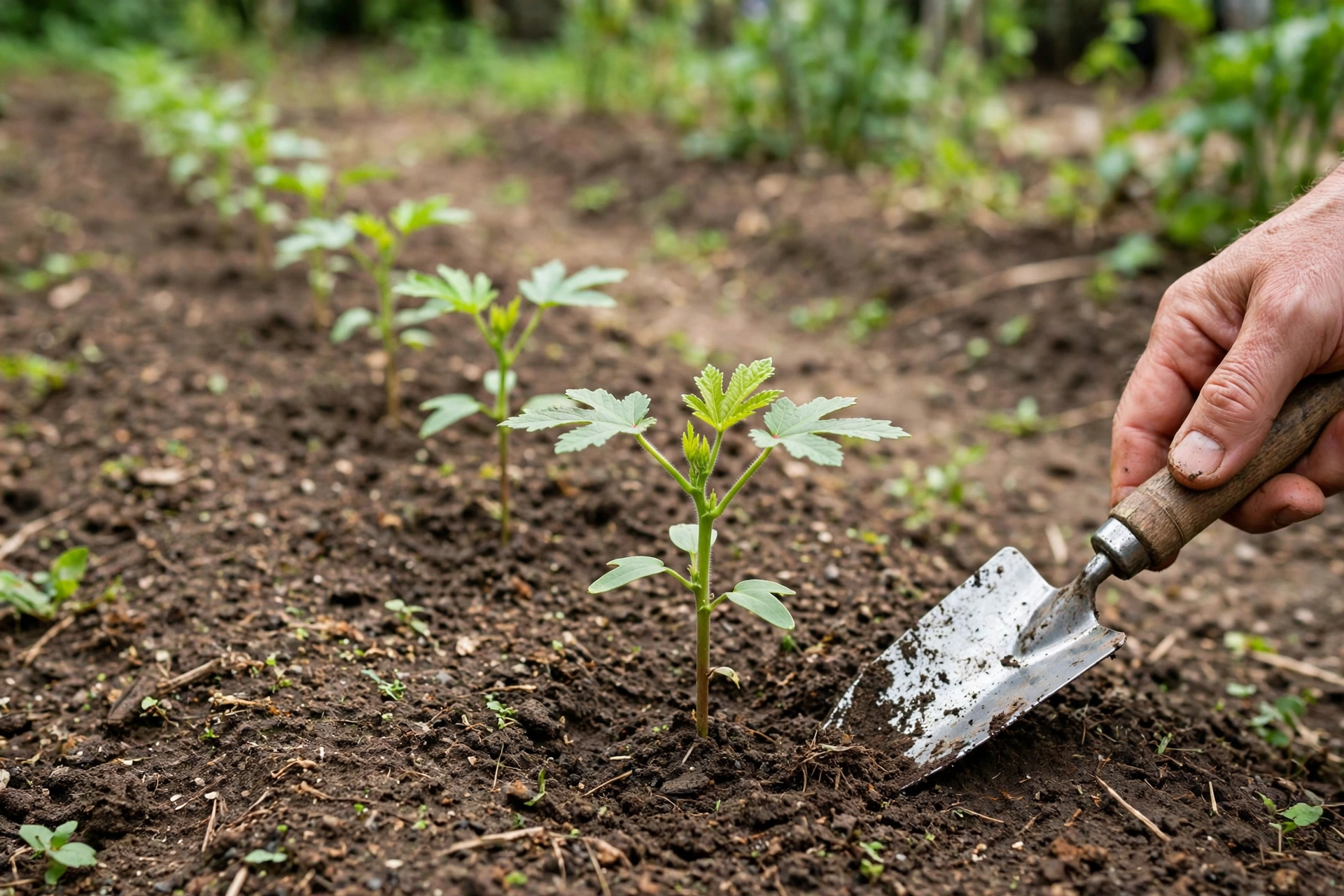
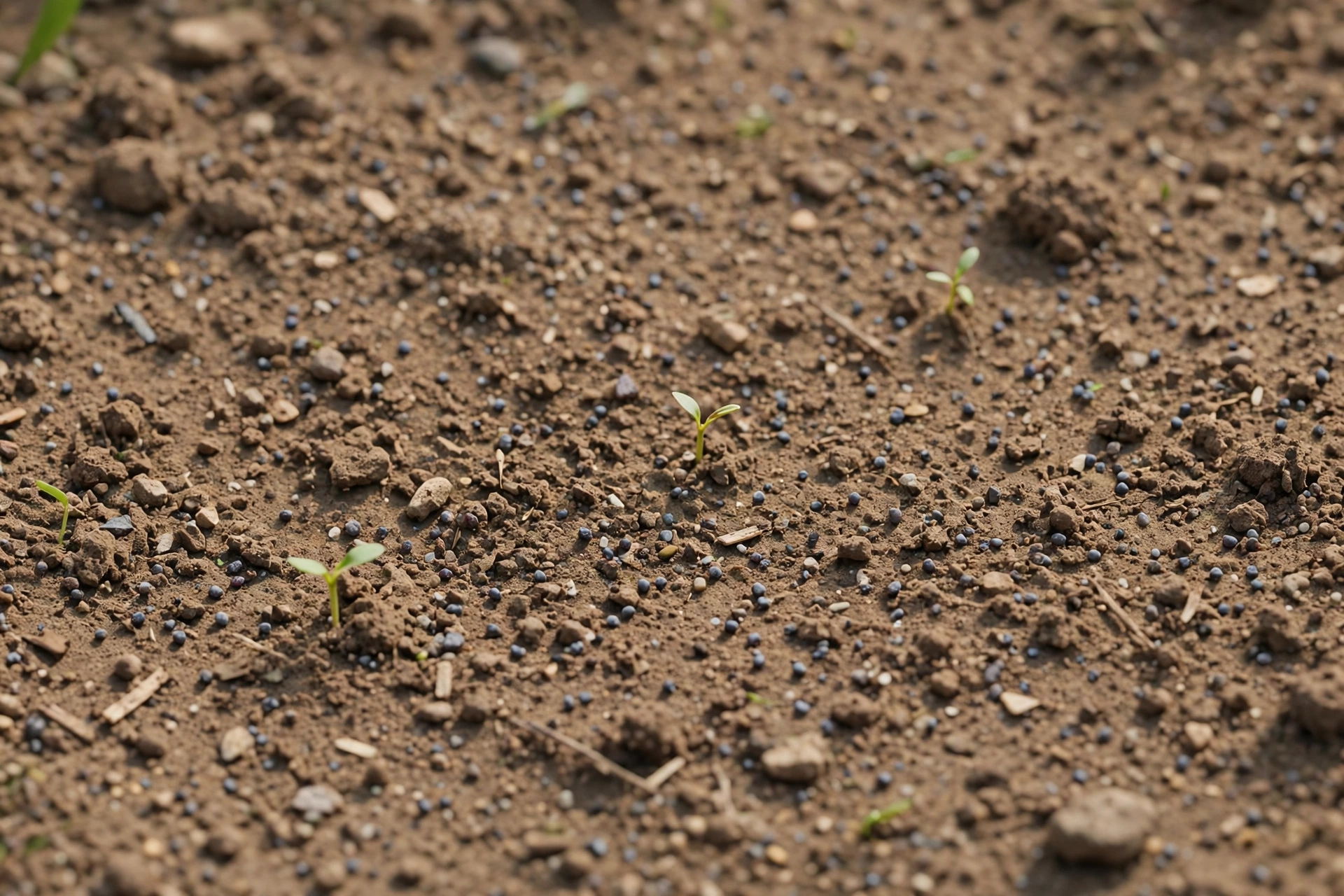
The growing manners are nearly identical, which keeps the decision simple. Both varieties sow a half to one inch deep, germinate in 10 to 15 days, grow taller than 24 inches in full sun, and sulk in cold ground — sow 1 to 2 weeks after your average last frost date, into soil that has reached at least 70°F. Both are frost sensitive and heat tolerant, and both stop producing if you let pods mature on the plant, so the daily picking habit matters more than the variety.
| Variety | Days to maturity | Pick pods at | Spacing | Rating |
|---|---|---|---|---|
| Clemson Spineless 80 | 55 days | 3″–4″ | 1 every 18″ | 4.8/5 (23 reviews) |
| Red Burgundy | 55–60 days | 6″ or shorter | 1 every 18″–24″ | 4.7/5 (15 reviews) |
Best Overall: Clemson Spineless 80 Okra
If you plant one okra, plant this one. Clemson Spineless 80 is the standard green okra, developed at Clemson University and improved in 1980 for an earlier, more productive harvest, and its dark green, straight, slightly grooved pods are the ones with the full-bodied flavor okra lovers keep coming back for.
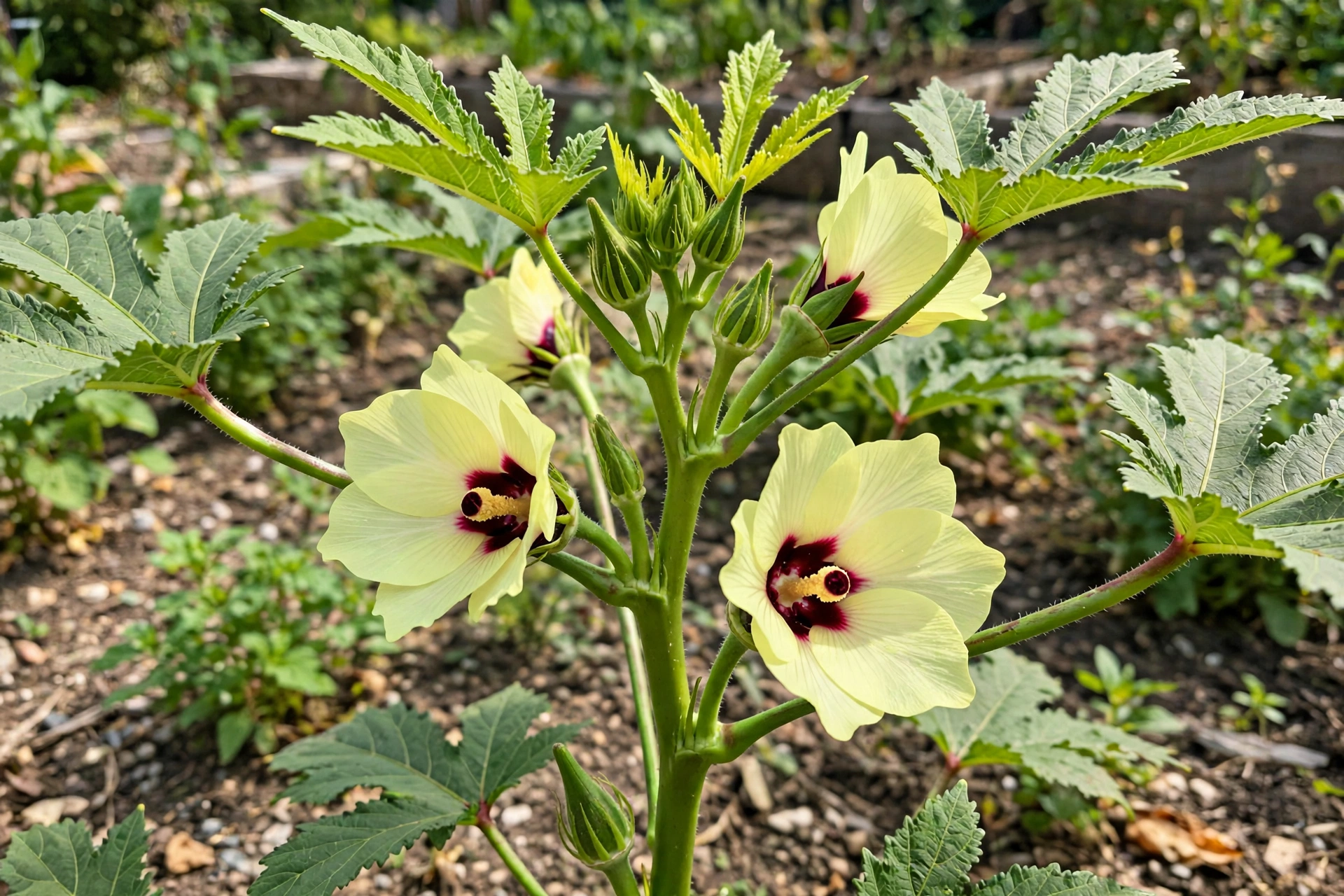
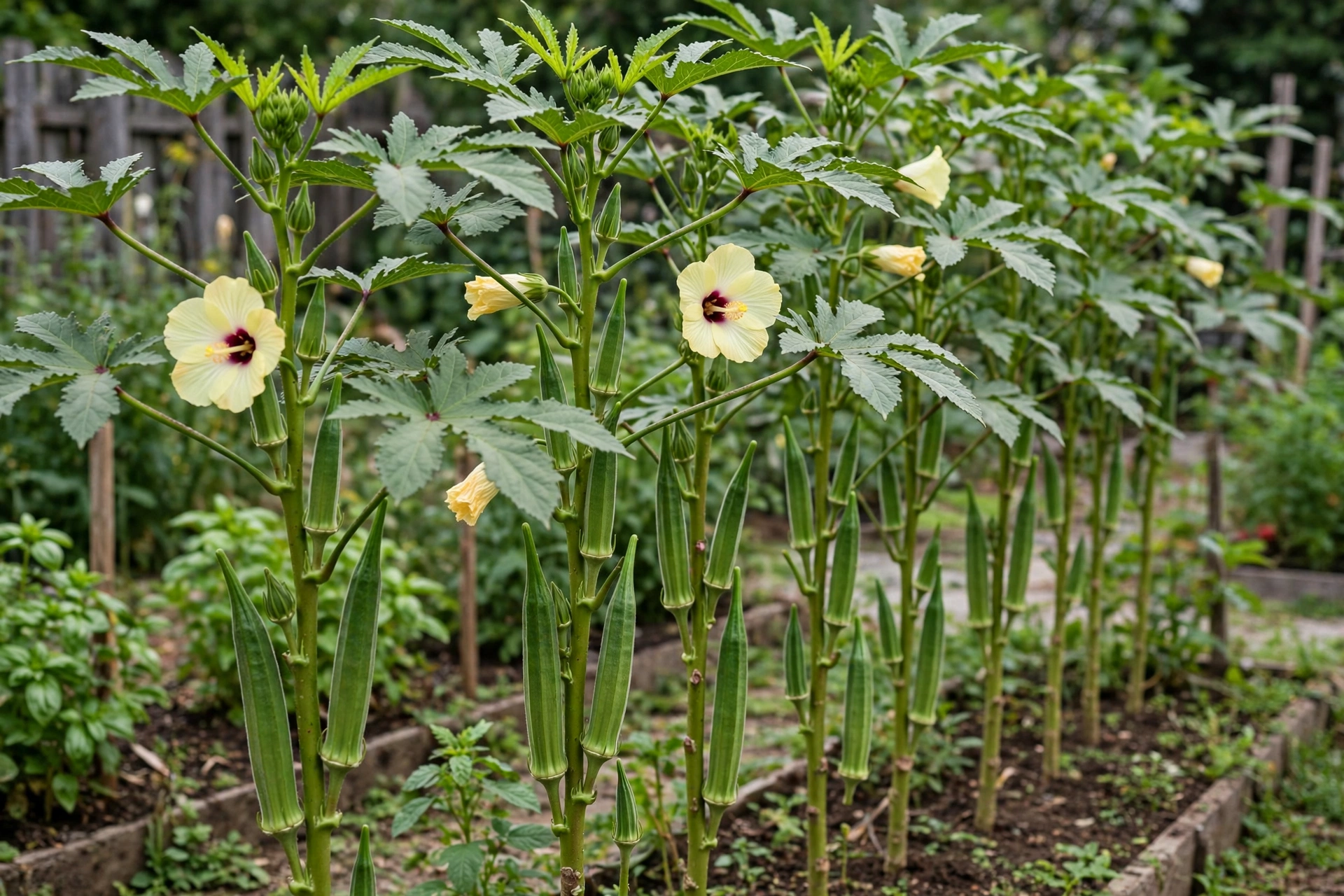
The numbers are the strongest on this page. It matures in 55 days, rates 4.8 out of 5 from 23 reviews, and the packet is $2.69 in both conventional and organic versions. Pods can grow to 9 inches, but pick them at 3 to 4 inches, before they turn tough — that short picking window is the one real demand this variety makes. The plants are tall, the pale flowers attract pollinators, and a row in bloom is prettier than a vegetable this useful has any right to be.
Pros: 55 days to maturity; highest rating here, 4.8/5 from 23 reviews; conventional and organic packets, both $2.69; the classic green pod for gumbo, frying, and pickling.
Cons: pods toughen quickly past 4 inches, so it punishes a skipped picking day; tall plants need the full 4-foot row spacing.
Clemson Spineless 80 Okra Seeds
The classic green okra — 55 days, dark grooved pods, and the strongest rating of the two.
Best for Color: Red Burgundy Okra
Red Burgundy is the okra you plant where people can see it. Deep crimson pods hang against green leaves on burgundy-tinted stems, the yellow flowers draw bees all summer, and the plant earns its space as an ornamental even before the first pod is picked.
It is not just a pretty face. Red Burgundy is described as the most productive red variety, it was introduced in 1983 and won an All-America Selections award in 1988, and it rates 4.7 out of 5 from 15 reviews at the same $2.69. The grooved red pods stay tender to about 6 inches — a more forgiving picking window than Clemson’s 4 inches — and one packet sows up to 34 feet of row. It wants a touch more room, thinned to one plant every 18 to 24 inches, and it runs 55 to 60 days, a few days behind Clemson at the top end.
Pros: the most productive red variety; tender to 6 inches, so picking is more forgiving; one packet sows up to 34 feet; AAS winner with real ornamental value.
Cons: 55 to 60 days, the slower of the two; wider spacing, so a small bed fits fewer plants; smaller review base, 15 reviews.
Red Burgundy Okra Seeds
Crimson pods on a bee-friendly plant — the productive red variety, tender to 6 inches.
Worth Adding: A Basket Built for Daily Picking
Okra picking is a daily errand once the plants start, and the pods are at their best small, which means a lot of little trips with your hands full. A proper harvest basket turns that errand into one comfortable carry, and it keeps tender pods from bruising in a pile.
The Harvest Basket rates 4.9 out of 5 from 50 reviews and runs $46.95 to $54.95 depending on size. It is the one non-seed pick on this page, and it earns its place the first week you are picking every morning.
Harvest Basket
A sturdy carry for the daily okra round — 4.9/5 from 50 reviews.
What We Would Skip
Skip the early sowing, whichever packet you buy. Okra seed planted into soil below 70°F mostly sits and rots, and a stand started two weeks late into warm ground will outgrow one started early into cold ground. The other skip is the giant-pod harvest photo: a 9-inch Clemson pod is a seed pod, not supper. Pick small, pick daily, and either variety will keep producing until frost.
Bottom Line
Plant Clemson Spineless 80 if you want the classic green pod and the fastest, best-rated harvest — it is the default for a reason. Plant Red Burgundy if your bed is visible from the porch and you want the more forgiving picking window; you give up a few days and a little row space, and you get the prettiest vegetable in the summer garden. Short on season? Start either one indoors 4 to 6 weeks before your last frost date in biodegradable pots, and give the seedlings warmth from day one.