Landscape & Leisure is reader-supported. When you buy through links on our site, including Botanical Interests seed links, we may earn a commission at no extra cost to you. Prices change, so click through to confirm current pricing.
Your cosmos choice is two plants wearing one name: one loves heat and poor soil, the other brings the big cutting flowers. Pick by summer.
That is the whole comparison in one breath, and the rest of this page is the evidence. Our cosmos varieties roundup rates the individual packets on both sides, and our growing cosmos guide covers the sowing routine both species share. If zinnias are competing for the same cutting-bed space, our zinnias vs. cosmos vs. marigolds comparison handles that three-way choice separately.
Side by Side
| Trait | Cosmos sulphureus | Cosmos bipinnatus |
|---|---|---|
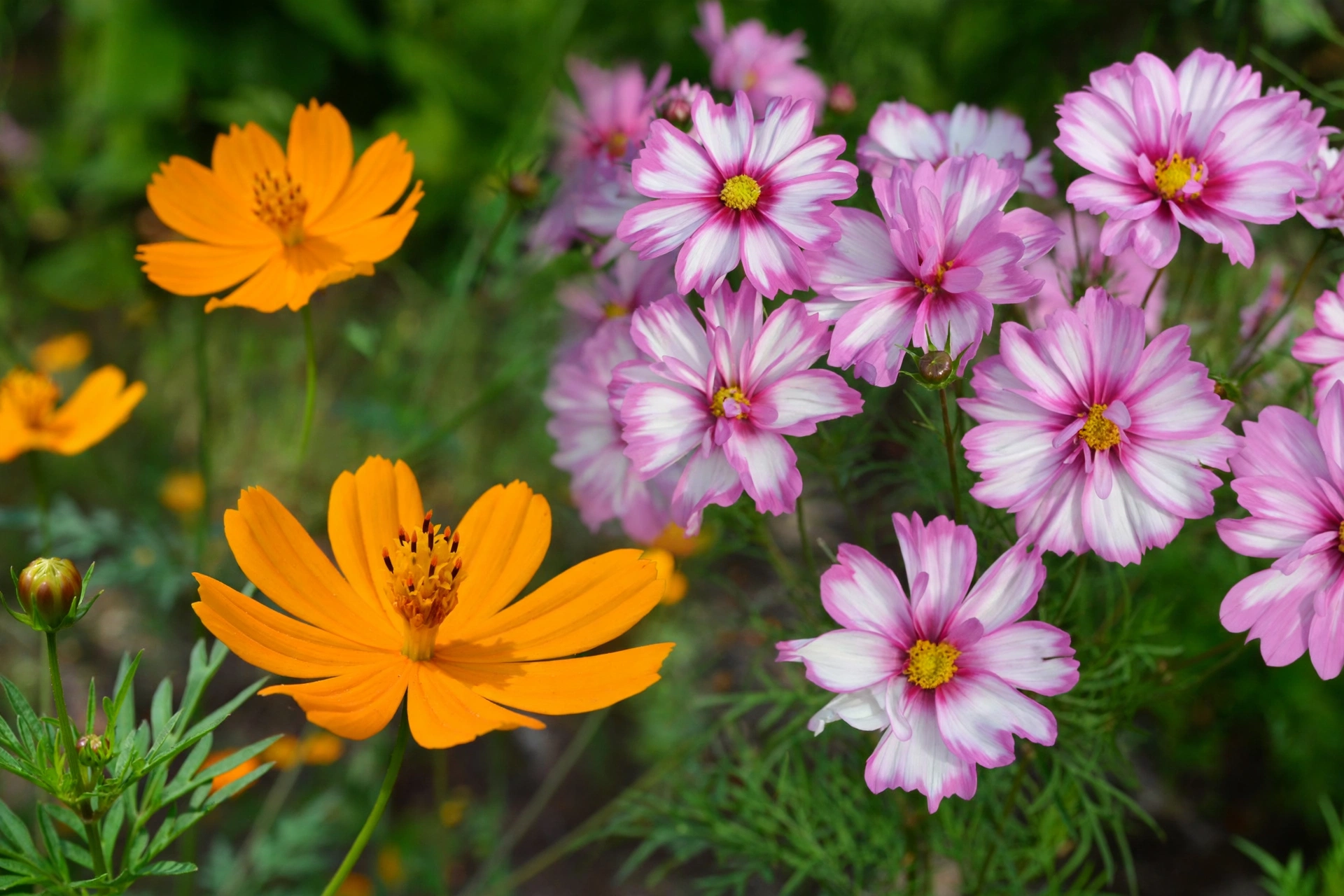
| Colors | Scarlet, orange, gold, yellow | Pink, white, rose, crimson, apricot, bicolors |
| Flower size | 1–2½″ | 3–4″ |
| Plant habit | Bushier, 36″ and up | Tall and airy, well over 24″ |
| Heat tolerance | The stronger of the two in hot, dry beds | Drought tolerant once established |
| Best job | Mass warm color, wildflower areas | Cutting gardens, back-of-border height |
| Varieties here | Diablo, Bright Lights Blend | Sensation Blend, Apricotta, Sea Shells, Candystripe, Double Click |
Color: Warm Fire vs. the Full Pastel Box
Sulphureus owns the warm end of the spectrum and nothing else — scarlet, orange, gold, and yellow, in blends like Bright Lights that mix all four on one planting. Bipinnatus owns everything cooler: the pinks and whites of Sensation Blend, Apricotta’s apricot-pink, Candystripe’s rosy-edged white, and Double Click’s carmine. Decide your palette first, because the palette decides the species before any other trait gets a vote.
Flower Size and the Vase
Bipinnatus flowers run 3 to 4 inches across, one bloom to a stem worth arranging, and its varieties were bred with the vase in mind — Apricotta for its sturdy stems, Sea Shells for its rolled petals. Sulphureus flowers are smaller, 1 to 2½ inches, and they win differently: sheer number. A sulphureus plant in full swing carries more open flowers at once, which is why Diablo reads so strongly from the street even though each blossom is modest.
Standing in the bed at dusk, the difference is easy to feel — the bipinnatus row sways above your waist in big, loose color, while the sulphureus patch glows lower and denser, and the bees are still working it after the tall row has gone quiet. Neither effect is better; they are different evenings in the garden, and most beds have room for one of each.
Heat, Soil, and Forgiveness
Both species want full sun, lean soil, and a barely-covered sowing after frost — the shared routine is in the growing guide. Within that shared frame, sulphureus is the tougher customer in a hot, dry, neglected corner, the one to trust along a driveway or in a wildflower strip you water rarely. Bipinnatus is drought tolerant once established too, but its tall stems appreciate the slightly kinder conditions of a tended border, and both species share the family rule: rich, fertilized soil makes leaves, not flowers.
Diablo Cosmos Seeds
The sulphureus standard — scarlet-orange flowers in quantity, and the highest rating of any cosmos here.
Sensation Blend Cosmos Seeds
The bipinnatus standard — big white, pink, rose, and crimson flowers made for cutting.
Apricotta Cosmos Seeds
Bipinnatus at its most bouquet-ready — apricot-pink 3-inch blooms on sturdy cutting stems.
The Verdict
Grow sulphureus if your bed is hot, dry, or mostly left alone, and you want warm color in quantity — Diablo is the single best packet on either side of this page. Grow bipinnatus if you cut flowers and want big blooms with height — Sensation Blend for the classic mix, Apricotta for the vase. If you truly cannot choose, plant Diablo in the tough corner and Sensation at the back of the border, and let each species do the job it is built for.