If your herb bed is still hanging on — a brave row of parsley, sage looking unbothered, thyme sprawling like it owns the place — a hard frost is about to make the decisions for you. The happy news is that one good harvest afternoon saves almost all of that flavor for winter cooking, and drying herbs is one of the easiest preserving jobs in the whole garden.
Know Which Herbs to Cut, and Which to Bring Inside
Start by sorting your plants into two cheerful piles. The sturdy Mediterranean herbs — sage, thyme, oregano, and rosemary — dry beautifully and keep their flavor for months, so they are your harvest-first group.
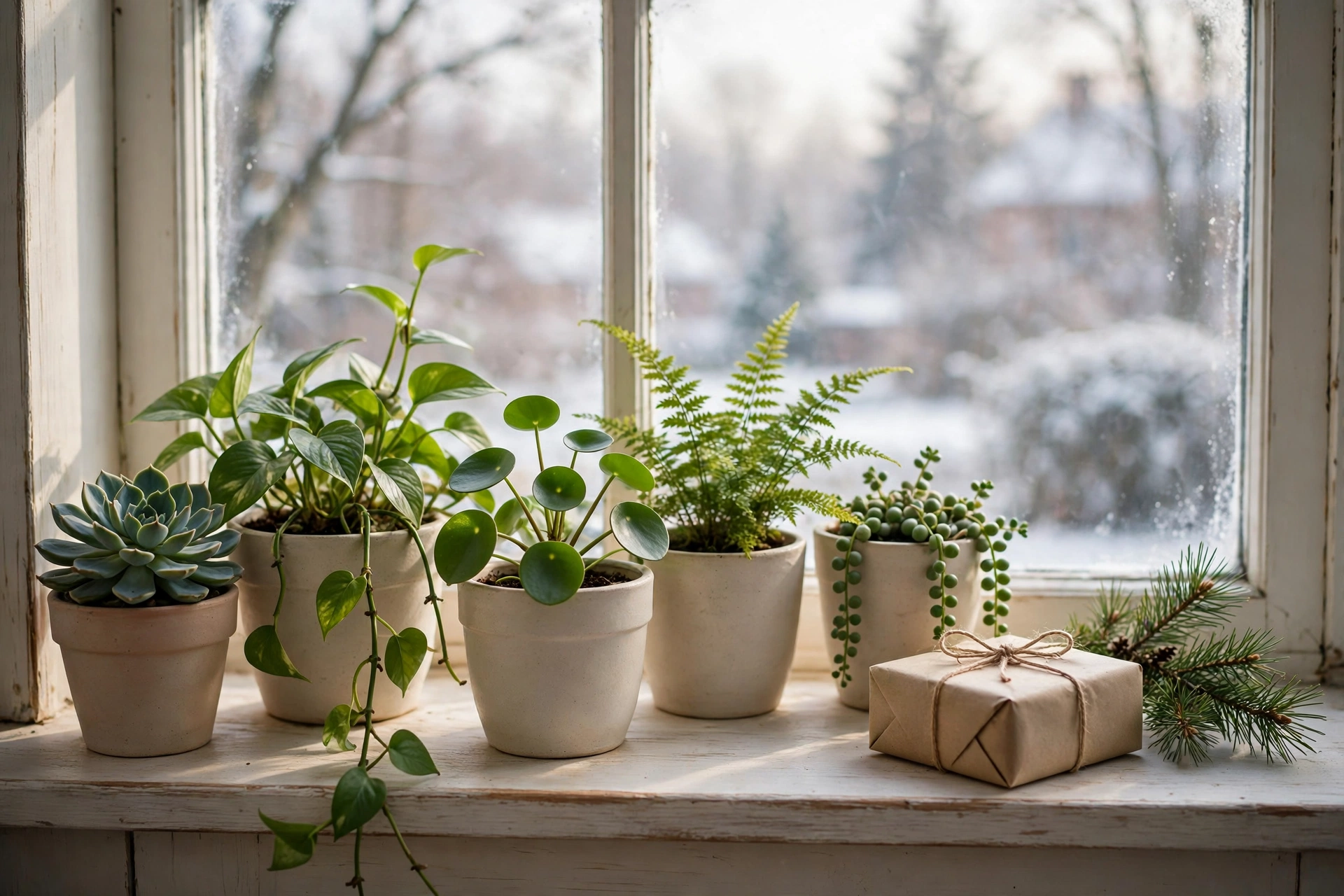
Tender herbs play by different rules. Basil turns black at the first cold night and dries to something that tastes mostly like hay, so basil is better frozen in oil or blended into pesto. If you have a potted basil, rosemary, or parsley you want to keep growing instead of harvesting, our guide to overwintering tender herbs indoors covers the bring-it-inside option step by step.
Pro Tip: harvest on a dry morning after the dew has lifted, usually mid-morning. University of Minnesota Extension notes that herbs carry their strongest flavor when you cut them just before the flowers open, and dry leaves dry faster and mold less than wet ones.
Harvest and Dry in Four Easy Steps
Step 1: Cut generously, but leave the plant its dignity. Use clean scissors and take stems from the outside of the plant first. For leafy annual herbs near the end of their season, you can cut up to three-quarters of the growth, because frost will take the rest within days anyway.
Step 2: Shake, rinse only if you must, and pat dry. Give each bunch a gentle shake outdoors to evict any sleepy insects. If the leaves are dusty, rinse quickly in cool water and pat them completely dry with a clean towel, because extra water is the enemy of clean drying.
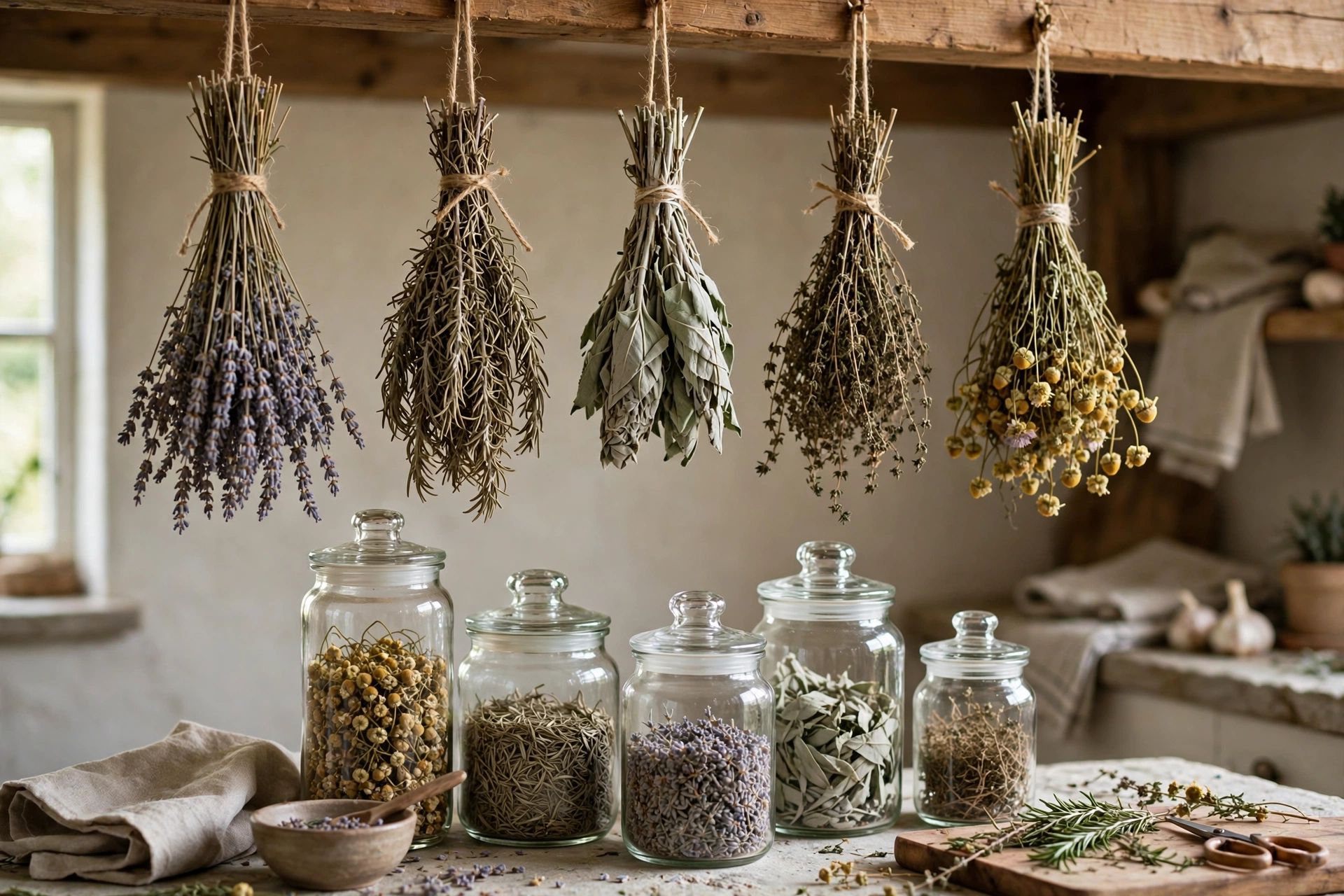
Step 3: Bundle small and hang them upside down. Gather 4 to 6 stems into a small bundle — small bundles dry evenly, while fat bundles trap moisture in the middle — and tie the stems with twine. Hang the bundles upside down in a warm, dark, airy spot, like a pantry, a garage rafter, or a closet with the door cracked. A paper bag with a few slits slipped over each bundle keeps dust and light off while the air still moves.
Step 4: Wait 1 to 2 weeks, then test for snap. Leaves are done when they crumble crisply between your fingers and the stems snap instead of bending. In a humid kitchen this can take the full two weeks, so be patient and check every few days. The whole room will smell wonderful while you wait, which is not a bad trade for patience.
Storing Your Dried Herbs So They Still Taste Like Something
Strip the leaves from the stems over a big bowl, keep them as whole as you can, and tuck them into clean, airtight glass jars. Whole leaves hold their flavor far longer than crumbled ones, so crush them right before cooking, not before storing.
Label every jar with the herb and the month, and store the jars in a dark cupboard away from the stove. Dried herbs are at their best for about 6 to 12 months, and a quick sniff tells you the truth — if the jar smells faint, the flavor will be faint too. If you dry mint, lemon balm, or chamomile for drinks, our comparison of fresh vs dried herbs for tea explains how the flavor changes once the leaves are dry.
Pro Tips for a Harvest You Will Actually Use
- Freeze the soft herbs: parsley, cilantro, and chives lose a lot in drying — chop them, pack them into ice cube trays with a little water or oil, and freeze them instead.
- Save the stems for the pot: dried thyme and oregano stems still carry flavor and are lovely tossed into a soup pot, then fished out before serving.
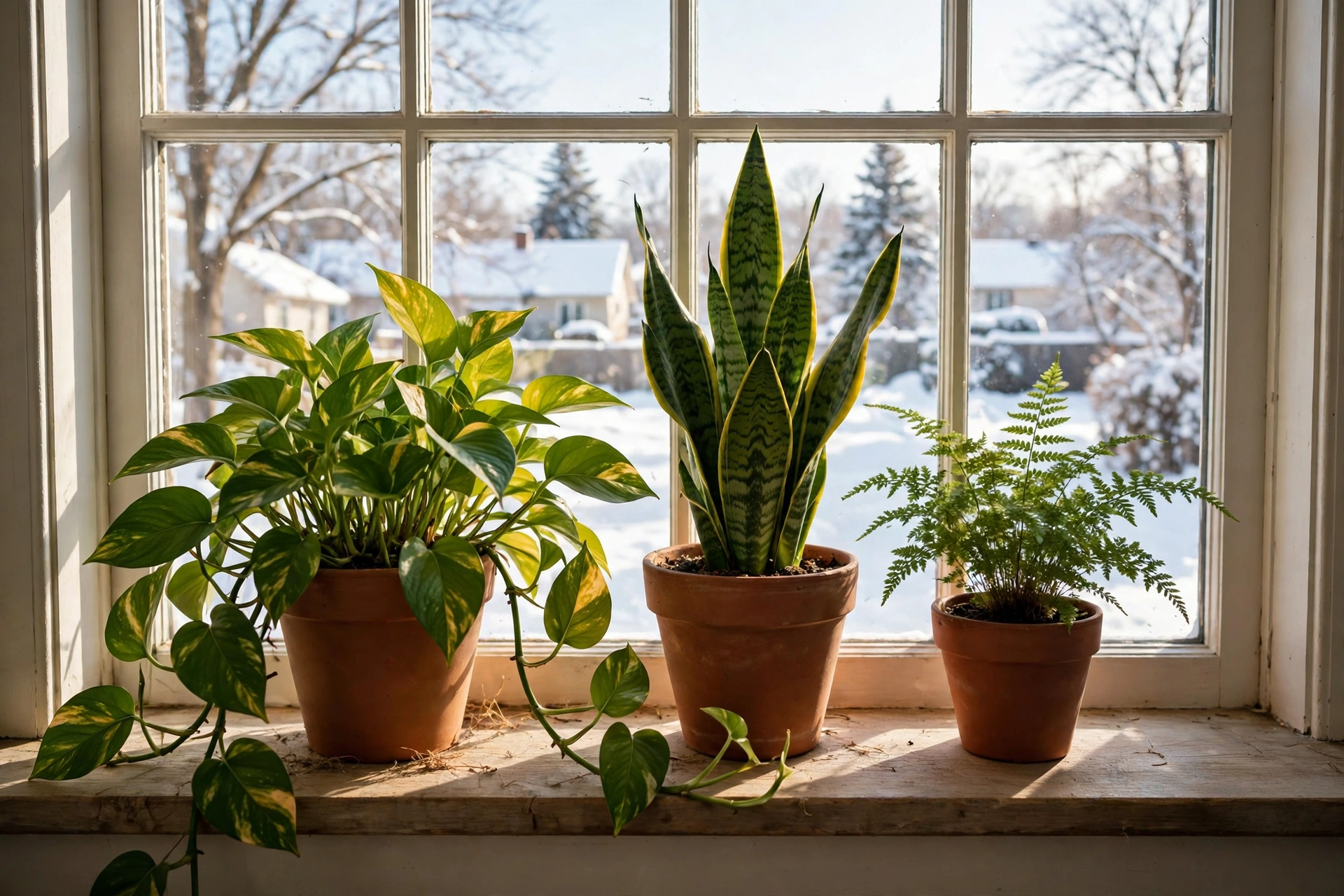
- Keep a windowsill backup: a small pot of parsley or chives indoors carries you through winter — our notes on growing herbs on a windowsill cover the light and watering basics.
- Work smarter, not harder: harvest everything in one afternoon, hang it all at once, and jar it all on one quiet evening two weeks later.
Wrap-Up Tips
One afternoon with the scissors turns a frost-threatened herb bed into a cupboard of summer flavor you will reach for all winter. Cut on a dry morning, bundle small, hang them dark and airy, and jar the leaves whole. Your soups, roasts, and Sunday sauces will thank you. Happy gardening!