Landscape & Leisure is reader-supported. When you buy through links on our site, including Botanical Interests seed links, we may earn a commission at no extra cost to you. Prices change, so click through to confirm current pricing.
November light is already slipping. The sun sets before dinner, the brightest window in the house gets maybe half the light it had in June, and that is exactly when a windowsill herb garden either settles in or slowly gives up. The good news: herbs are forgiving if you get three things right — light, water, and the way you harvest.
Think of the windowsill as a small, seasonal garden with its own rules. Outdoors, rain and sun do most of the adjusting. Indoors, you are the weather, and the adjustments are smaller and more frequent: a quarter-turn of the pot, a finger in the soil, a few snips instead of a shearing.
Light First: Your Brightest Window, Then Rotate
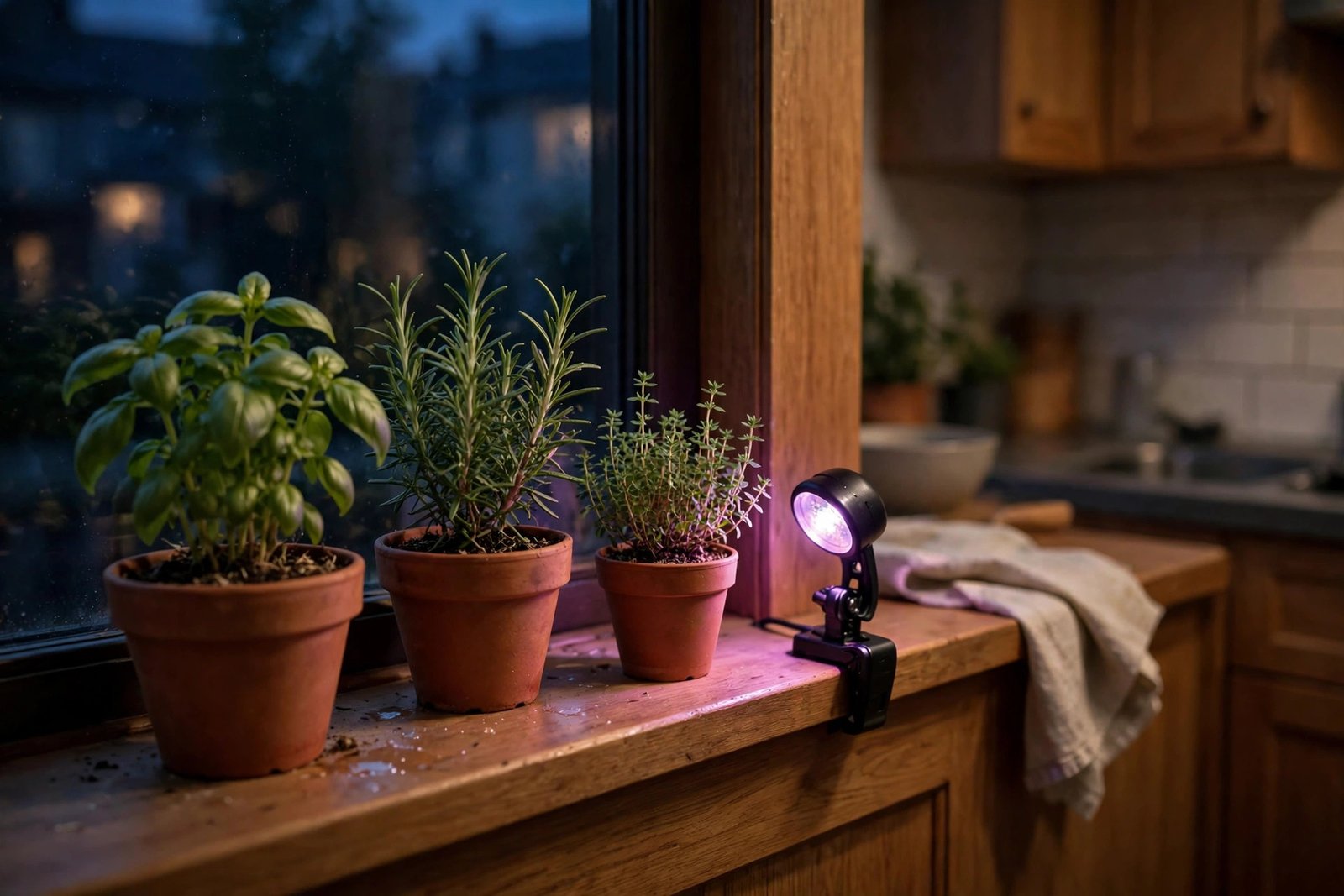
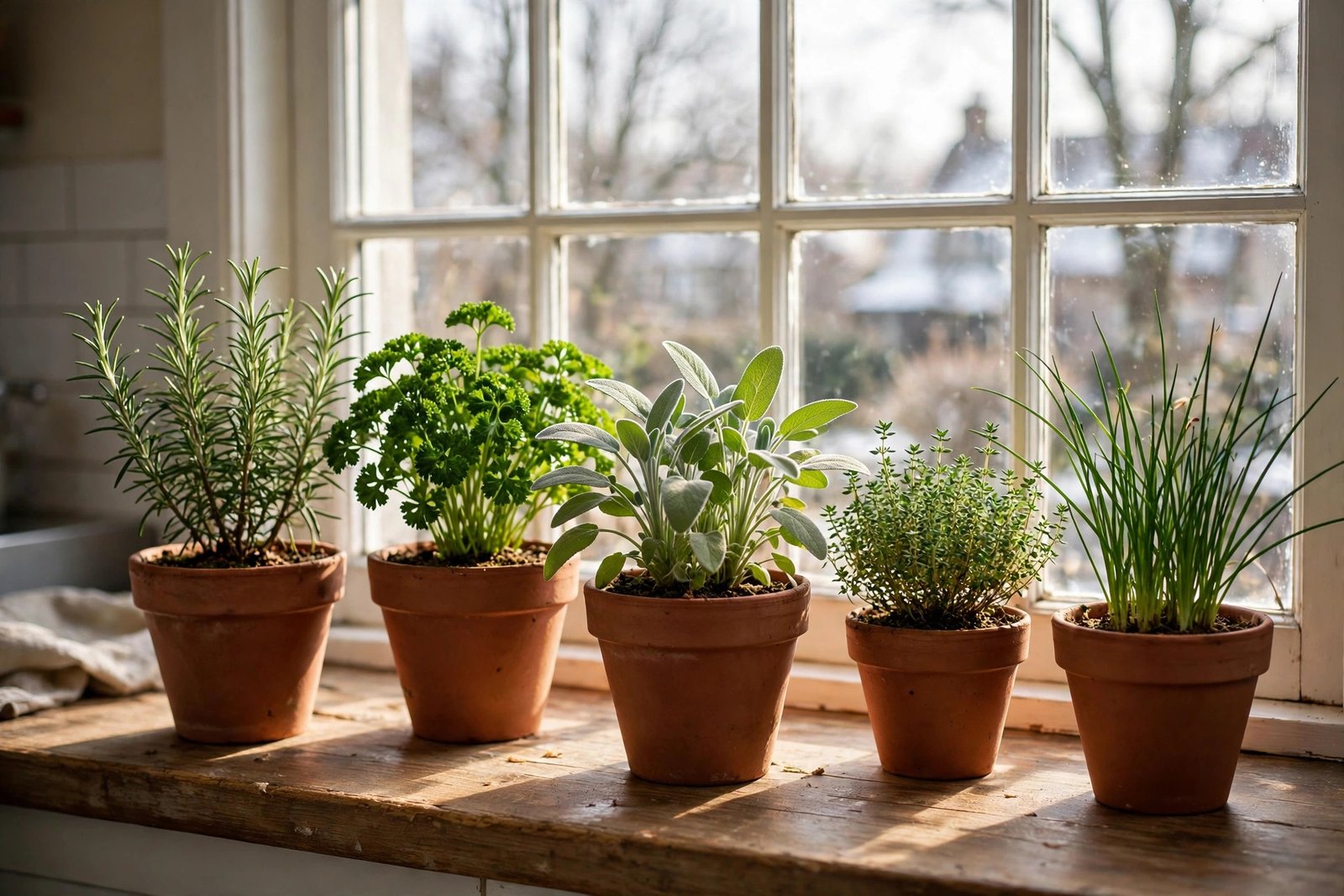
Herbs want the brightest window you have, ideally one that faces south. Basil, parsley, and the chives are all listed as full sun to part shade, which indoors translates to direct sun through glass for as much of the day as you can give them. A north-facing window in a northern winter will keep them alive, but leggy and pale — if that is all you have, read Windowsill vs. Grow Lights for Indoor Herbs before you blame the plants.
Turn each pot a quarter-turn every few days. Plants lean toward the light, and a pot that never turns grows lopsided, with one lush side and one bare side. Watch the leaves, too: if new growth looks stretched and thin, with long gaps between leaves, the plant is reaching for more light than it is getting. Move it closer to the glass — but keep basil off cold glass on freezing nights, since basil is very frost sensitive and a cold draft will spot its leaves.
Water: Less Than You Think, More Often Than You Forget
Overwatering kills more winter herbs than underwatering does. Indoor pots dry slowly in winter, and roots sitting in wet soil rot quietly while the top looks fine. The rule that works: stick a finger an inch into the soil. If it feels dry at that depth, water thoroughly until it drains from the bottom, then empty the saucer. If it still feels damp, wait.
Every pot needs a drainage hole, and no pot should sit in a saucer full of water. If your prettiest pot has no hole, use it as a cover pot: keep the herb in a plain plastic pot inside it, and lift it out to water. Herbs in small pots dry faster than herbs in big ones, so check the small pots first — and in a warm kitchen, check everything more often than you expect.
| Herb | Sow depth | Seedlings appear | How to harvest |
|---|---|---|---|
| Moss Curled Parsley | Follow the packet | Slowly — be patient | Pick outer leaves; let the center grow |
| Garlic Chives | 1/4 inch | 10–15 days | Cut outer spears at 6 inches, back to 2 inches |
| Common Chives | 1/4 inch | 10–15 days | Cut outer spears at 6 inches, back to 2 inches |
| Italian Genovese Basil | 1/4 inch | 5–10 days | Take up to 1/3 at a time, before flowering |
Starting From Seed on the Sill
Sow chives and basil at a quarter inch deep, in seed-starting mix rather than heavy garden soil, and keep the mix evenly moist — not soggy — until seedlings appear. A seed-starting heat mat under the tray helps in a cool room, since warm soil wakes seeds faster; it is the one piece of gear worth owning if your windowsills run cold.
Parsley is the slow starter of the group, so sow it a little thickly and give it time before you judge the pot. Chives need no thinning once they are up. Basil sprouts fast, in 5–10 days, and then wants warmth and light more than anything else. The full roundup of which varieties to sow is in Best Herbs to Grow Indoors in Winter.
Moss Curled Parsley Seeds
The winter windowsill workhorse: cold-tolerant, curly, mild, rated 5.0 out of 5.
Garlic Chives Seeds
Flat garlicky leaves for stir-fries and eggs, from a perennial that comes back every year.
Seed Starting Heat Mat
Warm soil wakes winter seeds faster — the one piece of gear that earns its place under a cool windowsill tray.
Harvest Like You Mean It to Keep Growing
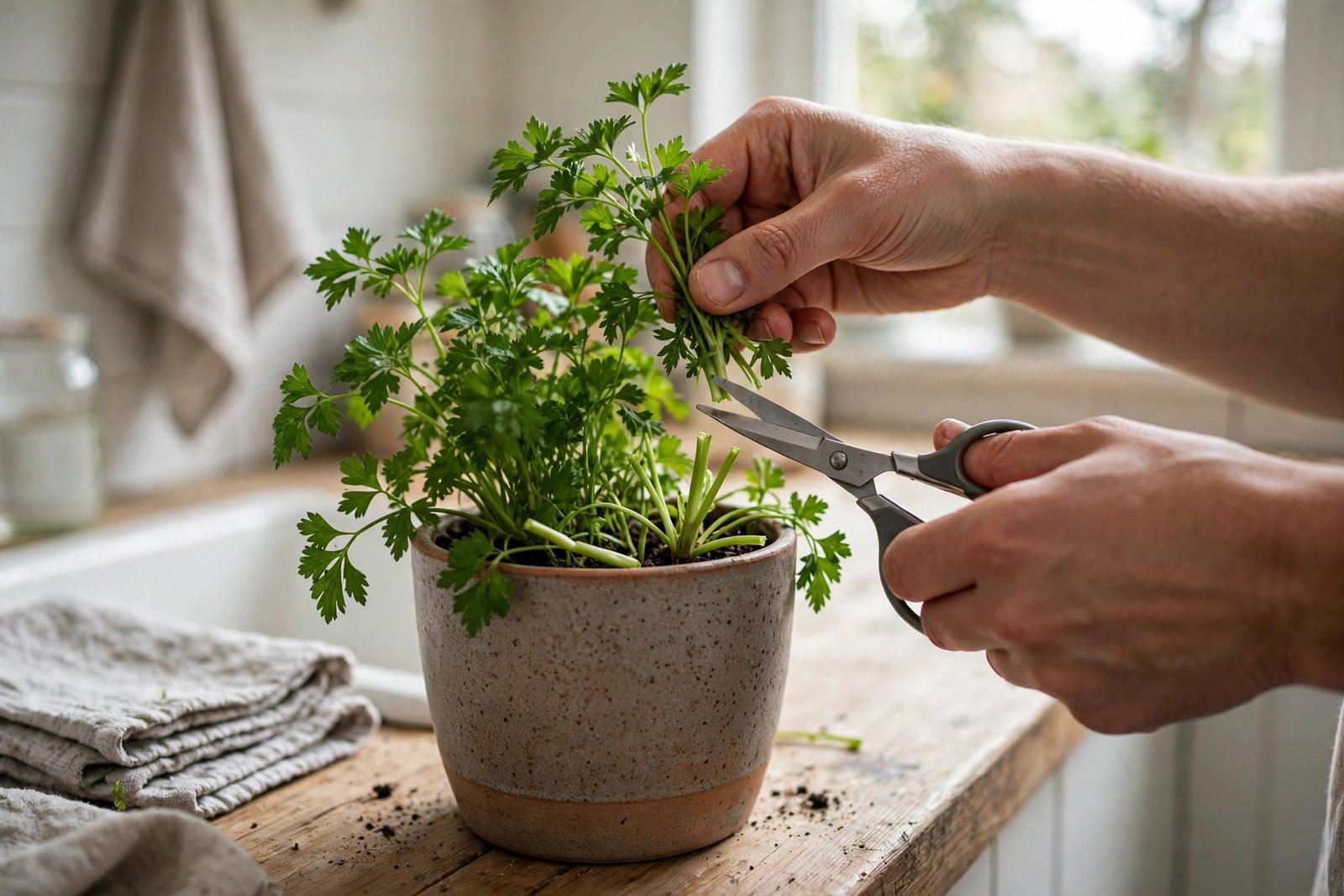
Herbs produce more when you pick them — but only if you pick the right way. For parsley, take the outer leaves and leave the center growing. For both chives, cut the outer spears once they reach 6 inches, back to 2 inches above the soil; once or twice a season, shear the whole plant back to 2 inches to bring on fresh, tender growth. For basil, harvest up to a third of the plant at a time, always before it flowers, because flavor fades once blooms appear.
Never strip a plant bare in one cooking session. A good rule: take no more than a third, and let the plant recover for a week before the next big harvest. Small, frequent snips beat one dramatic shearing, and the plant will reward you with denser growth instead of sulking.
What to Watch Next
Three warning signs, and the fix for each: stretched, pale growth means more light; yellow lower leaves with damp soil means less water; a plant that stops producing after heavy cutting means you took too much at once — leave it alone for two weeks and it usually rebounds. Get those three right and the sill carries you through to spring, when the chives and parsley can move outside and keep going.
Start with parsley and chives, keep the water restrained, and turn the pots. By February, snipping fresh herbs in the middle of winter will feel less like a project and more like a habit — which is exactly what a windowsill garden is supposed to become.