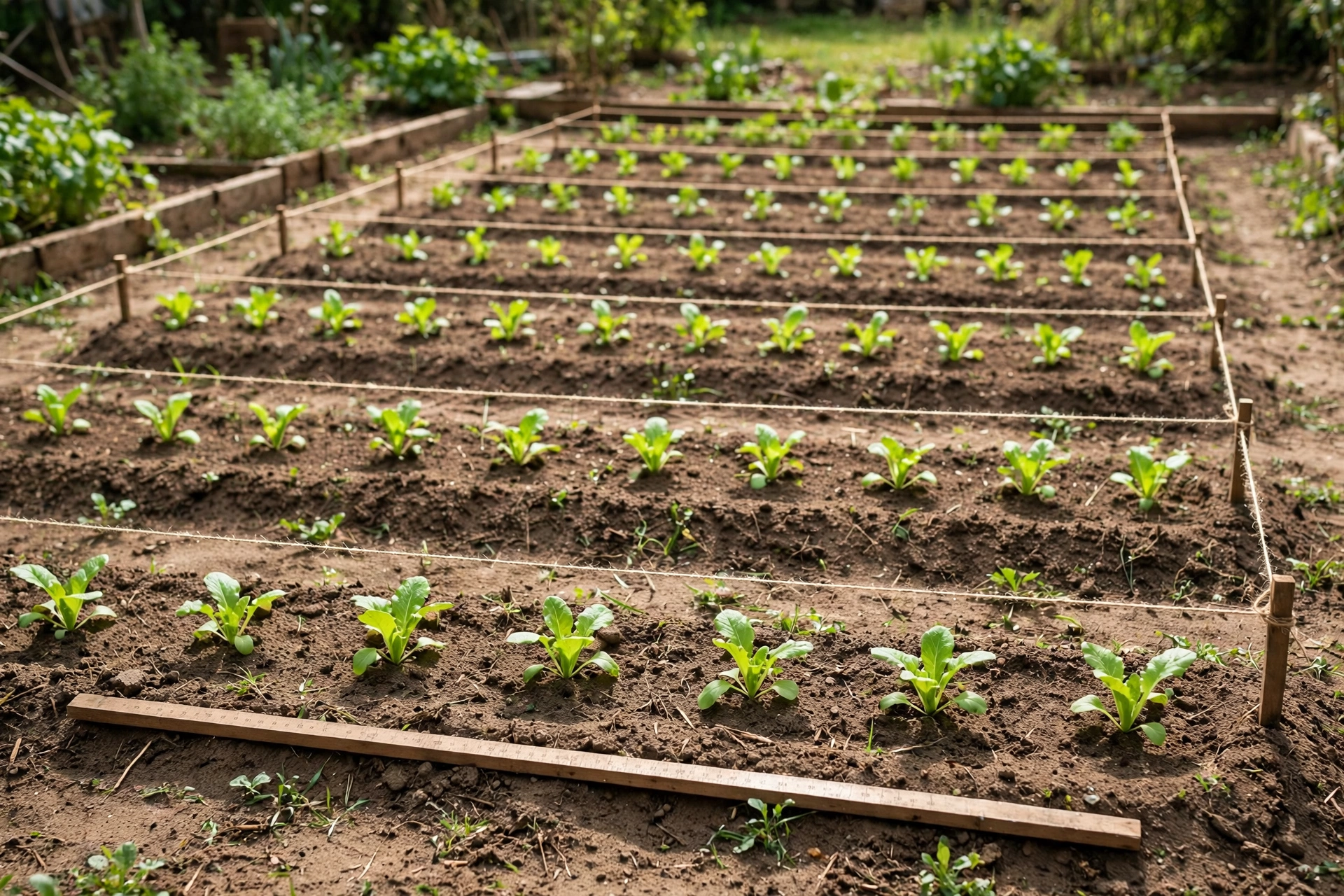
You stand at the end of the bed with a tray of transplants in one hand and a tape measure in the other, counting under your breath — because squeezed plants sulk all season, and a half-empty row is bed space you will look at until fall.
This planner settles the count before anything goes in the ground. Pick your crop, type in your row length and, if you have one, your bed width, and it tells you how many plants fit in each row, how many rows fit across the bed, and how many plants you need in total.
For the crops where a harvest figure is available, it also gives you a rough sense of what that planting might bring in, so the seed order and the bed plan finally agree with each other.
Vegetable spacing and yield planner
Pick your crop and the two spacings below fill in for you. In-row spacing means the distance between plants in the same row, and row spacing means the distance between one row and the next. Where the chart gives a range, the in-row box starts at the middle of the range, rounded, and the row box starts at the first figure — change either number to match your bed.
Measure the inside length of the row, from where the first plant goes to where the last one goes.
Only if your rows run side by side across a bed. Leave this blank if you are planting a single row.
The distance between plants in the row. This starts at the chart figure for your crop — type over it if your variety or your bed calls for something different.
The distance between rows. This also starts at the chart figure for your crop, and you can type over it the same way.
Your browser has JavaScript turned off, so the planner cannot run. The spacing table and worked examples below give you the same answers by hand.
What your numbers mean
Plants per row is the shopping number. It tells you how many transplants to buy or how many seeds to count out for one row, before you have committed to a whole bed.
Rows and total plants are the bed numbers. Rows tells you how many lines actually fit across the width you gave, and total plants is plants per row multiplied by rows — the full count for the bed, not just one line of it.
Where a yield line appears, read it as a planning figure in pounds for the whole planting. It comes from the total feet of row you are planting, so a second row adds its harvest on top of the first instead of replacing it.
How the math works
The planner puts the first plant at the start of the row, then counts one more plant every time another spacing interval fits, and it counts rows across the bed the same way. It then multiplies plants per row by rows for your total, and, where a yield figure exists, it multiplies your total feet of row by that figure.
By hand, the same count reads like this: turn your row length into inches, take away one spacing, divide what is left by the spacing, add one back for the first plant, and drop any fraction — a part of a spacing does not hold another plant. Count rows the same way, using your bed width in inches and your row spacing.
If your row is shorter than one spacing, the planner counts one plant and tells you to give it the full row. A short row still grows something worth harvesting, and zero is never the right answer for it.
Worked examples
A 4-by-8-foot bed at 24-inch rows and 12-inch spacing in the row. Say you type an 8-foot row length, a 4-foot bed width, 24 inches between rows, and 12 inches between plants. Across 48 inches of bed, the rows count is 48 minus 24, divided by 24, plus one — 2 rows. Along 96 inches of row, the plants count is 96 minus 12, divided by 12, plus one — 8 plants per row. Two rows of eight comes to 16 plants in total.
A single 10-foot row at 12-inch spacing. Leave the bed width blank and type a 10-foot row with 12 inches between plants. The count is 120 minus 12, divided by 12, plus one — 10 plants, in one row.
Run your own bed through both checks if the answer surprises you. When the typed-over spacing and the chart spacing give very different counts, the typed number is usually the one worth a second look.
Spacing for each vegetable
| Crop | In-row spacing | Row spacing | Days to maturity |
|---|---|---|---|
| Beans, bush | 2-4 in | 36 in | 50-60 |
| Beets | 2 in | 18-36 in | 55-65 |
| Broccoli | 12 in | 36 in | 60-80 |
| Cabbage | 12 in | 36 in | 70-120 |
| Cantaloupe | 36 in | 60 in | 80-90 |
| Carrot | 2-3 in | 18-36 in | 70-95 |
| Cauliflower | 12 in | 36 in | 60-75 |
| Collards | 8-16 in | 36 in | 55-85 |
| Corn | 12-18 in | 36 in | 65-90 |
| Cucumber | 12 in | 60 in | 50-65 |
| Eggplant | 24 in | 36 in | 75-90 |
| Kale | 8-16 in | 36 in | 50-70 |
| Lettuce | 8-12 in | 18-36 in | 60-85 |
| Okra | 12 in | 36 in | 55-65 |
| Onion, dry bulb | 3-4 in | 18-36 in | 100-120 |
| Peas | 2 in | 36 in | 60-70 |
| Pepper, bell | 24 in | 36 in | 65-80 |
| Pepper, hot | 24 in | 36 in | 65-95 |
| Pumpkin | 48 in | 72 in | 85-120 |
| Radish | 1 in | 24 in | 25-30 |
| Spinach | 2 in | 18-36 in | 40-45 |
| Squash, summer | 24 in | 36 in | 40-55 |
| Squash, winter | 36 in | 60 in | 85-120 |
| Tomato | 24 in | 48 in | 70-90 |
| Turnip | 2 in | 18-36 in | 40-60 |
| Watermelon | 36-48 in | 72 in | 80-90 |
Days to maturity counts from planting seed or setting transplants in the garden, so use it to pace your expectations once plants are in, not to work backward to a sowing date on its own. The wide ranges are real: a cabbage at 70 days and a cabbage at 120 days are different varieties doing exactly what they were bred to do.
Notice how much room the vining crops ask for. Cucumbers want 60 inches between rows and pumpkins want 72, and giving them that room is what keeps the vines out of the paths and the fruit where you can find it.
What you might harvest
The figures below are a commercial planning estimate — the kind of number a market grower uses to plan beds and orders — given per 100 feet of row for crops that are usually set out as transplants. The planner multiplies this figure by your total feet of row, so your result already accounts for every row in the bed.
| Crop | Commercial planning estimate per 100 ft of row |
|---|---|
| Broccoli | 50 lb |
| Cabbage | 150 lb |
| Cauliflower | 120 lb |
| Eggplant | 75 lb |
| Kale | 75 lb |
| Lettuce | 50 lb (100 heads) |
| Peppers | 50 lb |
| Tomatoes | 150 lb |
Crops that are not in this table show a plant count only, with no yield line, because there is no transplant figure here to plan from. A count you can trust beats a harvest number nobody should plan a pantry around.
Use the estimate to size the job, not to promise the kitchen a number. One wet week at the wrong moment can move a tomato row well off its planning figure, in either direction.
Fitting rows into a real bed
Measure the inside of the bed, not the outside of the boards. A bed built from lumber loses a few inches to the boards themselves, and those inches are exactly where a squeezed last row usually comes from.
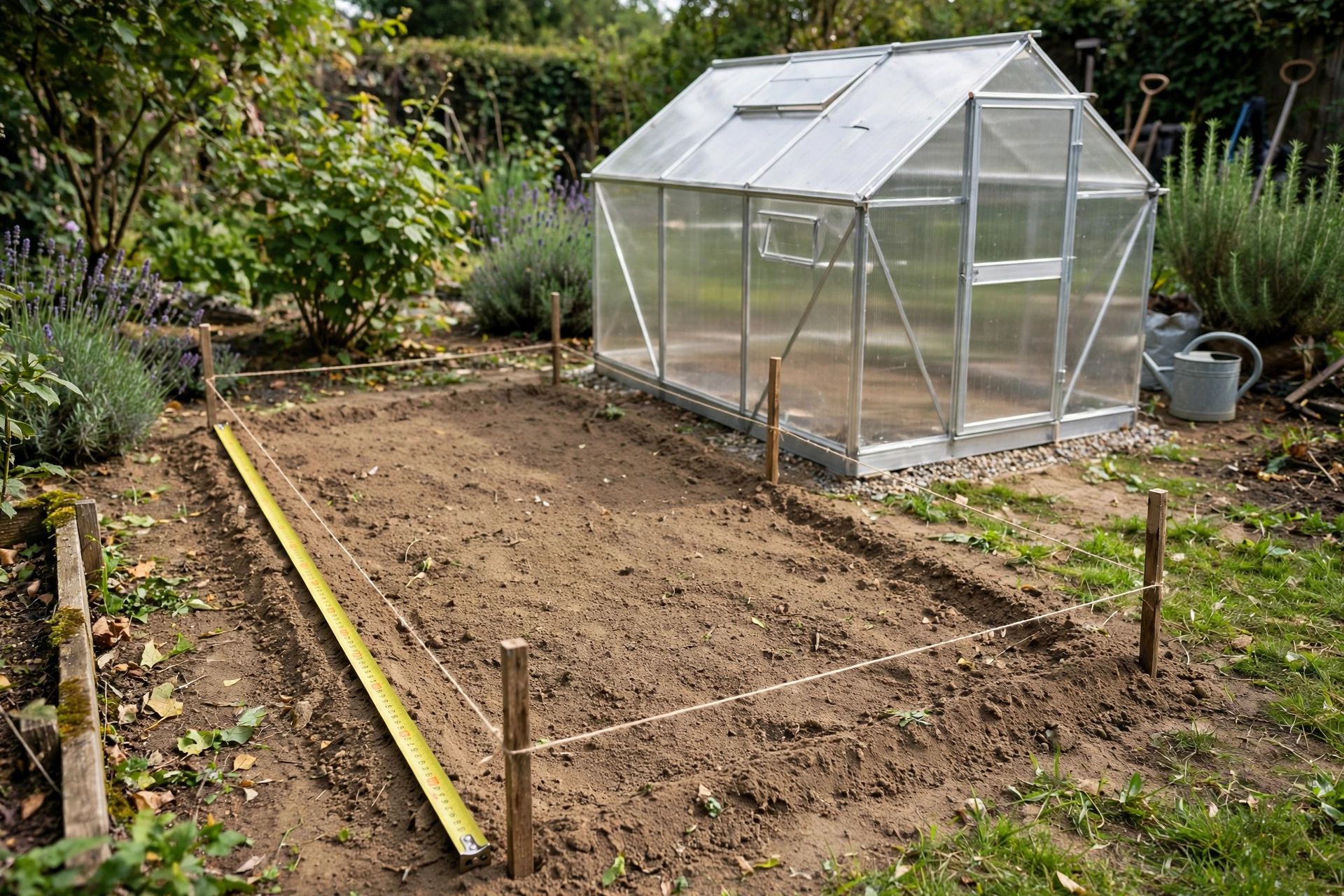
On a still morning, with the soil turned and smelling faintly sweet, run a string line for the first row before you set a single plant. Every row after it is easier to keep honest, and a straight first row makes the spacing you planned the spacing you actually planted.
If the count comes up one row short of what you hoped, widen nothing. Plant the rows that fit at the spacing the crop wants, and put the leftover width into a path you can kneel on — you will thank that path at harvest, when the plants are full size and the bed is wet.
What this planner does not do
This planner tells you how many plants fit your rows and gives you a rough harvest size for the crops listed above — it does not set your planting dates, and it does not know your variety, weather, or soil, so treat every yield as a planning figure rather than a promise. For sowing and transplant dates counted back from your last frost, use the seed starting date calculator.
Sources
- University of Georgia Extension, Circular 963, “Vegetable Gardening in Georgia” — Vegetable Planting Chart (June 2009), fetched in full November 6, 2026 for the seed-starting date calculator scope and carried to this planner. Governs every spacing and days-to-maturity figure above.
- Johnny’s Selected Seeds, “Vegetables Transplanted — Crop Plant Quantity and Yield Chart” — https://www.johnnyseeds.com/growers-library/methods-tools-supplies/seed-starting-transplanting/vegetables-transplanted-crop-plant-quantity-yield-chart.html (fetched November 19, 2026). Commercial planning estimate only; governs no spacing figure.