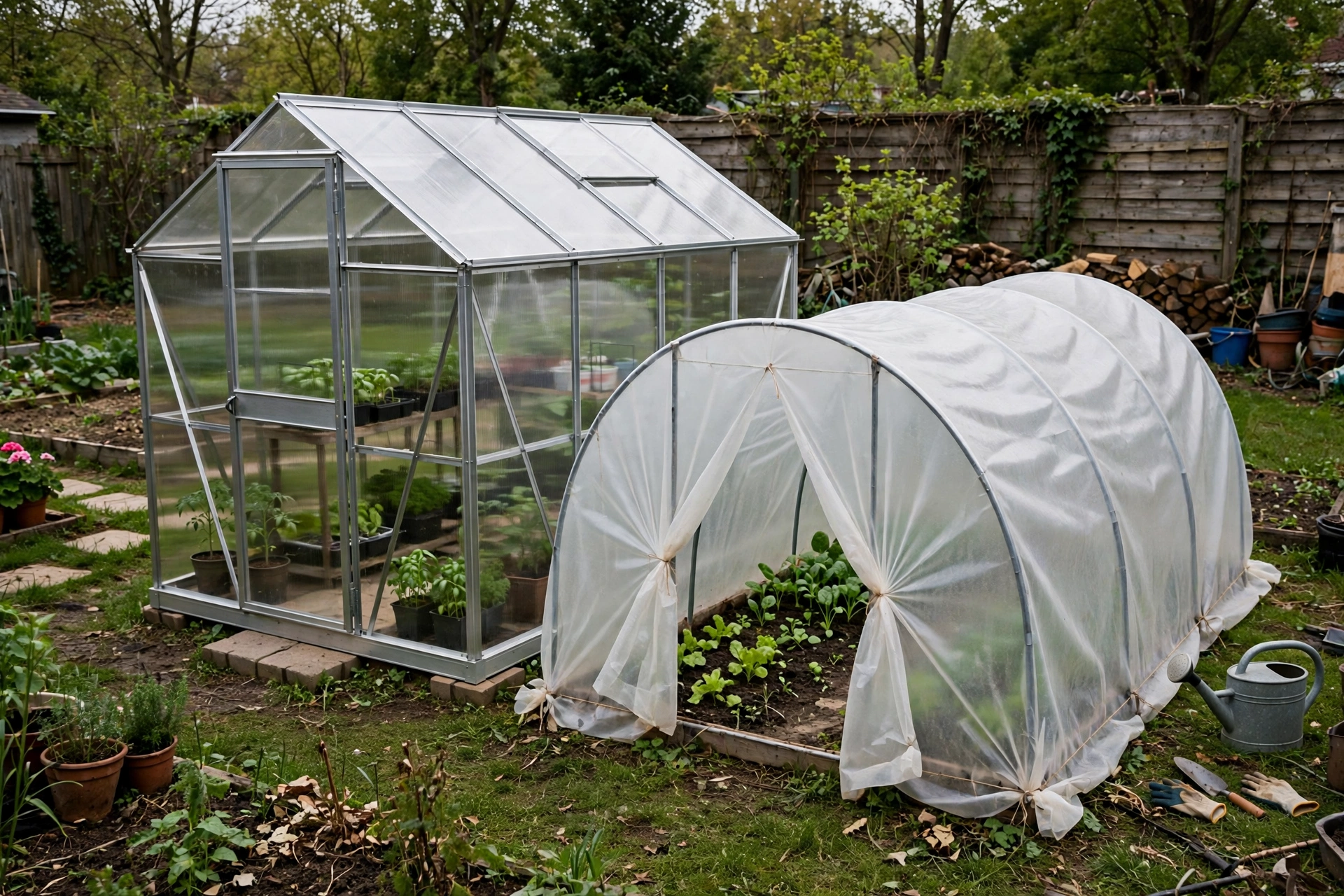
The cheap tunnel sags after one windy spring, its film gone cloudy and torn, and you are pricing panels before the second season starts.
That is the most common greenhouse mistake there is: buying the frame decision and the covering decision as if they were the same thing. The frame may last a decade, while the covering decides whether you are re-skinning the whole structure next year or gardening under the same panels in five years.
Three coverings dominate backyard kits: twin-wall polycarbonate, single-sheet polycarbonate, and polyethylene film. Here is how they compare on the things that decide cost over time.
The three coverings, side by side
| Covering | Lifespan | Insulation | Light | Replacement cost |
|---|---|---|---|---|
| Twin-wall polycarbonate | Longest of the three; a multi-year panel | Best — the air gap between walls slows heat loss | Diffused, spread evenly across the benches | Highest up front, rarely repeated |
| Single-sheet polycarbonate | Multi-year, shorter than twin-wall in hard use | Moderate — one layer, no air gap | Clearest light of the three | Mid-range when a panel needs swapping |
| Polyethylene film | Shortest — degrades in a season or two | Lowest — thin film loses heat fast at night | Good at first, clouds as the film degrades | Cheap per cover, paid again and again |
Lifespan: where the money actually goes
Film loses this comparison before anything else is considered. Sunlight breaks polyethylene down, wind works at every fixing point, and within a season or two the cover tears, clouds, and needs replacing.
Polycarbonate panels hold their shape and clarity for years instead of seasons. A panel that survives storm after storm without a re-skinning weekend is worth more than its price tag suggests, because the replacement film, the fixings, and your Saturday all cost something too.
Insulation: the twin-wall air gap
Twin-wall polycarbonate traps air between its two sheets, and still air is what slows heat escaping on a cold night. That gap is the reason twin-wall kits hold overnight temperatures better than a single sheet of the same material.
Single-sheet polycarbonate insulates less, since there is no trapped layer, and film insulates least of all. On a frosty morning you can feel the difference at the door: the twin-wall house is cool, the film tunnel is at outdoor temperature, and the seedlings notice even if you do not.
Light: clear is not always better
Single-sheet panels pass the clearest light, which suits a shaded yard where every bit of sun counts. Twin-wall panels diffuse the light instead, scattering it across the benches so lower leaves get a share and leaf scorch drops on bright days.
Film starts clear enough and then clouds as it degrades, so its light quality falls across its short life. A covering that dims a little more every month is quietly taxing the very growth you bought the greenhouse to speed up.
Replacement cost: cheap, bought often
Do the honest math over five years rather than one checkout. Film is the cheapest cover to buy and the most expensive habit, because you purchase it repeatedly and spend the labor of fitting it each time.
A polycarbonate kit costs more on day one and then mostly stops costing. If a single panel is damaged, you replace that panel, not the whole skin, which keeps a mid-life repair small.
Which covering fits which gardener
Choose twin-wall polycarbonate if you overwinter plants or grow year-round, because insulation and lifespan both matter most in winter. Our roundup of the best greenhouse kits for backyard gardeners leads with a twin-wall kit for exactly that reason.
Choose single-sheet polycarbonate for spring seed starting in a shaded yard, where clear light beats insulation. Before you order either, confirm the footprint with what size greenhouse you need, because the right panel on the wrong size still disappoints.
Reserve film for short, disposable cover over a bed or row. As the skin of a greenhouse you depend on, it is the one covering on this page that plans to fail.
Verdict
Buy polycarbonate, and buy twin-wall if winter growing is anywhere in your plans. Film tunnels cost less at checkout and more every year after, while a twin-wall kit is the covering you fit once and then forget about for seasons at a time.