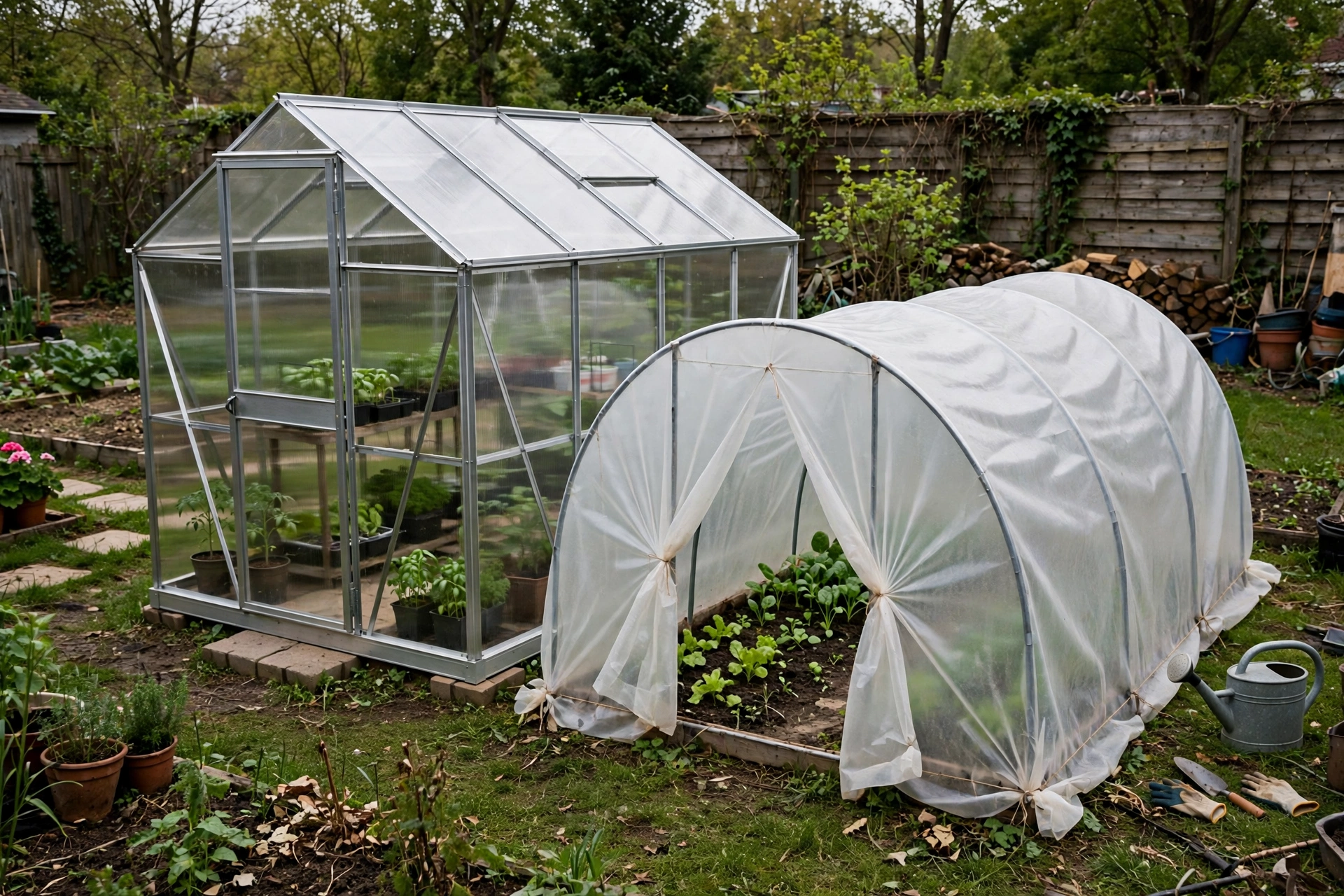
Cold frames crowd the patio by late winter and every flat needs more light, so the tape measure comes out on the back lawn.
The size question is really a timing question. A greenhouse bought for spring seed starting lives a different life from one bought to carry tender plants through winter, and buying for the wrong job leaves you short of bench space in April or heating empty air in January.
This guide sizes the greenhouse by the work you actually plan to do in it. Start with the job, then check headroom, benches, and path width before you look at a single kit.
Start with the job: three uses, three sizes
Seed starting only. If the greenhouse works from late winter into spring and then empties as transplants go out, a compact 6 x 6 ft kit is enough. Flats stack on benches for a few busy weeks, and the structure can sit quieter through summer.
Overwintering tender plants. Pots of citrus, geraniums, and herbs need floor space more than bench space, because they arrive in containers and stay in them. A 6 x 8 ft kit gives you room to group pots, walk around them, and water without dragging anything outside.
Year-round growing. Growing through all four seasons is the demanding case, since crops at different stages share the space at once. Plan on 6 x 8 ft as a floor, not a target, and favor the largest footprint your yard and budget honestly allow.
Why the season changes the answer
A seed-starting greenhouse earns its keep in a short, intense window. You sow earlier than the garden allows, the vent opens on bright afternoons, and by the last frost date the benches clear as everything moves outdoors.
Overwintering runs the opposite rhythm. The plants are inside for months, growth is slow, and what matters is steady protection through the coldest nights rather than maximum spring bench space.
Year-round growing stacks both rhythms on top of each other. Seedlings want the benches in the same weeks that overwintered pots still occupy the floor, which is why gardeners who grow all year outgrow small kits fastest.
Headroom: buy the walk-in, check the ridge
A walk-in greenhouse you cannot stand up in becomes a greenhouse you stop using. Check that you can stand upright at the center path, with enough ridge height above the benches for tall plants and hanging work.
Headroom matters at the eaves too. Bench crops sit near the walls, so a kit with very low sides steals growing height exactly where your tomatoes and peppers want to climb.
Bench space and the 2-foot path
Benches do the real work, so lay the interior out before you buy. Keep a center path about 2 ft wide, which leaves room to carry a full flat or a watering can without turning sideways.
In a 6 ft wide kit, that path leaves roughly 2 ft of bench depth on each side. In an 8 ft wide kit, the same path leaves closer to 3 ft a side, and that extra foot is where a second row of flats fits during the spring rush.
On a still morning in March, steam rises off the soil in the flats and the door glass fogs while you water. That daily round is pleasant in a kit with a clear path and miserable in one where every step is a shuffle between pots.
A quick sizing check before you order
- List what goes inside in your busiest month, not your quietest.
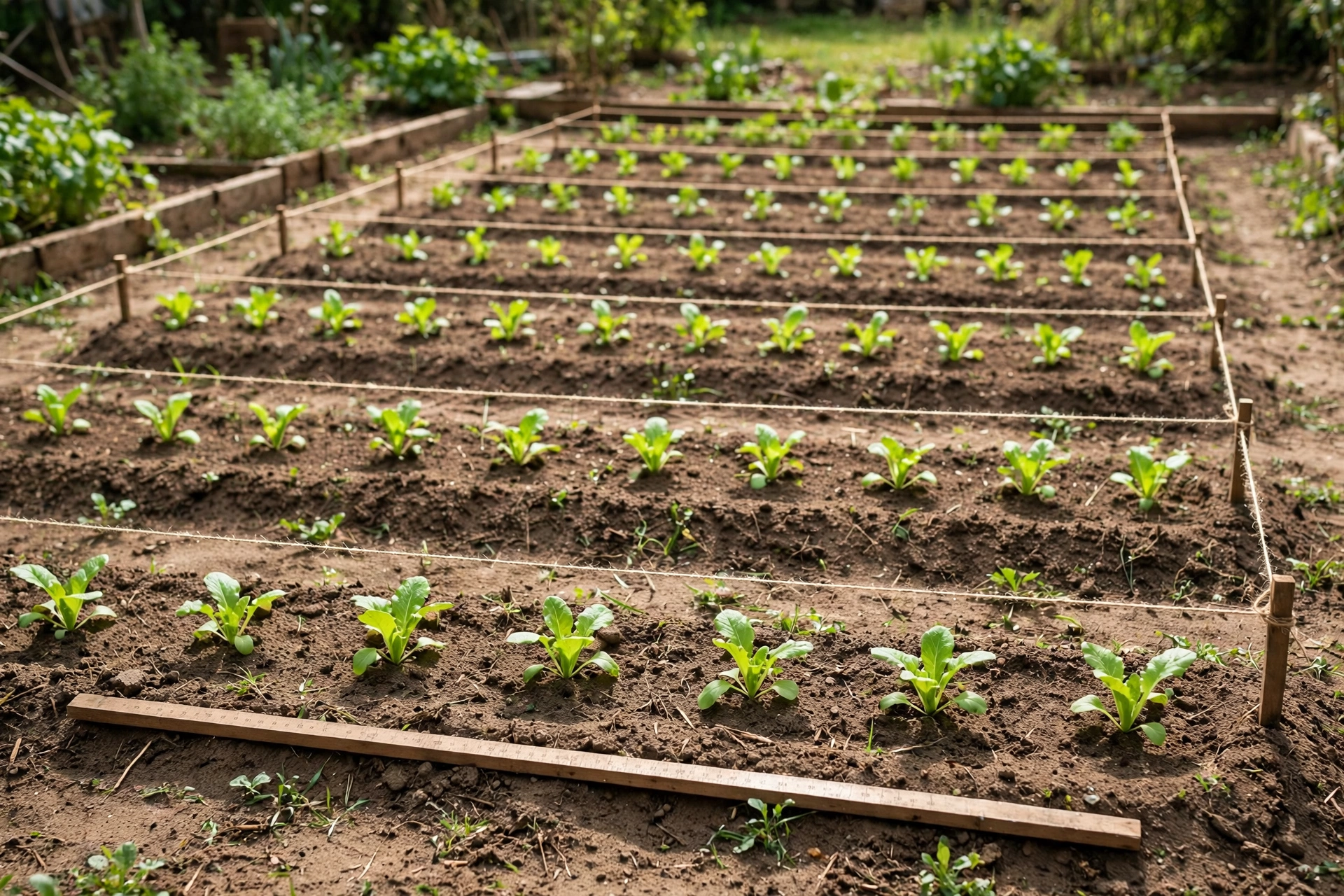
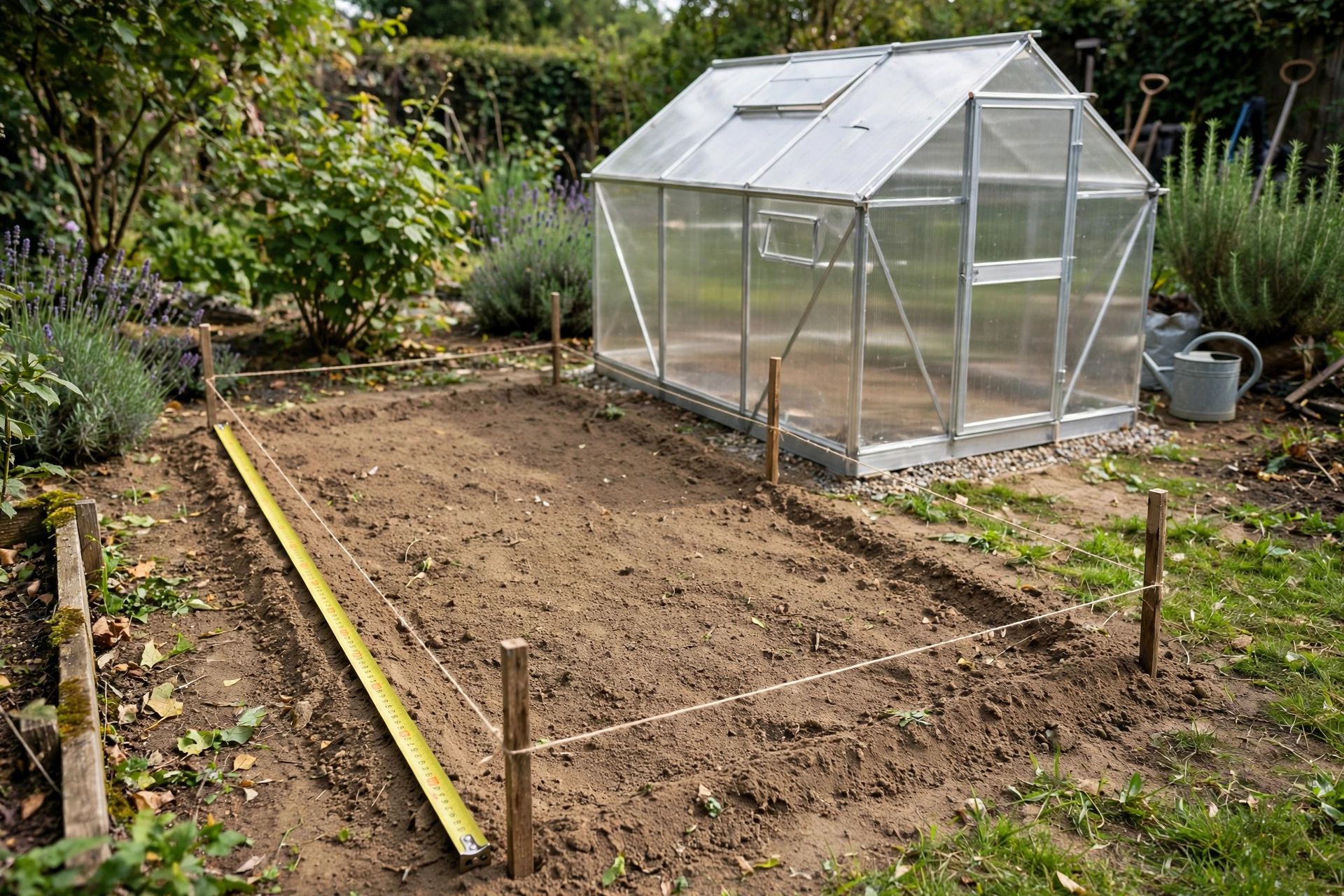
- Mark the footprint on the lawn with stakes and string, then stand inside it.
- Allow the 2 ft path first, then count the bench space that remains.
- Check you can stand upright in the center and reach both benches.
Match the size to a kit
Once the footprint is settled, our roundup of the best greenhouse kits for backyard gardeners compares 6 x 6 and 6 x 8 kits side by side. Panel choice matters just as much at any size, and polycarbonate vs plastic greenhouse kits explains which covering lasts long enough to be worth sizing carefully for.
The size to buy
Buy the 6 x 6 if seed starting is the whole job, and buy the 6 x 8 the moment overwintering pots or year-round crops enter the plan. Gardeners rarely regret the extra 12 square feet, and they regularly regret the missing path, the low eaves, and the bench that was never there.