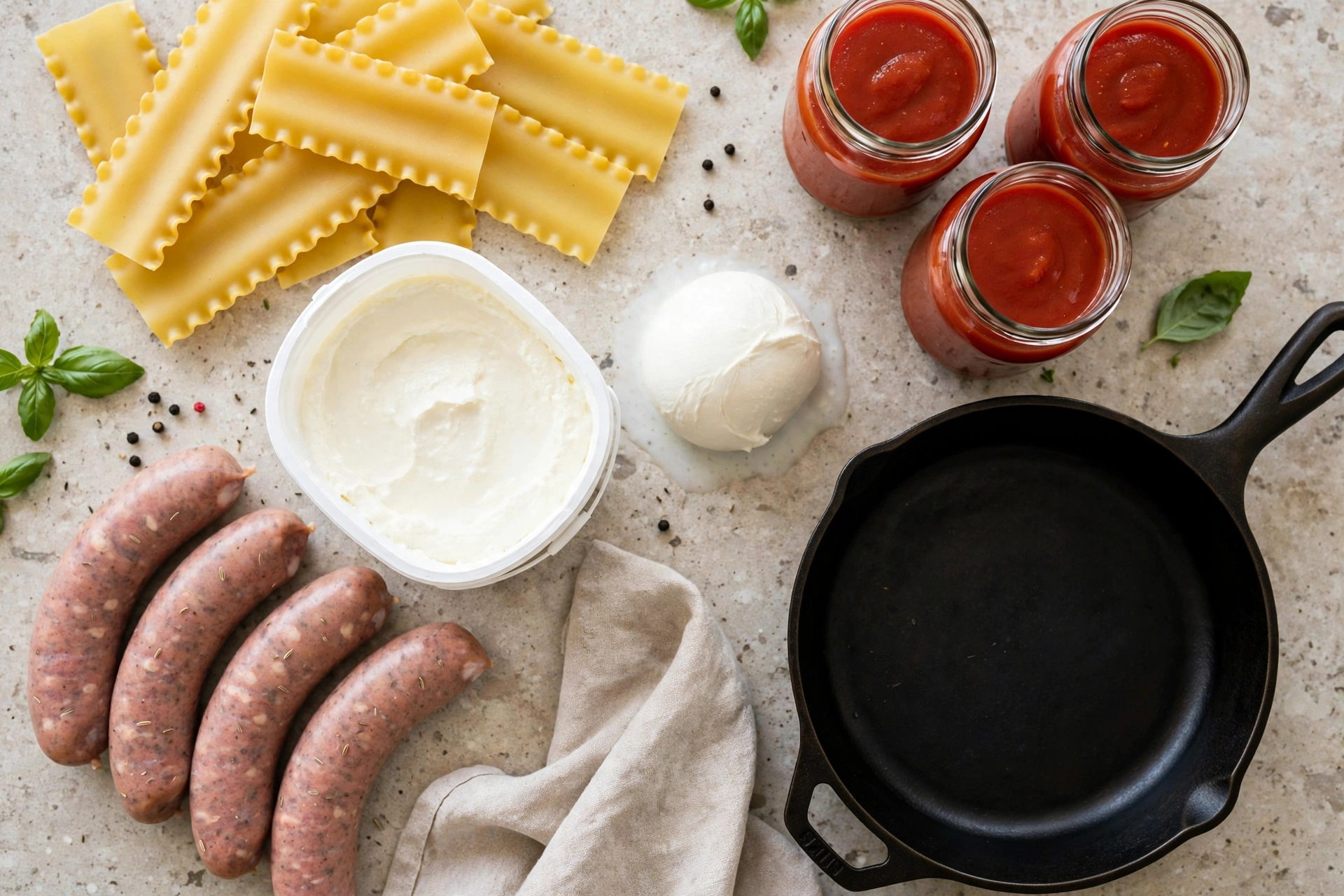
Brown sausage is a patience problem, not a heat problem. The crust you want forms when meat sits still against a hot pan in a single layer, and it fails to form when the pan is crowded and the spoon never stops moving.
That one distinction, steamed gray crumbles versus deeply browned ones, is the difference between a pasta sauce that tastes like its ingredients and one that tastes like a sauce. This is the technique behind pans like the skillet lasagna with Italian sausage, and it takes no more time than the gray version. It just asks you to do less, on purpose.
Why sausage steams instead of browning
Ground sausage is wet. The moment it hits the pan it starts giving off liquid, and until that liquid cooks away, the meat is simmering in its own juices at the temperature of boiling water, no matter how high the burner is set.
Browning needs a dry surface and a hotter one. The crust starts forming only once the pan dries out, which is why the first minutes in the pan look like nothing is happening, and why crowding is fatal: a double layer of sausage makes twice the liquid and half the contact, and the bottom steams while the top barely warms.
One pound of sausage in a 12-inch skillet is the comfortable maximum for a single batch. Two pounds goes in two batches, and the second batch browns faster than the first because the pan is already dry and seasoned with fond.
The method
Start with a hot, dry pan. Set a large skillet over medium-high heat and let it get properly hot before the sausage goes in. Sausage carries enough fat of its own that oil is unnecessary; the first crumbles will render what the rest need.
Press the sausage into the pan in rough chunks. Take it out of its casings, lay it in as a few thick slabs and large crumbles, and press each piece flat against the metal so the contact area is wide. Flat contact browns; round crumbles roll and pale.
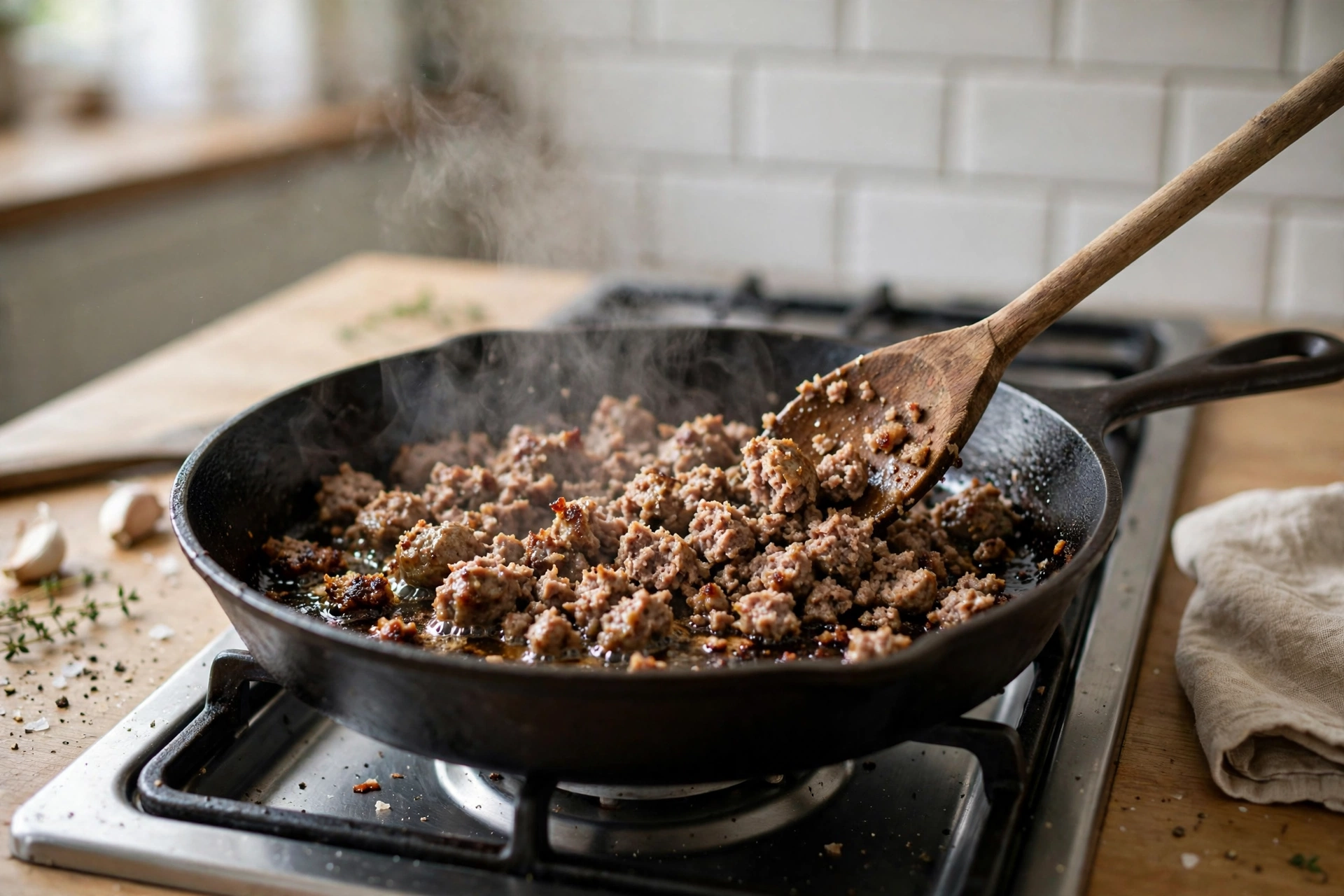
Leave it alone for 2 to 3 minutes. This is the whole technique, and it feels wrong the first time. The underside is building its crust in that stillness. When the pieces release easily and the bottoms are deep golden brown, turn them once and leave the second side alone the same way.
Break it up late, not early. Once both sides carry color, break the slabs into the crumble size your sauce wants and stir for another minute or two, until no pink remains and the sausage is cooked through to 160°F. Total time runs about 8 to 10 minutes, and most of it is the pan working while you watch.
Listen while it works. Wet sausage hisses and sputters in a high, busy way; browning sausage settles into a lower, steadier sizzle, and the smell shifts from raw and garlicky to something closer to a grill. Your ears will call the turn before your eyes do.
Managing the fat and the fond
Browned sausage leaves two things behind: rendered fat and fond, the dark crusty film on the pan. The fond is pure sauce value. The fat is value in a spoonful and a problem in a ladleful.
Spoon off all but about 1 tablespoon of the fat before the sauce ingredients go in. That spoonful carries the aromatics, onion and garlic cook beautifully in it, while the rest would float on the finished sauce in orange pools.
Then let the sauce itself do the deglazing. When the tomato and liquid hit the hot pan, stir and scrape the bottom with a wooden spoon, and the fond dissolves into the sauce as a deep, savory base note that tastes like the sauce simmered for hours. A sauce built on gray sausage has nothing to dissolve, which is why no amount of simmering rescues it.
The mistakes that undo it
Crowding the pan is the first, covered above. Stirring constantly is the second: every stir breaks contact and cools the surface, so the meat gives up more liquid and browns less, the exact opposite of the stirrer’s intention.
Starting in a cold pan is the quiet third. Sausage laid into a warming pan renders its fat slowly into a puddle and then poaches in it. Hot pan, room in it, hands off. Keep those three and the crust, the fond, and the sauce all follow.