The biscuit tin empties before the coffee finishes brewing. That is the occasion these are built for: a slow morning, a pot of coffee, people drifting into the kitchen in the order they wake up, and a pan of biscuits that makes every one of them stay a little longer.
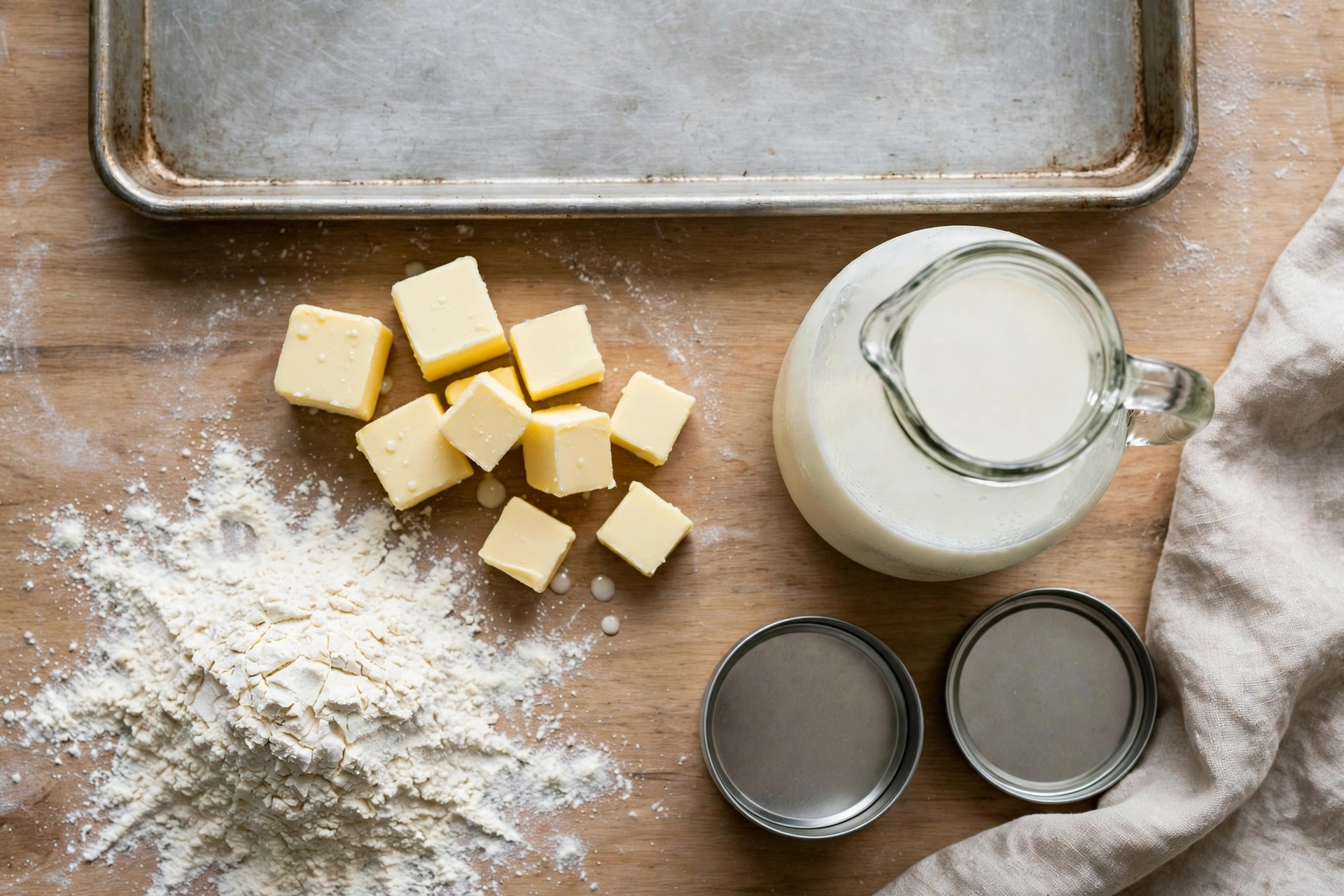
These are tall, layered buttermilk biscuits, the kind that pull apart in sheets. The ruling that makes them work is stated plainly: the butter goes in frozen and grated, and it stays cold until the oven takes over.
Why this one works
Layers come from flat pieces of cold butter stacked through the dough, and grating frozen butter is the most reliable way to get those pieces small, even, and still cold when the pan goes in. In a 450°F oven the butter melts fast and lets off steam, and the steam is what pushes the layers apart.
The folding does the rest. Five letter folds turn one layer of butter shreds into dozens of thin ones, without the flour-and-rolling production of a laminated dough. It takes about two minutes, and it is the difference between a biscuit and a scone-shaped disappointment.
One handling rule matters as much as the cold butter: cut straight down and lift the cutter straight up. A twist seals the cut edge, and a sealed edge cannot rise, so the biscuit leans instead of climbing.

Buttermilk Biscuits from Scratch
Ingredients
Method
- Heat the oven and grate the butter. Heat the oven to 450°F and line a baking sheet with parchment. Grate the frozen butter on the large holes of a box grater, then set the shreds in the freezer while you mix the dry ingredients.
- Mix the dry ingredients. Whisk the flour, baking powder, baking soda, sugar, and salt together in a large bowl until evenly combined.
- Cut in the butter. Toss the frozen butter shreds through the flour with your fingers until every shred is coated and the mixture looks like coarse crumbs with pea-size pieces throughout.
- Add the buttermilk. Pour in the cold buttermilk and stir with a fork just until a shaggy dough forms and no dry flour remains at the bottom of the bowl. The dough will look rough, and that is right.
- Fold for layers. Turn the dough onto a lightly floured counter, pat it into a rough rectangle, and fold it in thirds like a letter. Turn, pat, and fold four more times, dusting with flour only when the dough sticks.
- Cut without twisting. Pat the dough to about 3/4 inch thick and cut straight down with a floured 2 1/2-inch cutter, never twisting, which seals the layers shut. Gather the scraps, pat, and cut the remaining biscuits.
- Bake until tall and golden. Arrange the biscuits close together on the sheet, brush the tops with buttermilk, and bake for 12 to 15 minutes, until risen and deep golden on top. Serve warm.
Variations
Cheddar and chive. Fold 3/4 cup shredded sharp cheddar and 2 tablespoons snipped chives in with the butter shreds. These belong next to a pot of soup as much as next to eggs, and the site’s sweet potato biscuits make a fine second pan when the crowd is bigger than one batch.
Drop biscuits for a busy morning. Stir an extra 2 tablespoons of buttermilk into the dough, skip the folding, and drop rough mounds onto the sheet. No layers, but the crumb is tender and the coffee timing still works.
Make ahead and storage
Cut biscuits freeze beautifully unbaked. Freeze them solid on the sheet, bag them, and bake from frozen at the same temperature, adding about 3 minutes. That is the version to hand a new parent or a neighbor: a bag of frozen biscuits and one sentence of instruction.
Baked biscuits keep a day at room temperature in a tin and rewarm in a 350°F oven for about 5 minutes. For another pan built on the same cold-butter logic, the apple cheddar hand pies use the same grated-butter dough thinking in a different shape. Make the biscuits while the coffee brews, and let the tin do the inviting.