A fire pit cooking grate is built to be lifted on and off a live fire, carried, scraped, and left out in the weather. A grill grate is built to sit on the ledges inside one specific grill, under a lid, and mostly stay there. They look interchangeable in a product photo, which is exactly how a spare kettle grate ends up sagging over a fire pit.
The symptom usually shows up mid-cook: the grate bows under a load of food, the plating blisters, or the grate is simply the wrong diameter and rocks on the rim. Each of those traces back to a build difference, and the differences are easy to check once you know where to look.
The differences that matter
| Feature | Fire pit cooking grate | Grill grate |
|---|---|---|
| How it is supported | Legs, a post, a swing stand, or the pit’s rim | Ledges or tabs inside one grill model |
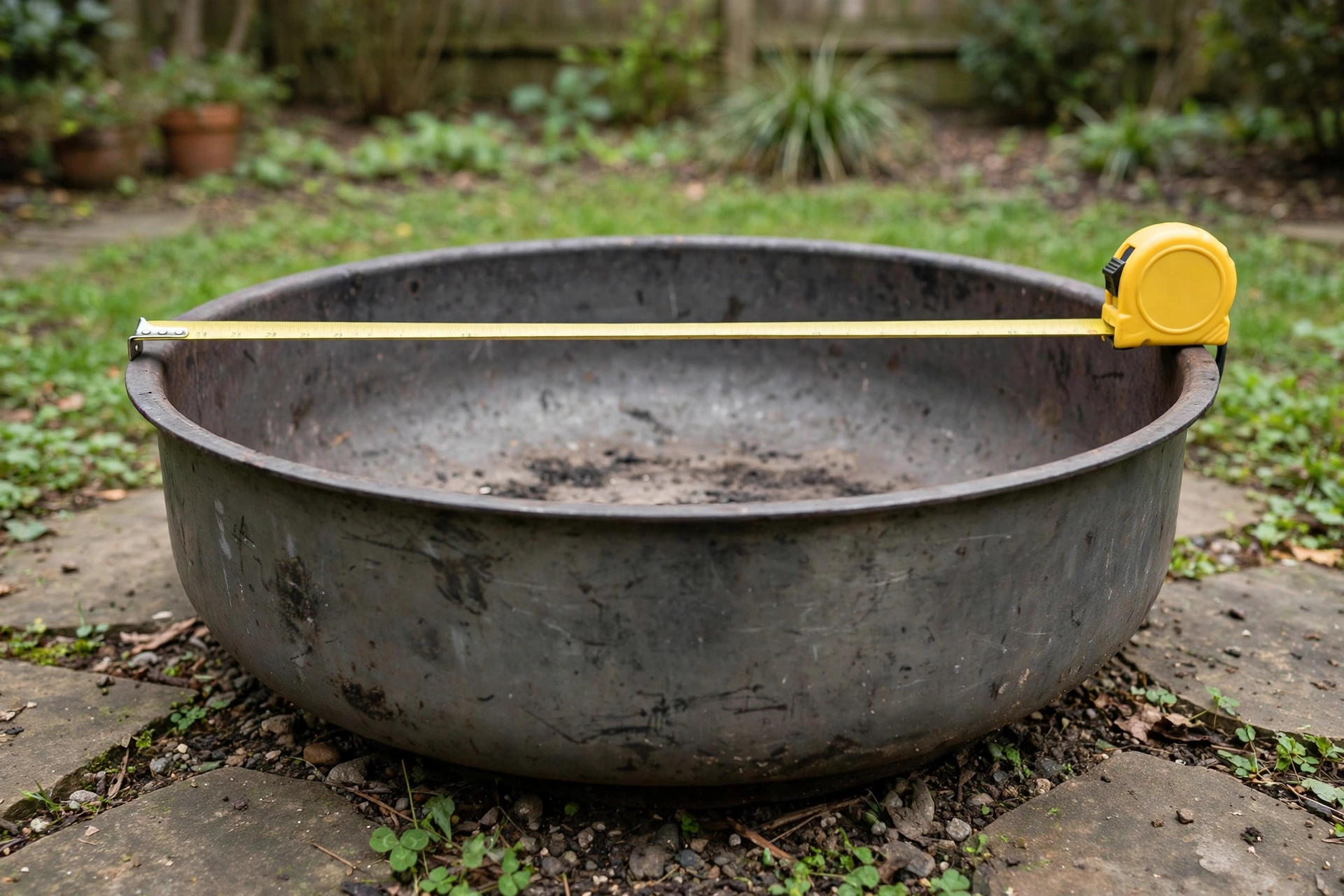
| How it is sized | By the pit’s inside diameter, with 1–2 inches of clearance | Cut to one grill’s exact dimensions, sold by model |
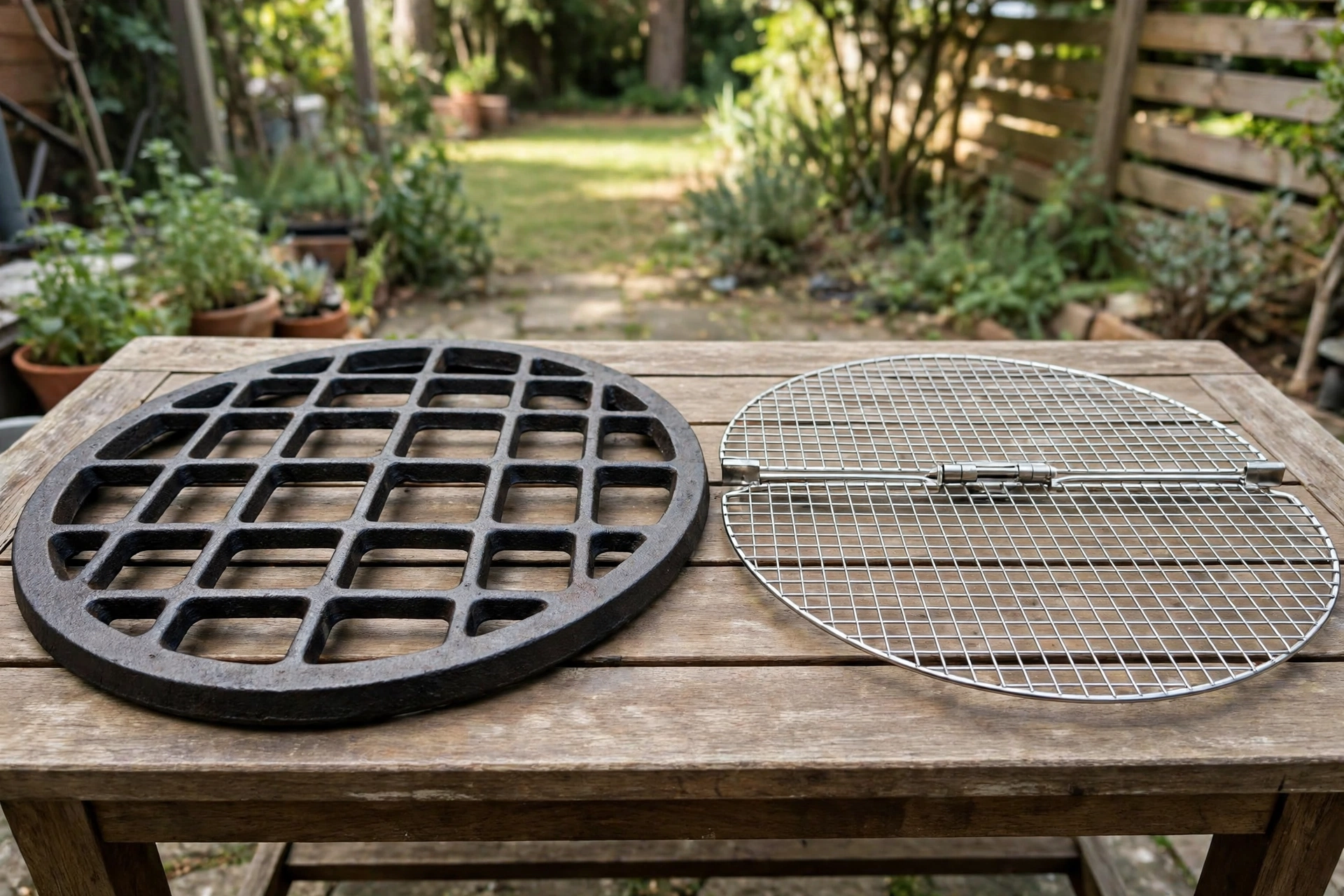
| What it is made of | Bare stainless steel, heavy steel bar, or cast iron | Often chrome- or porcelain-plated steel over a thinner core |
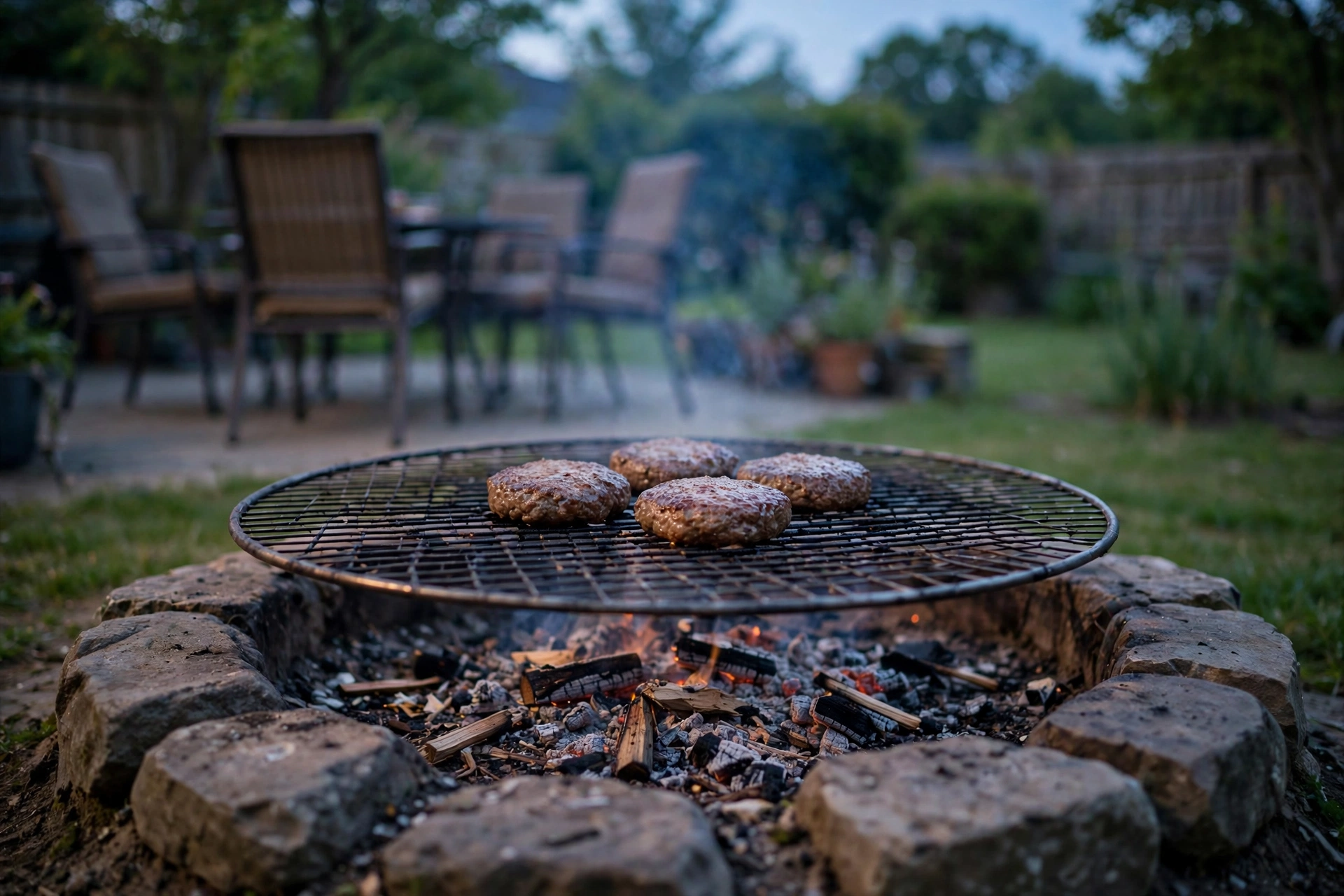
| Heat it is built for | Direct flame and an open coal bed, plus outdoor weather | Enclosed heat under a lid, sheltered when stored |
| Handles | Common — it is meant to be moved while hot | Rare — it is lifted with a tool, when cool, for cleaning |
Why the spare grill grate disappoints
The fit fails first. A grill grate is cut to a measurement, not a category. The hinged cooking grate for a 22-inch kettle grill measures 21.5 inches, while a 19.5-inch fire pit like the Solo Stove Bonfire takes a 17.5-inch top — so the spare grate either cannot drop in or bridges the rim with its edges hanging over the flame.
Sizing by inside diameter, with clearance, is the fire pit rule; the full method is in what size fire pit cooking grate do you need.
The finish fails second. Plating is made for the controlled heat of a lidded grill. Over direct flame, chrome and porcelain coatings blister and flake, and flakes have nowhere to go but the food and the fire. Bare steel and cast iron have no coating to lose, which is why fire pit grates are sold uncoated even when it makes them look plain.
The gauge fails last, and worst. A grill grate rests on ledges around its full rim, so it can be thin. A fire pit grate spans open space, often supported only at a post or two edges, and a thin one bows under a cast iron skillet or a full load of chicken. The bow is permanent once it happens.
You can watch it happen on a quiet evening: the coals settle to a steady orange, the thin bars take on the same glow at their centers, and the middle of the grate sinks a fraction under the skillet — a fraction more every cook after that.
When a grill grate works anyway
Here is the honest exception. A heavy cast iron grill grate — the kind sold as an upgrade for kettle grills — handles open flame fine, because the material is the same one fire pit grates are made from. If it fits your pit with clearance and you accept that it has no handles, it will cook well.
A plated grate over a fire ring at a campsite is a reasonable one-weekend stopgap, too, as long as you go in knowing the finish is being spent. What does not work is the standing arrangement: a thin plated grate living over your pit all season will warp, flake, and rust at every chip.
Either way, the fire underneath matters as much as the grate on top. A steady coal bed built with the starters in our roundup of the best fire starters for a fire pit cooks evenly on any grate; a young, flaming fire scorches food on the best grate made.
Which one you actually need
If you cook over your fire pit more than a couple of times a season, buy the fire pit cooking grate, sized by your pit’s inside diameter. It is supported properly, it is made of material that tolerates flame, and it will still be flat in five years. Our picks for the main styles are in the best fire pit cooking grates and grills.
Keep the grill grate for the grill it came with. It is a good part in the wrong job, and the pit will prove that to you one blistered, sagging cook at a time.