This post contains affiliate links. We may receive a commission if you make a purchase after clicking on one of these links.
You are kneeling by a cold fire pit with a lighter that keeps blowing out, a stack of good dry wood, and guests who have already pulled their chairs into a circle. The wood is not the problem. The start is.
A good fire starter gets that first flame established quickly, without lighter fluid, without a pile of newspaper ash, and without you hovering over it. This guide compares three proven options for a backyard fire pit, and it links to our guides on burning pine needles in a fire pit and lighting a smokeless fire pit for the method that goes with them.
Best fire starters for a fire pit, at a glance
| Pick | Type | Best for | Watch out for |
|---|---|---|---|
| Lightning Nuggets N100SEB | Compressed nugget | Reliable starts, low fuss | Higher cost per fire than fatwood |
| Pure Garden Fatwood, 10 lb | Resin-rich pine sticks | Natural kindling feel, good value in a small box | Pieces vary in size |
| Plow & Hearth Fatwood, 40 lb | Resin-rich pine sticks, bulk | Frequent fires, lowest cost per start at bulk size | You need dry storage for a big box |
Best overall: Lightning Nuggets
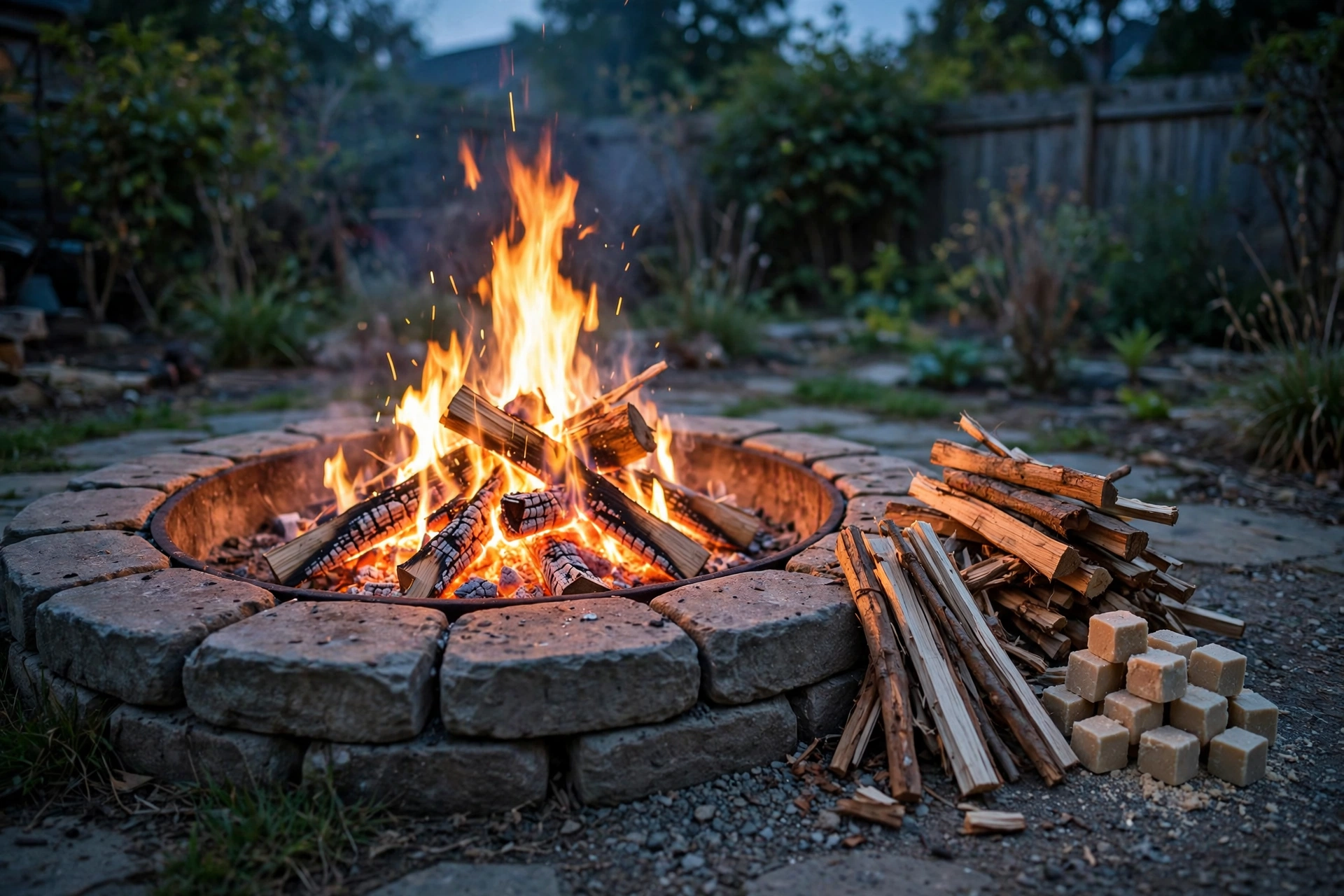
Lightning Nuggets are compressed, easy to light, and consistent from one fire to the next, which is why they work well when you want a predictable start. One nugget under a teepee of kindling is the usual method, and the flame lasts long enough to catch the kindling rather than flaring and dying.
The trade-off is cost per fire. If you light a pit most weekends, fatwood usually works out cheaper, while the nuggets earn their price on convenience and consistency.
Lightning Nuggets N100SEB Fire Starters
Consistent, easy starts when you want the fire lit without fuss.
Runner-up: Pure Garden Fatwood, 10 lb
Fatwood is resin-rich pine that lights readily and burns hot for kindling. A 10-pound box is a sensible size for most households: enough for a season of occasional fires, small enough to store in a garage or deck box, and easy to split into smaller sticks when a fire needs a gentler start.
Pieces vary, because this is a natural product. Sort the box once — thin sticks for starting, thicker pieces for building — and lighting gets much easier.
Pure Garden Fatwood, 10 lb
Natural resin-rich sticks in a manageable box for occasional fires.
Best for frequent fires: Plow & Hearth Fatwood, 40 lb
If your fire pit runs every weekend, the 40-pound box is the economical way to buy the same kind of fatwood. The per-start cost drops, and you are not reordering mid-season.
Storage is the catch. Fatwood should stay dry, so plan a lidded container or a dry corner before a bulk box arrives.
Plow & Hearth Fatwood, 40 lb
Bulk fatwood for households that light a fire most weekends.
Not recommended: lighter fluid as your regular starter
Lighter fluid can light wood, but it is a poor regular habit for a backyard pit: it flares, it leaves a chemical smell that hangs over food and seating, and it tempts people to add more to a fire that is already lit, which is where accidents happen. Keep it out of the fire-pit routine and use a starter made for the job.
How to light a fire pit with a starter
Start with a clean pit. Remove old ash so air can reach the base of the fire.
Build loose, then light low. Place the starter at the centre, lean kindling around it in a teepee, and keep gaps for air.
Add wood in stages. Once kindling is burning well, add one or two split logs, then larger pieces after a coal bed forms.
For what belongs in the pit in the first place, see what you can burn in a fire pit, and for cones specifically, whether pine cones belong in a fire pit.
Bottom line
Buy Lightning Nuggets if you want the most predictable start, and buy fatwood if you light fires often enough that cost per start matters. Either choice beats lighter fluid and a handful of newspaper.