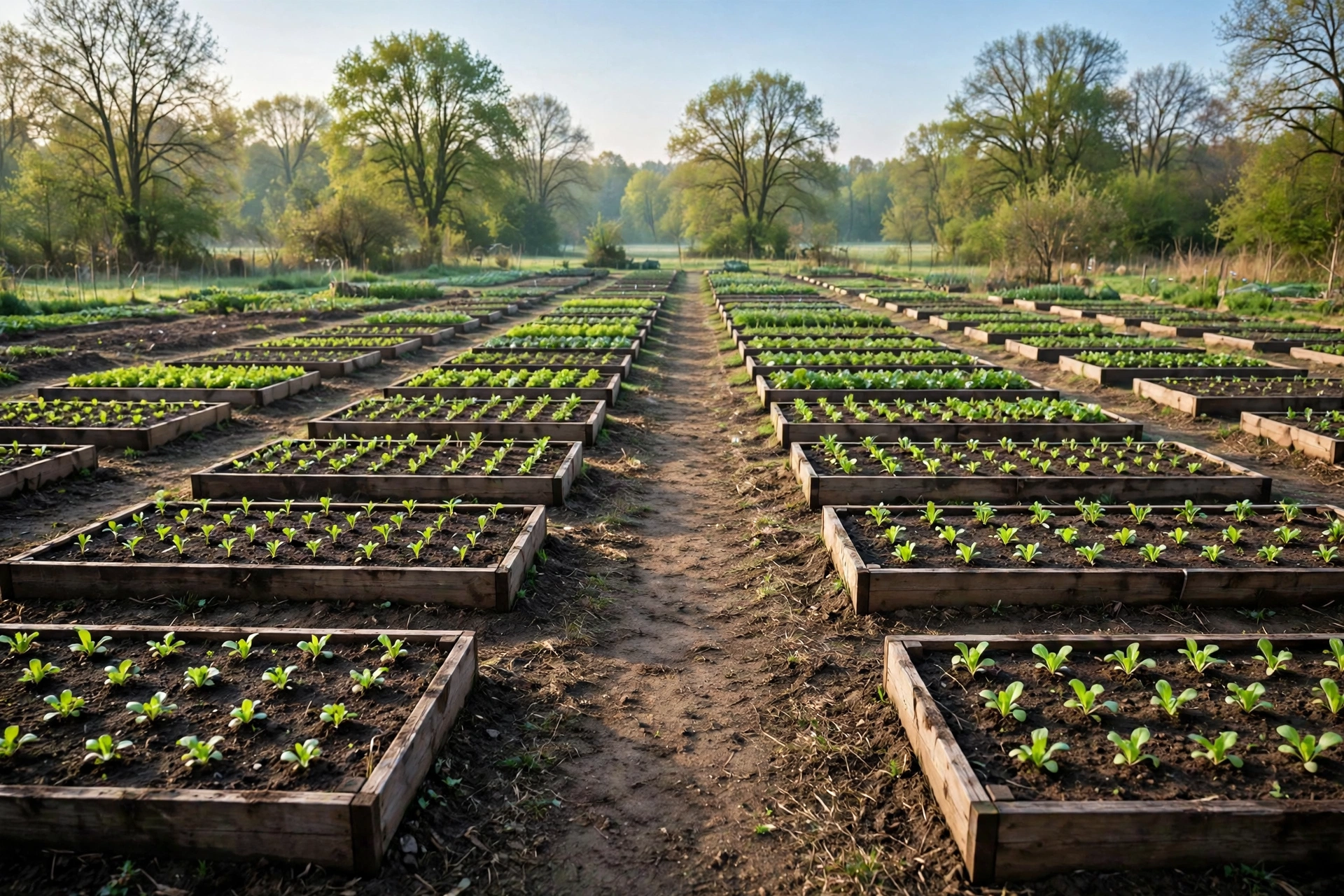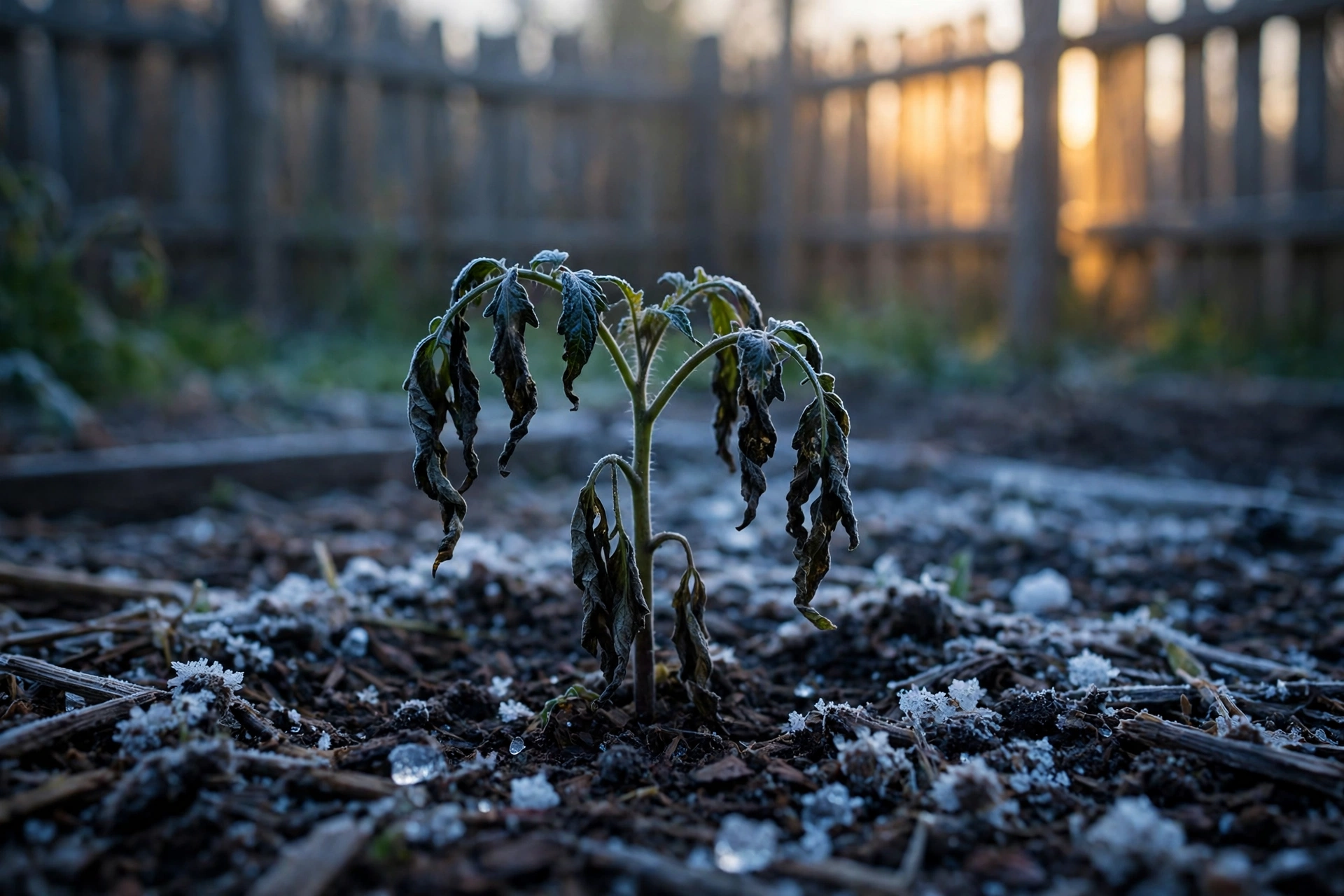
The tomatoes went in on the first warm weekend of April. The garden center had them, the sun was out, and waiting felt like losing. A week later the overnight low hit 28 degrees, and by morning the plants were black and limp.
Every gardener has a version of that story, and most of us paid for the lesson the same way. Planting at the wrong time is the most expensive mistake in a vegetable garden — and it is expensive in both directions. Too early, the cold does the damage, sometimes in one night, sometimes slowly and underground where you can’t watch it happen. Too late, nothing dramatic happens at all. The plants grow beautifully and run out of season. Knowing which failure you’re flirting with, and when, is most of what a planting calendar is for.
Too early: one cold night is enough
Warm-season crops — tomatoes, peppers, cucumbers, melons, squash, okra, eggplant, basil — have no frost tolerance. None. North Carolina State Extension puts it flatly: these are plants that cannot tolerate any frost. University of Minnesota Extension draws the line that matters. A light frost at 32 degrees can damage tender plants. A hard frost at 28 degrees or colder will kill most warm-season crops outright.
There is no hardening a tomato against that, no toughening it up. A plant that goes out two weeks before the last frost is not two weeks ahead. It’s a plant betting its life, every night, on the weather skipping a frost that in an average year is still likely to come. Your average last frost date is a coin flip. Plant tender crops ahead of it and you’re betting against the flip until it passes.
Too early: the damage you cannot see
The slower failure happens below ground, where nobody thinks to look. Soil warms up far more slowly than air, and warm-season crops prefer soil temperatures of 60 to 70 degrees. NC State Extension warns that cool soil causes slow growth in warm-season plants — they start out stressed, and they never really catch up for the rest of the season. Minnesota Extension says the same of heat-lovers planted into cold ground: slow growth, yellowing leaves, reduced yields. Even when the plants survive.
Seed fares no better. Beans and corn sown into cold, wet soil don’t germinate. They sit. And sitting seed rots, or gets eaten. The gardener concludes the seed was bad. The seed was fine. The soil was 48 degrees.
This is why the calendar watches two thermometers instead of one. The soil temperature a crop needs to germinate is as much a planting date as the frost date is. It just gets measured in degrees instead of days.
Too early starts indoors, too
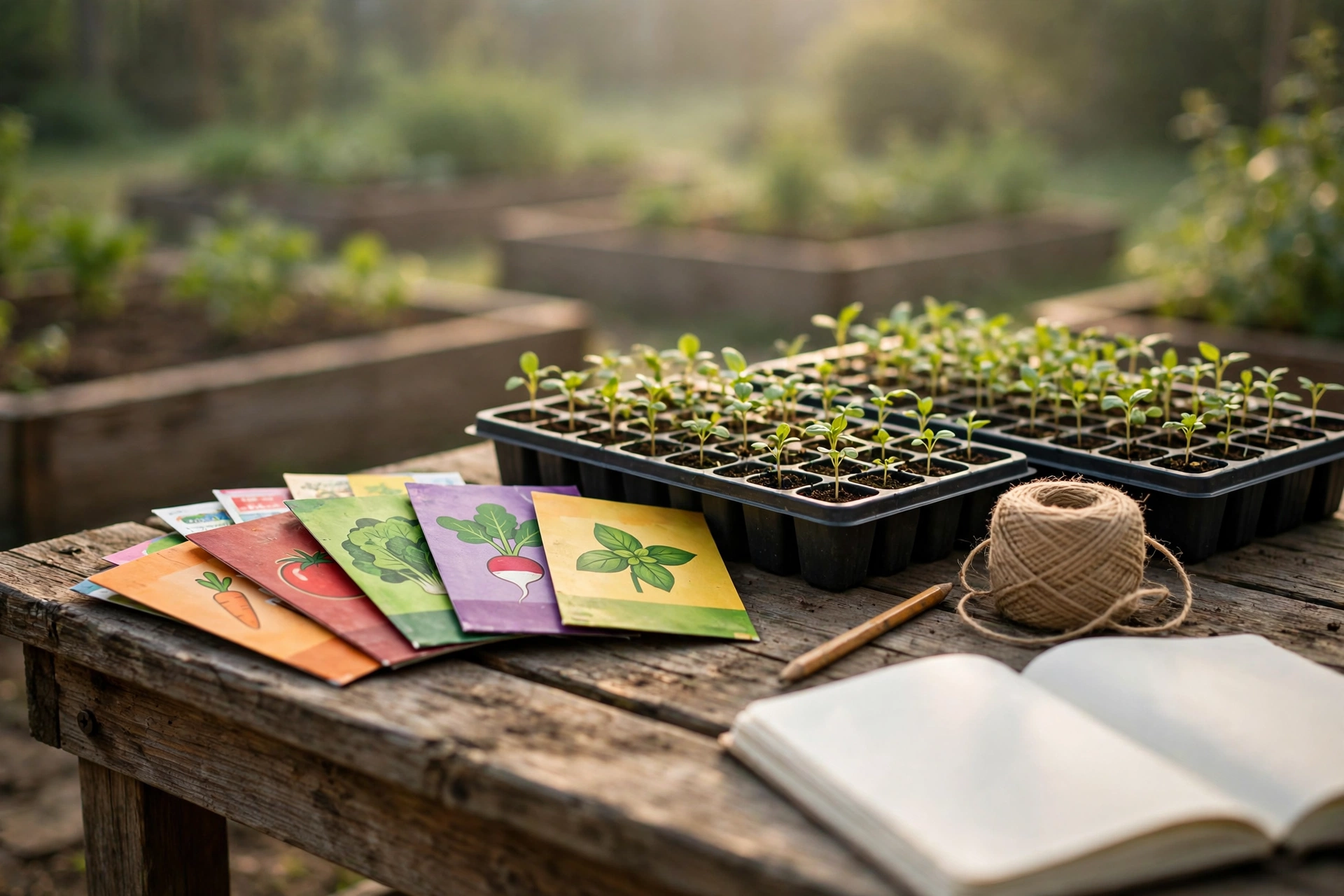
The same mistake happens on the windowsill, weeks before the garden is even involved. Seed-starting dates are counted back from set-out for a reason: each crop needs a set number of weeks to reach transplant size, and no more. Sow tomatoes ten weeks before they can go outside instead of six to eight, and by transplant day you have a tall, root-bound plant that has spent a month cramped in a small pot. Set it out and it stalls while its roots sort themselves out. The plant started on schedule — smaller, younger, unremarkable — frequently passes it.
Early is not ahead. Early is a plant spending its energy in the wrong place. How planting calendars work is mostly the discipline of counting those weeks honestly.
Too late: the season simply runs out
Late planting rarely looks like failure while it’s happening. That’s what makes it the sneakier of the two. The plants grow. They flower. Then the first fall frost arrives, right on schedule, and the crop is a week short — green tomatoes on the vine, bean pods half-filled, a melon that needed ten more days it was never going to get.
The check is one subtraction: first fall frost minus days to maturity equals the last honest planting date. And even that date is optimistic. Cornell Cooperative Extension notes that as fall brings shorter and cooler days, plants need more time to mature than the days-to-harvest figure on the packet. A 55-day bean sown 55 days before the first frost will not make it. Give the sum a two-week cushion and it usually will.
Too late: heat does its own damage
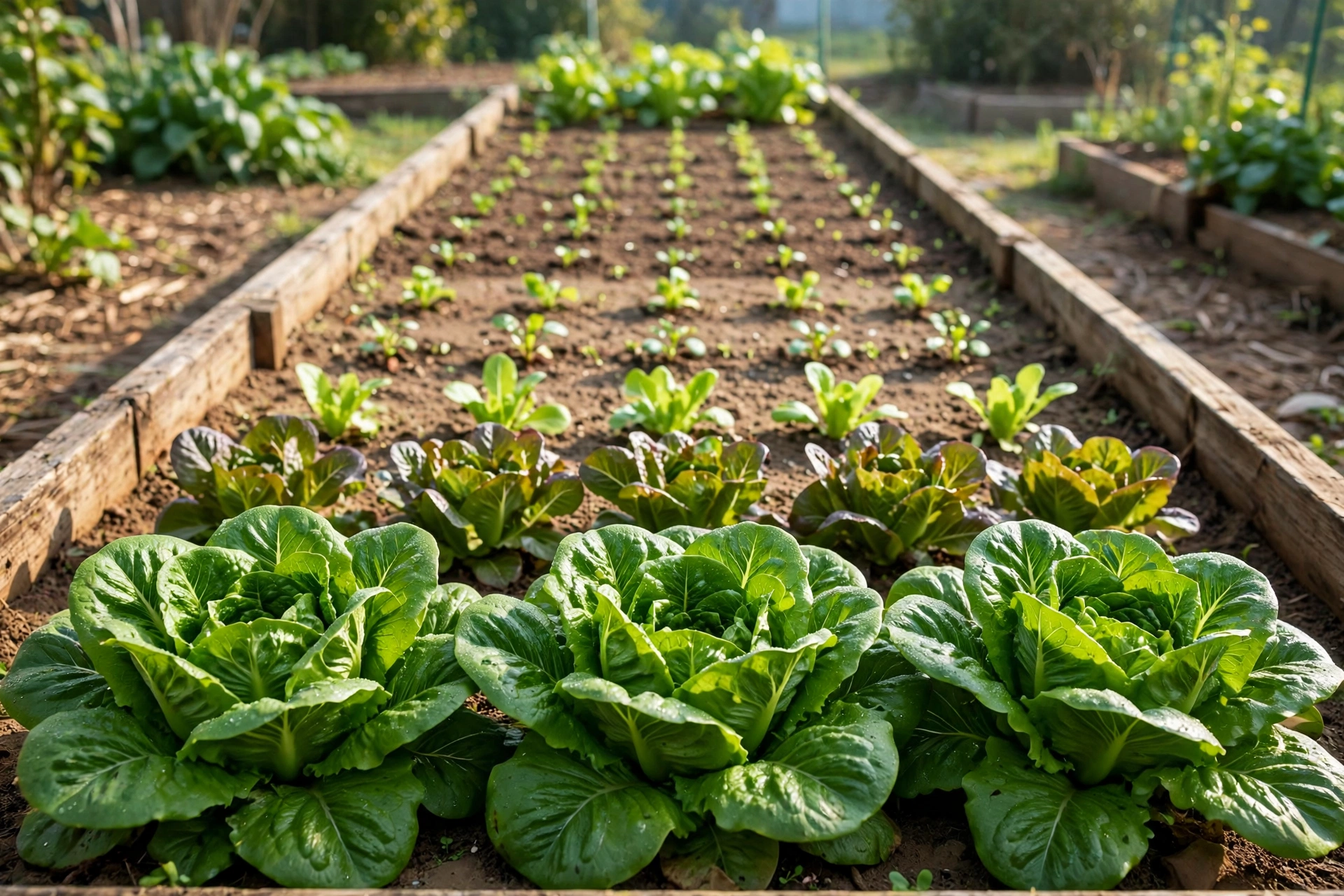
Cool-season crops have the opposite problem. Lettuce, spinach, peas, and radishes planted late don’t run into frost. They run into summer. Minnesota Extension notes that many cool-season vegetables bolt or turn bitter when they mature into heat. The spinach you sowed in June was not a bad variety. It was a spring crop asked to finish in July, and bolting is what it does instead.
Even warm-season crops stall in real heat. Peppers drop blossoms and stop setting fruit when nights stay hot — the plants look perfectly healthy and produce nothing at all until the weather breaks. Timing a crop so its harvest lands in weather it actually likes is the quiet half of every planting window on the calendar.
Planting early anyway, with your eyes open
Some gardeners plant warm-season crops ahead of the date on purpose, trading risk for a longer season. That can be a fair trade — if you’re ready to protect the plants. NC State Extension’s guidance is specific: cover with lightweight fabric row cover when frost threatens, and take it off the next morning as temperatures rise. Plastic is the common substitute and the worse one. Foliage touching plastic gets burned, and plastic left on into a sunny morning turns the whole cover into an oven.
So the April tomatoes weren’t really a gardening failure. They were a scheduling one. The calendars give you the dates, the forecast tells you which week to believe, and a folded row cover by the back door covers the gap between the two. Plant inside the window, and the crops mostly take care of the rest.
Sources
- North Carolina State Extension — Don’t Plant Too Early! (frost intolerance of warm-season crops, soil temperature and slow growth, row cover guidance).
- University of Minnesota Extension — A Minnesota guide to garden timing (light frost vs. hard frost, cold-soil effects, bolting of late-planted cool-season crops).
- Cornell Cooperative Extension, Orleans County — Succession Planting: Get the Most Out of Your Garden (slower fall maturity than packet days suggest).
- NOAA National Centers for Environmental Information — U.S. Climate Normals, 1991–2020 (first and last frost dates).