The seed packets are lined up on the kitchen counter, the calendar says it is time, and the garden bed is still cold enough to make your hand pull back. That is the moment most seeds get sown too early, because the packet talks about frost dates while the seed itself only answers to the temperature of the soil around it.
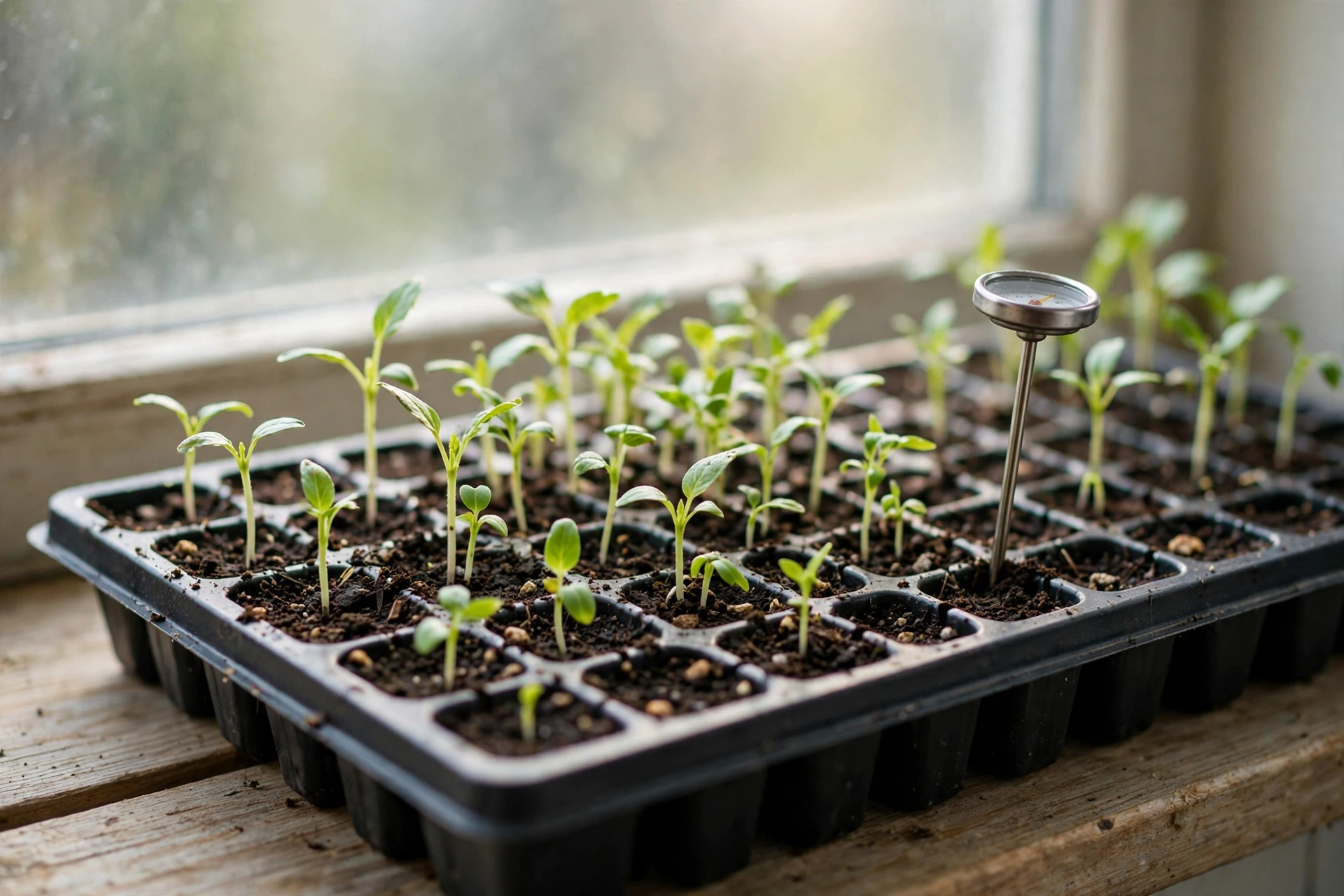
A soil thermometer pushed to seed depth settles the question in about a minute, and this table gives you the numbers to read it against. Every figure comes from Oregon State University Extension’s germination-temperature table, built from J. F. Harrington’s germination experiments at UC Davis, and it covers 23 vegetable crops with a minimum, an optimum range, and a maximum soil temperature for each.
How to read the table
Minimum is the floor, and below it seeds sprout slowly or not at all, while the optimum range is where germination runs fastest and most even — the range to aim for when you can wait. Maximum is the ceiling, and above it germination stalls again, which matters most for cool-season crops sown into summer-warmed soil. Take the reading at seed depth in the morning, when the soil is at its coolest, and sow once it holds at or above the minimum for your crop.
The table
| Crop | Minimum °F | Optimum range °F | Maximum °F |
|---|---|---|---|
| Asparagus | 50 | 60–85 | 95 |
| Bean | 60 | 60–85 | 95 |
| Beet | 40 | 50–85 | 95 |
| Carrot | 40 | 45–85 | 95 |
| Cauliflower | 40 | 45–85 | 100 |
| Swiss chard | 40 | 50–85 | 95 |
| Corn | 50 | 60–95 | 105 |
| Cucumber | 60 | 60–95 | 105 |
| Eggplant | 60 | 75–90 | 95 |
| Lettuce | 35 | 40–80 | 95 |
| Muskmelon | 60 | 75–95 | 100 |
| Onion | 35 | 50–95 | 95 |
| Parsley | 40 | 50–85 | 90 |
| Parsnip | 35 | 50–70 | 85 |
| Pea | 40 | 40–75 | 85 |
| Pepper | 60 | 65–95 | 95 |
| Pumpkin | 60 | 70–90 | 100 |
| Radish | 40 | 45–90 | 95 |
| Spinach | 35 | 45–75 | 85 |
| Squash | 60 | 70–95 | 100 |
| Tomato | 50 | 60–85 | 95 |
| Turnip | 40 | 60–105 | 105 |
| Watermelon | 60 | 70–95 | 105 |
How fast seeds come up once the soil is warm enough
Warm soil does more than let seeds sprout — it hurries them along. The same Extension table records how many days six common crops took to appear above the soil when the seed was planted half an inch deep, and the gap between a cool bed and a warm one is the difference between waiting two weeks and waiting less than one.
| Crop | Days at 59°F | Days at 77°F |
|---|---|---|
| Bean | 16 | 8 |
| Carrot | 10 | 6 |
| Lettuce | 4 | 2 |
| Pea | 9 | 6 |
| Radish | 6 | 3 |
| Tomato | 14 | 6 |
What the numbers mean for your sowing dates
The warm-season crops all draw the same line: beans, cucumbers, eggplant, peppers, squash, pumpkins, melons, and watermelon need soil at 60°F before they will germinate at all, and they do their best work well above that. Sown into cold soil they sit, and seed left sitting in cold, wet ground is seed that rots before it sprouts — so for these, starting indoors or waiting a week beats sowing early every time. When to Start Tomato Seeds Indoors in Zone 4 works through the indoor-start timing for the warm-season crop most gardeners start inside.
The cool-season crops tell the opposite story. Lettuce, onion, spinach, and parsnip will germinate with soil as cold as 35°F, and peas at 40°F, which is why they are the first seeds into the ground each spring. They have a ceiling too, though: lettuce and spinach stop germinating well once the soil passes 85°F, so a late-summer sowing for a fall crop goes better in a shaded bed or after a good watering cools the ground. Celery is the one crop with a quirk worth knowing — it needs the night temperature to drop to 60°F or lower to germinate at all, so a warm spell with warm nights will hold it back even when the days feel right.
For the setup around all of this — trays, lights, and heat mats for the seeds you start inside — Setting Up a Seed-Starting Station: Trays, Lights, and Heat covers the gear, and the Seed-Starting Date Calculator turns your last-frost date into sowing dates for the crops you start indoors.
Bottom line
Check the soil temperature before you sow, not the calendar — push the thermometer to seed depth, wait until the bed holds at or above your crop’s minimum, and hold the warm-season crops until the soil reaches 60°F. The seeds will come up faster, more evenly, and with far fewer gaps to fill in later.
Sources
Oregon State University Extension, “Soil temperature conditions for vegetable seed germination” (J. F. Harrington, Department of Vegetable Crops, UC Davis; OSU Extension Catalog; published April 12, 2013; updated August 11, 2026) — https://extension.oregonstate.edu/catalog/soil-temperature-conditions-vegetable-seed-germination — fetched November 12, 2026.