This site contains product affiliate links. We may receive a commission if you make a purchase after clicking on one of these links.
The common mistake in a first beekeeping purchase is buying the hive a piece at a time. A deep box from one seller, frames from another, a cover from a third — and by the time the bees are ordered, nothing quite matches, the frames sit slightly wrong in the boxes, and the whole spring starts with a carpentry problem instead of a colony.
Vevor’s 40-frame Langstroth starter kit skips that entirely. It is one box of matched parts: two deep boxes and two medium boxes, 40 frames with foundations, a metal top cover, and an entrance reducer, all in beeswax-coated wood with clear observation windows. It costs $195.90, and owners rate it 4.5 out of 5 across 162 reviews on the listing, a count that spans the kit’s box configurations.
The verdict up front: for a first hive, or a second hive added without a parts hunt, this is the sensible shape of a purchase. The wood arrives finished, the joints arrive cut to fit each other, and the one real chore left is the frames, which owners are candid about.
What arrives in the box
A Langstroth hive is a stack, and this kit gives you the full working stack. The two deep boxes form the brood chamber where the queen lays and the colony lives year-round. The two medium boxes sit above as honey supers, the part you harvest. Twenty deep frames and twenty medium frames fill them, each with a beeswax-coated ABS foundation that gives the bees a straight starting pattern to build comb on.
The wood is 0.74 inches thick — 19 millimeters — joined with precise dovetail joints at the corners. Dovetails matter more than they sound like they should. A hive gets pried apart, lifted, shifted, and set back down all season, and a corner joint that locks mechanically holds its square through years of that handling in a way a butt joint with screws simply does not.
Every wooden surface carries a full beeswax coating, inside the same idea as the foundations. Bees settle faster into a home that already smells like beeswax, and you skip the weekend of staining or painting that an unfinished pine kit asks for before it can go outside. The kit rounds out with a metal top cover that shrugs off weather, an entrance reducer for a young colony that cannot yet defend a wide doorway, and handles cut for lifting.
| Detail | This kit |
|---|---|
| Boxes | 2 deep + 2 medium Langstroth boxes |
| Frames | 40 total — 20 deep + 20 medium, with foundations |
| Wood | 0.74 in (19 mm) thick, dovetail joinery, full beeswax coating |
| Foundations | ABS, beeswax-coated |
| Windows | Transparent acrylic, with ventilation ports; close for winter |
| Also included | Metal top cover, entrance reducer, handles |
| Price | $195.90 |
| Owner record | 4.5 out of 5, 162 reviews across the listing’s configurations |
The windows are the feature you will actually use
Every box carries a transparent acrylic window, and it changes how a new beekeeper learns. A colony in its first season needs checking often, and every full inspection means breaking the propolis seal, lifting boxes, and pulling frames while ten thousand bees object. A window lets you confirm the bees are building, busy, and expanding with the hive closed and the colony calm.
Ventilation ports work alongside the windows, moving air through the hive in summer heat. When cold weather comes, the windows close to hold warmth in, so the same feature that cools the hive in July insulates it in January.
Owners like the windows, with one honest asterisk. One Vevor.com reviewer who bought this same two-deep, two-medium configuration put it plainly: “The bees dont like the windows and they try to cover them.” Bees propolize what they consider a draft or a light leak, so a window can slowly film over from the inside — a small maintenance wipe, not a defect, and worth knowing before you picture a permanent aquarium view.
Living with it, according to the people who own it
The strongest thread in the owner record is assembly. Dovetails that are cut true make a hive build feel like stacking blocks, and that is the experience owners describe. One Vevor.com reviewer wrote, “Everything slipped together just fine on the dove tails,” and followed it with the coating: “The coating is great, didn’t have to worry about staining, ready right out of the box.” That same owner put frames straight into a late swarm catch and reported a board that had split along the grain, fixed in minutes with wood glue — both halves of this kit’s story in a single review.
The frames are the other half. Where the boxes earn praise, the frame pieces draw the kit’s recurring complaint: some arrive with notches cut roughly enough that a frame needs a little rework before it seats properly. It is a few minutes with a knife or a file, not a rebuild, but plan on dry-fitting your frames before the bees arrive rather than during their installation. The acrylic windows also draw an occasional note — a panel can warp slightly, and it is held by few screws.
One more honest note for the beekeepers reading closely: the included bottom board is a standard board, not a screened varroa board. Many beekeepers run screened boards for mite counts and ventilation, and owners of this kit treat that as a separate upgrade purchase. Nothing about that diminishes the kit — it is simply a line item to know about before you price a complete setup. Your veil, suit, smoker, and hive tool are likewise separate purchases, and the bees themselves, of course, arrive from a bee supplier, not in this box.
Room to grow into
A colony does not stay the size it arrives. A package or nuc installed in spring builds through the season, and the stack has to grow with it — brood boxes first, then supers as the honey comes in. This kit starts you with the full four-box stack, so the first expansion is a matter of setting the next box on, not ordering parts mid-flow and hoping they match the boxes below. They will match, because they came in the same box.
Assembly asks little of you. The dovetails are the structure, the parts are cut to fit each other, and the build needs no complex tools — set aside a calm afternoon, work on a flat surface, and dry-fit the frames as you go, since those are the pieces owners occasionally need to tidy up. Build it before the bees arrive and the installation day itself stays about the bees, which is where your attention belongs.
Why a garden wants this hive
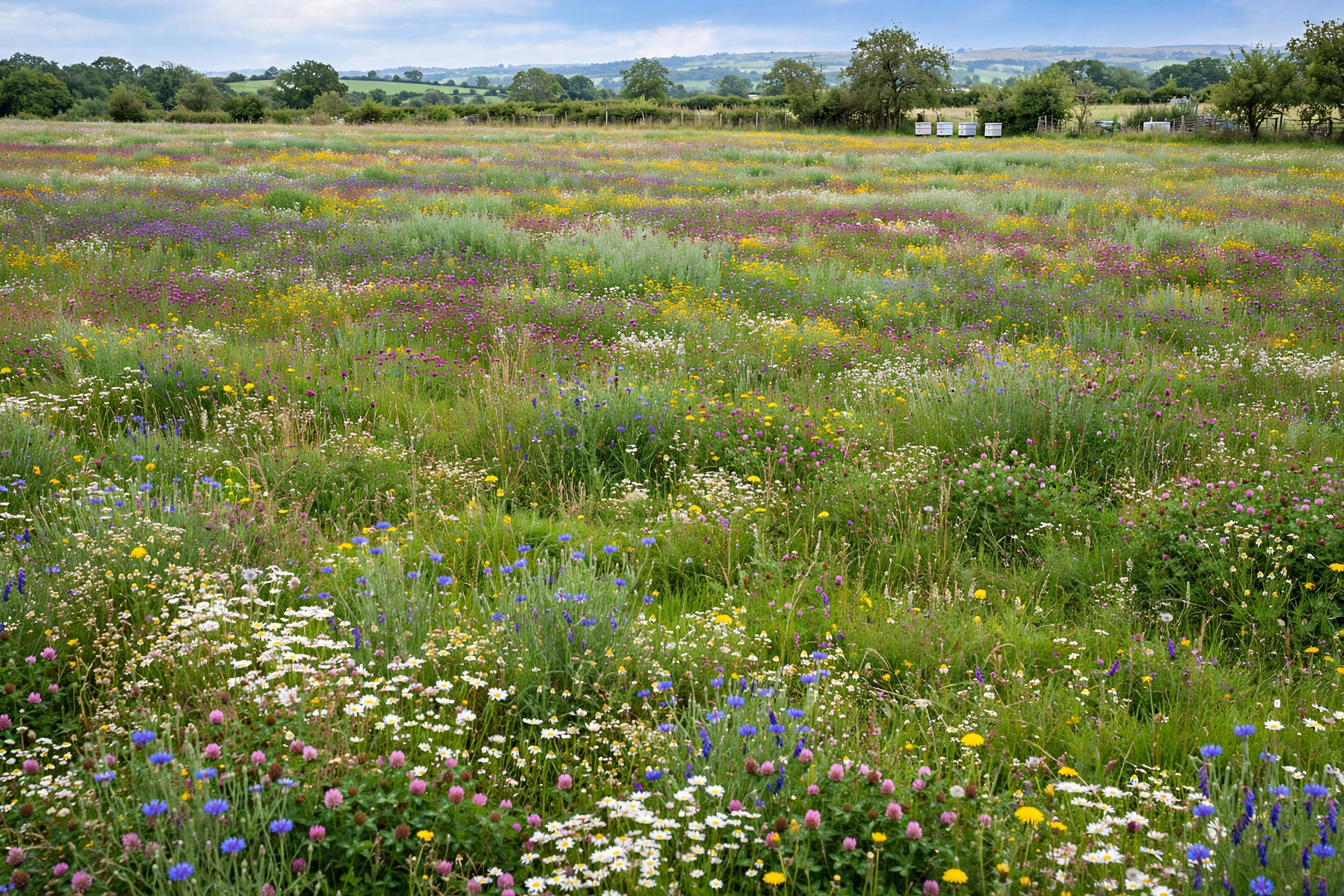
A backyard colony earns its space in pollination long before the first honey harvest. The flowers and vegetables a garden struggles to set fruit on are exactly the ones a resident hive works daily, which is why a hive pairs so naturally with the plantings this site covers — the edible flowers worth growing from seed and a stand of cosmos grown from seed both feed bees from early summer to frost. Put the hive in a sunny, level corner with its entrance facing away from paths and patios, check your local rules on keeping bees before you order, and give the colony room to grow upward — this stack has the space for it.
BEST STARTER KIT
Vevor Bee Hive 40-Frame Langstroth Starter Kit
A complete matched stack — two deep and two medium boxes, 40 waxed frames, observation windows — ready to assemble at $195.90.
Who should buy it, and who should keep looking
Buy this kit if you are starting your first colony and want the hive itself to be the easy part. The matched boxes, finished wood, and windows give a beginner a complete, forgiving setup for $195.90, and an established keeper adding a hive gets the same convenience without a lumber run.
Keep looking if your beekeeping plan already runs on screened bottom boards and specific frame styles you buy by preference — you will end up replacing pieces of any complete kit, this one included, and building from components suits you better. And if you only want pollination without the keeping, plant the flowers and let a neighbor’s bees do the visiting.
For everyone starting out, though, the math is friendly: a full four-box Langstroth stack, waxed and windowed, for under two hundred dollars. Assemble it on a calm afternoon, dry-fit the frames, and be ready when the bees are.