Two inches of root depth is the line a new sod lawn has to cross before anyone should aerate it, and that single number explains the whole timing puzzle. Once the sod is down, the machine has to wait until roots knit at least 2 inches into the soil below. Before the sod goes down, the ground is bare, and loosening it is both safe and, on the wrong soil, the step the whole lawn depends on.
The lawns that fail in their first year usually fail at this exact seam. Sod laid over hard, compacted construction soil roots shallowly because the roots meet a floor they cannot push through, and the grass above thins no matter how faithfully it gets watered.
What you are seeing: the symptom first
The warning sign is the bare ground itself, before any sod arrives. If a screwdriver pushed into the moist soil stops short or takes real leaning to go in, the soil is compacted enough to matter. New subdivisions are the classic case, because the ground has carried trucks, equipment, and stacked materials before it ever carried grass.
Loose, dark soil that a trowel slides into easily is the opposite sign. That ground does not need loosening, and running an aerator over it is work with no lawn at the end of it.
What aerating bare soil does, and what it does not
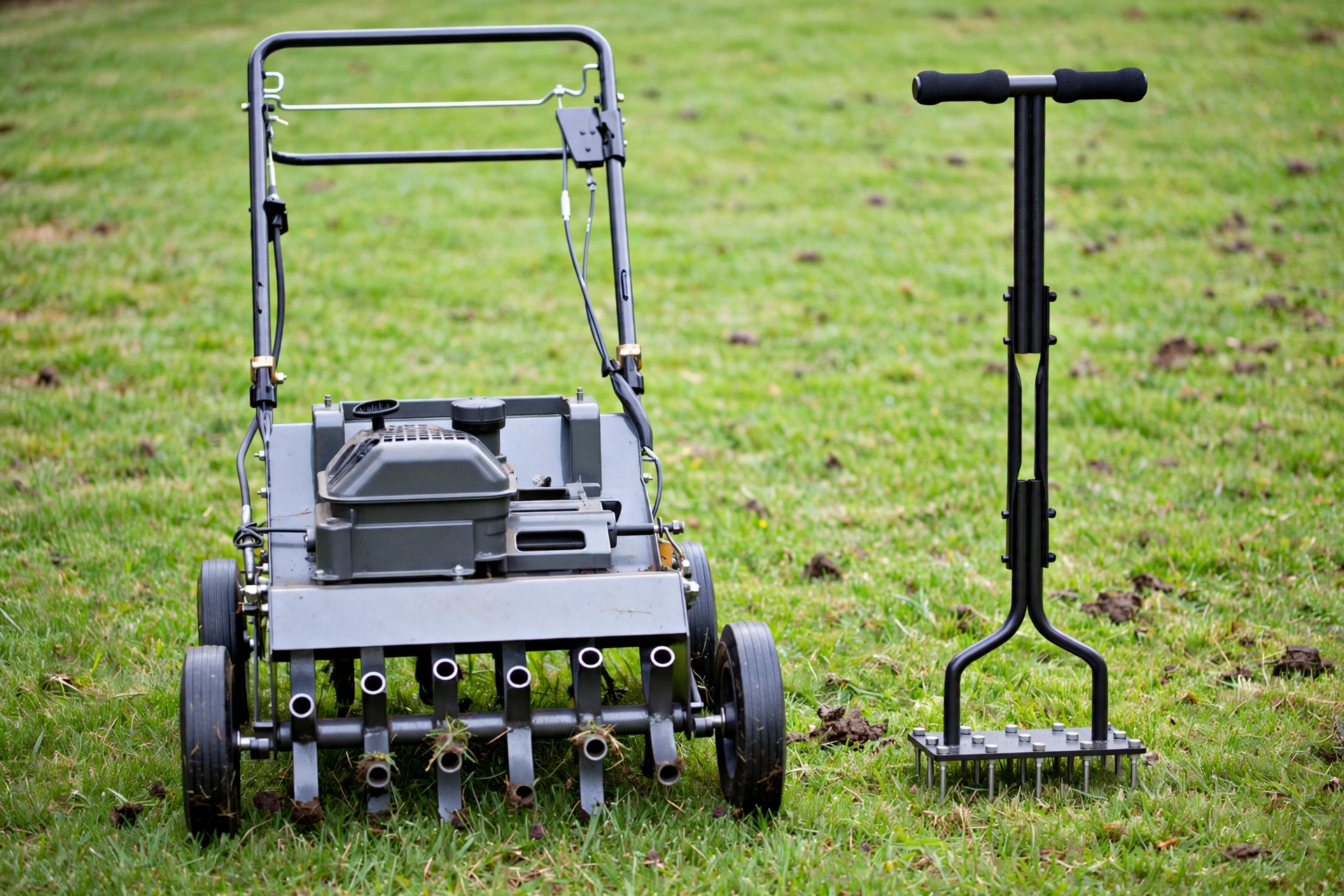
It opens the compacted layer. A core aerator run over bare, moist soil pulls plugs and breaks up the packed top few inches, giving new roots channels to grow down through instead of a surface to spread across.
It does not replace grading. Aeration loosens; it does not level. Low spots, slopes toward the house, and rough grade all get fixed with soil and a rake as their own step, and the aerating happens on the finished grade, not before the shaping is done.
It does not fix bad soil by itself. Where the ground is mostly subsoil or rubble left from construction, the fix is bringing in real topsoil, not punching holes in what is there. Holes in poor soil give roots a poor place to go, just an easier one.
The order that works
Test the compaction first. Push the screwdriver test in several spots on moist soil. Easy in most places means skip the aerator and spend the effort on grading and watering instead.
Aerate the compacted ground while it is bare. Work the whole area, not just the worst path, because sod roots do not respect the boundary of the spot you fixed.
Grade and roll after loosening. Level the loosened soil, roll it lightly so the sod makes full contact, and keep it moist until the sod arrives. Sod laid on loose, lumpy ground dries at the air pockets and roots unevenly.
Then leave the new lawn alone. Once the sod is down, the waiting rule from our guide to when to aerate a new lawn takes over: no aerating until the roots reach about 2 inches deep and the lawn has settled into regular mowing. Cornell’s sod guidance puts that first post-install aeration at roughly 4 to 6 weeks at the earliest, and only once the root check passes.
What success looks like
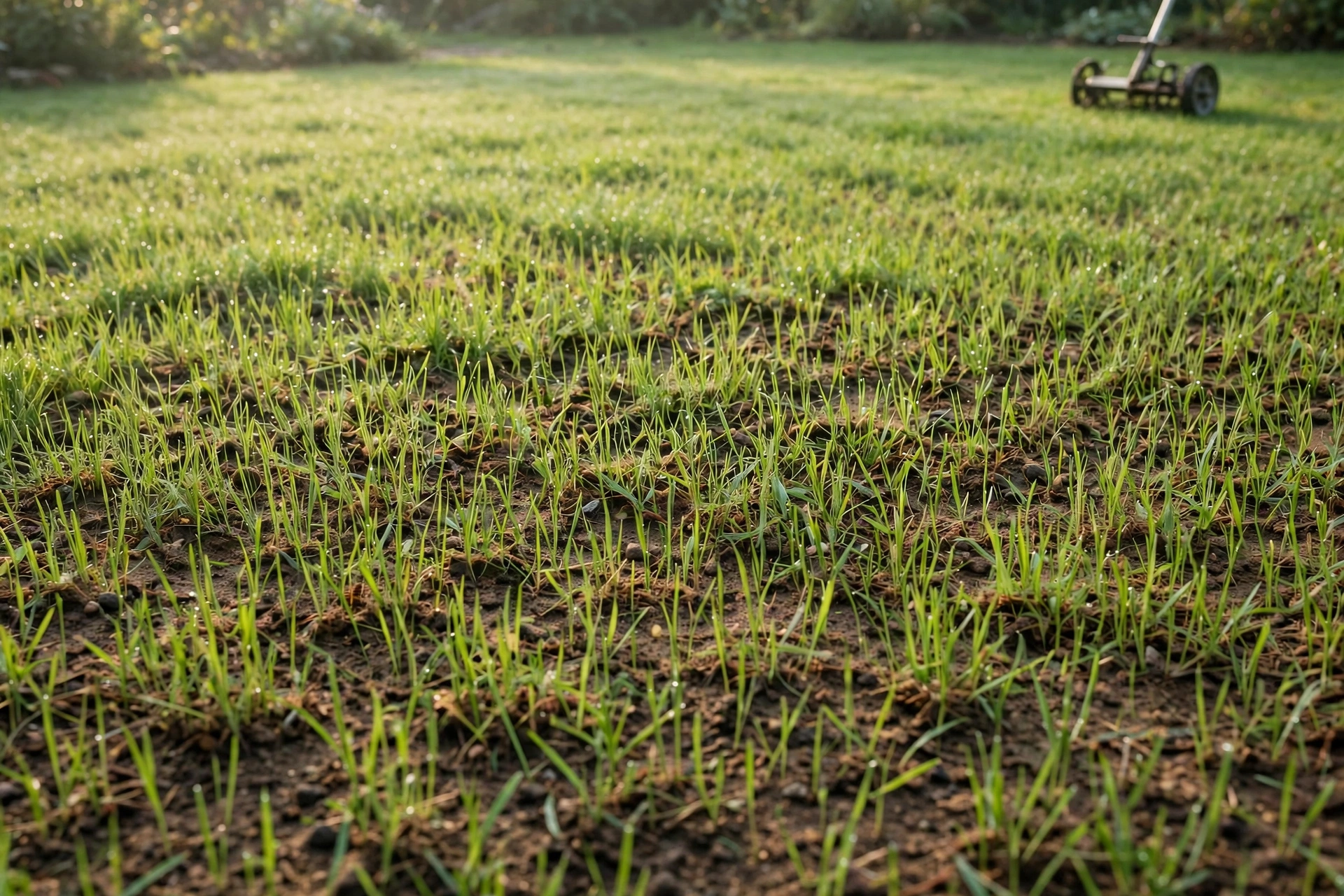
A sod corner that resists a gentle tug a few weeks in is the sign the roots found their way down. The lawn that was aerated and graded before laying stays even underfoot, takes water without puddling on the surface, and thickens through its first season instead of thinning at the seams.
The lawn that skipped the loosening on hard ground tells the opposite story by midsummer: shallow roots, fast wilting between waterings, and edges that lift like a rug. That pattern is a soil problem wearing a watering problem’s clothes, which is why our guide to how to tell if your lawn needs aerating starts with the same screwdriver check.
The answer
Aerate before laying sod when the bare soil fails the screwdriver test, especially on new-construction ground, and do it before the final grade and roll. Skip it on soil that is already loose, and put the saved effort into grading, contact, and water. After the sod is down, the machine stays in the garage until the roots earn it.