By the time a new lawn has been mowed a few times, it starts to look finished — thick enough to walk across without thinking twice, green right up to the edges. The roots underneath are on a different schedule, though, and they are the part that decides whether aeration helps or hurts, so the calendar matters less than what you find when you test the lawn.
Why a new lawn is different
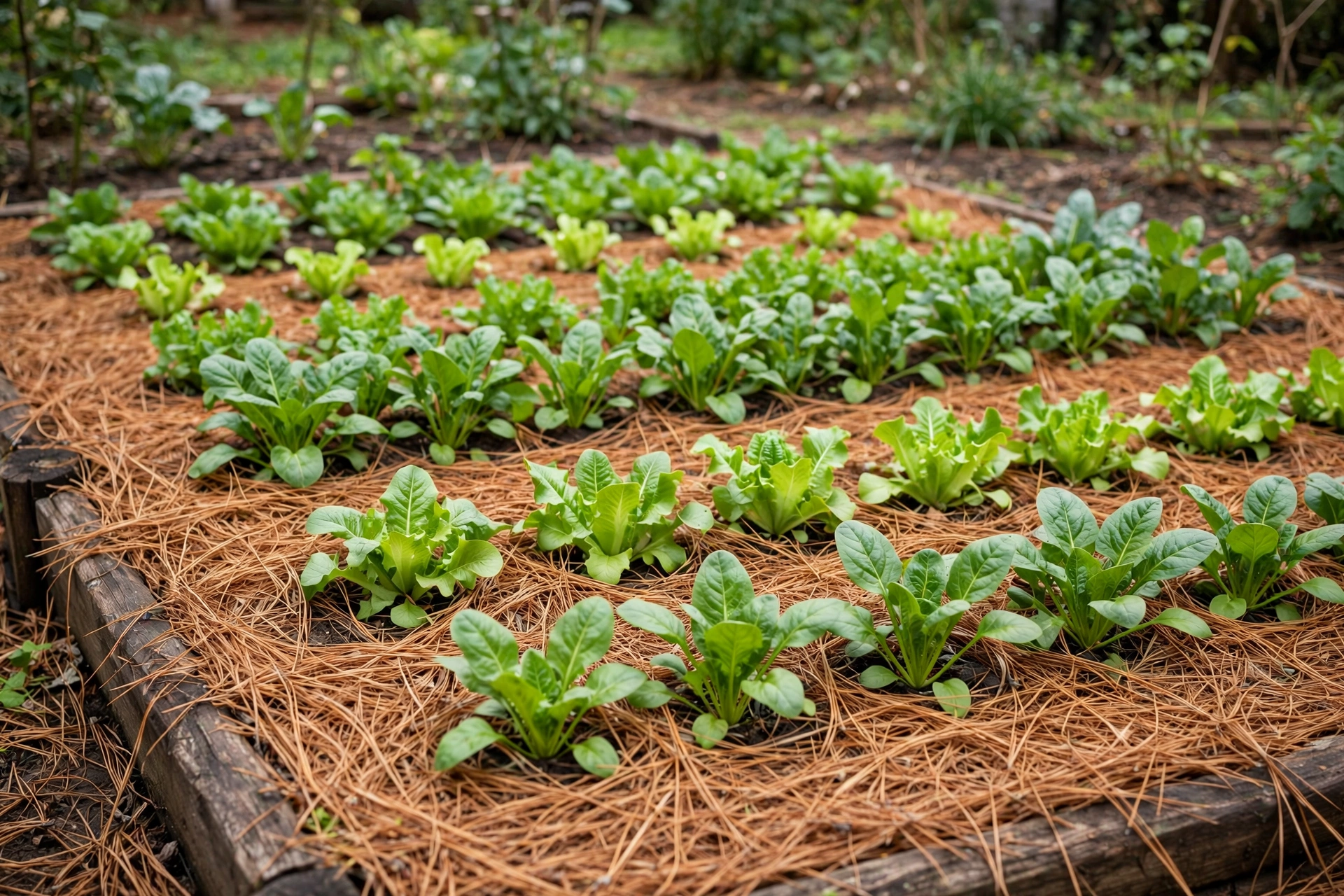
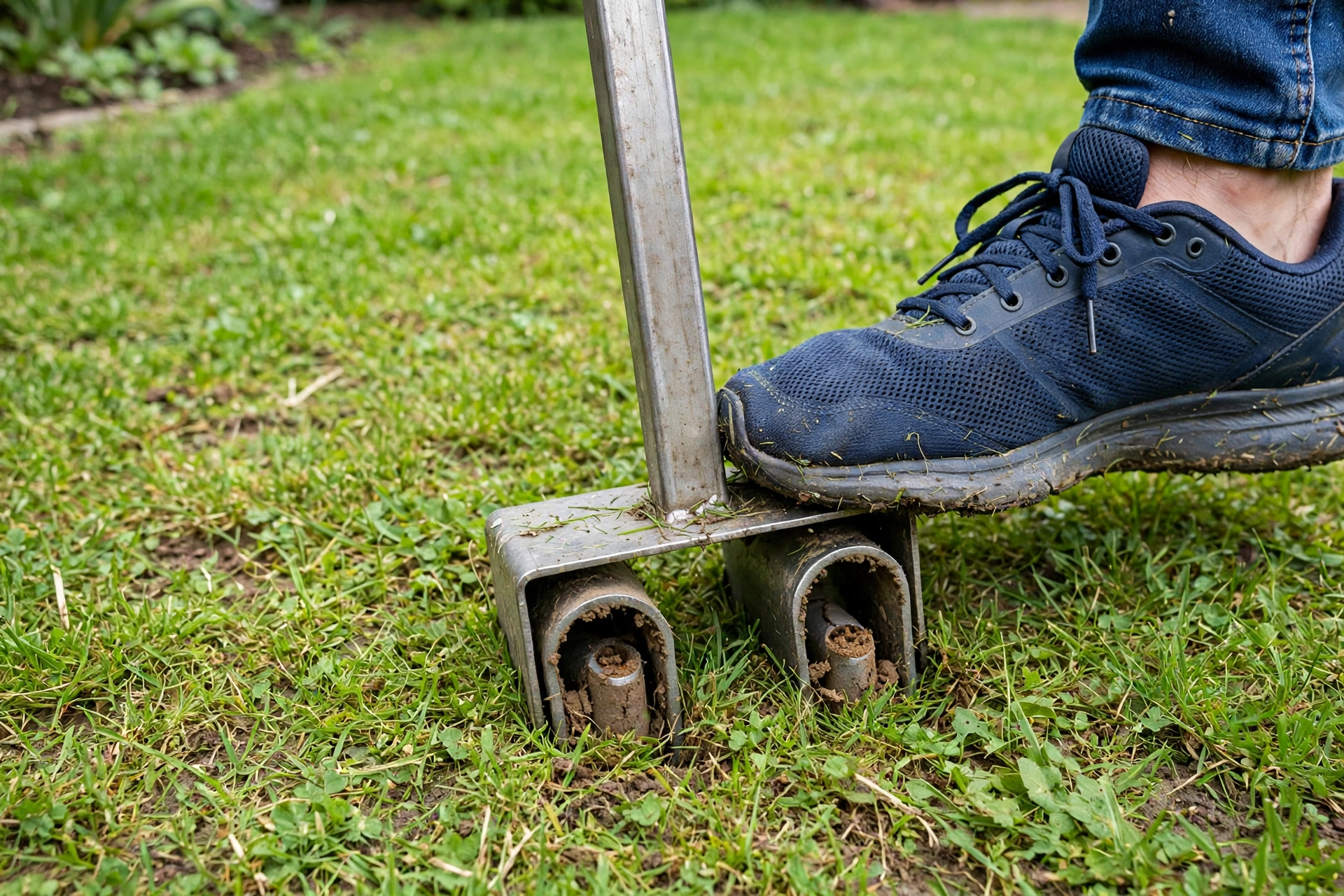
Aeration pulls plugs of soil out of the ground, and that force is the whole point on an established lawn: the holes let air, water, and nutrients reach roots that are already anchored deep. On a new lawn the roots are not anchored yet. Sod sits on a thin layer of its own soil with seams between the pieces, and its roots are still knitting down into the ground beneath. Seedlings are even more fragile, with shallow roots that tear out of the soil with very little force. Run a corer over either one too soon and you rip up the roots you spent the season growing.
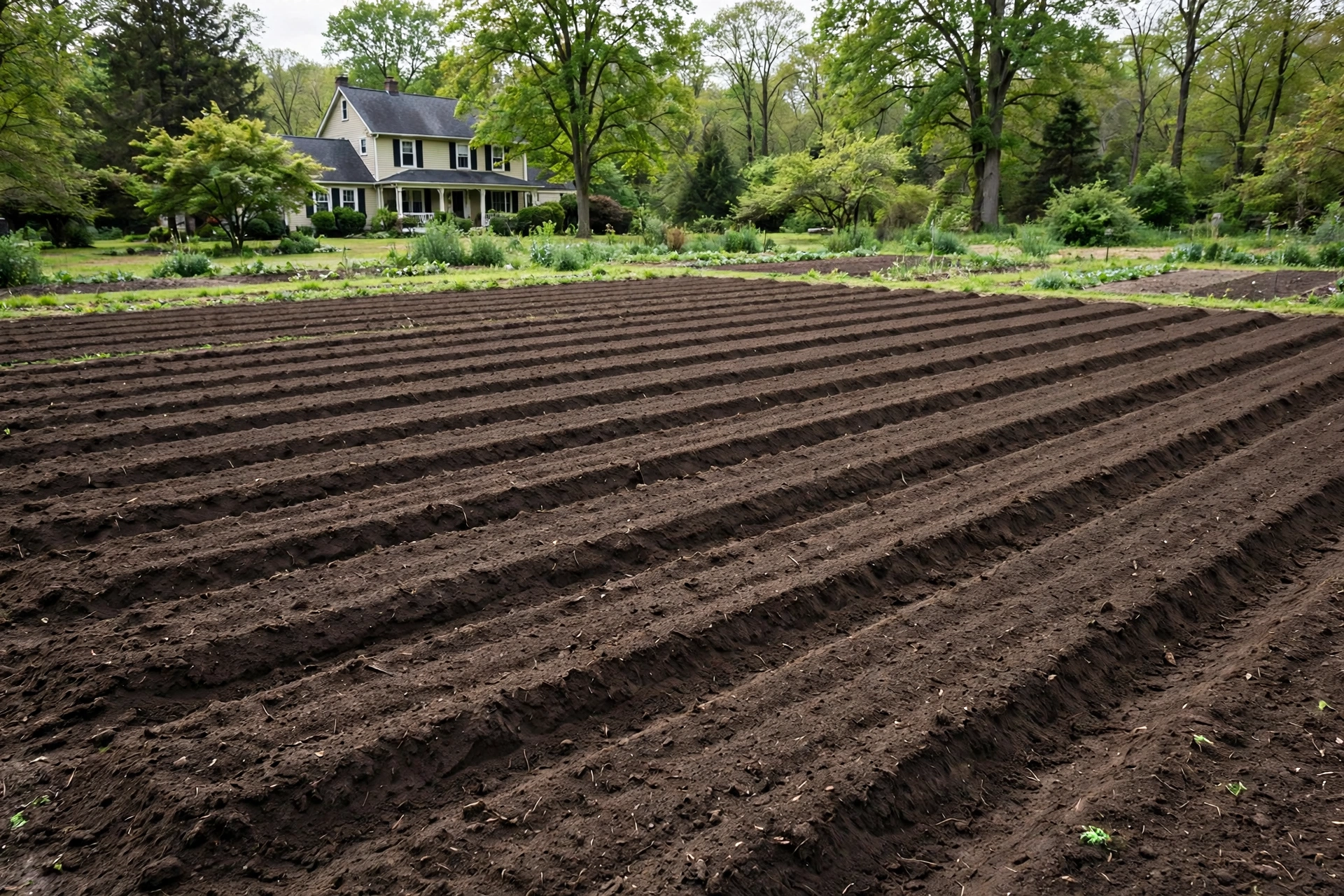
That is also why a new lawn rarely needs aerating in the first place. The soil was tilled before the sod went down or the seed went in, so compaction has not had time to set in yet. The job in year one is letting roots grow, not opening the soil.
Sod: wait for roots two inches deep
For a sodded lawn, the test is root depth, not the date on the calendar. Cornell Cooperative Extension’s sod guidance says to core aerate 4 to 6 weeks after the sod is installed, once the roots have reached 2 inches into the soil below — that channel is what lets the roots grow past the thin layer of soil the sod arrived with, instead of layering on top of it. Sod roots in 1 to 2 weeks under good watering, so the 4-to-6-week window is the point where those roots are usually deep enough to hold through an aerator pass.
Check it before you commit to the job. Lift a corner of a sod piece: if it comes up easily, the roots are not in yet and aeration waits. If it holds firm, cut out a small plug with a knife and measure the roots — 2 inches or more means the lawn is ready. A lawn sodded in spring will usually be ready by fall, which is also the best season to aerate a cool-season lawn anyway, so the timing lines up on its own.
Seeded lawns: wait a full growing season
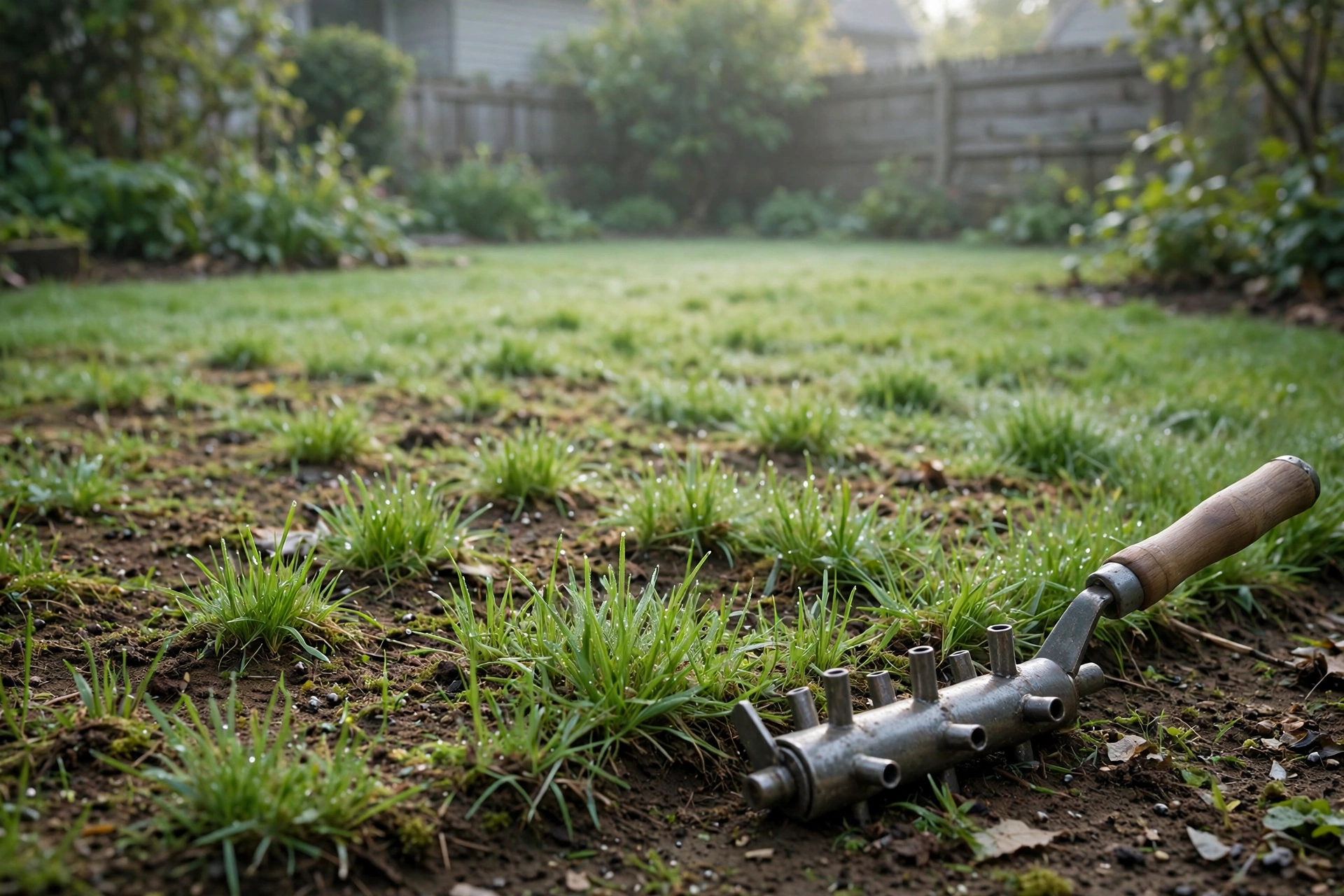
A seeded lawn needs longer, because every plant in it started from a seed in your soil rather than arriving with roots already formed. Wait a full growing season — roughly 6 to 12 months — before the first aeration, and use the mowings as your clock: the grass should be dense enough to have had four to five regular mowings at its full height before an aerator touches it. Thin, patchy seedlings that have only been cut once or twice are still holding on by threads, and a tine will pull them out by the roots.
The order matters just as much as the wait. Aerate before you seed, never right after. Core aeration immediately before seeding is one of the best things you can do for a lawn — the open holes are the finest seedbed on the property, with seed-to-soil contact that broadcast seed on flat ground never gets. Aerating right after seeding does the opposite: the tines knock seed out of contact with the soil and tear the seedlings that have already germinated. If you seeded this fall, the first aeration is next fall.
The readiness checks
- The tug test (sod). Grab a corner of a sod piece and pull gently. If it lifts, the roots are not established and aeration waits, no matter how many weeks have passed.
- The plug test (sod and seed). Cut a small plug a couple of inches deep and look at the roots. Two inches of root growth on sod means it can take an aerator pass; on a seeded lawn, look for dense roots holding the plug together instead of crumbling apart.
- The mowing count (seeded lawns). Four to five regular mowings at the grass’s normal height, with the lawn filling in thick between cuts, is the sign the seedlings have become turf.
- The screwdriver test (either one). Push a long screwdriver into the soil a day or two after rain. If it slides in easily, the soil is not compacted and the lawn does not need aerating yet anyway — the test only points to aeration when the screwdriver meets firm resistance in the first few inches.
What to do while you wait
The first season is for watering deeply, mowing at the grass’s full height, and keeping heavy traffic off the young turf — the roots do the work, and your job is mostly to stay out of their way. Once the lawn passes the readiness checks, aerate when the grass is growing strongly, in early fall or early spring for a cool-season lawn, and follow the after-aerating care guide for watering and seeding into the fresh holes. When the lawn is established and big enough to justify a machine, the tow-behind aerator setup guide covers weight, hitch, and pass patterns.
The short answer
Give sod until its roots reach 2 inches — usually 4 to 6 weeks — and give a seeded lawn a full growing season and four to five mowings at full height. Test the lawn before you aerate it, and aerate in the fall when the grass is growing strongly enough to fill the holes back in. The roots you protect this season are the lawn you mow next year.