The common mistake is buying the aerator that fits the budget instead of the lawn. A tow-behind is cheaper per inch of width than almost anything in the rental fleet, so it tempts people with quarter-acre yards, and then it spends every fall fighting gates, beds, and tight corners it was never built for.
The reverse mistake costs more. A walk-behind plug aerator is a serious workout machine, and on an acre of open lawn it turns a one-hour job into an afternoon of wrestling a heavy unit back and forth while the tractor sits in the garage.
| Factor | Walk-behind | Tow-behind |
|---|---|---|
| Working width | About 19–21 inches per pass | 40–48 inches per pass |
| Needs | Your legs and arms; rental units run 200 lb or more | A riding mower or lawn tractor with a hitch |
| Turning and gates | Turns in place, fits through a standard yard gate | Wide turns, awkward in fenced and bedded yards |
| Plug depth | 2–3 inches, driven by the machine’s own weight | Up to 3 inches, with a weight tray (up to 140 lb on common models) for hard ground |
| Best lawn size | Up to about a quarter acre | Half an acre and up, open ground |
Width is the whole argument, until it is not
A 48-inch tow-behind covers ground at more than twice the rate of a walk-behind, and on open lawn that settles the question in about ten minutes of towing. The tractor does the pulling, the weight tray does the pressing, and an acre is a single relaxed circuit instead of a project.
Width stops helping the moment the lawn stops being open. Every bed, tree ring, and fence line forces a tow-behind into wide, sloppy turns that leave unaerated crescents behind, and the corners it misses are usually the compacted spots by gates and paths that needed aerating most. Our setup guide for using a tow-behind aerator covers the pass patterns that reduce the misses.
The walk-behind’s honest costs
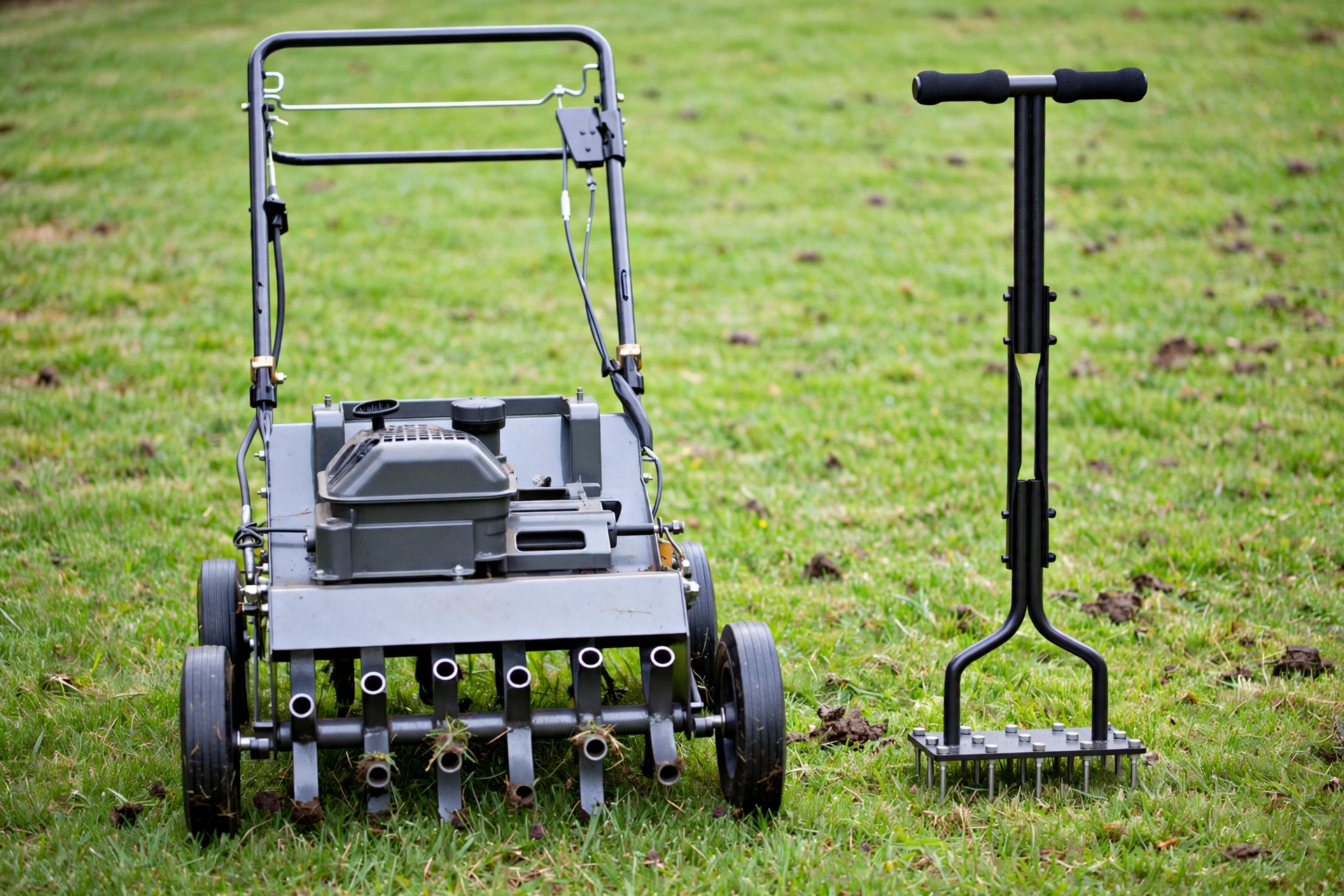
A powered walk-behind core aerator is heavy, top-heavy on slopes, and tiring to turn at the end of every pass, which is why the rental window matters: the job has to fit inside it. Our breakdown of what lawn aeration costs runs the rental math, and the rent vs buy an aerator comparison settles when owning one pays.
What the walk-behind gives back is precision. It goes through the gate, turns at the fence, works the narrow side yard, and aerates right up to the edges the tow-behind rounds off. On a small, cut-up suburban lot, it finishes more of the actual lawn than the wider machine does.
Where each one wins
Under about a quarter acre, or any lawn chopped up by beds, fences, and play equipment, the walk-behind wins, rented or owned. Between a quarter and a half acre is the honest gray zone: a walk-behind still finishes it, but the tow-behind starts paying if the ground is mostly open and a tractor already lives in the garage.
At half an acre and up of open lawn, the tow-behind wins outright, and our roundup of the best tow-behind lawn aerators compares the widths and weight trays worth buying. Small, worn patches and single compacted paths need neither machine: a manual coring tool, covered in our guide to the best manual aerators for small lawns, handles those for the price of a pizza.
The verdict
Match the machine to the ground, not the budget line. Walk-behind for small and broken-up lawns, tow-behind for half an acre and up of open ground behind a tractor you already own, and rent the walk-behind for a season before buying either one if your lawn sits in the gray zone between them.