This post contains affiliate links. If you buy through them, we may earn a commission at no extra cost to you.
Two plants, one bed, and a name that confuses the choice: Perpetual Spinach sits on the chard side of this comparison, which tells you most of what you need to know about how differently these crops behave in heat.
True spinach wins on speed and flavor in cool weather. Chard wins on duration. Which one deserves your bed depends on the season you are actually planting in.
What each plant is
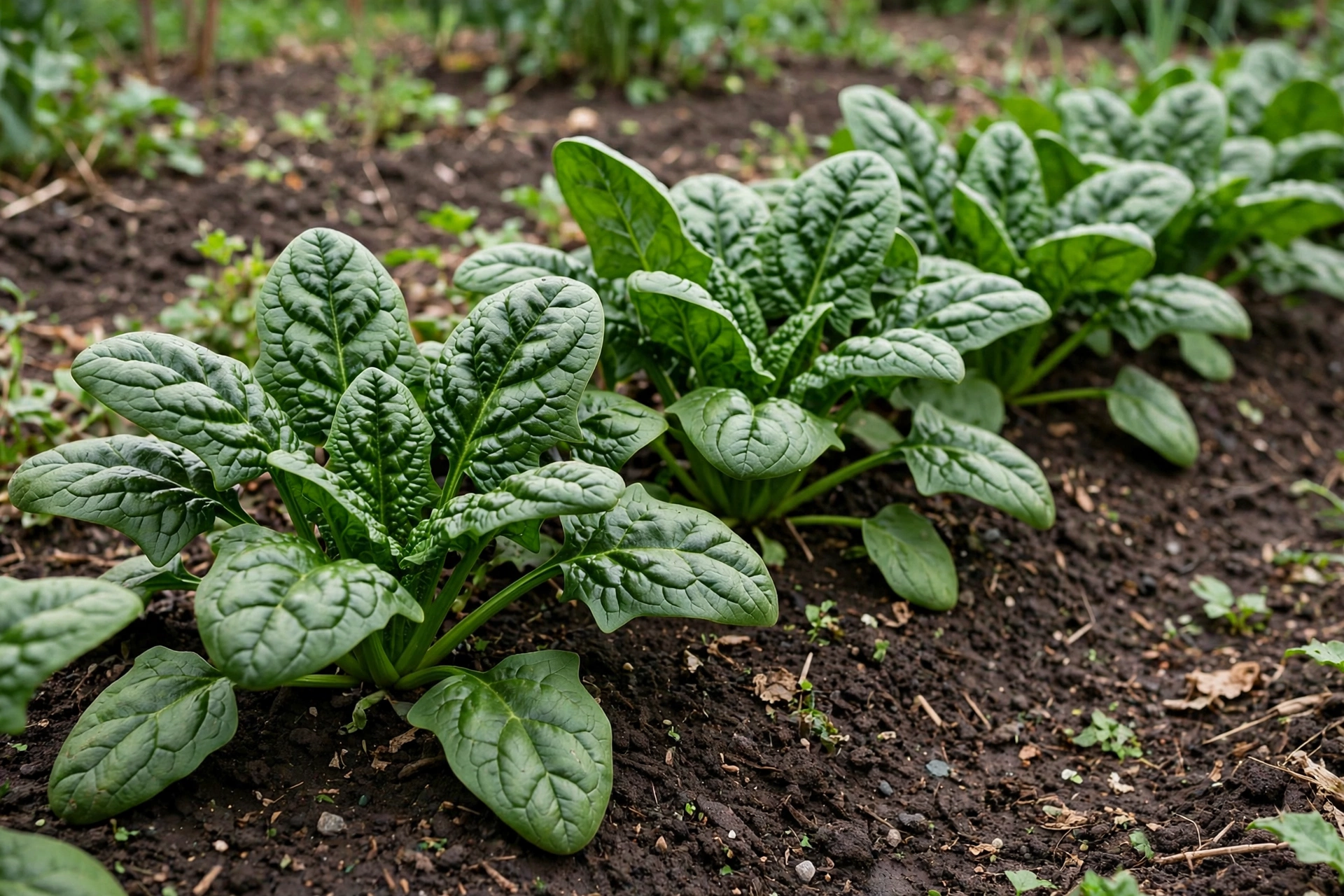
True spinach here is Bloomsdale, Spinacia oleracea, 28 to 45 days, with dark green, thick, curled savoy leaves. It is a cool-season annual, short, under 12 inches, and it bolts as days lengthen and soil warms.
Chard is Beta vulgaris, the beet family, grown for stems and leaves over a long season. Perpetual Spinach is a chard with thin ribs and smooth leaves, 20 to 50 days, and the larger chards run bigger and longer still.
Speed: spinach, and it is not close
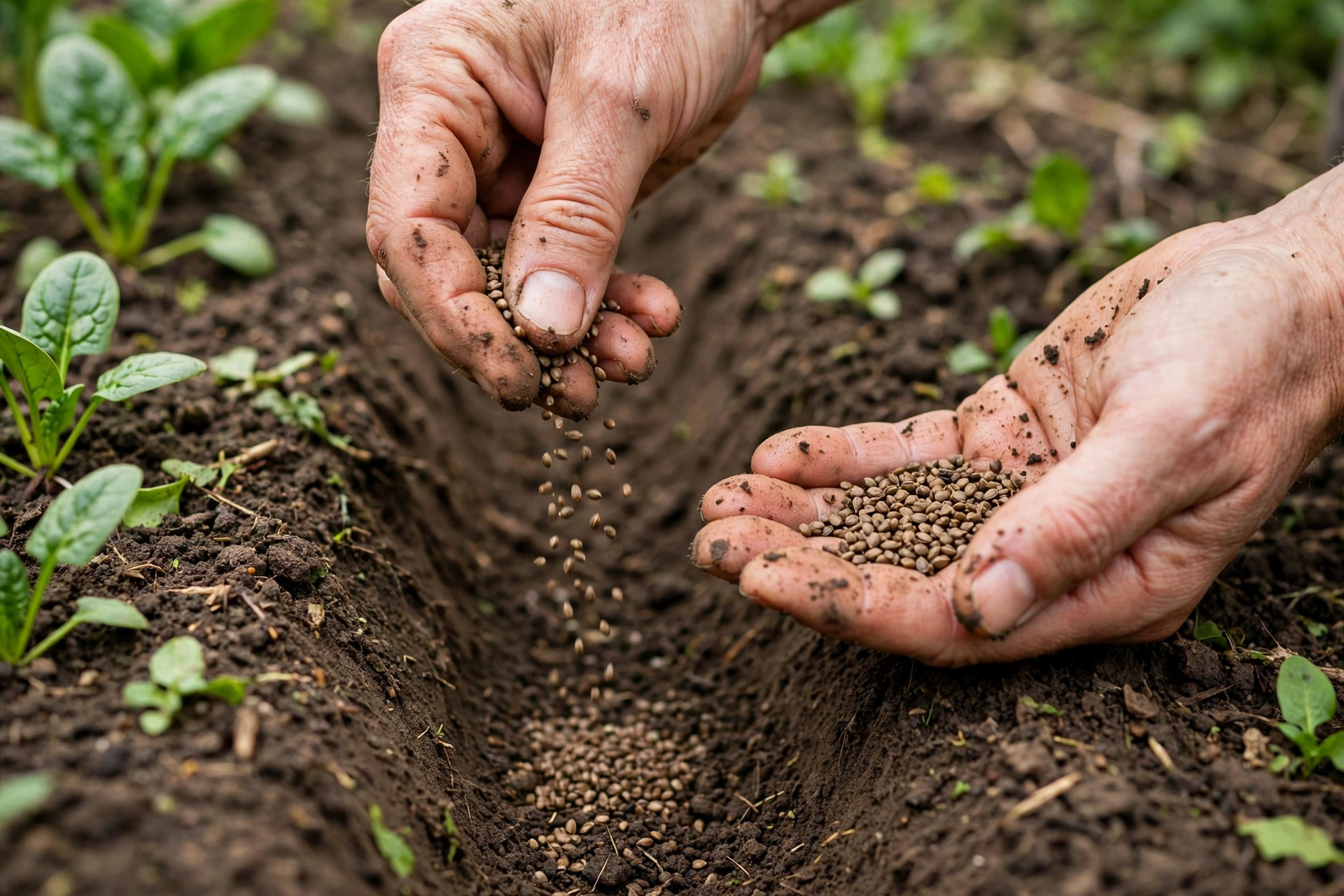
Bloomsdale can give baby greens in 28 days from a cool sowing, seeds 1 inch apart for that cut. Chard’s baby leaves start around 20 days for Perpetual Spinach and Five Color Silverbeet, but full stems and large leaves take 50 to 60 days.
If the bed needs to turn over fast in spring, spinach is the crop. If the bed can stay planted from spring into fall, chard uses that time better.
Bloomsdale Spinach Seeds
True spinach, baby greens in as little as 28 days in cool soil.
Heat: chard, by a wide margin
Spinach germination halts above 85°F soil, and the plant bolts as heat arrives. That is not a flaw to manage around, it is the crop’s limit.
Chard is slower to bolt, and Perpetual Spinach is sold on exactly that point for warmer climates. Five Color Silverbeet and Fordhook Giant keep cutting through summer in a way no true spinach in this catalog will.
On a hot afternoon the chard bed still looks composed, thick stems holding the leaves up, while a late spinach row has already sent up stalks. That visual is the whole argument in July.
Perpetual Spinach Swiss Chard Seeds
A chard, 20–50 days, slower to bolt, harvest a third at a time.
Flavor and kitchen use
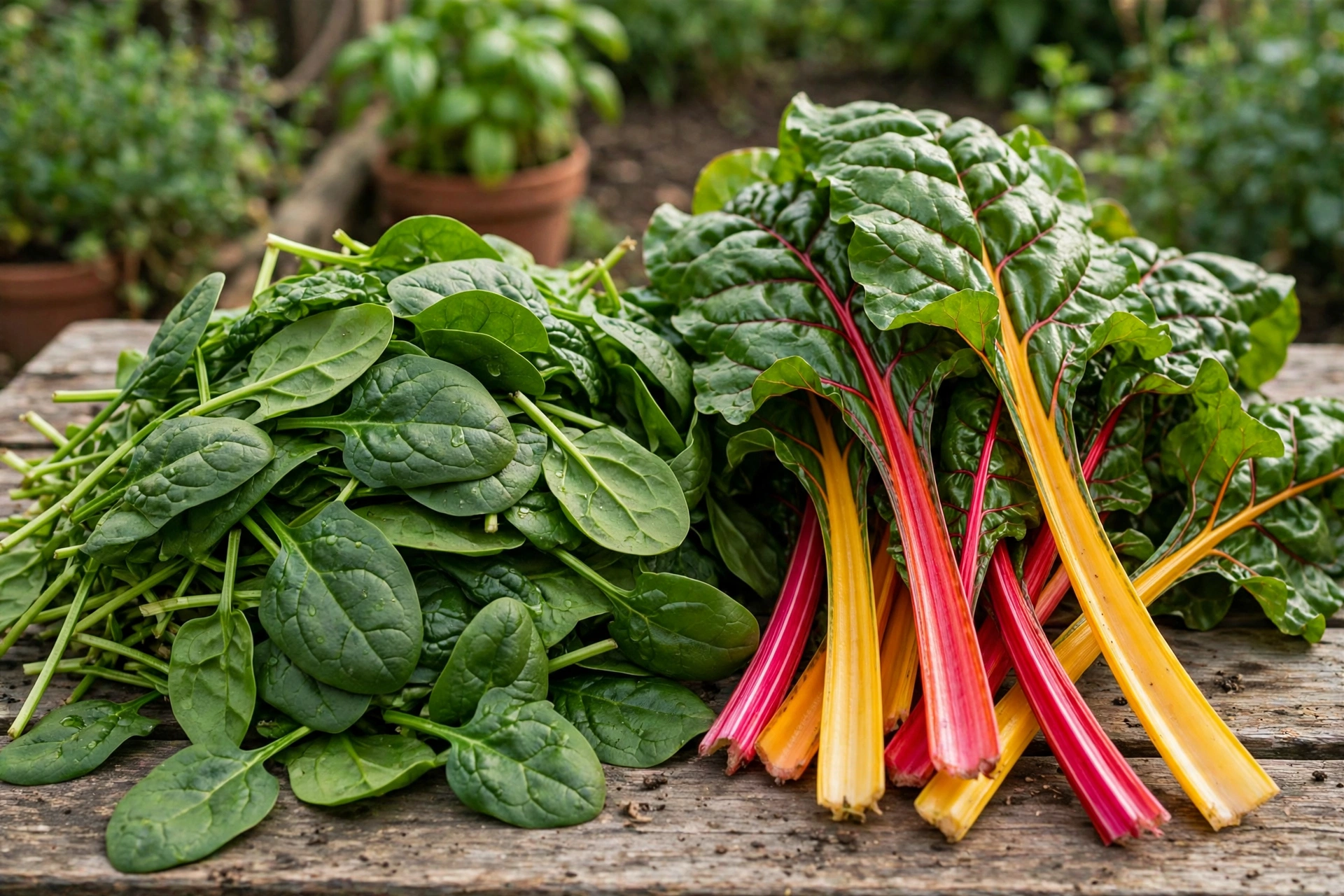
Spinach is tender, mild, and eaten raw as readily as cooked, which is why baby Bloomsdale leaves go straight into salad. Chard leaves are sturdier and earthier, better cooked, with stems that cook separately like a second vegetable.
Five Color Silverbeet adds stems in white, red, orange, pink, and gold, which matters if the bed is visible from the kitchen. Fordhook Giant is the plain workhorse, large white stems and heavy leaves for cooking in quantity.
Five Color Silverbeet Swiss Chard Seeds
Colored stems, 20–60 days, baby greens at 20 days, full leaves later.
The comparison table
| Crop | Days | Heat | Harvest style |
|---|---|---|---|
| Bloomsdale Spinach | 28–45 | Bolts in heat; germination halts above 85°F soil | Outer leaves or cut whole at 1 inch |
| Perpetual Spinach (chard) | 20–50 | Slower to bolt in hot weather | Up to a third of outer leaves at a time |
| Five Color Silverbeet (chard) | 20–60 | Frost tolerant, long season | Outer leaves, or cut whole 2 inches above ground |
The variety-by-variety ranking is in the best spinach varieties to grow from seed, and the sowing sequence is in growing spinach from seed: sowing, spacing, and harvest. The dedicated chard ranking is the best Swiss chard varieties to grow from seed.
Bottom line
Grow spinach for spring and fall, and grow chard for the season in between. If you can only plant one and your summers are warm, plant the chard, Perpetual Spinach first, because it will still be producing when Bloomsdale has bolted.