This post contains affiliate links. If you buy through them, we may earn a commission at no extra cost to you.
28 days. That is how fast a baby spinach leaf can get from seed to salad when the soil is cool, and it is the number that explains most spinach disappointment I see.
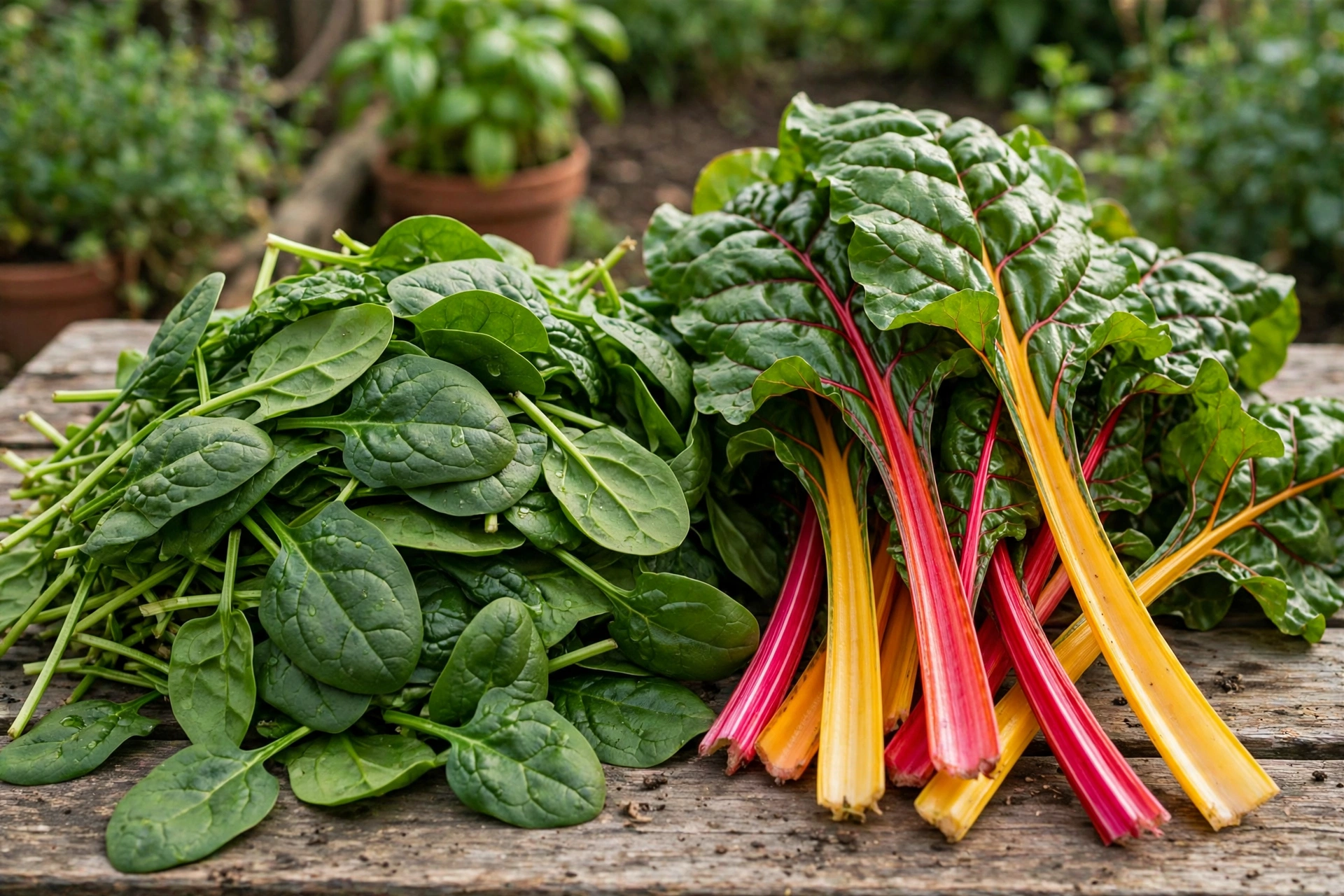
Gardeners blame the packet when a spring sowing bolts, when in practice the usual suspect is timing: true spinach wants cool soil, and warm soil shuts it down. You need one spinach for the cool weeks, a substitute that carries the summer, and a chard to lean on when you want both.
The short answer
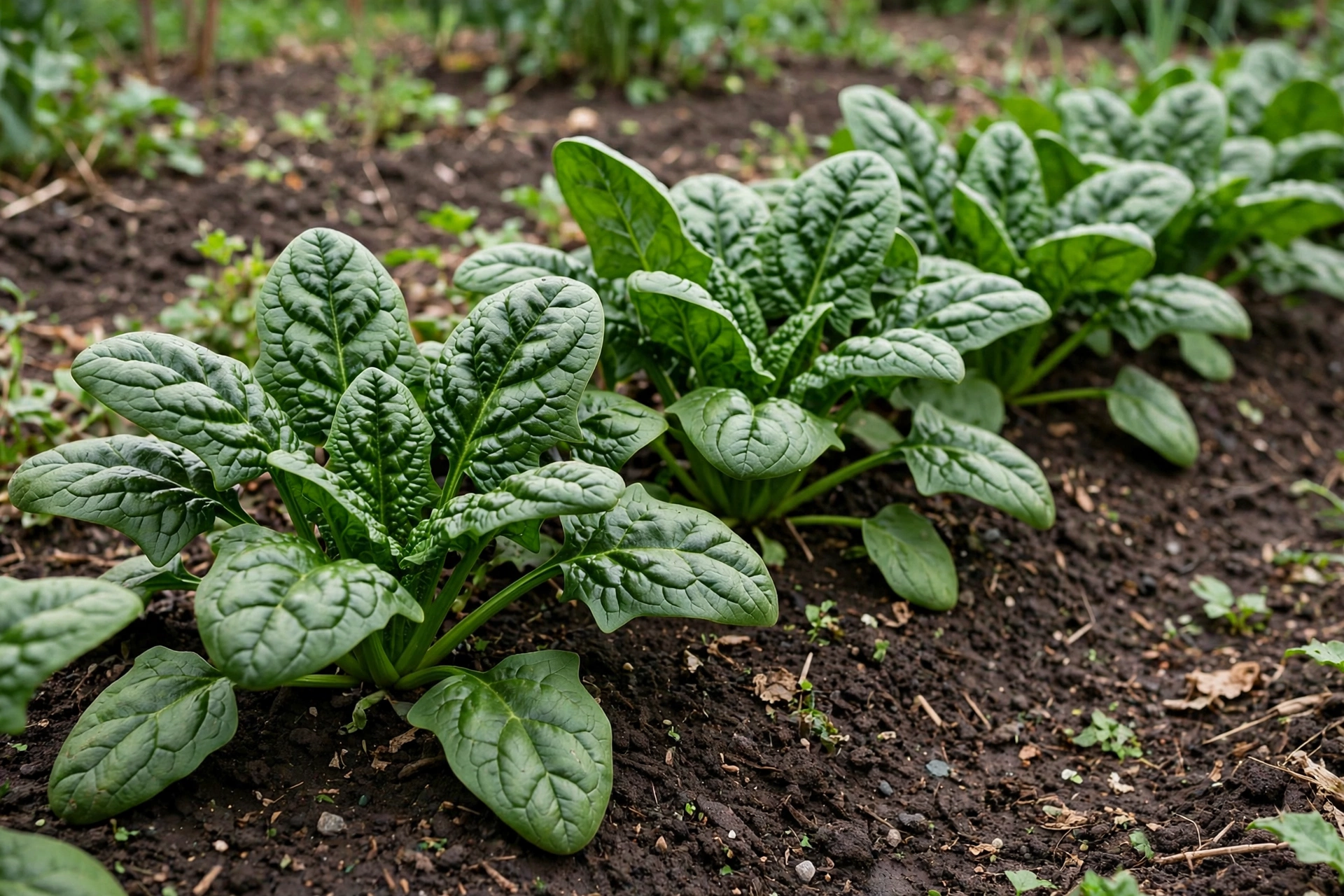
Plant Bloomsdale for spring and fall. It is the one true spinach in this catalog, Spinacia oleracea, 28 to 45 days, slow to bolt for its type, with dark green, thick, curled leaves.
For summer, switch species. New Zealand Spinach is not true spinach at all, and Perpetual Spinach is a chard wearing a spinach name, and both keep producing when Bloomsdale would rather flower.
Bloomsdale Spinach — the true spinach
Bloomsdale dates to the early 1800s, and the packet still reads like a cool-season specialist: sow 4 to 6 weeks before your average last frost, in soil above 40°F and ideally 50 to 75°F, because soil above 85°F halts germination.
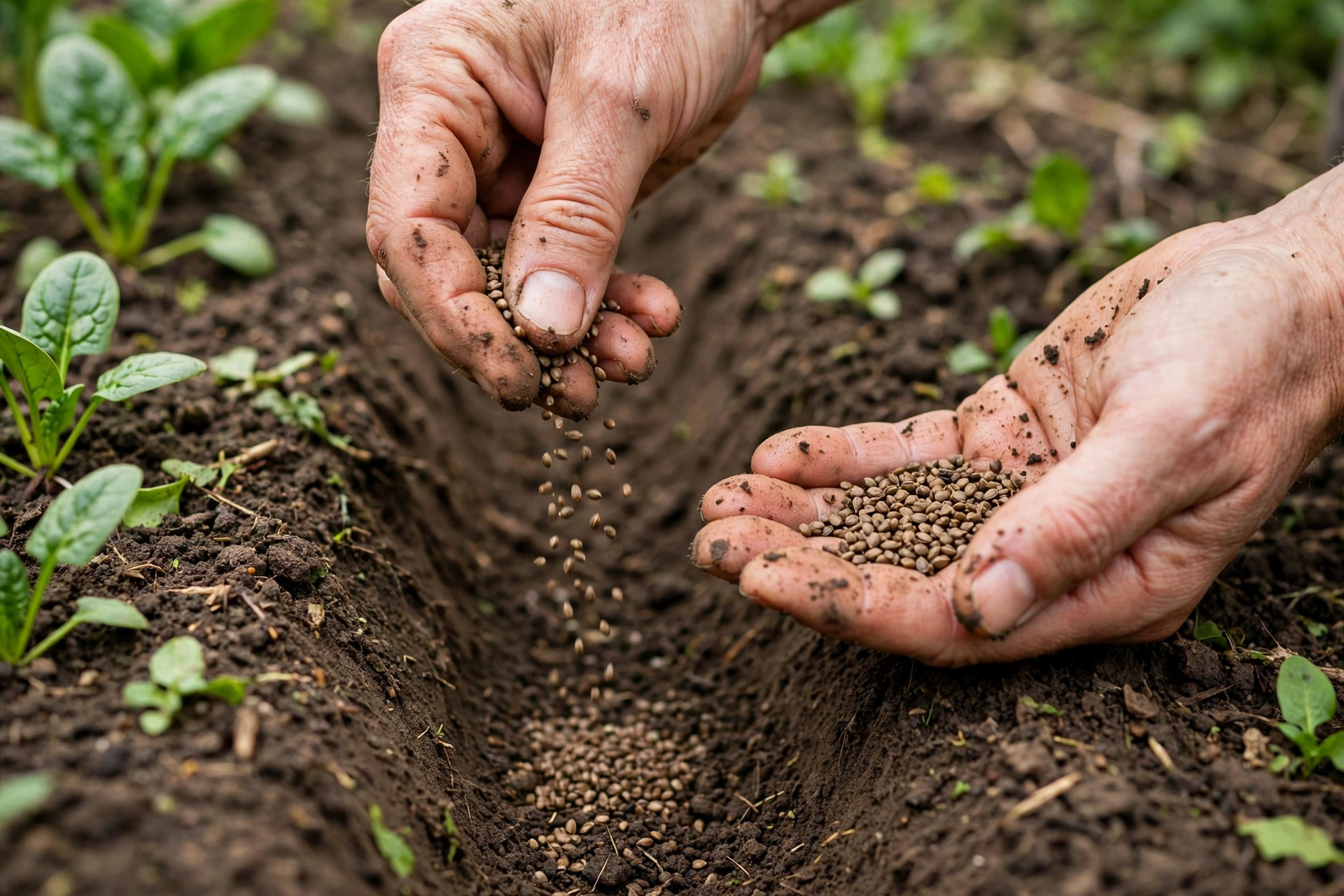
The leaves are the savoy type, heavily curled and thick enough to hold up in a pan, and the plant stays short, under 12 inches. Sow a group of 3 seeds every 6 inches, half an inch deep, and thin to 1 every 6 inches when the plants are 2 inches tall.
I would plant this one first in any cool window, and I would not ask it to do July. Its trade-off is right there in the numbers: the fastest finish here, and the narrowest weather window.
Bloomsdale Spinach Seeds
True spinach, 28–45 days, savoy leaves, slow to bolt for a true spinach.
Check Price at Botanical InterestsNew Zealand Spinach — the summer substitute
New Zealand Spinach, Tetragonia tetragonioides, is not true spinach, and the packet says so plainly. It was found in New Zealand on Captain Cook’s 1770 voyage, and it earns its place a different way: it loves heat.
Sow it 1 to 2 weeks after your average last frost, in soil at least 65°F and ideally 70 to 80°F, a group of 3 seeds every 8 inches, half an inch deep. It needs 50 to 60 days, emerges in 10 to 20 days, and then sprawls, so give it room and pinch the tips to push branching.
Harvest only up to a third of the plant at a time and it regrows fast. It is frost sensitive and drought tolerant once established, perennial in zones 8 and warmer, and bothered by almost no insects on its own page, even snails and slugs.
New Zealand Spinach Seeds
Not true spinach — a heat-loving substitute, 50–60 days, that produces all summer.
Check Price at Botanical Interests
Perpetual Spinach — the chard in spinach clothing
Perpetual Spinach is also not true spinach. It is a Swiss chard, Beta vulgaris, an Italian heirloom also called Bietola a Costa Fine for its thin ribs, and that identity is its strength: it is slower to bolt in hot weather than true spinach.
It runs 20 to 50 days, baby greens at the early end, with smooth green leaves on thin bright stems. Sow a group of 2 seeds every 8 inches, half an inch deep, and thin to 1 every 8 inches.
If you want one packet that starts cool and keeps going into warmth, this is the bridge. The flavor is chard, milder and earthier than spinach, so set the expectation before the first harvest.
Perpetual Spinach Swiss Chard Seeds
A chard sold as perpetual spinach, 20–50 days, slower to bolt in heat.
Check Price at Botanical InterestsThe comparison table
| Pick | What it is | Days | Sow when |
|---|---|---|---|
| Bloomsdale | True spinach, savoy leaf | 28–45 | Cool soil, 50–75°F ideal |
| New Zealand Spinach | Not true spinach, Tetragonia | 50–60 | Warm soil, 70–80°F ideal |
| Perpetual Spinach | Swiss chard, thin ribs | 20–50 | Cool to warm, slower to bolt |
For the full sowing sequence, see growing spinach from seed: sowing, spacing, and harvest. For the longer decision, spinach vs chard: which to grow works through flavor, heat, and harvest side by side.

What I would skip, and why
I would skip hunting for a second true spinach variety in this catalog. There is one, it is good, and the honest move is to pair it with the substitutes instead of pretending a longer list exists.
I would also skip starting Bloomsdale indoors. Its own page says not recommended, because the roots dislike disturbance, and direct sowing in cool soil is the whole point of the variety.
Bottom line
Buy Bloomsdale first, and buy it for the cool weeks. Add New Zealand Spinach if summer greens matter to you, and add Perpetual Spinach if you want one packet that bridges the two seasons.