This post contains affiliate links. We may receive a commission if you make a purchase after clicking on one of these links.
The report says your pH is fine. It says phosphorus is adequate and potassium is close. Then you look at the lawn in front of you — thin in the same places, pale by midsummer, unimpressed by the fertilizer you spread in spring — and the two stories do not match.
When the number and the grass disagree, check the sample before you check the test. A laboratory can only measure what arrives in the bag, and most wrong soil results are made in the yard, in the ten minutes before anything is mailed anywhere.
Where soil tests go wrong
Each of these mistakes skews the result in a specific direction, which is what makes them worth learning. A wrong number is worse than no number, because a wrong number gets acted on — with lime, with fertilizer, with a whole season of confidence.
1. One core from one spot
A single scoop describes a single square foot. Soil pH can vary by half a point or more across one ordinary lawn — lower under the pine, higher along the driveway where concrete dust and gravel have washed for years. One core from beside the patio becomes the prescription for the whole yard.
The fix is a composite: 10 to 15 cores pulled across the area, mixed together, with about a pint of the mix sent in as the sample. The report then describes the lawn you actually have, averaged the way the lawn will actually be treated.
2. A different depth every time, thatch included
The top inch of a lawn profile and the soil four inches down are different material. Thatch and surface debris run acidic and rich in undecomposed matter; deep soil runs leaner. A sample that includes the thatch layer in one spot and misses it in another mixes two soils and reports a third that exists nowhere.
Scrape the thatch and surface litter off each core before it goes in the bucket, and pull every core to the same depth. Consistency matters more than the exact figure — our soil sampling guide walks through the full routine, depth included.
3. Testing right after fertilizing or liming
Fertilizer salts sit in the top of the profile for weeks after an application, and a sample pulled through them reports nutrients the roots will never see at those levels. Lime is slower: it reacts over months, so a test pulled a fortnight after liming reads the application, not the outcome.
Sample before the spring feeding, not after it. If the lawn was just fertilized, wait at least six weeks. If it was just limed, wait longer — the retest belongs to next season, when the reaction has actually happened.
4. Sampling mud
Saturated soil smears instead of crumbling, so wet cores blend unevenly and the pint you send over-represents whichever spot was softest. Frozen ground is worse: cores shatter, the surface layer is lost, and what arrives is mostly subsoil.
Wait for soil that is moist but not wet — the consistency you would happily dig a planting hole in. Two or three dry days after rain is about right in most yards.
5. A dirty bucket and the wrong tools
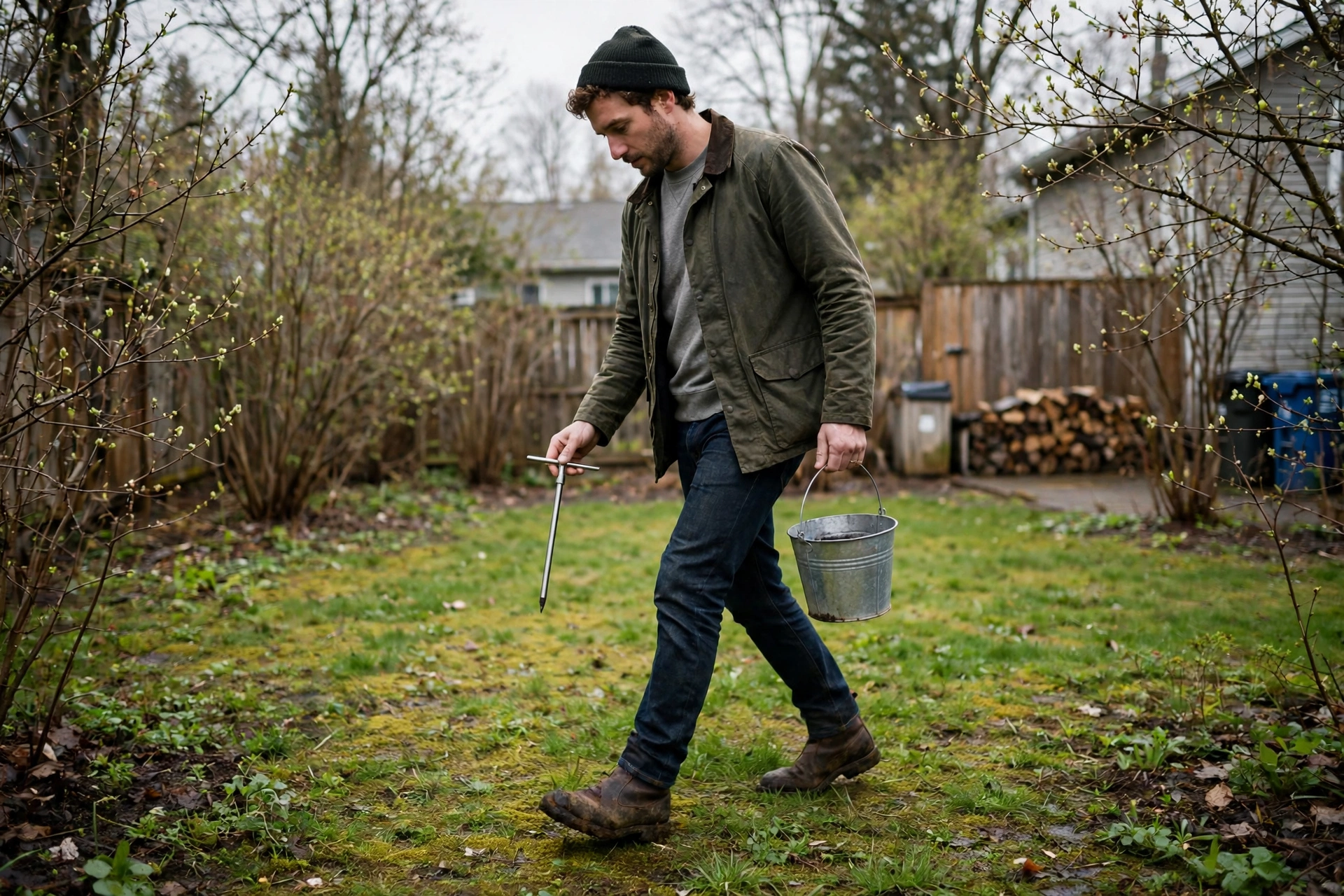
The mixing bucket is part of the instrument. A bucket that held fertilizer, or a galvanized pail, can contaminate the sample — galvanized coatings are zinc, and zinc is one of the micronutrients the lab reports. Rusty tools flake. Residue from the last job becomes this test’s phantom nutrient.
Use a clean plastic bucket and a stainless or chrome soil probe or trowel, and rinse both before you start. It takes a minute, and it removes a whole category of strange results.
6. Mixing unlike areas into one bag
The front lawn, the vegetable garden, and the shaded side yard are three different soils with three different prescriptions. Composited into one bag, they produce one average recommendation that fits none of them — too much lime for the garden, too little for the lawn, and a phosphorus number nobody can use.
Sample each area you manage differently as its own test. The extra kit is cheaper than a season of amendments aimed at an average.
7. Trusting an old at-home kit’s colors
Capsule kits read pH and the major nutrients by color matching, and the reagents age. A kit that has sat in a hot garage for two summers can drift, and a color read ten minutes late — after the solution has darkened past the reading window — drifts further. This is the honest limit of at-home testing: it catches big imbalances well and fine differences poorly.
Use a fresh kit, read each test inside its stated window, and treat a surprising result as a prompt for a lab test rather than a verdict. Our lab test vs at-home kit comparison lays out exactly which decisions each one can carry.
The sampling routine that tells the truth
Pick one area. One lawn, one garden, one bed — never a blend.
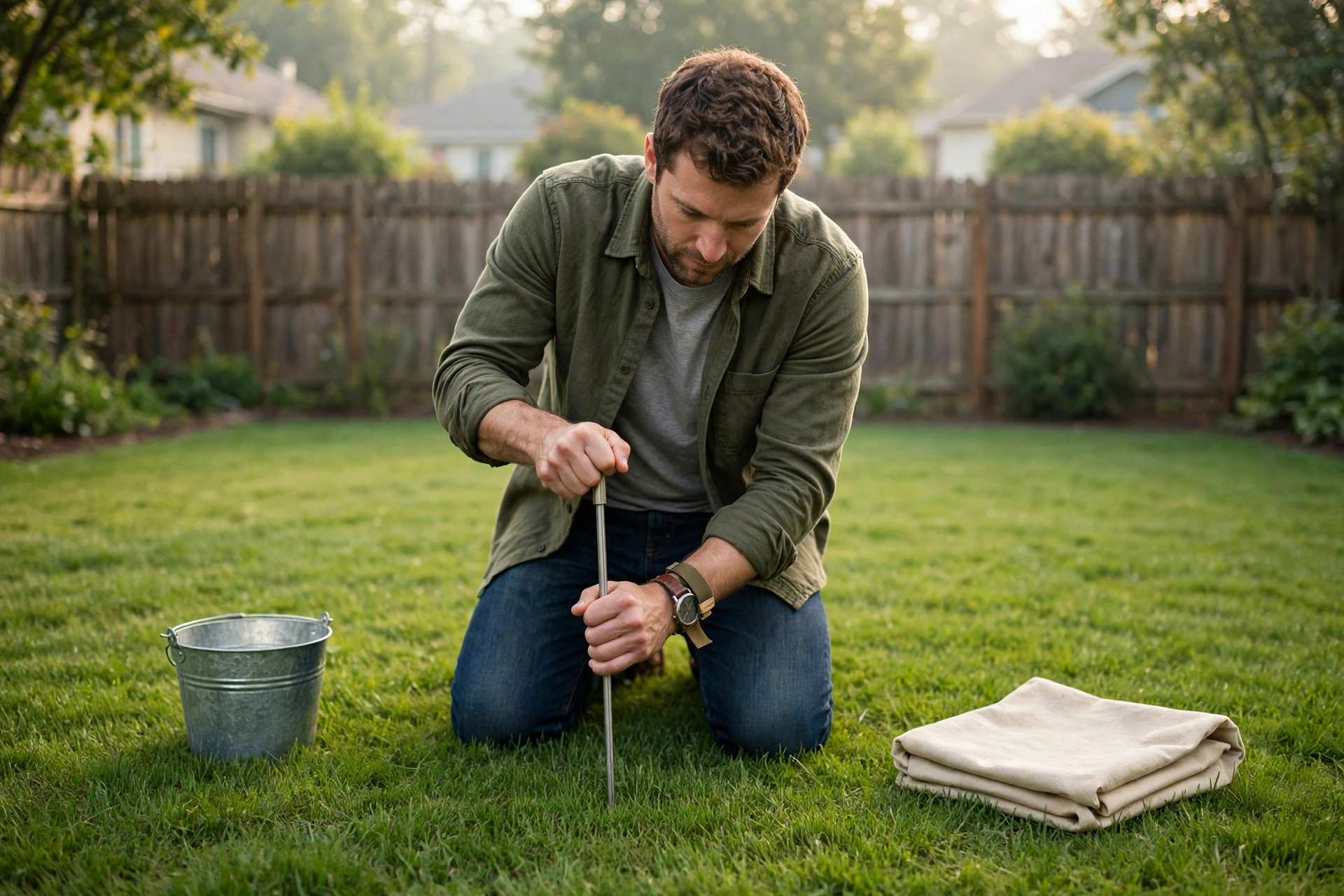
Pull 10 to 15 cores. Walk a zigzag, take a core every few paces, all to the same depth, thatch scraped away first.
Mix in a clean plastic bucket. Break the cores up, stir the whole composite, and fill the sample bag or box from the mix — about a pint.
Sample at the right moment. Before fertilizing, weeks clear of lime, in soil that is moist rather than wet.
That is the entire discipline. Fifteen unhurried minutes is the difference between a report you can spend money on and a report you have to explain away.
Which test to send the good sample to
A clean sample deserves a test matched to the decision. If lime, sulfur, or a season of fertilizer hangs on the result, send the composite to a lab — the numbers come back with rates you can act on. If you are checking whether anything is badly off before spending anything, a fresh at-home kit answers today. Our soil test kit roundup compares both routes in full.
MySoil Soil Test Kit
A full lab analysis by mail: 13 nutrients plus pH, with recommendations tailored to your soil.
Luster Leaf 1601 Rapitest Soil Test Kit
Forty quick tests for pH, nitrogen, phosphorus, and potash, with answers in minutes and no mailing.
Here is what success looks like: two tests taken a season apart, sampled the same way, agreeing within a few tenths on pH. When your numbers start repeating like that, the sample is honest — and every decision you make from it gets cheaper.