This article contains affiliate links. If you buy through them, we may earn a small commission at no extra cost to you.
Your lawn is trying to tell you something, and fertilizer is not always the answer it wants. Yellow patches, thin turf, and a lawn that shrugs off every bag you spread usually mean the soil underneath is off, and guessing which nutrient is missing costs more than finding out.
A soil test is the cheapest honest answer in lawn care. The three kits below cover the whole range: a full lab analysis by mail, a faster lab kit with a detailed report, and a kitchen-table kit that answers the big questions in minutes. One of them fits the question you are actually asking.
How We Picked
Every kit here measures pH plus the nutrients that drive fertilizer decisions, and every one is a real, currently available product with a named testing method. Lab kits report numbers a fertilizer plan can be built on. At-home kits report ranges that catch big problems fast.
The deciding factor is not accuracy in the abstract. It is what you will do with the answer. A homeowner planning a full fertilizer program needs lab numbers. A homeowner wondering whether the soil is wildly acidic needs an answer today. Both are legitimate, and they are different purchases.
At a Glance
| Kit | Type | What it measures | Results in |
|---|---|---|---|
| MySoil Soil Test Kit | Mail-in lab test | 13 plant-available nutrients plus pH, with tailored recommendations | 6 to 8 days online |
| SoilKit | Mail-in lab test | pH, buffer pH, organic matter, CEC, and minerals by Mehlich III extraction | 1 to 2 business days after lab receipt |
| Luster Leaf 1601 Rapitest | At-home chemical kit | pH, nitrogen, phosphorus, and potash in low/medium/high ranges | Minutes, at the kitchen table |
Best Overall: MySoil Soil Test Kit
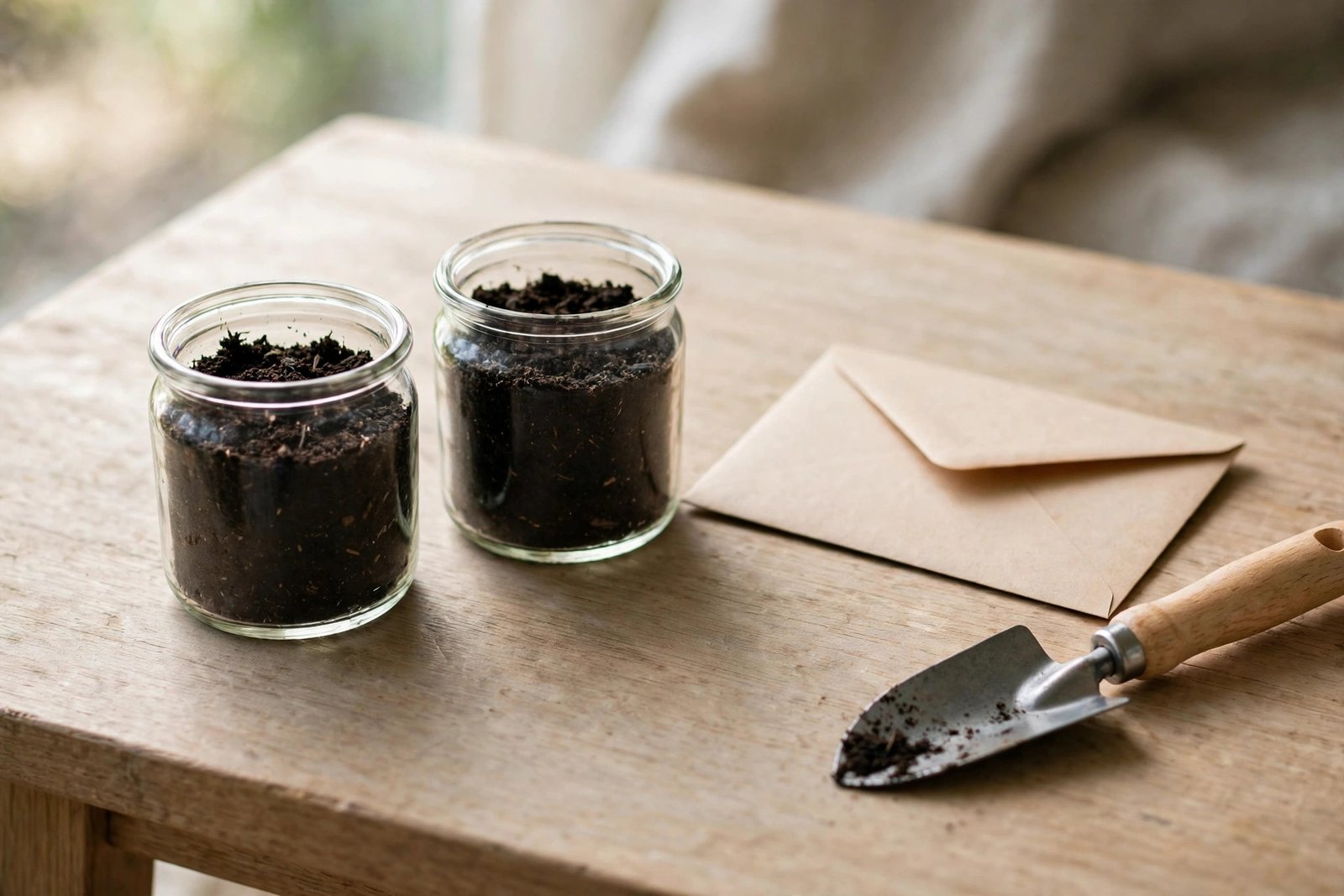
MySoil is the pick for a homeowner who wants a real lab answer without dealing with a university lab directly. The kit uses ion-exchange resin capsules, a method developed at Montana State University, designed to mimic how plant roots take up nutrients. You register the kit, fill the sample jar, mail it in the prepaid envelope, and read the results online in 6 to 8 days.
The report covers 13 plant-available nutrients plus pH, with recommendations tailored to your soil and what you are growing. That breadth is the point. A test that only reports pH tells you the soil is acidic. A test that reports the full nutrient picture tells you whether lime, phosphorus, or potassium is the thing actually holding the lawn back.
The trade-off is the wait and the one-shot nature of a mail-in kit. You get one sample per kit, so sample well: ten to fifteen cores from across the area, mixed together, as our soil sampling guide explains. A careless sample wastes a good lab test.
MySoil Soil Test Kit
A full lab analysis by mail: 13 nutrients plus pH, with recommendations tailored to your soil.
Runner-Up: SoilKit Soil Test Kit
SoilKit is the faster lab route, and the most detailed report of the three. The lab tests by the Mehlich III extraction method and reports pH, buffer pH, organic matter, cation exchange capacity, and a long mineral list including phosphorus, potassium, magnesium, calcium, manganese, iron, copper, and boron. Results post to your dashboard 1 to 2 business days after the lab receives the sample.
Buffer pH and organic matter are the details that separate a good report from a basic one. Buffer pH tells you how much lime the soil actually needs, not just that it is acidic. Organic matter hints at how the soil holds nutrients and water. If you are planning lime and fertilizer together, that extra detail earns its keep.
The trade-off is the same as MySoil’s: mail-in means waiting, and the depth of the report is only useful if you read it. SoilKit’s recommendations help, but a homeowner who only wants to know “acidic or not” will find this report more than the question asked for.
SoilKit Soil Test Kit
The most detailed lab report, with buffer pH and organic matter, posted 1 to 2 business days after receipt.
Best At-Home Kit: Luster Leaf 1601 Rapitest Soil Test Kit
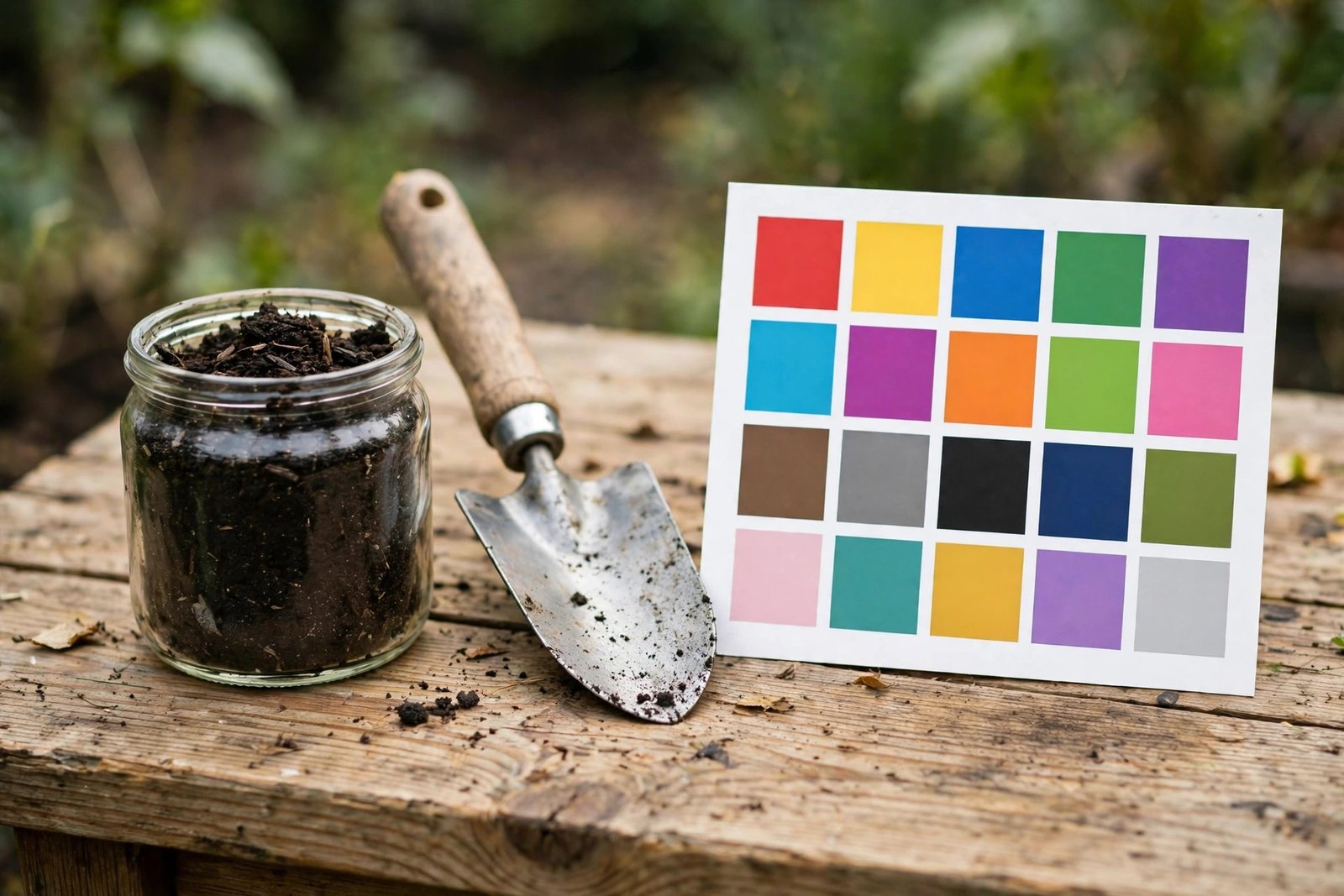
The Luster Leaf 1601 Rapitest is the classic kitchen-table kit, and it has survived this long for a reason: it answers the big questions in minutes, with no mailing and no waiting. Mix soil with water, add a color-coded capsule, shake, and match the color to the chart. The kit holds 40 tests, ten each for pH, nitrogen, phosphorus, and potash.
Think of it as a diagnostic tool, not a prescription. It will tell you the soil is very acidic, or nitrogen is low, or phosphorus is surplus, in low, medium, and high ranges. That is enough to catch the big imbalances that make lawns look sick, and enough to test several spots across the yard for the price of one lab kit.
The trade-off is precision. Color matching is subjective, and ranges are not numbers. Do not use a Rapitest result to fine-tune a fertilizer program to the pound. Use it to decide whether a lab test is worth it, or to compare spots quickly. Our lab vs at-home comparison works through that decision in full.
Luster Leaf 1601 Rapitest Soil Test Kit
Forty quick tests for pH, nitrogen, phosphorus, and potash, with answers in minutes and no mailing.
Not Recommended: A Single-Probe Stick as Your Only Soil Test
The cheap 3-in-1 probe sticks that promise moisture, pH, and fertility from one probe in the ground are the gadget to skip as a soil test. Their pH readings can miss by as much as a full point, which is the difference between healthy soil and a nutrient lockout, and they say nothing useful about nitrogen, phosphorus, or potassium levels.
A probe has a place as a quick moisture check for houseplants. As the basis for a fertilizer decision on a lawn, it is a guess with a needle on it. Spend the same money on a Rapitest kit and get an actual, if coarse, nutrient reading instead.
What to Do With the Results
A soil test only pays off if the fertilizer follows it. Our 28-0-3 vs 10-10-10 comparison shows how the numbers on a bag translate into pounds of nutrient, and our fertilizer after aerating guide covers timing a feeding to an open, receptive lawn. If the test shows high phosphorus, that 10-10-10 bag is adding nutrient the soil already has in surplus, and a high-nitrogen bag is the honest choice.
Test every few years, sample the front and back lawns separately if they look or behave differently, and keep the report. A soil test is a baseline, and the next one is only useful if you can compare it to this one.
Final Thoughts
Buy MySoil if you want a complete lab answer with plain recommendations. Buy SoilKit if you want the deepest report and the fastest lab turnaround. Buy the Rapitest if you want answers today and a tool you can reuse across the yard. Skip the probe stick. And whichever kit you choose, sample like it matters, because it does: ten to fifteen cores, mixed well, at a consistent depth. The lab can only test what you send it.