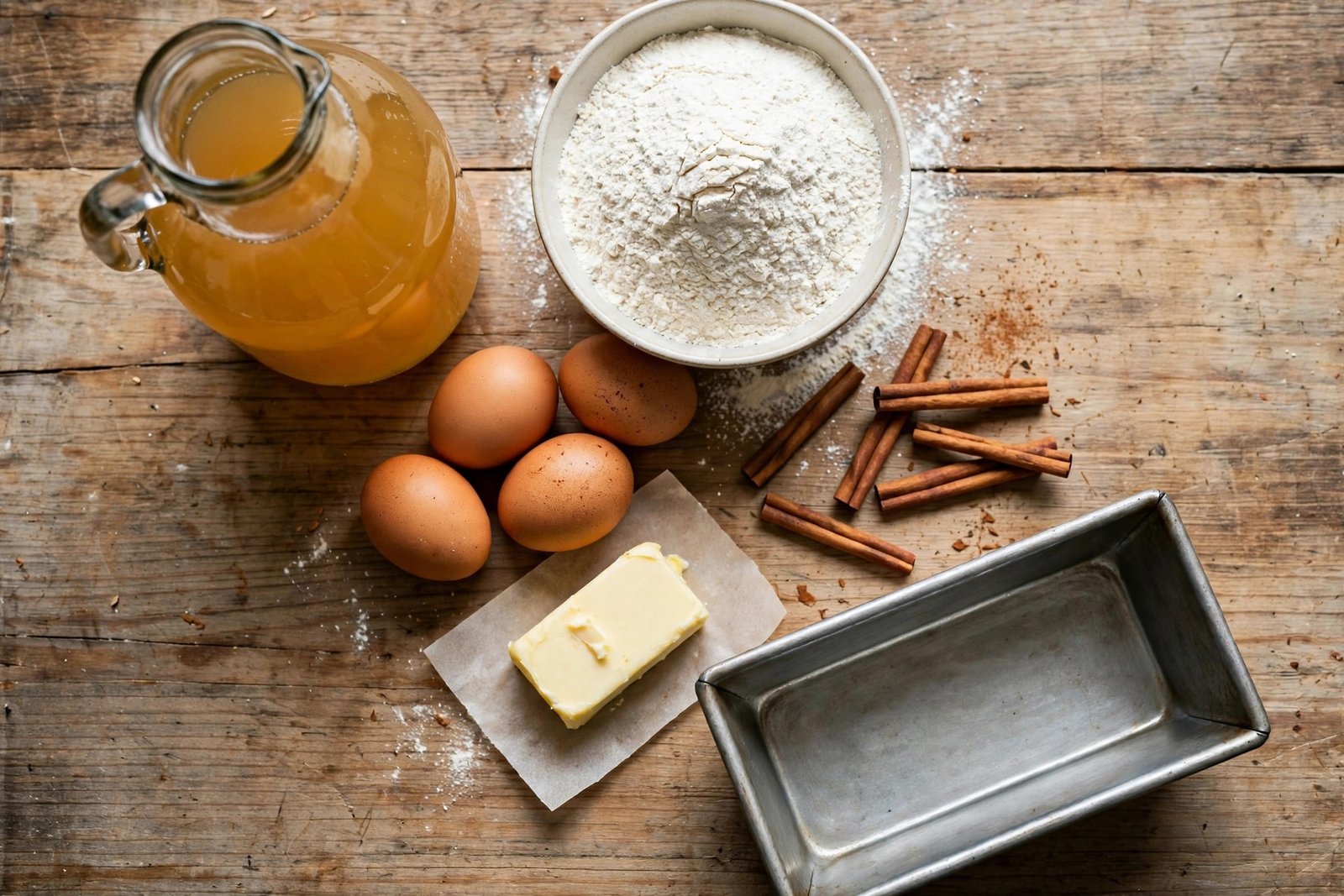
What do you do with the last jug of cider from the orchard stand? You could drink it, or you could simmer it down to a syrup, fold it into a spiced batter, and let your kitchen smell like the orchard for the rest of the afternoon. This loaf is the second choice, and it tastes like it.
Why This One Works
Reducing the cider is the whole trick. Simmering 1 1/2 cups down to 3/4 cup drives off water and leaves the apple flavor behind, so the cake tastes like cider instead of just tasting sweet. A spoonful of sour cream keeps the crumb tender, and the coating goes on while the loaf is still warm, so the cinnamon sugar sticks instead of sliding off.
If you have ever wondered why a cake made with straight-from-the-jug cider tastes faintly of nothing, this is the answer: the flavor was there, it was just diluted. The reduction fixes that before the batter even comes together.

Apple Cider Doughnut Loaf Cake
Ingredients
Method
- Reduce the cider. Pour the 1 1/2 cups of apple cider into a small saucepan and bring it to a simmer over medium heat. Simmer gently for about 20 minutes, until it has reduced to 3/4 cup. Set aside to cool while you prepare the pan and batter.
- Heat the oven and prepare the pan. Heat the oven to 350°F. Grease a 9×5-inch loaf pan and line it with parchment paper, leaving an overhang on the two long sides for lifting. While the cider cools, measure out the remaining ingredients — about 10 minutes of measuring and mixing in all.
- Whisk the dry ingredients. In a medium bowl, whisk together the flour, baking powder, baking soda, cinnamon, nutmeg, and salt until evenly combined.
- Cream the butter and sugars. In a large bowl, beat the softened butter, granulated sugar, and brown sugar together for about 2 minutes, until light and fluffy. Beat in the eggs one at a time, then the vanilla.
- Add the wet ingredients. Stir in the sour cream and the cooled 3/4 cup of reduced cider until the mixture is smooth. It may look slightly curdled at this point; that smooths out once the flour goes in.
- Finish the batter. Add the dry ingredients to the wet ingredients in two additions, stirring just until no dry flour remains. Fold in the diced apple. Do not overmix, or the loaf turns tough.
- Bake. Scrape the batter into the prepared pan and smooth the top. Bake for about 60 minutes, until a toothpick inserted in the center comes out with a few moist crumbs and the center reads 200°F to 205°F on an instant-read thermometer. If the top browns too fast, tent it loosely with foil for the last 15 minutes.
- Cool in the pan. Let the loaf cool in the pan for 15 minutes, then lift it out by the parchment and set it on a wire rack.
- Coat while warm. While the loaf is still warm, brush all sides with the melted butter, then roll it gently in the cinnamon sugar, pressing lightly so the coating sticks. Let it cool to lukewarm before slicing into 10 slices.
Variations, Serving, and Storage
Swap the diced apple for a firm pear, diced the same size, and the loaf holds together just as well. A handful of chopped toasted pecans folded in with the apple adds crunch without changing the bake. For a plainer loaf, skip the coating and dust the cooled cake with powdered sugar instead.
Serve it slightly warm or at room temperature, in thick slices, with coffee or with a mug of mulled apple cider from the fire pit if the evening runs that way. Wrapped tightly, the loaf keeps two days on the counter or up to five days in the refrigerator, and slices freeze well for a month — thaw at room temperature.
It also sits happily next to the season’s other baking: if you liked the Dutch-oven pumpkin bread, this is its orchard cousin, and it pairs just as well with a plate of butternut squash mac and cheese on a cold night when dinner comes first and dessert follows close behind.
Save the heel for yourself. It carries the most cinnamon sugar, and nobody at the table will argue once they have tasted the middle.