Landscape & Leisure is reader-supported. When you buy through links on our site, including Botanical Interests seed links, we may earn a commission at no extra cost to you. Prices change, so click through to confirm current pricing.
You’re standing at the seed rack with a stir-fry in mind, and every packet of Asian greens looks like the same promise in a different color. It isn’t. One of these greens is bred to take summer heat, one will still be standing after a hard frost, one is done in thirty days, and one brings a mustard bite that changes the whole pan. Pick the wrong one for your weather and you get a short, stingy harvest where dinner should have been.
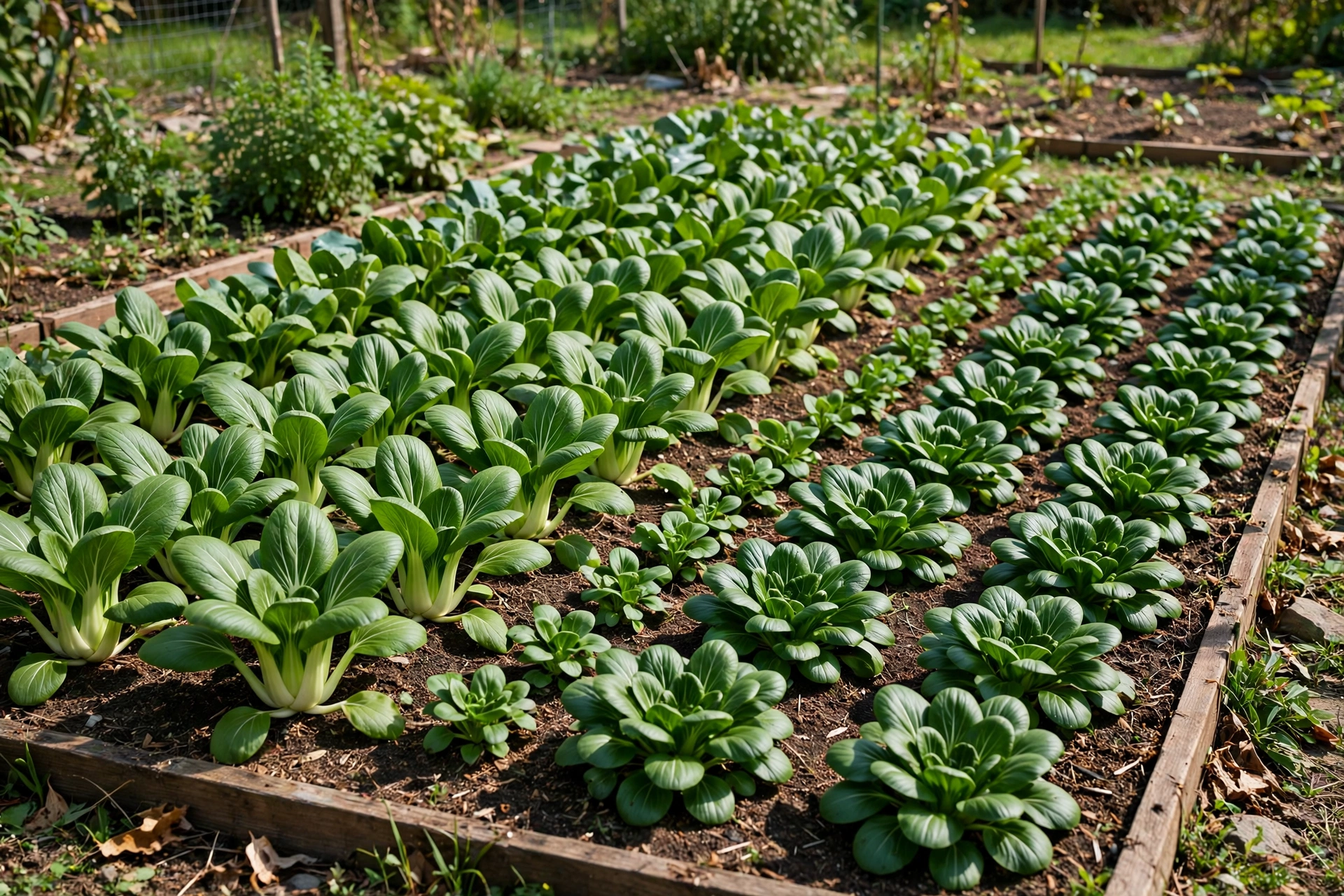
What the bok choys below share is a forgiving sowing recipe: seed a quarter inch deep, three seeds every six inches, thinned to one plant every six inches once the seedlings are two inches tall. (Gai Choy, the mustard of the group, wants a little more room — six to ten inches between plants.) Germination takes five to ten days, and none of them wants to be started indoors — direct sow is the way, most of them two to four weeks before your last frost, in soil that’s at least 60 degrees. For the planting itself, see our guide to growing bok choy. If you’re torn between the two headliners, see bok choy vs tatsoi.
Best Overall: Bok Choy Choko
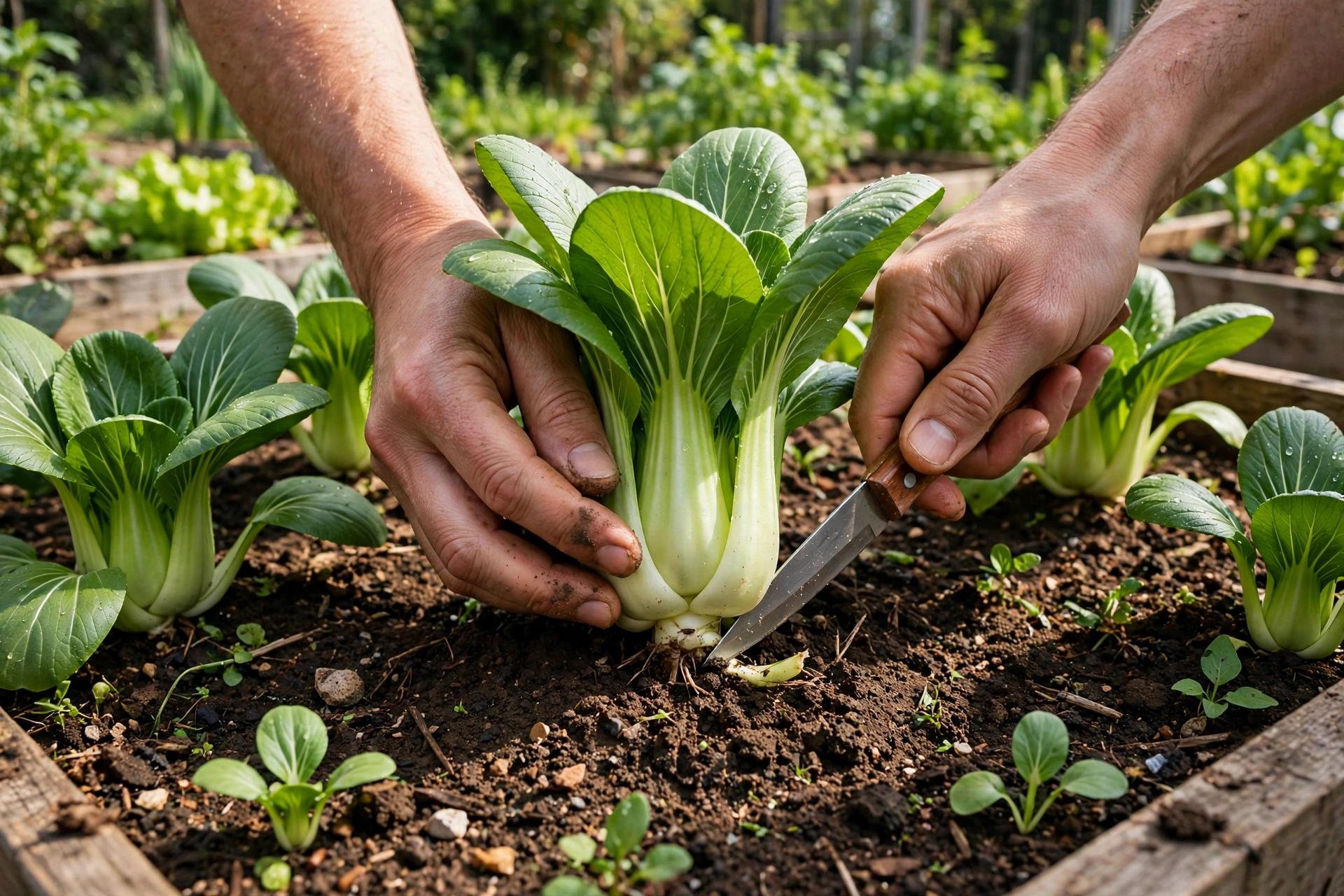
Choko is the packet to buy first, and the gardener ratings say so plainly: 4.9 from 38 reviews, the highest rating and the most reviews of any Asian green here. It’s a small-type bok choy bred for heat tolerance, with smooth, leafy blades and crisp, pale green stems, and Botanical Interests says it tolerates heat well enough to grow all summer. Harvest it at 4 inches tall for delicate, crisp, pleasantly mild leaves — a stir-fry ingredient first, but just as good fresh or marinated in a salad, or turned into baby bok choy kimchi.
The trade-off is patience. At 50 to 55 days to maturity, Choko is the slowest of the four — Toy Choy below is on the table in about a month. And it’s a hybrid, so seed saved from your own plants won’t grow true. Neither matters much when the plant itself is this reliable: uniform green leaves, a packet that sows 18 feet, and a plant that looks beautiful enough to grow alongside flowers.
Pros: highest gardener rating here at 4.9 from 38 reviews; bred for heat tolerance, grows all summer; harvest at 4 inches for tender baby leaves; good for containers.
Cons: slowest to mature of the four at 50–55 days; a hybrid, so saved seed won’t grow true.
Bok Choy Choko Seeds
A heat-tolerant baby bok choy with the highest gardener rating here — the one to plant first.
Runner-Up: Rosette Tatsoi
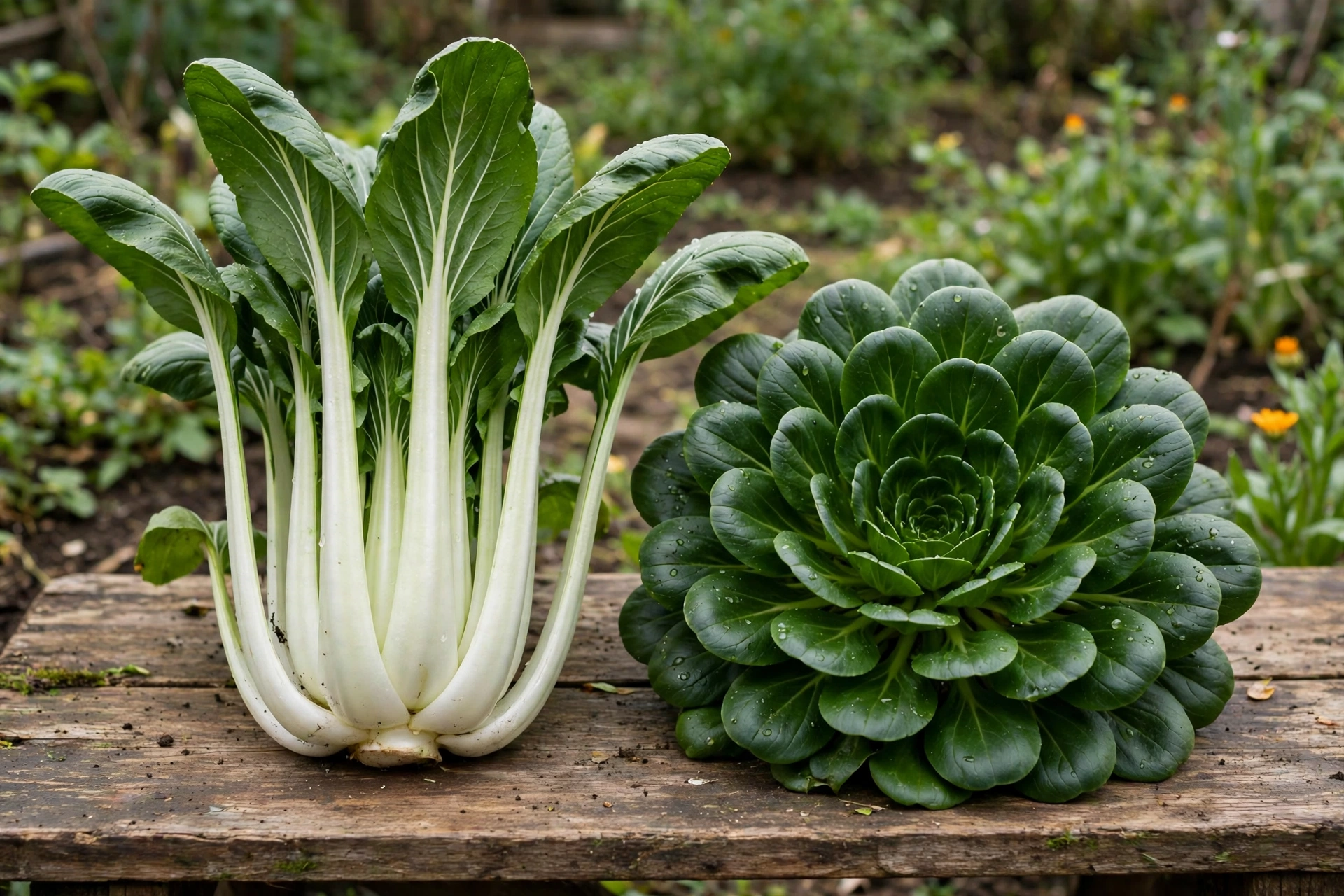
Tatsoi is the green for the other end of the season. Its spoon-shaped, dark green leaves grow in a flat rosette, and it is very cold tolerant — Botanical Interests says it withstands temperatures down to 15 degrees, and that it can be harvested even when there is snow on the ground. At 45 days it’s nearly as quick as Choko is patient, and the flavor runs slightly mustard-like, which Botanical Interests calls more flavorful than traditional bok choy, with a smooth texture gardeners prize.
The trade-off is the calendar. Tatsoi sows one to two weeks after your last frost, later than the bok choys, and it wants cooler soil — ideally 65 to 75 degrees where Choko wants 75 to 85. That later start is also its gift: sow it again in late summer and fall and it carries the bed into cold weather the others can’t touch. One packet sows up to 51 feet, the most generous coverage here.
Pros: withstands temperatures down to 15°F; 45 days to maturity; sow again in late summer and fall for cool-season harvest; the rosette form is pretty enough for a front border.
Cons: slightly mustard-like flavor isn’t for everyone; sows later than the bok choys, after the last frost.
Rosette Tatsoi Bok Choy Seeds
A cold-hardy rosette that keeps producing after frost — the fall garden’s Asian green.
Best for Small Spaces: Toy Choy
Toy Choy is the answer to the smallest garden question: what grows in a pot by the door. It’s a miniature bok choy that reaches only 5 inches tall, with smooth, dark green blades and thick, white, crisp stems, and it’s ready to harvest in as few as 30 days — the fastest pick in this roundup by a clear margin. It also tolerates warm weather better than full-size types, so a sunny patio spot suits it rather than punishing it.
The trade-off is scale, and there’s no getting around it. A 5-inch plant gives you a 5-inch harvest, so sow a full row rather than a few plants, and one packet sows only 11 feet — the shortest coverage here. What it gives you instead is a bok choy that fits where no other bok choy fits, with glossy leaves that look good doing it.
Pros: ready in as few as 30 days, the fastest here; only 5 inches tall — made for containers and bed edges; handles warm weather better than full-size bok choy.
Cons: small plants mean small harvests per plant — sow a full row; one packet sows only 11 feet.
Toy Choy Bok Choy Seeds
A 5-inch bok choy ready in about a month — the fastest pick here, made for pots.
Best Bold Flavor: Gai Choy Mustard
Gai Choy is the one with a point of view. It’s a head-forming Chinese mustard with crinkled, medium green leaf tips and broad, crisp, light green to white midribs, and its flavor is pungent in the classic Chinese mustard way — enjoyed in Chinese, Korean, and Japanese cooking, and softened by cooking, braising, stir-frying, or pickling. Picked young it’s mild and makes an excellent baby green; let it mature and the heads form and the flavor turns up.
The trade-off is the thin review base. Gai Choy carries a 4.8 rating, but on only 4 reviews — encouraging rather than proven, so plant it as your bold second green rather than your only one. And direct sow only: Botanical Interests warns that transplant stress can make it bolt. On the plus side, you can start harvesting leaves when they’re just 2 inches tall, taking no more than a third of the plant if you want regrowth, and sow again every three weeks until ten to twelve weeks before your first fall frost.
Pros: the only real heat in this roundup — pungent mustard flavor; mild as a baby green, bold braised or pickled; successive sowings keep it coming all season.
Cons: only 4 reviews behind that 4.8 rating; transplant stress can make it bolt, so direct sow only.
Gai Choy Mustard Seeds
A head-forming mustard with real bite — mild as a baby green, bold braised or pickled.
The One to Skip: Baby Choi
Baby Choi is the classic baby bok choy — smooth, dark green blades with white, crisp stems, ready to harvest at 5 to 6 inches tall in only about 35 days, and bolt resistant besides. Gardeners rate it 4.1 from 32 reviews, and it suits containers as well as beds. The problem isn’t the seed. It’s the shelf: Baby Choi is sold out, so there’s no packet to buy. When it’s back in stock it’s a fine second bok choy — but until then, Choko covers the same ground and is in stock now.
Side-by-Side Comparison
| Variety | Days to maturity | Size | Best for | Gardener rating |
|---|---|---|---|---|
| Bok Choy Choko | 50–55 days | Under 12″ | Summer heat, stir-fry | 4.9 / 38 |
| Rosette Tatsoi | 45 days | Under 12″ | Cold weather, fall | 4.7 / 17 |
| Toy Choy | 30–35 days | 5″ tall | Containers, fast harvest | 4.7 / 30 |
| Gai Choy Mustard | 40–60 days | Under 12″ | Bold flavor, baby greens | 4.8 / 4 |
Bottom Line
If you plant one Asian green, plant Choko — the highest-rated packet here, bred for heat, and happy all summer long. If your season runs cold, tatsoi is the second packet: it shrugs off frost down to 15 degrees and keeps the bed producing when everything else has quit. And if all you have is a pot by the door, Toy Choy is ready in about a month. Sow while the soil is still cool, thin to one plant every six inches, and pick the outer leaves first — the bed will keep feeding you long after the packet is empty.