Landscape & Leisure is reader-supported. When you buy through links on our site, including Botanical Interests seed links, we may earn a commission at no extra cost to you. Prices change, so click through to confirm current pricing.
The mistake is buying on looks. On the seed rack, bok choy and tatsoi sit side by side like the same plant in two costumes — both Asian greens, both fast, both picked leaf by leaf. But one was bred for heat and the other for frost, and planting the wrong one in the wrong season is how you end up with a short, stingy harvest instead of a bed that keeps giving. They’re cousins, not twins, and the choice between them is really a choice about your weather.
Both are worth growing — the question is which one earns the space first. See our roundup of the best Asian greens for the full field, and our bok choy growing guide for the sowing and harvest details both of them share.
In the Garden: Two Different Plants

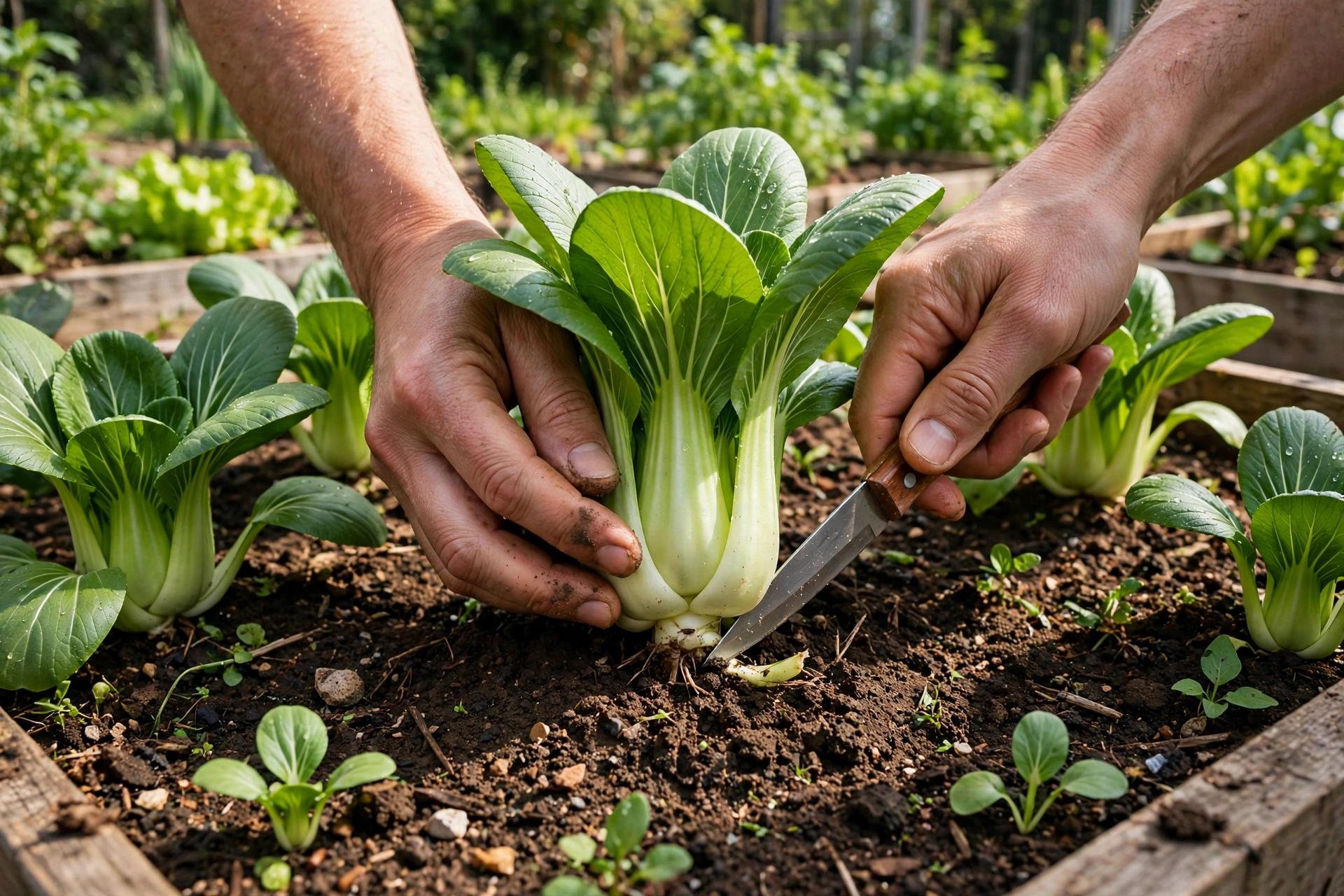
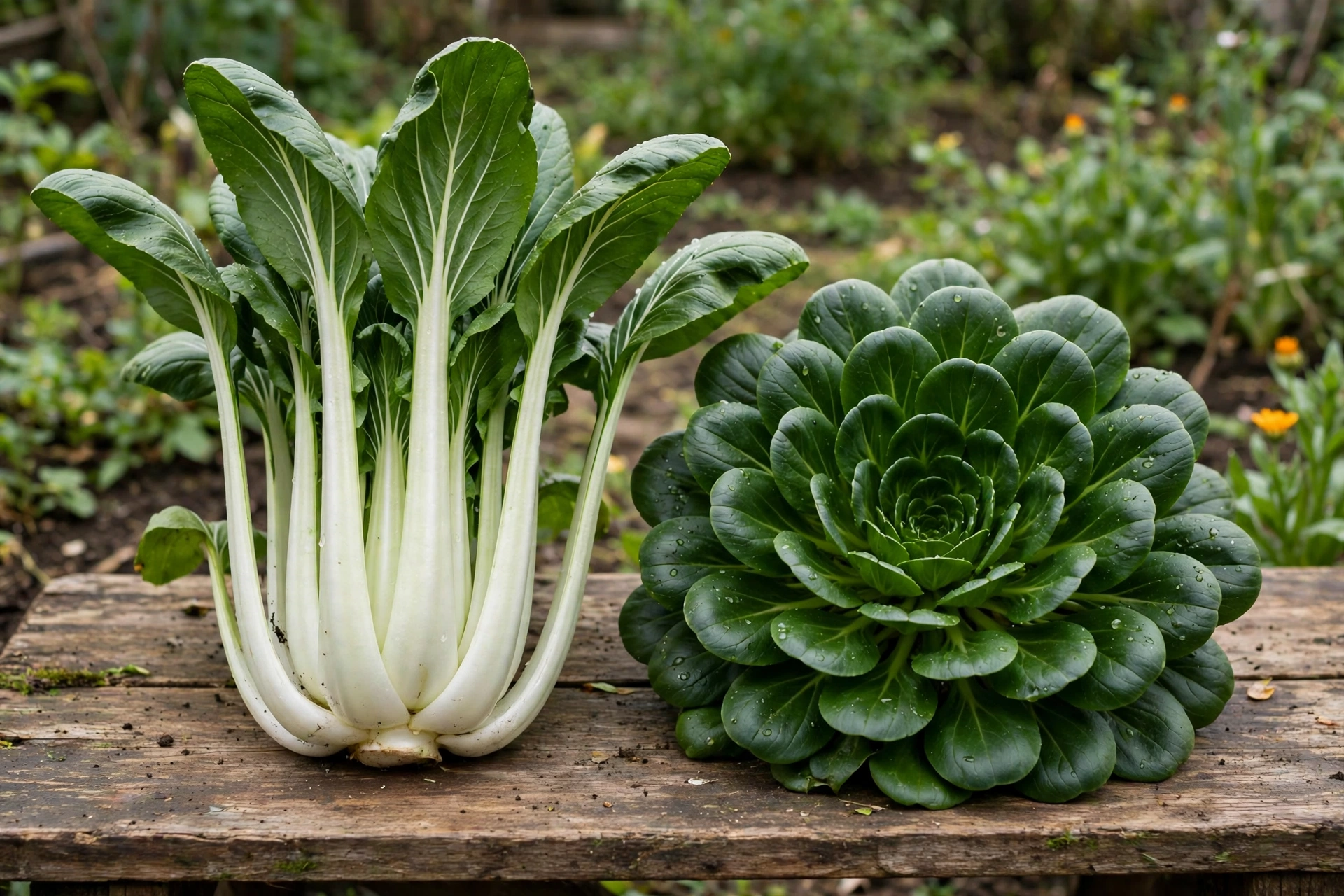
Start with what you see. Bok choy grows upright, a loose cluster of smooth, leafy blades on crisp stems — Choko’s are pale green, Toy Choy’s white. Tatsoi grows flat, a rosette of spoon-shaped, dark green, thick leaves spread close to the ground. The shape tells you how to pick them, too: bok choy’s upright leaves come off one by one from the outside, while tatsoi’s flat rosette invites the same leaf-by-leaf harvest from a plant that hugs the soil.
The shape also tells you where they fit. Tatsoi’s low rosette tucks into bed edges and front borders where an upright plant would shade everything behind it — Botanical Interests even notes it’s worth growing for its decorative value alone. Bok choy stands up in the row like any other leafy green, and Toy Choy’s 5-inch plants squeeze into containers and the gaps between slower crops.
Flavor: Mild vs Mustardy
Choko is the mild one. Its leaves are pleasantly mild-flavored, crisp, and delicate at 4 inches tall — a stir-fry green first, but just as good fresh or marinated in a salad. Toy Choy runs the same way: tender, crisp stems and glossy dark green leaves with nothing sharp about them.
Tatsoi has an edge. Botanical Interests describes it as more flavorful than traditional bok choy, slightly mustard-like, with a smooth texture gardeners prize — and more nutritious, with a high calcium and vitamin content. That mustard note is what makes tatsoi interesting in a pan, and it’s also what makes it the wrong pick if what you actually want is a mild green that disappears into the dish.
Weather: Heat vs Cold
This is the decision, and the numbers make it plain. Choko is a small-type bok choy bred for heat tolerance, and Botanical Interests says it tolerates heat well enough to grow all summer. Toy Choy goes further: it tolerates warm weather better than full-size types, so a hot patio is a feature, not a problem.
Tatsoi plays the opposite season. It is very cold tolerant — Botanical Interests says it withstands temperatures down to 15 degrees and can be harvested even when there is snow on the ground. It sows one to two weeks after your last frost and again in late summer and fall, in cooler soil, ideally 65 to 75 degrees where Choko wants 75 to 85. Plant tatsoi for the fall bed and bok choy for the summer one, and neither plant is ever asked to do a job it wasn’t bred for.
Speed and Size, Side by Side
| Trait | Bok Choy Choko | Rosette Tatsoi | Toy Choy |
|---|---|---|---|
| Days to maturity | 50–55 days | 45 days | 30–35 days |
| Height | Under 12″ | Under 12″ | 5″ tall |
| Flavor | Mild, crisp | Slightly mustard-like | Mild, tender |
| Weather strength | Heat tolerant, grows all summer | Cold tolerant to 15°F | Warm-weather tolerant |
| Sowing window | 2–4 weeks before last frost | 1–2 weeks after last frost | 2–4 weeks before last frost |
| Gardener rating | 4.9 / 38 | 4.7 / 17 | 4.7 / 30 |
The table hides one honest trade-off: Choko is the slowest of the three at 50 to 55 days, and it carries the best rating — 4.9 from 38 reviews, the most reviews of any Asian green here. Toy Choy is the fastest at 30 to 35 days, but a 5-inch plant gives you a 5-inch harvest, so sow a full row. Tatsoi sits in the middle on speed and first on cold, which is exactly why it’s the fall pick.
Bok Choy Choko Seeds
Bred for heat tolerance with the highest gardener rating here — the bok choy for a hot summer.
Rosette Tatsoi Bok Choy Seeds
Withstands temperatures down to 15°F — the Asian green for fall beds and frost.
Toy Choy Bok Choy Seeds
A 5-inch bok choy ready in about a month — the fastest pick here, made for pots.
Bottom Line
If your summers run hot, plant Choko — bred for heat, the best-rated packet here, and happy all summer long. If your season runs cold, plant tatsoi — it shrugs off frost down to 15 degrees and keeps the bed producing when everything else has quit. And if all you have is a pot by the door, Toy Choy is ready in about a month. The honest answer is that most gardens want two of them: bok choy for summer, tatsoi for fall, and the same sowing recipe for both.