Landscape & Leisure is reader-supported. When you buy through links on our site, including Botanical Interests seed links, we may earn a commission at no extra cost to you. Prices change, so click through to confirm current pricing.
Cauliflower is a fall crop wearing a spring costume. Plant it so the heads form in hot weather and you get loose, yellowed curds and a lasting grudge against the whole species.
Time it so the heads size up as the weather cools and the same plant behaves. That timing is mostly a variety decision, and it is the decision this page settles: which of the cauliflower packets is worth your bed, which one colors up, and which one is not a cauliflower at all. The mechanics — blanching, spacing, harvest — live in my guide to growing cauliflower from seed, and the spiral-headed question gets its own page in cauliflower vs Romanesco.
The Three Varieties, Side by Side
| Variety | Days | Head | Spacing | Rating |
|---|---|---|---|---|
| Twister | 75–80 | 6½–7 in, white | 24 in | 3.5/6 |
| Amethyst | 70 | 6½–7 in, purple | 24 in | 5.0/2 |
| Romanesco | 75–100 | 5–6 in, lime green | 24 in | 4.6/16 |

Three packets is the whole cauliflower shelf worth planting right now. All three start indoors, all three want a plant every 24 inches, and all three germinate in 8 to 10 days at a soil temperature of 70 to 85°F, per their packets. What differs is the head — its color, its size, and how long you wait for it.
Twister — Best Overall
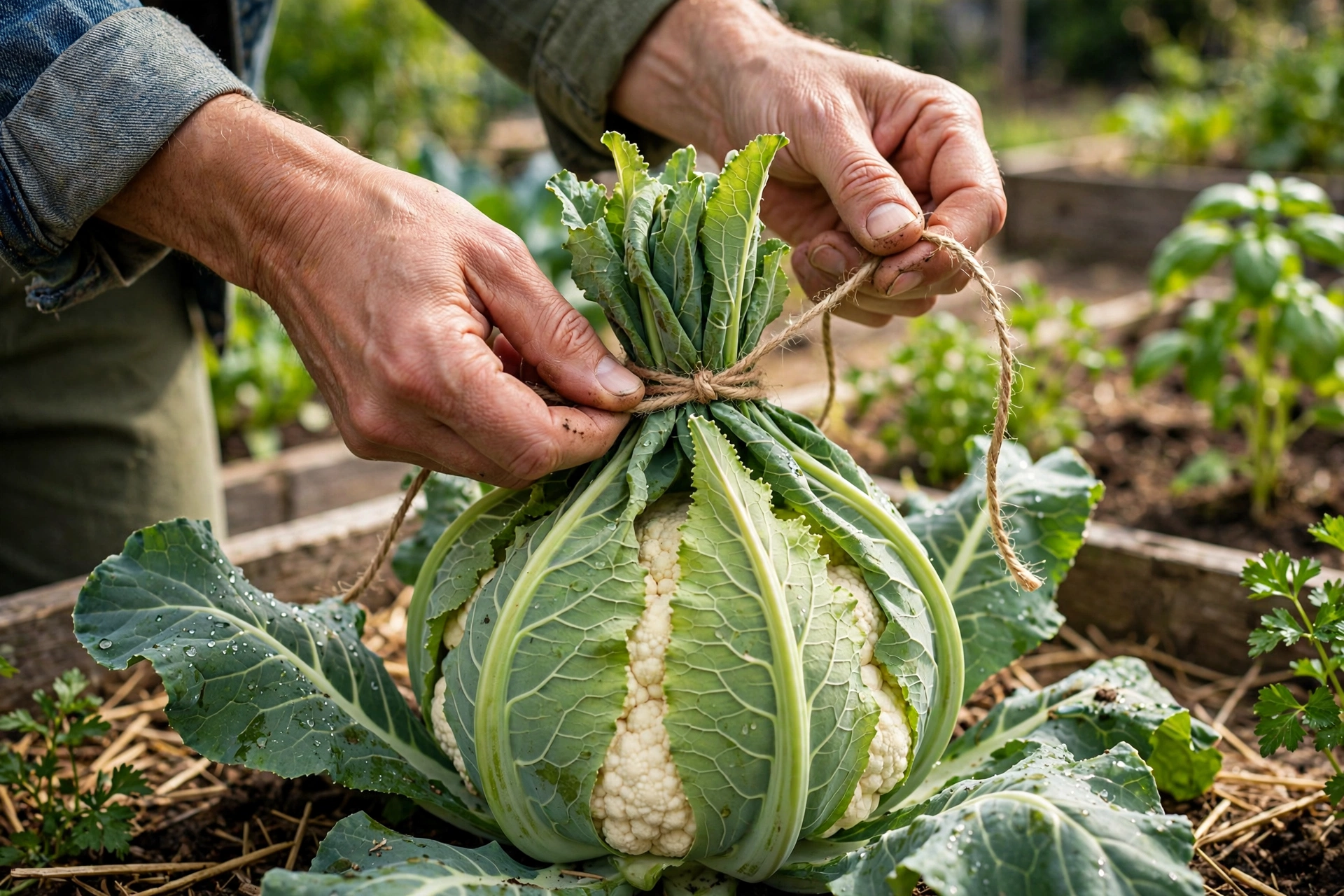
Twister is the white cauliflower to plant if white cauliflower is the point. The hybrid makes uniform, dense heads 6½ to 7 inches wide in 75 to 80 days, and its large leaves curl over the curd on their own — the packet calls it self-blanching, which means the head stays snowy instead of sun-scalding yellow while you are busy elsewhere.
It also tolerates heat better than the other two, and in mild climates the packet says it can grow year round. I would still aim it at a fall heading window; heat tolerance buys you forgiveness, not a new season.
The honest mark against it is the rating: 3.5 stars from 6 reviews, the lowest on this page. The variety’s job — a reliable white head that wraps itself — is exactly what the packet describes, but six reviewers is a small jury and their verdict was mixed, so I am ranking it on its stated traits, not on applause.
- Pros: self-blanching white heads, 6½–7 inches; heat tolerant; heads hold well in the garden
- Cons: lowest rating here at 3.5/6; 75–80 days is not fast
Twister Cauliflower Seeds
Self-blanching hybrid with dense, uniform white heads that hold well in the garden.
Check Price at Botanical InterestsAmethyst — Best for Color, and the Earliest Finish
Amethyst finishes first, at 70 days, and it does it in purple. The domed heads run the same 6½ to 7 inches as Twister, the plants are only medium height at 12 to 24 inches, and the packet notes it performs particularly well in the Eastern US in spring or fall.
Two cautions ride with it. The packet is small — it sows up to 10 feet of row — and at $7.49 it is by far the priciest seed on this page. Its 5.0-star rating comes from just 2 reviews, which is a compliment, not a consensus.
I would plant Amethyst where the color earns its keep: a small bed, a market row, a kid who will eat a purple vegetable on principle. For a long row of white heads, Twister’s packet math wins.
- Pros: earliest at 70 days; striking purple heads the same size as the white hybrid; compact plants
- Cons: $7.49 for a packet that sows about 10 feet; rating rests on 2 reviews
Amethyst Cauliflower Seeds
Early purple hybrid, 70 days, with domed heads as large as the white varieties.
Check Price at Botanical InterestsRomanesco — Best for Fall
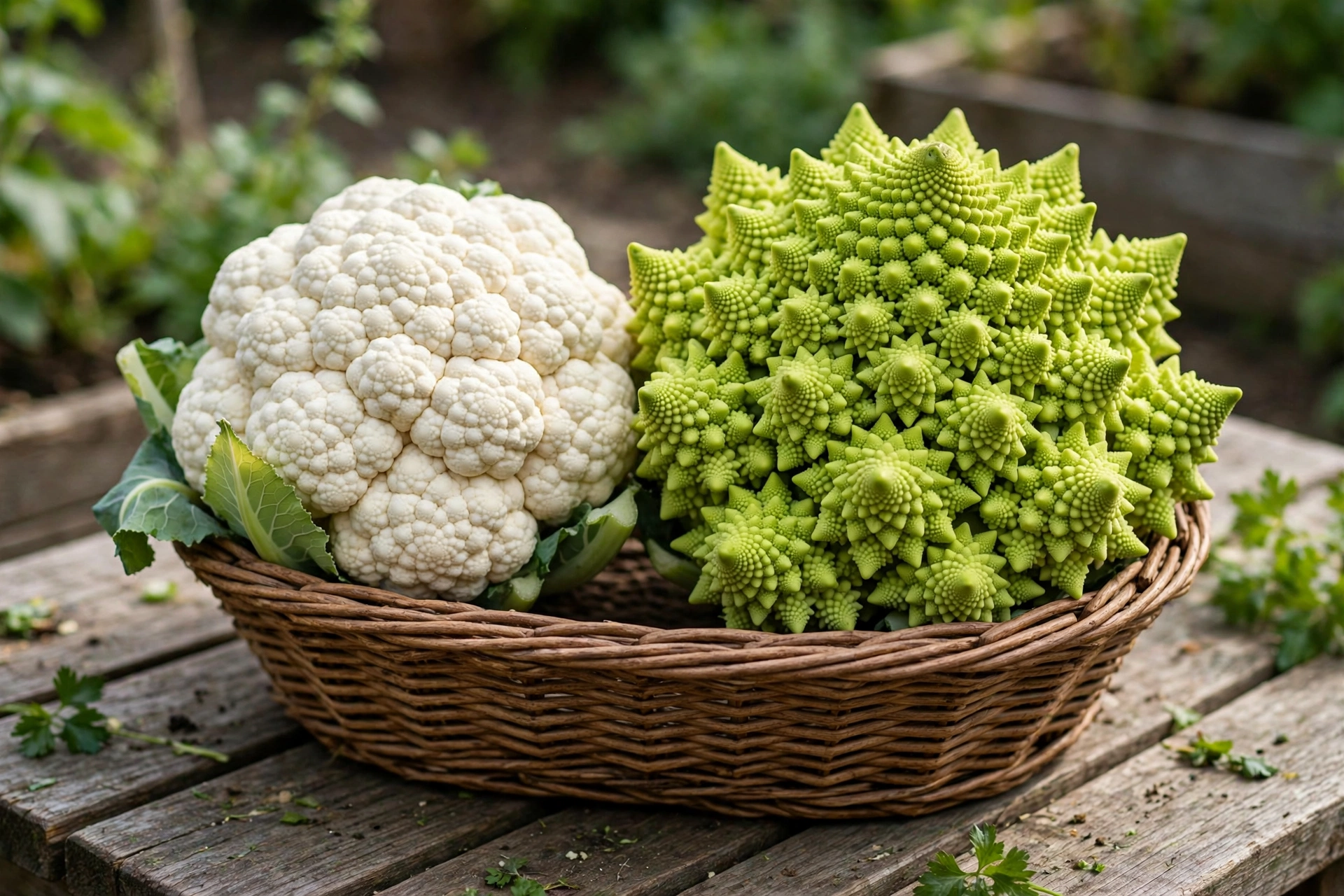
Romanesco is on this page under protest from its own packet, which states plainly that it is not actually a cauliflower but somewhere between a broccoli and a cauliflower. Fair enough. Gardeners shop for it with the cauliflowers, grow it on the cauliflower schedule, and cut a 5 to 6 inch lime-green head made of spiraling florets, so here it sits.
The heirloom dates to 1890 and carries the best-supported rating here, 4.6 stars from 16 reviews, at the lowest price, $2.69 for a packet that sows up to 160 feet. Cooked, the packet promises a nutty flavor and a texture similar to cauliflower.
The trade is time. At 75 to 100 days it is the slowest thing on this page, and the packet itself steers you to a fall harvest, because a warm spring may delay the heads until fall anyway. Plant it as a fall crop from the start and that warning becomes the plan. I work through the head-to-head in cauliflower vs Romanesco.
- Pros: best-supported rating here, 4.6/16; $2.69 and a generous packet; unmistakable spiral heads
- Cons: slowest at 75–100 days; not a true cauliflower; smaller 5–6 inch heads
Romanesco Cauliflower Seeds
Heirloom spiral heads with a nutty flavor, grown on the cauliflower schedule for a fall cutting.
Check Price at Botanical InterestsThe One I Would Skip: Snowball Y
Snowball Y is the classic name in this group — 6 inch snow-white heads in 70 to 80 days, self-blanching, a 4.0-star rating from 11 reviews — and it is sold out. A sold-out packet cannot anchor a bed plan, so it gets this paragraph instead of a card. If it returns in stock, it competes directly with Twister on the same job at a lower price.
One Piece of Gear All Three Want
Every packet on this page marks direct sowing not recommended and indoor starting recommended, 4 to 6 weeks before transplanting. Cauliflower seedlings are also the brassicas I most want in separate cells, because a checked transplant sulks for a week — the same reason I start the varieties in my broccoli varieties roundup the same way.
Epic 6-Cell Seed Starting Trays
Sturdy reusable cells for the indoor start every cauliflower packet on this page recommends.
Check Price at Botanical InterestsBottom Line
Plant Twister if you want white cauliflower without babysitting the blanching. Plant Amethyst if 70 days and a purple head are worth a small, pricey packet. Plant Romanesco for fall, and accept the wait as the price of that spiral. The packet I would not build a plan around this season is the one that is not on the shelf.