Landscape & Leisure is reader-supported. When you buy through links on our site, including Botanical Interests seed links, we may earn a commission at no extra cost to you. Prices change, so click through to confirm current pricing.
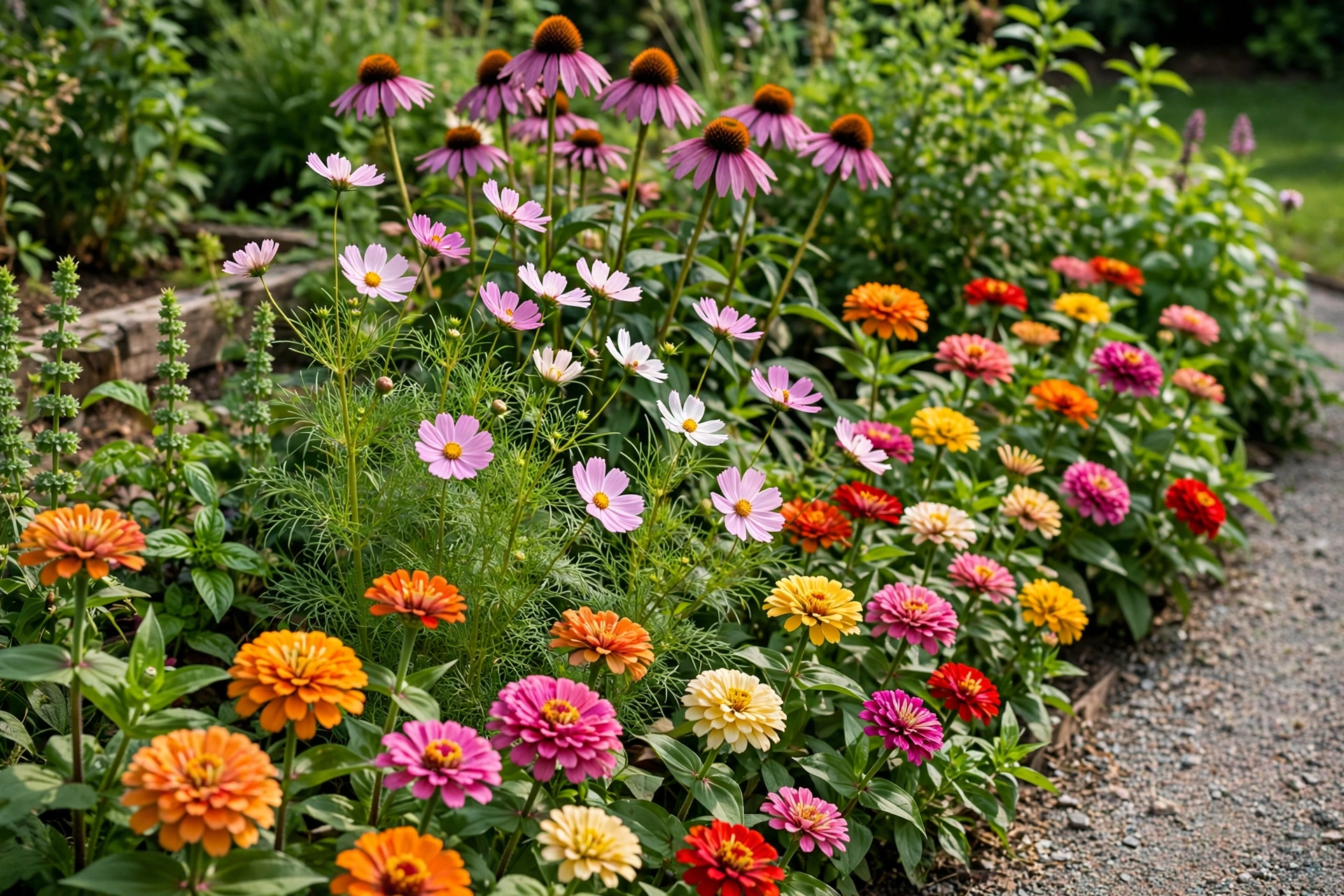
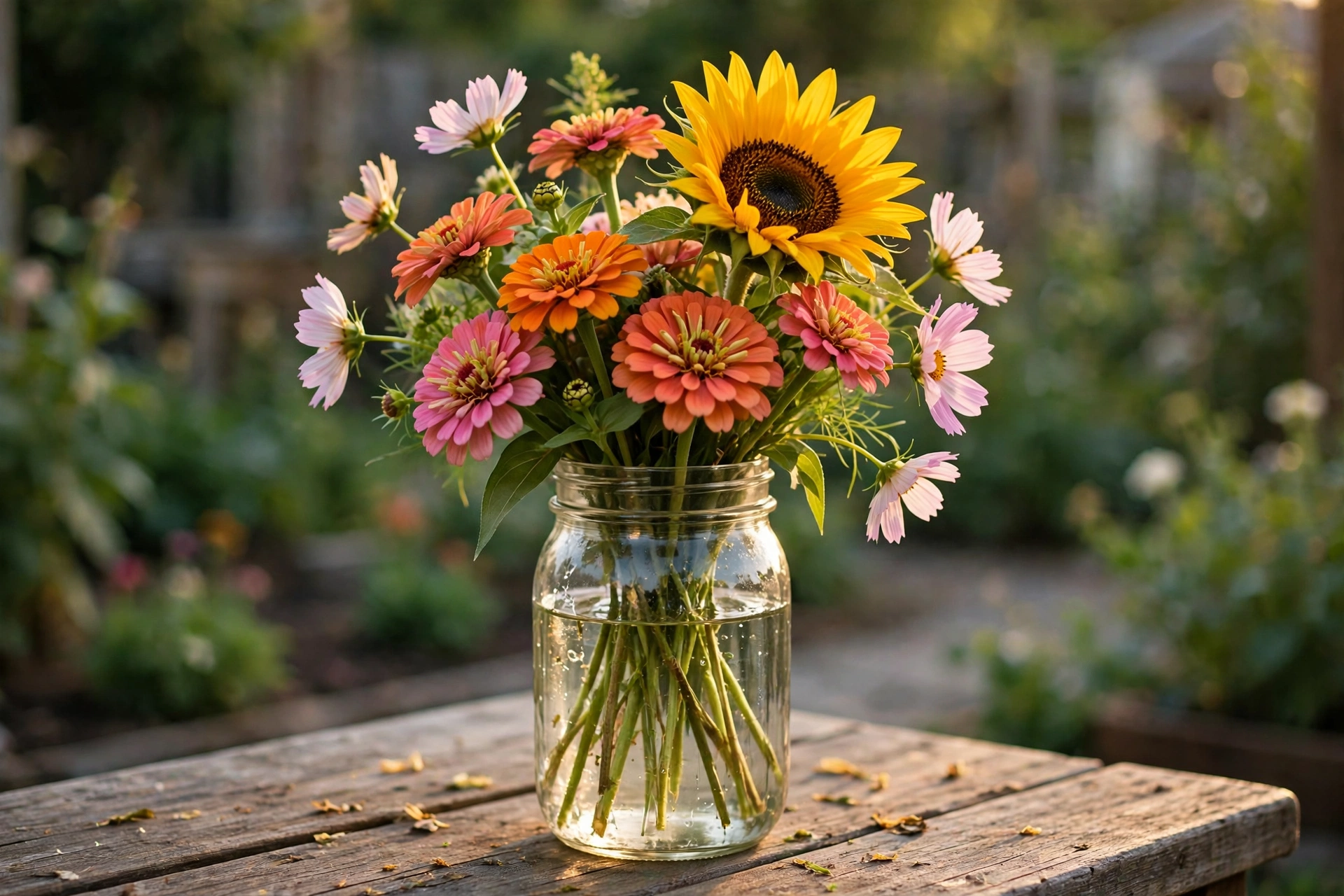
There is a particular Saturday-morning feeling that no florist can sell you: stepping outside with scissors, still in your slippers, and coming back in with a jar full of flowers you grew from a packet that cost less than the coffee you are holding. That is the whole promise of a cut-flower patch. It is not a big garden, and it does not ask for much. A sunny strip, a few packets, and a willingness to cut — the more you cut, the more most of these flowers bloom.
The seven varieties below are the ones worth your sunny strip, chosen for stem length, vase life, and the simple pleasure of looking at them. Each one earns its place for a different job, and the trade-offs are stated plainly. For timing and indoor starts, see our guide to starting flowers indoors. For the longer question of what comes back next year, see our comparison of annual and perennial flowers from seed.
| Variety | Bloom | Best for |
|---|---|---|
| California Giants Blend Zinnia | 4″–6″ flowers, summer to frost | The main event — big, long-lasting bouquets |
| Sea Shells Blend Cosmos | 3″–4″ quilled petals, summer to frost | Airy, romantic filler that flatters everything |
| Diablo Cosmos | 1″–1½” scarlet-orange blossoms, summer to frost | Bold color and butterflies |
| Sensation Blend Cosmos | 3″–4″ flowers, summer to frost | A tall, full cutting patch in one packet |
| Evening Sun Sunflower | 4″–6″ sunset-hued flowers | Branching stems and weeks of cutting |
| Rouge Royale Sunflower | True red flowers, summer to frost | A dramatic, pollen-free bouquet |
| Crackerjack African Marigold | 4″ blooms, summer to frost | Sturdy stems and the longest-looking vase life |
Best Overall: California Giants Blend Zinnia
If you plant exactly one cut flower, plant this one. California Giants has been delivering big blossoms since 1926, and the reason it is still around is embarrassingly simple: it works. The flowers run 4 to 6 inches across, in red, pink, purple, and white, on tall, heat-loving plants that only get going once summer truly arrives.
Here is the part that makes zinnias the perfect beginner cut flower. Cutting them is not taking something away from the plant — it is the instruction to make more. Botanical Interests puts it plainly: the more you cut, the more they bloom. And each flower lasts a very long time, both on the plant and in the vase, provided you harvest before the small yellow flowers emerge between the petals and change the vase water often.
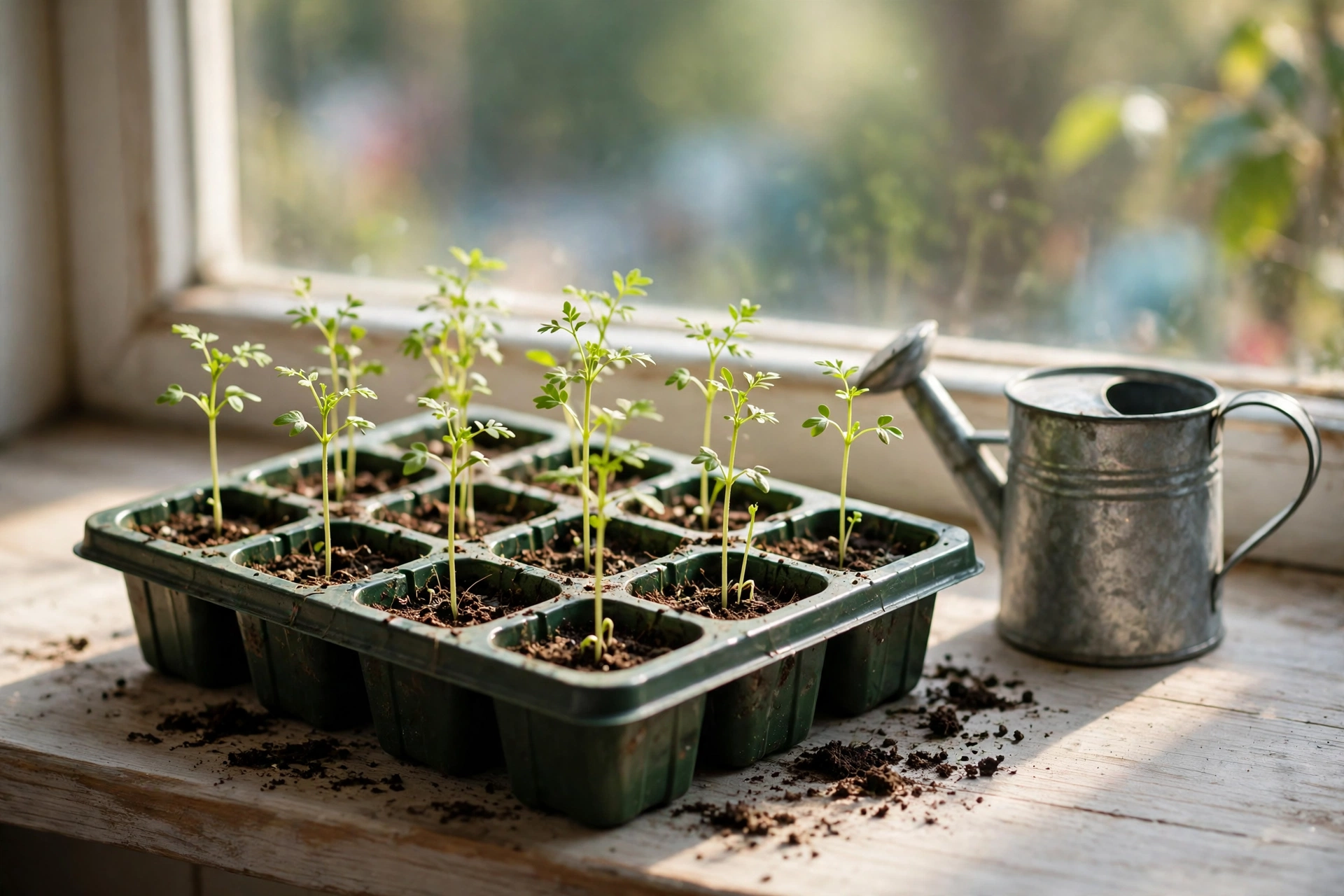
Zinnias do not benefit from being sown early, and they will tell you so by sulking. Start indoors 4 to 6 weeks before your last frost, or — better for most gardeners — direct-sow 1 to 2 weeks after it. They germinate in 3 to 10 days in warm soil, spaced a group of 3 seeds every 12 inches, thinned to one.
Pros: Huge flowers, excellent vase life, deer resistant, attracts pollinators.
Cons: Frost sensitive and heat-loving; an early sowing gains you nothing.
California Giants Blend Zinnia Seeds
Big 4″–6″ flowers since 1926 — the more you cut, the more they bloom.
Best for Airy Bouquets: Sea Shells Blend Cosmos
Some flowers are the star of the bouquet. Cosmos are the reason the bouquet looks effortless. Sea Shells Blend has 3- to 4-inch blossoms in white, pink, rose, and crimson, but the petals are the trick: rolled and quilled, like little seashells, around yellow centers. They catch the light in a way flat petals never do.
Cosmos prefer neglect over attention, which is a polite way of saying they are nearly impossible to fuss over. Once established they are drought tolerant, they reseed readily, and they bloom from summer to frost on tall plants that ask for full sun and not much else. For the longest vase life, harvest in the morning and cut the stems just as the buds begin to open.
Pros: Distinctive quilled petals, drought tolerant, deer resistant, excellent cut flower.
Cons: Needs full sun and well-drained soil; rich soil and heavy feeding produce leaves at the expense of flowers.
Sea Shells Blend Cosmos Seeds
Quilled, seashell-shaped petals in white, pink, rose, and crimson.
Best Bold Color: Diablo Cosmos
Diablo is the cosmos for gardeners who find pink a little too polite. Its blossoms are small — 1 to 1½ inches — but they are scarlet-orange, vivid enough to carry a whole bed, on tall stems that make a big statement in the garden. It won an All-America Selections award back in 1974, and it has been earning its keep ever since.
What sells Diablo for cutting is volume. One plant throws loads of blossoms from midsummer until the first fall frost, feeding bees, hummingbirds, and butterflies along the way. Cut the stems just as the buds begin to open, and they hold well. Plant it where you want a jolt of color, not a whisper of it — beside blue or purple flowers, it fairly glows.
Pros: Striking color, heavy bloom, drought tolerant, a pollinator magnet.
Cons: Small individual flowers; it reads best in quantity, not as a single stem.
Diablo Cosmos Seeds
Scarlet-orange blossoms in loads, from midsummer to frost — a 1974 All-America Selections winner.
Best for a Full Cutting Patch: Sensation Blend Cosmos
Sensation Blend is the tall, showy, old-fashioned cosmos your grandmother probably grew, and there is a reason it won its All-America Selections award in 1936 and never left the catalog. The flowers are large — 3 to 4 inches — in white, pink, rose, and crimson, on tall plants that fill a bed fast and keep filling it.
Think of Sensation as the backbone of a cutting patch: one packet, sown thickly, gives you the height and the volume that make a bouquet look generous. Cosmos are drought tolerant and need very little attention, and Sensation is an excellent butterfly lure. Sow it where it can stretch, in full sun, and let it do what cosmos do.
Pros: Large flowers, tall plants, very low maintenance, superb for wildflower areas.
Cons: Tall stems can flop in wind without neighboring plants for support; it reseeds, so expect volunteers.
Sensation Blend Cosmos Seeds
Tall, showy 3″–4″ flowers in white, pink, rose, and crimson — the classic cutting cosmos.
Best Branching Sunflower: Evening Sun Sunflower
Most people picture a sunflower as one enormous flower on one enormous stalk. Evening Sun is the friendly correction: a branching sunflower that produces dozens of 4- to 6-inch flowers in sunset hues — reds, oranges, and golds, several rich tones on a single plant — over a long bloom period. One plant can keep your vases full for many weeks.
That branching habit is what makes it a cut-flower sunflower instead of a novelty. You cut a stem, and the plant sends out more. The flowers are gorgeous, the birds love the seeds that follow, and the whole plant stays manageable in height rather than towering over the fence. If your sunflower color runs more yellow than the sunset tones you pictured, you are not alone — it is a variable mix, and part of the charm is seeing which tones each plant throws.
Pros: Branching habit means many stems, long bloom period, several tones per plant.
Cons: Color varies from plant to plant; some blooms come up plain yellow.
Evening Sun Sunflower Seeds
Dozens of 4″–6″ sunset-hued flowers on branching, manageable plants.
Best Statement Flower: Rouge Royale Sunflower
Rouge Royale is a true red sunflower, and true red is rare enough in a sunflower to stop people mid-stride. The plants are multi-branching, so you get a dramatic accent in beds, borders, and arrangements rather than a single stem to admire from a distance.
Two practical virtues seal it. First, it does not drop its pollen, so a bouquet stays beautiful instead of dusting the tablecloth — all beauty and no mess, as Botanical Interests puts it. Second, planting closer together produces longer stems and smaller flowers, which is exactly what you want for cutting. Cut before the flower is completely open, and the vase life is long.
Pros: True red color, pollen-free, multi-branching, dramatic in arrangements.
Cons: The darkest reds can read almost black in shade; plant it where the sun hits it.
Rouge Royale Sunflower Seeds
A stunning true red sunflower that holds its pollen — dramatic, and no mess in the vase.
Best Sturdy Stem: Crackerjack African Marigold
Crackerjack is the marigold that behaves like a proper cut flower. It is a superior blend with a mounding form, consistent height, and sturdy flower stalks — the kind of stems that stand up straight in a vase instead of flopping over the rim. The 4-inch blooms come in tangerine orange, rich gold, and lemony yellow, and they are radiant, long-lasting cut flowers.
Marigolds are also the easiest flower on this list to grow from seed, and one of the most useful in the garden: deer resistant, rabbit resistant, drought tolerant, and a butterfly magnet. Plant Crackerjack next to blue or dark purple flowers for a contrast that makes both colors look better. Harvest in the morning, choosing flowers that are half-open, and change the vase water frequently for the longest vase life.
Pros: Sturdy stalks, long-lasting cut flowers, ~120 seeds per packet, pest resistant.
Cons: Wants warm soil (70°–80°F) to direct-sow; starting indoors 4 to 6 weeks early is the surer path in short seasons.
Crackerjack African Marigold Seeds
Majestic 4″ blooms on sturdy stalks — radiant, long-lasting, and easy from seed.
The One to Skip for Bouquets: Mammoth Sunflower
Mammoth Sunflower is magnificent, and it has no business in a vase. Its single stalk can reach 12 feet tall and produce one flower 10 to 12 inches across. That is a screen, a shade provider, and a seed harvest — not a bouquet.
Grow it if you want seeds for the birds (or for yourself), a fast-growing summer screen in a tight row, or the sheer delight of a flower the size of a dinner plate. Just do not buy it expecting armfuls of cutting stems. For bouquets, Evening Sun and Rouge Royale above are the sunflowers that actually deliver.
How to Cut for the Longest Vase Life
The cutting rules are the same across nearly every flower on this list, and they are worth learning once. Cut in the morning, when the stems are full of water and the day’s heat has not arrived. Cut just as buds begin to open — zinnias are the exception, harvested before the small yellow flowers emerge between the petals. Use clean, sharp scissors, and put the stems in water immediately.
Then change the water often. Most short vase lives are not a flower problem; they are a water problem. A fresh jar, a fresh cut at an angle, and water changed every couple of days will do more for your bouquets than any packet of flower food.
Final Thoughts
Start with California Giants zinnias and one cosmos — Sea Shells if you like romance, Diablo if you like drama. Add a branching sunflower for height, and Crackerjack marigolds for stems that behave. That is a cutting patch that fits in a sunny strip and pays you back all summer, one jar at a time. And the best part is the part no florist can replicate: the flowers were yours before they were ever in the vase.