This post contains affiliate links. If you buy through them, Landscape & Leisure may earn a commission at no extra cost to you.
A hose that kinks at the spigot, splits in August, or arrives too short for the back bed costs a second purchase, and most yards go through that cycle more than once.
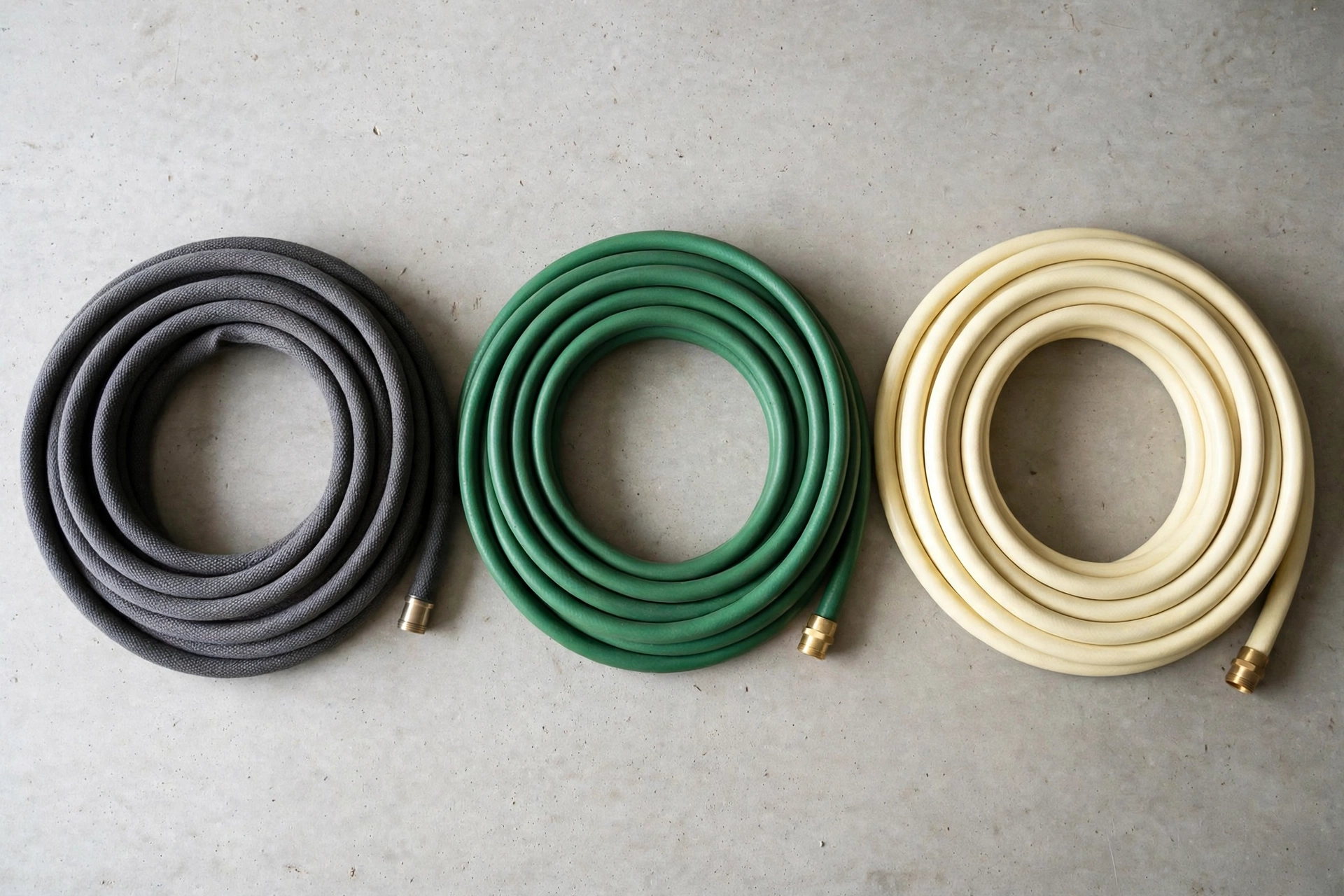
Buy the Flexzilla 5/8-inch by 50-foot hose first. Its hybrid polymer stays flexible in cold weather, it weighs far less than a rubber hose of the same size, and its fittings are built to seal without pliers.
The Dramm ColorStorm is the runner-up for anyone who values service life over easy handling, and the Gilmour Flexogen is the heavy-duty alternative. One popular expandable design is not recommended as a main hose, for a specific reason covered below.
The picks at a glance
| Hose | Size | Material | Pressure rating | Best for |
|---|---|---|---|---|
| Flexzilla Garden Hose | 5/8 in. x 50 ft | Hybrid polymer | 150 PSI max | Most lawns and gardens |
| Dramm ColorStorm Premium | 5/8 in. x 50 ft | EPDM rubber | 518 PSI burst, 120 PSI working | Long service life, hot water |
| Gilmour Flexogen | 5/8 in. x 50 ft | PVC reinforced with polyester | 500 PSI burst | Heavy use, lifetime warranty |
| Teknor Apex NeverKink 8615-50 | 5/8 in. x 50 ft | Vinyl | 340 PSI max | Kink resistance on a budget |
| Pocket Hose Copper Head | 50 ft, 3/4 in. fittings | Latex core, woven jacket | 650 PSI claimed | Light, occasional watering only |
Best overall: Flexzilla Garden Hose, 5/8 in. x 50 ft
The Flexzilla uses a hybrid polymer that lays flat instead of holding a coil, so it pulls around beds and corners without the fight a stiff vinyl hose puts up. Owners consistently praise how light it feels on a long watering route, and that matters more than most spec sheets suggest.
It is drinking-water safe, rated to 150 PSI, and flexible at temperatures where cheaper hoses turn rigid. The bright green color is easy to spot in grass before the mower reaches it.
The trade-off is pressure headroom. At 150 PSI maximum it has less margin than the Dramm or the Gilmour, so it is the wrong pick for a booster pump or an unusually high-pressure supply.
Flexzilla Garden Hose 5/8 in. x 50 ft
Hybrid polymer that stays flexible, lays flat, and stays light on long routes.
Runner-up: Dramm ColorStorm Premium Rubber Hose, 5/8 in. x 50 ft
The ColorStorm is an EPDM rubber hose with crush-proof, nickel-plated brass couplings and a lifetime guarantee from Dramm. It is rated for hot water up to 160°F, which no other hose in this roundup claims, and its listing puts maximum flow at 12.5 gallons per minute for the 50-foot length at 60 PSI.
Rubber is the material that survives being left on a driveway, dragged across gravel, and coiled in winter without cracking. If a hose lives outdoors year-round, this is the construction that holds up.
The cost is weight and price. A 50-foot rubber hose is noticeably heavier to haul than the Flexzilla, and it costs more up front, which is why it sits second instead of first for a typical yard.
Dramm ColorStorm Premium Rubber Garden Hose, 50 ft, 5/8 in.
EPDM rubber, crush-proof couplings, hot-water rated, lifetime guarantee.
Heavy-duty alternative: Gilmour Flexogen, 5/8 in. x 50 ft
The Flexogen is built in eight layers with polyester cord reinforcement and a 500 PSI burst strength, and Gilmour backs it with a lifetime warranty. A protective collar at the spigot end guards the spot where hoses most often kink and split.
Owners who run sprinklers for long sessions tend to favor this kind of reinforced construction, because the hose holds its shape under sustained pressure. Pair it with the sprinkler catch can calculator and a long run stops being guesswork.
It is stiffer than the Flexzilla in cold weather and heavier to coil, so it suits a hose that mostly stays in one place better than one carried bed to bed.
Gilmour Flexogen Garden Hose, 5/8 in. x 50 ft
Eight-layer construction, 500 PSI burst strength, lifetime warranty.
Also considered: Teknor Apex NeverKink 8615-50
The NeverKink 8615-50 is a 5/8-inch by 50-foot vinyl hose, 5.23 pounds, rated to 340 PSI, with a mesh reinforcement designed to stop twists before they close off flow. It is made in the USA and carries a lifetime guarantee against kinking.
It is a reasonable budget route, but vinyl stiffens in cold weather and ages faster in sun than rubber or hybrid polymer. For a shaded patio or a small bed it does the job; for a main lawn hose, the three picks above last longer.
Not recommended as a main hose: expandable Pocket Hose designs
The Pocket Hose Copper Head is a 50-foot expandable hose with a three-layer latex core and a woven outer jacket, sold with 3/4-inch fittings and a claimed 650 PSI rating. It is genuinely light and it stores in a small pot, which explains the appeal.
Skip it as your only hose. An expandable hose reaches its full length only under pressure, it cannot be left pressurized in the sun without shortening its life, and its narrow inner tube delivers less flow to a sprinkler than a standard 5/8-inch hose. Owners consistently report shorter service life than conventional hoses, and a sprinkler that underperforms is usually traced back to exactly this kind of restriction.
For a balcony or a few pots by the door, an expandable hose is a fair convenience buy. For watering a lawn, buy a conventional hose first.
How to choose between these three
Start with size, because diameter decides flow more than brand does. The sizing guide at what size garden hose you need walks through 1/2, 5/8, and 3/4 inch with the pressure drop that comes with longer runs.
Then decide on material by where the hose will live. The comparison at expandable vs rubber vs vinyl garden hoses covers lifespan, weight, and storage for each type, and the earlier overview at garden hoses: the good, the bad, and the kinky remains a useful primer on what goes wrong with cheap hoses.
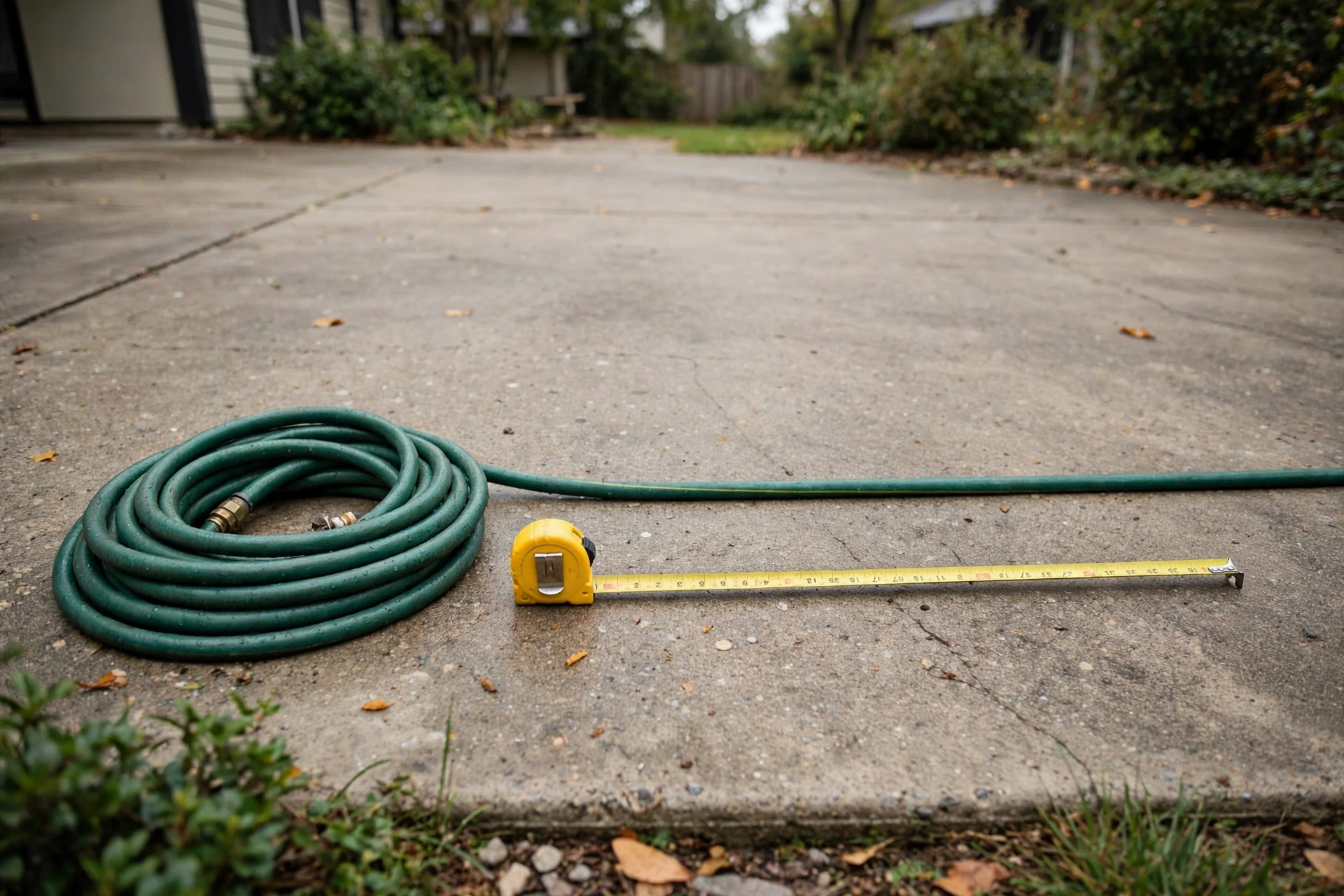
Length is the last call. Buy the shortest hose that reaches the far corner with a few feet to spare, because every extra 25 feet costs pressure and adds weight you carry on every trip.
What the pressure ratings actually tell you
Household water pressure usually sits between 40 and 80 PSI, so every hose here clears normal use with room to spare. The rating matters at the edges: a booster pump, a pressure washer feed, or a long downhill run can push a hose harder than a flat suburban yard ever will.
Burst strength and working pressure are different numbers, and listings mix them freely. The Dramm’s 518 PSI figure is a burst rating against a 120 PSI working pressure, while the Flexzilla’s 150 PSI is a maximum, so compare like with like before treating a bigger number as a better hose.
Fittings fail more often than tubes do. Machined brass or nickel-plated couplings that survive being stepped on or driven over outlast the thin stamped fittings on bargain hoses, and a leak at the spigot is almost always a fitting or washer problem rather than a burst tube.
Bottom line
Order the Flexzilla 5/8-inch by 50-foot hose for a general lawn and garden. Choose the Dramm ColorStorm instead if the hose will live outside year-round or run hot water, and choose the Gilmour Flexogen if it will sit under sprinkler pressure for hours at a time.