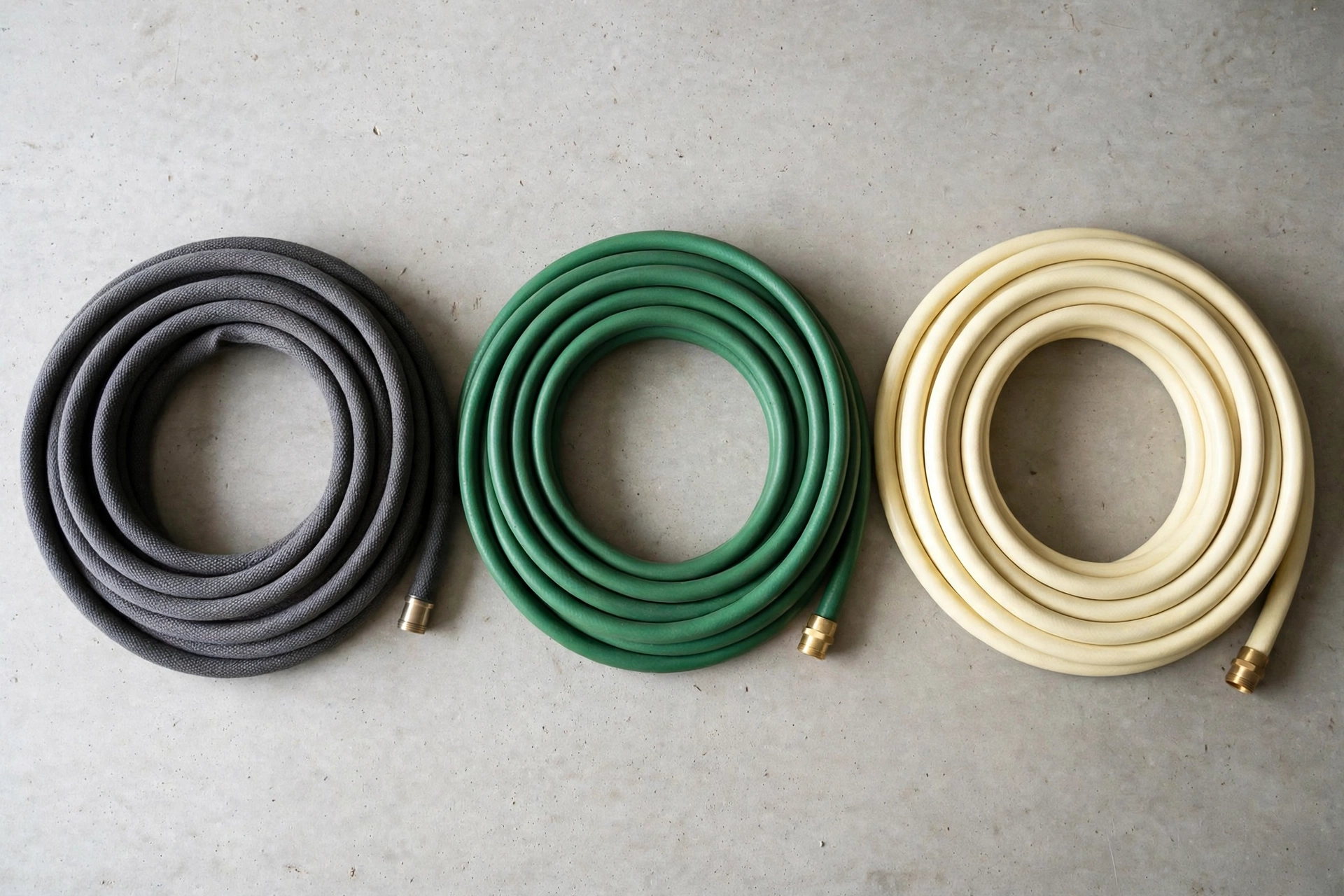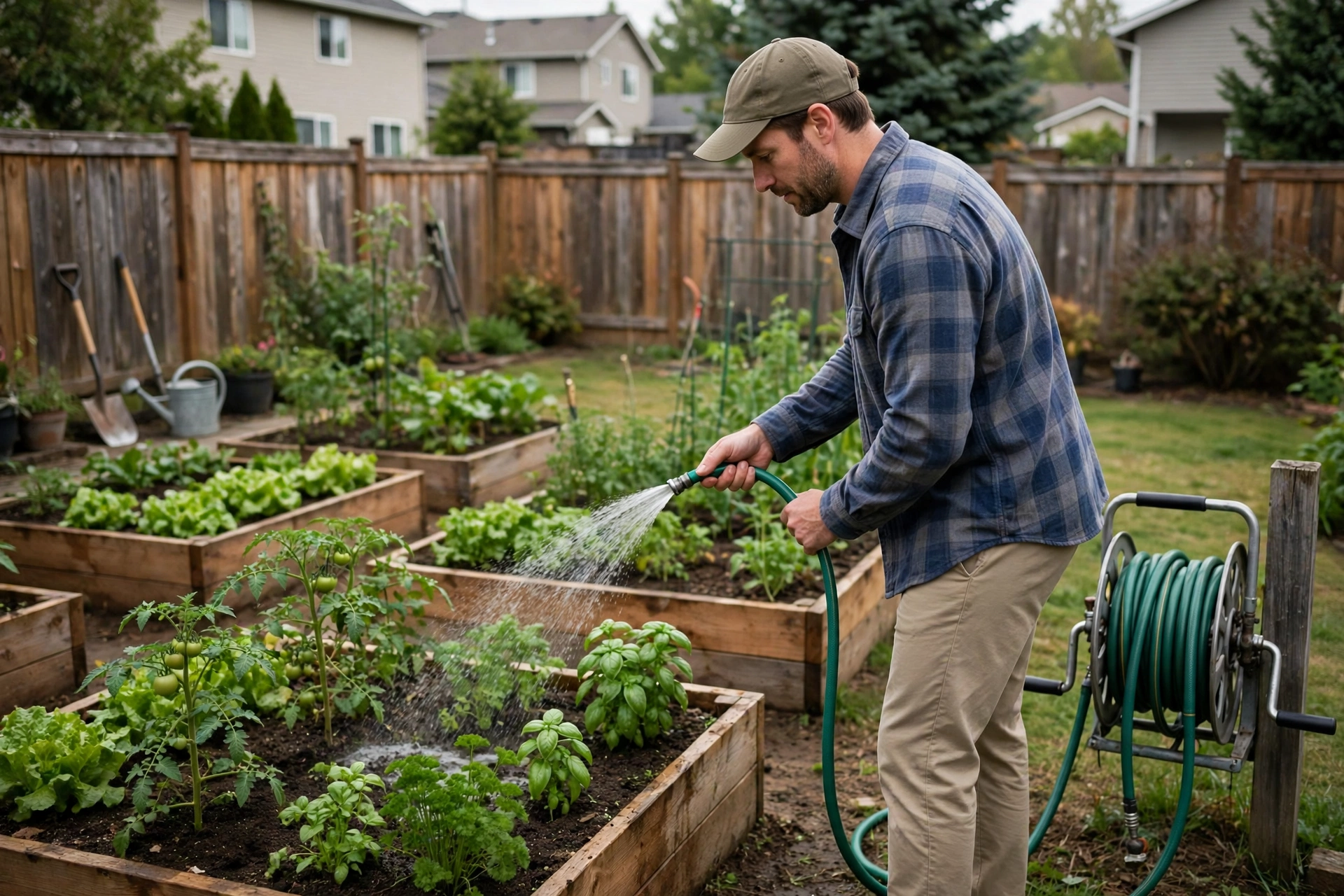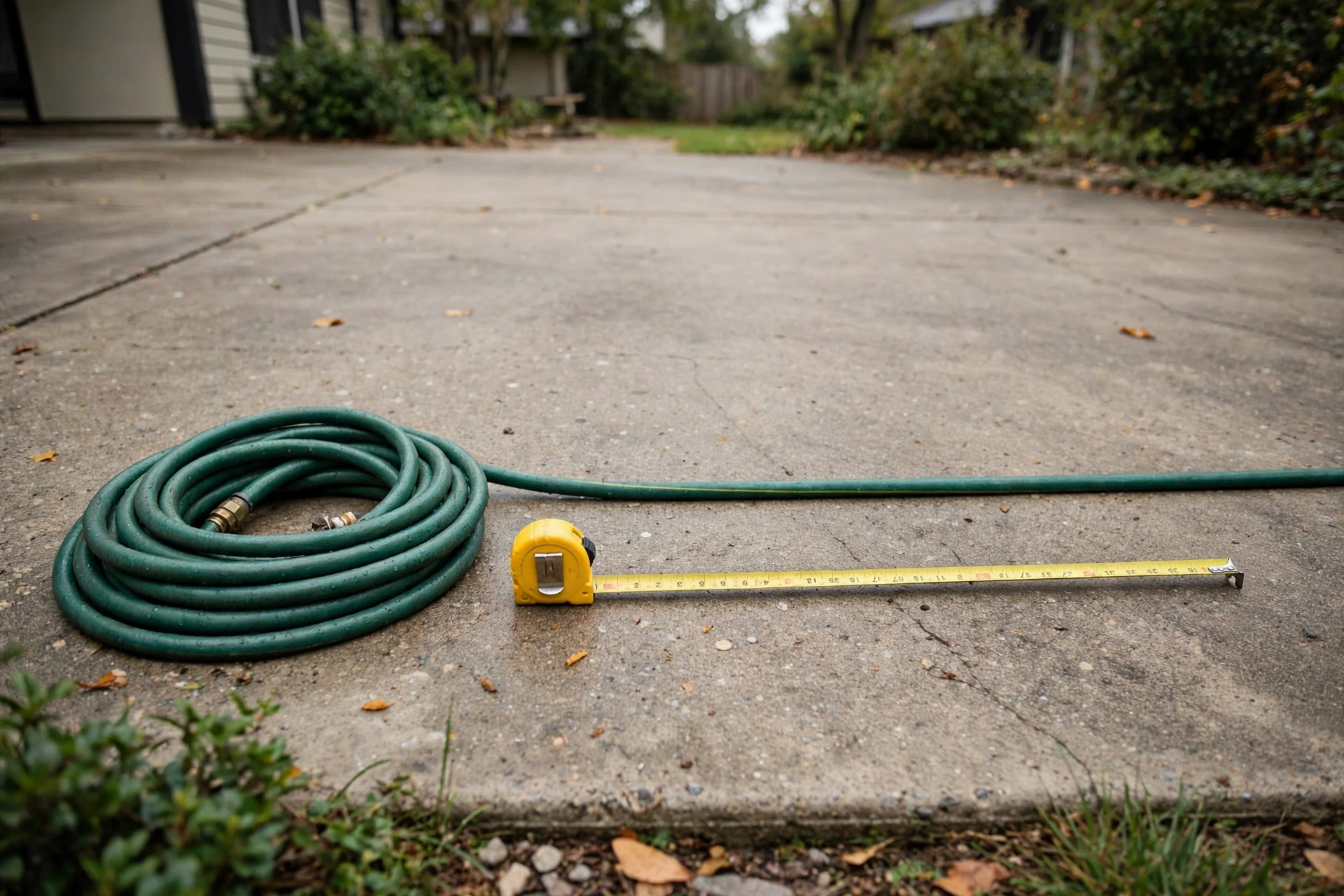
What size garden hose do you need when the sprinkler at the end of a 100-foot run barely throws half its pattern?
For most homes the answer is a 5/8-inch hose, because that diameter delivers enough flow for sprinklers and soaker lines without the weight of a 3/4-inch hose. The two cases that change the answer are a very small patio, where 1/2 inch is plenty, and a long run or a high-flow sprinkler, where 3/4 inch earns its keep.
Diameter and length work against each other. A wider hose carries more water, and a longer hose loses more pressure, so the right pick is the combination, not either number alone.
Diameter decides flow
Flow is measured in gallons per minute, and it rises fast as diameter grows, because a small increase in width opens a much larger passage for water. At a typical household pressure of about 50 PSI, the three common sizes separate clearly.
| Diameter | Typical flow at 50 PSI | Weight and handling | Best fit |
|---|---|---|---|
| 1/2 in. | About 6 to 8 gallons per minute | Lightest, easiest to coil | Pots, balconies, short runs |
| 5/8 in. | About 9 to 12 gallons per minute | Moderate, the standard coil | Most lawns, gardens, sprinklers |
| 3/4 in. | About 15 to 20 gallons per minute | Heaviest, stiffer to handle | Long runs, high-flow sprinklers |
One verified reference point: Dramm lists its 5/8-inch, 50-foot ColorStorm hose at a maximum flow of 12.5 gallons per minute at 60 PSI. That sits at the top of the 5/8-inch range above, which is what a well-made hose of that size should do.
Length costs pressure
Every foot of hose adds friction, and friction shows up as pressure lost between the spigot and the nozzle. Doubling a run from 50 to 100 feet in the same diameter can cost roughly a third of the flow at the far end, and the loss is worse in a narrow hose.
That is the sprinkler problem in the opening question. The sprinkler is not weak; the hose is feeding it through a long, narrow passage, and by the time the water arrives there is not enough pressure left to throw the full pattern.
The fix order matters. Shorten the run first if you can, step up one diameter second, and only then blame the sprinkler. A 3/4-inch hose at 100 feet often out-waters a 5/8-inch hose at the same length by a wide margin.
Match the hose to the spigot
Residential spigots use a standard 3/4-inch garden hose thread, so any of the three diameters connects without an adapter. Diameter in a hose listing is the inside width of the tube, not the fitting, which is why a 1/2-inch hose and a 3/4-inch hose both thread onto the same faucet.
Check the washer before blaming a fitting for a leak. A flat, cracked rubber washer inside the female coupling is the most common cause of a drip at the spigot, and a replacement washer costs cents.
The metal coupling goes quiet and dry with a fresh washer and hand tightening plus a quarter turn. If it still drips after that, the threads themselves are damaged and no amount of tape will fix them for long.
Pick by the job at the far end
Hand watering and pots. A 1/2-inch hose in a 25- or 50-foot length is light, cheap, and entirely adequate, because a watering wand needs control, not volume.
Sprinklers and general lawn work. A 5/8-inch hose is the default for a reason. It feeds a standard impact or oscillating sprinkler properly, and it is the size carried by nearly every pick in the roundup of the best garden hoses for lawns and gardens.
Long runs and big sprinklers. Go to 3/4 inch when the run passes about 75 feet or the sprinkler is rated above 10 gallons per minute. The extra weight is real, so leave this hose on a reel rather than carrying it.
Once the size is settled, measure what the sprinkler actually delivers with the sprinkler catch can calculator, because flow at the nozzle is the number that decides run time. Material is the other half of the decision, covered in expandable vs rubber vs vinyl garden hoses, and the background primer at garden hoses: the good, the bad, and the kinky explains why cheap hoses fail early.
A worked example: the 100-foot backyard run
Take a common setup: a spigot at 50 PSI, 100 feet of hose, and an oscillating sprinkler that needs about 10 gallons per minute to cover its full rectangle.
On a 1/2-inch hose, that run delivers well under what the sprinkler needs, and the pattern shrinks at both ends. On a 5/8-inch hose it comes close, with a visibly weaker throw in the last stretch.
On a 3/4-inch hose, the same sprinkler gets its flow and throws the pattern it was rated for. Nothing about the sprinkler changed; only the passage feeding it did.
That is why upsizing the hose fixes more weak-sprinkler complaints than replacing the sprinkler does. The sprinkler was rated assuming it would actually receive its flow.
When in doubt between two sizes, choose the larger one for any run you will not shorten later. The weight penalty is paid once per trip, while a flow penalty is paid on every watering, all season long.
The short answer
Buy a 5/8-inch hose in the shortest length that reaches your far corner. Drop to 1/2 inch only for pots and short patio runs, and step up to 3/4 inch for runs over 75 feet or sprinklers that need real flow.