This post contains affiliate links. We may receive a commission if you make a purchase after clicking on one of these links.
You push the mower over a spongy patch and the grass springs back thin and pale, because the roots never quite reach the soil below.
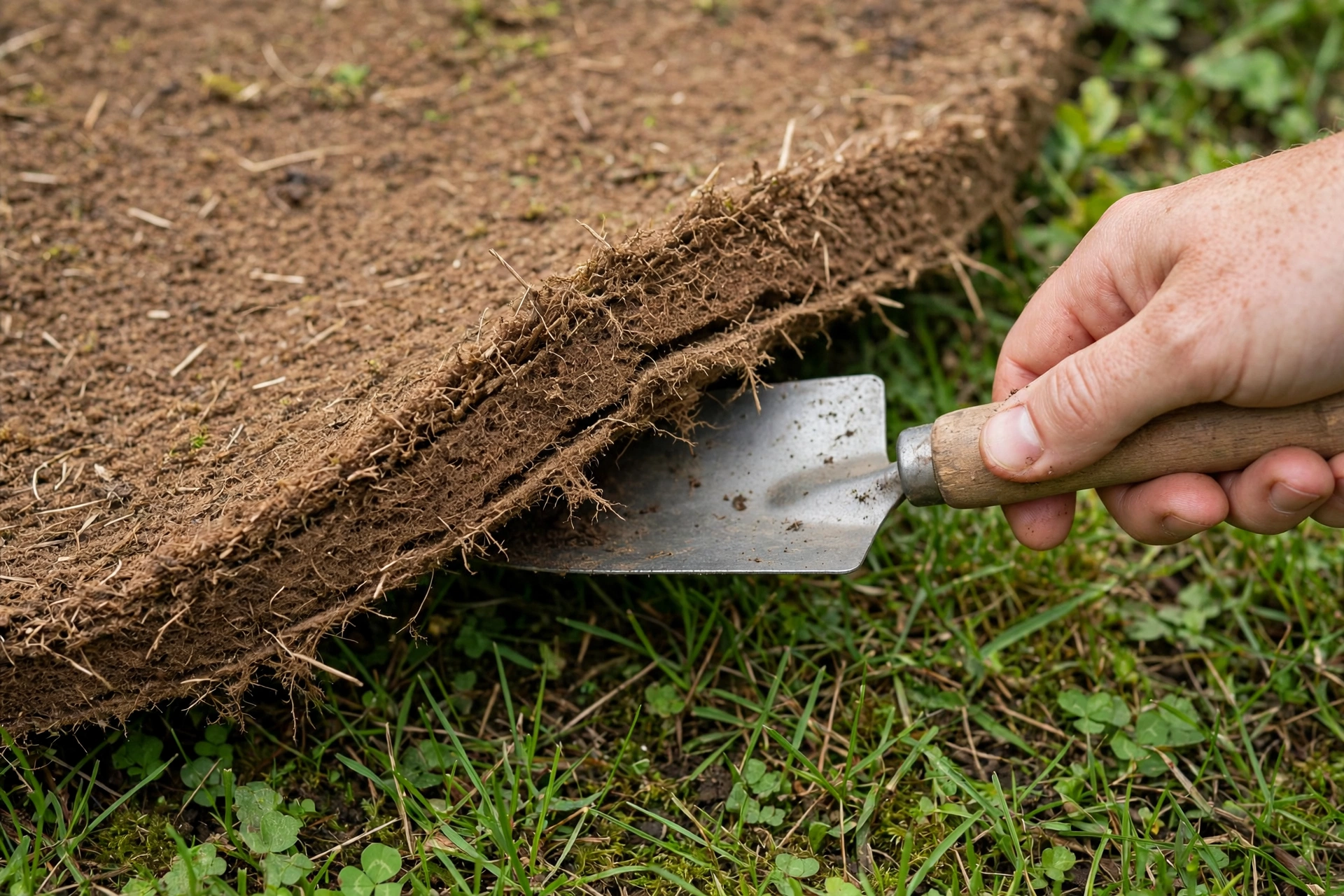
That springy layer is thatch, a mat of dead stems and roots sitting between the green growth and the ground. When it builds up past about 1/2 inch, water and seed sit on top of it instead of reaching the soil, and overseeding a lawn like that mostly feeds the mat.
The lawn scarifiers below fix that problem in two ways, with spring tines that comb the mat loose and with fixed blades that slice through it. This page settles which machine earns a place in the garage, and which lawns should start gentler.
Best lawn scarifiers and 2-in-1 dethatcher-scarifiers, at a glance
| Pick | Width | Motor | Working heads | Depth control |
|---|---|---|---|---|
| WEN DT1516 | 16-inch | 15-amp | 24 steel tines plus a 20-blade scarifier head | 5 positions, from +1/4 to -1/2 inch |
| Greenworks 13 Amp 14-Inch Dethatcher/Scarifier DT13B00 | 14-inch | 13-amp | Quick-release dethatcher and scarifier rollers | 3 positions |
Best overall: WEN DT1516
Most lawns that need scarifying need the gentler job first and the deeper job only in the worst sections, which is why a true 2-in-1 machine makes more sense than a single-purpose tool. The WEN DT1516 covers both passes in one frame.
Its dethatching head carries 24 steel tines that comb loose thatch up out of the turf. Swap to the scarifier head and 20 blades slice into the surface instead, opening narrow cuts where seed can settle against soil rather than resting on the mat.
Depth control is where this pick pulls ahead, because its 5 positions run from +1/4 inch down to -1/2 inch. You can start high on a healthy section, check what the pass pulled up, and step deeper only where the thatch is genuinely thick.
The 15-amp motor is the stronger motor in this comparison, and an overload shutdown protects it when a pass hits a dense patch and the load spikes. On a 16-inch path, a typical front-and-back yard takes fewer passes than it would behind a narrower machine.
The trade-off is that range cuts both ways. Set at -1/2 inch on a lawn that only needed combing, those 20 blades will tear turf you meant to keep, so the first pass belongs on a small test strip at a shallow setting.
Pros
- True 2-in-1 coverage: 24 steel tines for dethatching plus a 20-blade scarifier head for slicing
- Widest range here, with 5 depth positions from +1/4 to -1/2 inch
- Strongest motor in this comparison at 15 amps, with overload shutdown for protection
- 16-inch working width, so open sections take fewer passes
Cons
- The deepest setting is aggressive enough to damage a thin lawn if you skip the test strip
- Swapping heads between the combing pass and the slicing pass adds a step to the job
WEN DT1516
16-inch, 15-amp 2-in-1 with 24 steel tines, a 20-blade scarifier head, and 5 depth positions.
Runner-up: Greenworks 13 Amp 14-Inch Dethatcher/Scarifier DT13B00
A smaller yard changes the math. When the lawn is broken up by beds, trees, and a gate you have to angle through, a 14-inch machine turns more easily and the extra width of a bigger frame stops helping.
The Greenworks DT13B00 is also a genuine 2-in-1, with quick-release rollers for dethatching and scarifying. That quick-release swap is its best feature, because changing rollers without a drawn-out changeover makes a two-pass job — comb first, slice only where needed — much easier to bother doing in the right order.
Its 13-amp motor and 3 depth positions are a step down from the WEN on paper. For light to moderate thatch on a smaller lawn, that step down rarely shows, since the work is combing a mat loose rather than cutting deep into the surface.
Where it does show is control. Three depth positions give you coarser steps, so moving from a gentle pass to a deeper one is a bigger jump, and a lawn with very uneven thatch needs more test-strip checking between settings.
Pros
- Quick-release rollers make swapping between dethatching and scarifying fast
- 14-inch width suits smaller, broken-up yards with gates and beds to work around
- Both rollers included, so it covers the gentle pass and the deeper pass in one purchase
Cons
- Only 3 depth positions, so depth control is coarser than the WEN
- Narrower 14-inch path and a 13-amp motor, so thick thatch on a larger lawn takes longer
Greenworks 13 Amp 14-Inch Dethatcher/Scarifier DT13B00
14-inch, 13-amp 2-in-1 with quick-release dethatcher and scarifier rollers and 3 depth positions.
Not recommended as a scarifier: Sun Joe AJ801E
The Sun Joe AJ801E is sold as a dethatcher/scarifier, and that second word is the problem. Its roller carries spring tines only, so it combs the surface the way a dethatcher does and never makes the blade cuts that define scarifying.
As a dethatcher for a light mat, spring tines are a reasonable tool. As a scarifier, the AJ801E cannot open the surface for seed or cut through a thick, rooted-in layer, no matter which setting you choose, because the cutting head simply is not part of the machine.
Skip it if scarifying is the job you are buying for. Either pick above gives you both working heads in the box, which is the whole point of a 2-in-1 purchase.
Do you need the scarifier head, or just the tines?
Start with the layer itself, because the machine follows from the measurement. Our diagnostic guide to what a lawn scarifier is and whether you need one walks through cutting a small plug and measuring the thatch, with 1/2 inch as the line where the work starts to matter.
If you already know the layer is thick and you are weighing the two actions against each other, scarifier vs dethatcher gives a direct verdict for each lawn condition. Lawns that need only the combing pass are also well served by the machines in our roundup of the best electric dethatchers for home lawns, where scarifying heads are not part of the price.
How to choose between the two picks
Match width to the open ground first. A 16-inch path pays off across long, clear runs, while a 14-inch machine is easier to thread through a yard broken into small sections, even though it needs more passes to cover the same total area.
Count depth positions second, because thatch is rarely even across a whole yard. Five positions let you work a thick corner deeper and a healthy stretch shallower on the same afternoon, and that control matters more than a small difference in motor size once both machines are in this amp range.
Think about the second pass last. Both picks ask you to change the working head between combing and slicing, so the real question is whether you will do the passes in order — tines first, blades only where the mat survives — and the Greenworks quick-release rollers make that order the easiest to follow.
Before you run either machine
Mow a notch lower than usual and mark sprinkler heads and shallow lines before the first pass, since a scarifier head set below the surface will find anything sitting in its path. The lawn should be moist enough to slice cleanly without turning to mud, which in practice means working a day or so after rain or watering rather than in the middle of a dry stretch.
Run a test strip at the shallowest setting that does work, and look at what comes up before you commit the whole yard to that depth. Living grass in the pile means you are too deep or too aggressive for that section, while a pile of brown mat with the turf left standing means the setting is doing its job.
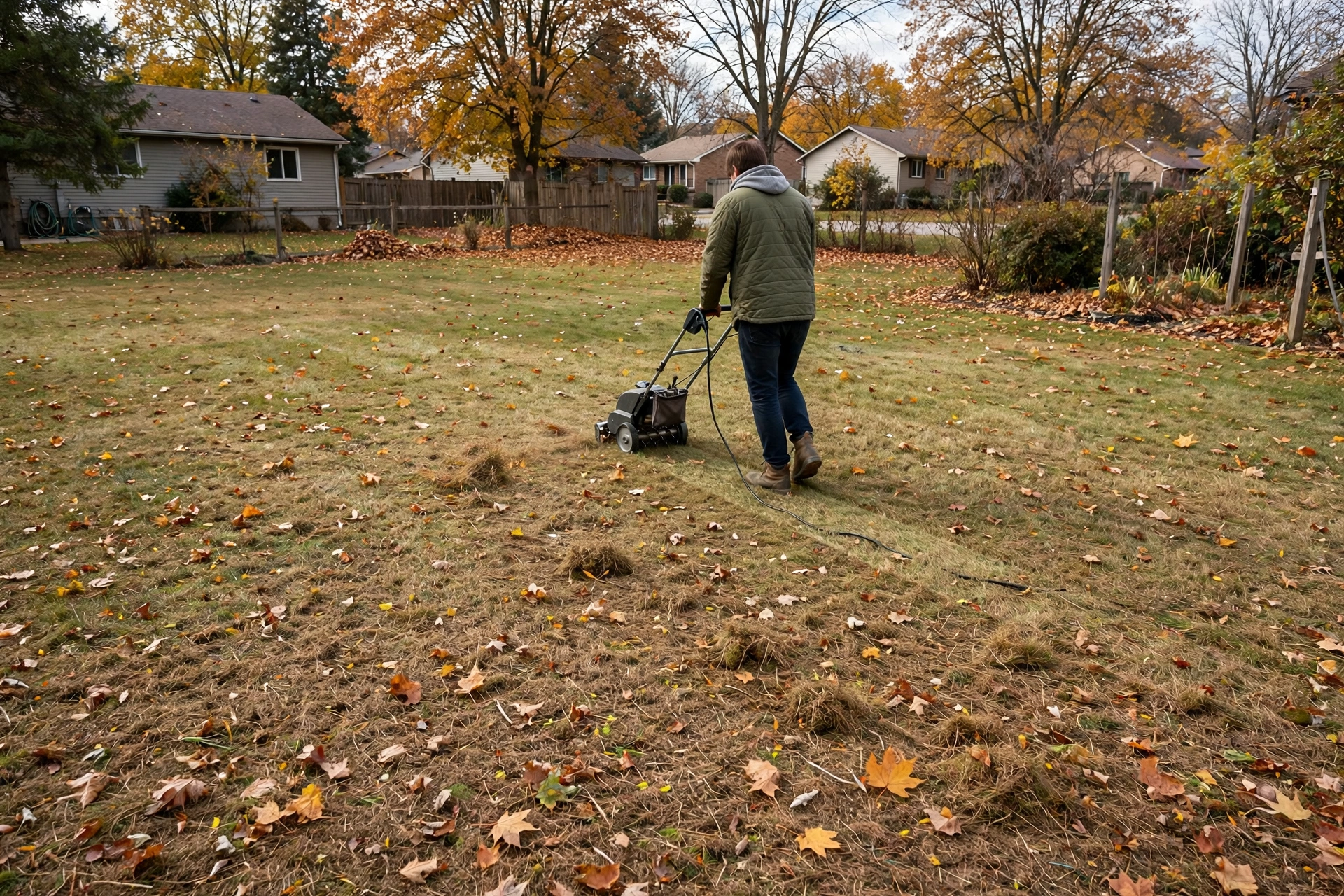
Rake up the debris the pass leaves behind, then overseed while the cuts are open if seeding is part of the plan. Seed that lands in a fresh slice touches soil on both sides, and that contact is what the entire job was for.
Bottom line
Buy the WEN DT1516 if you are choosing one machine from this page, because its 16-inch width, 15-amp motor, and 5 depth positions from +1/4 to -1/2 inch handle both the combing pass and the slicing pass without a second purchase. Choose the Greenworks DT13B00 instead for a smaller, broken-up yard where quick roller swaps and a narrower frame matter more than depth range.