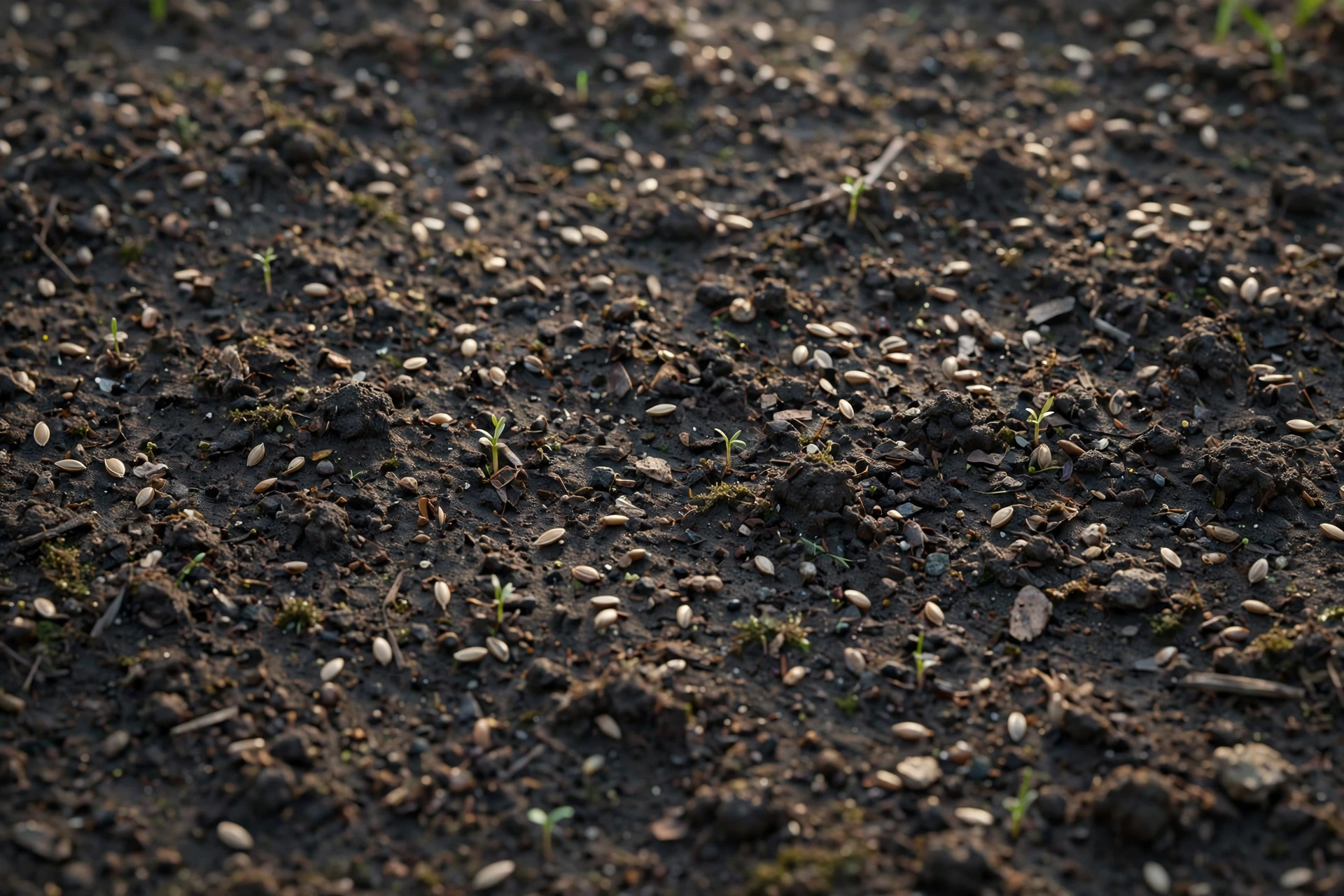
The seed goes down on a Saturday, the sprinkler runs twice a day, and by the next weekend you are standing at the back door studying bare dirt, wondering whether anything is happening under there at all.
That wait is where good seedings get misjudged. A patch that still looks empty on day nine may be right on schedule, because the calendar runs very differently depending on which grass you sowed — and tearing up a slow lawn that was never actually failing wastes the seed, the water, and the season you had. This table settles the question in front of you: how many days each common turf species needs to show its first sprouts, so you know whether to keep watering or to start over.
Germination times by species
These are expected days to germination — the wait for the first visible sprouts — for seed sown in season, pressed into contact with the soil, and kept consistently moist.
| Species | Expected germination (days) | Source |
|---|---|---|
| Annual ryegrass | 5–10 | UC IPM |
| Bermudagrass (seeded) | 10–30 | UC IPM |
| Buffalograss | 14–30 | UC IPM |
| Colonial bentgrass | 10–14 | UC IPM |
| Creeping bentgrass | 10–14 | UC IPM |
| Hard fescue | 7–14 | UC IPM |
| Kentucky bluegrass | 14–30 | UC IPM |
| Perennial ryegrass | 5–10 | UC IPM |
| Red fescue | 7–14 | UC IPM |
| Rough bluegrass | 7–10 | UC IPM |
| Tall fescue | 7–12 | UC IPM |
What these numbers promise, and what they do not
Germination only marks the start. The day count ends when the first green threads appear; the weeks of thickening, rooting, and filling in come after, and a fast-germinating species can still make a slow, thin lawn if the watering stops the moment sprouts show.
Read the range as patience rather than a deadline. Kentucky bluegrass, at 14 to 30 days, is the extreme case: a bluegrass seeding that shows nothing at two weeks is not failed seed, and it deserves its full month of steady moisture before you judge it. Ryegrass sits at the other end at 5 to 10 days, which is exactly why it gets blended into mixes — it holds the soil and shows green while the slower species underneath it take their time.
The first sign is easy to miss from the porch. Get down at soil level in the morning, while the dew is still on, and a slow lawn often shows itself as a faint green haze between the seeds — thousands of sprouts too small to see from standing height, already up and working.
The conditions behind the ranges
Every range in the table assumes the seed got a fair start: sown in its season, in contact with soil rather than sitting on thatch, and kept moist without being drowned. Cold soil slows all of it, a seedbed that dries out between waterings stalls it, and seed buried too deep spends its energy before it ever reaches light — any of the three stretches the wait past the top of the range.
One row carries a condition of its own. The bermudagrass range is for seeded bermudagrass; the hybrid bermudas planted across the South do not come true from seed and are established from sprigs or plugs instead, so no day count applies to them.
How much seed, and how long to wait
Germination time answers when; the other half of a seeding is how much. The seeding rates reference table gives the pounds per 1,000 square feet by species, and the grass seed calculator turns your lawn’s square footage into a bag count. Work out the rate first, then judge the result against this table’s calendar for the species you actually sowed.
Bottom line
Match your patience to your species before you match your watering to the calendar. Sow ryegrass when you need green inside two weeks; sow Kentucky bluegrass knowing the first sprout may take a full month, and give it that month, with the soil kept moist the whole way, before you call the seeding a failure.
Sources
UC Statewide IPM Program, University of California, “Grass seed germination rates,” The UC Guide to Healthy Lawns — https://ipm.ucanr.edu/TOOLS/TURF/ESTABLISH/germin.html — fetched November 17, 2026; verified again November 18, 2026.