You rent the wrong machine, scarify a lawn that only needed combing, and spend the next month watering bare dirt where grass used to grow.
That mistake is easy to make because scarifiers and dethatchers look alike, roll alike, and get sold under each other’s names. The cost of mixing them up runs in both directions, since a dethatcher sent into a truly thick mat barely disturbs it, while a scarifier sent into a thin one tears living turf.
Here is the verdict up front, and the rest of this page shows the work behind it. Dethatch a lawn whose thatch is just over 1/2 inch; scarify a lawn whose thatch is well over that line, especially when you plan to overseed right behind the pass.
Scarifier vs dethatcher, at a glance
| Tool | How it works | Best for | Risk if misused |
|---|---|---|---|
| Dethatcher | Spring tines comb through the turf and flick loose dead material up | Thatch just over 1/2 inch, routine cleanup, light overseeding prep | Leaves a thick, rooted-in mat mostly intact |
| Scarifier | Fixed blades slice vertically through the mat and into the top of the soil | Thatch well over 1/2 inch and overseeding that needs seed-to-soil contact | Tears living turf and opens bare ground for weeds |
The dethatcher: combing the mat loose
A dethatcher works with spring tines, which flex as they drag through the turf. That flex is the whole character of the tool, because the tines rake dead material out of the layer while riding over the living crowns instead of cutting through them.
Send the tines in when the layer measures just over 1/2 inch and the lawn underneath is fundamentally healthy. The pass lifts out the loose brown material, water starts soaking in again, and the lawn recovers quickly because very little living grass came up with the debris.
Where combing falls short is a mat that has rooted into itself over several seasons. Tines skim and flick at the top of a layer like that, and you can make two passes and still leave most of the barrier standing, which is the point where blades stop being the aggressive option and start being the correct one.
The scarifier: slicing the mat open
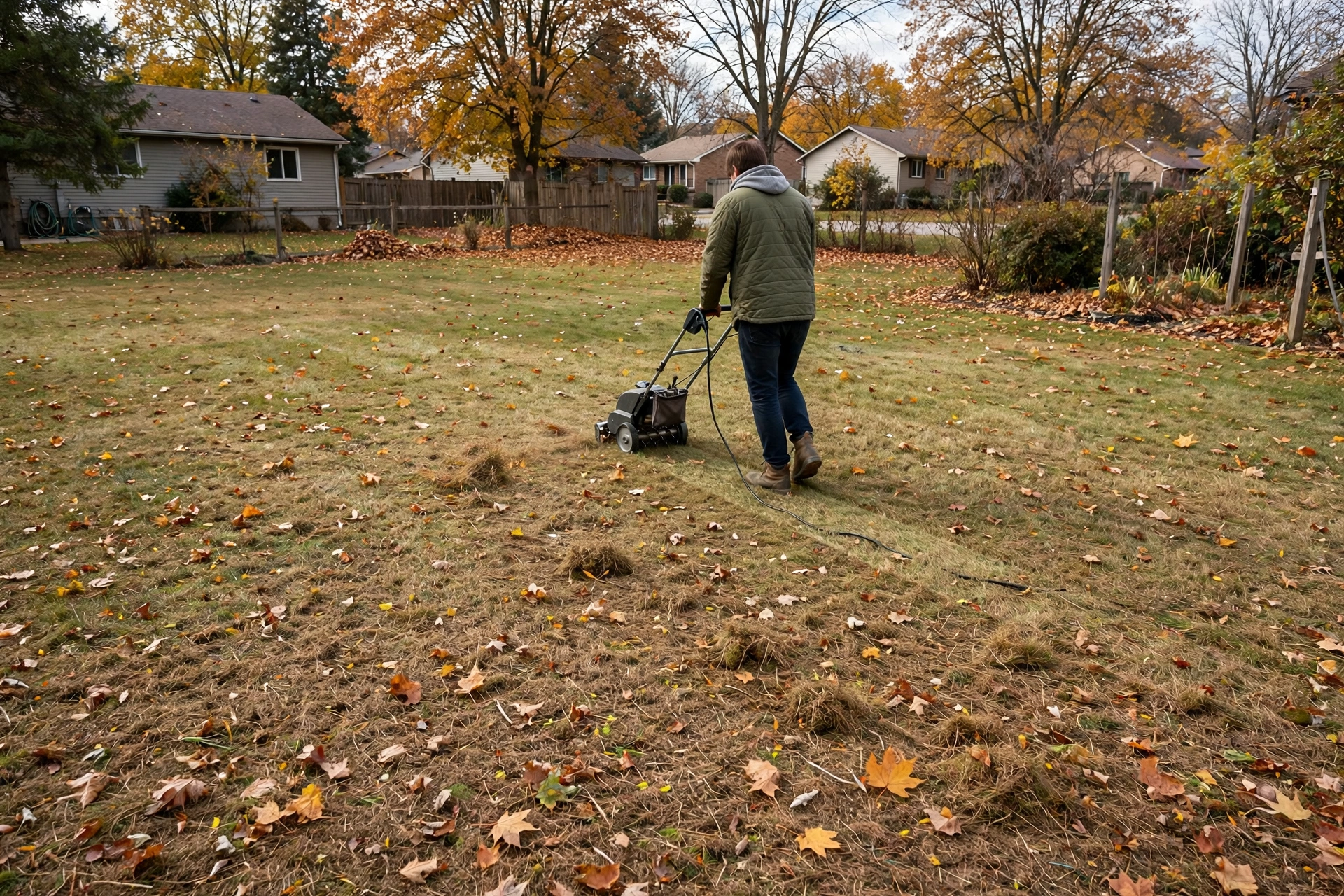
A scarifier works with fixed blades that do not flex, so each pass cuts narrow vertical slices through the thatch and scores the soil surface beneath it. The mat comes up in loosened strips for raking, and the cuts stay open behind the machine.
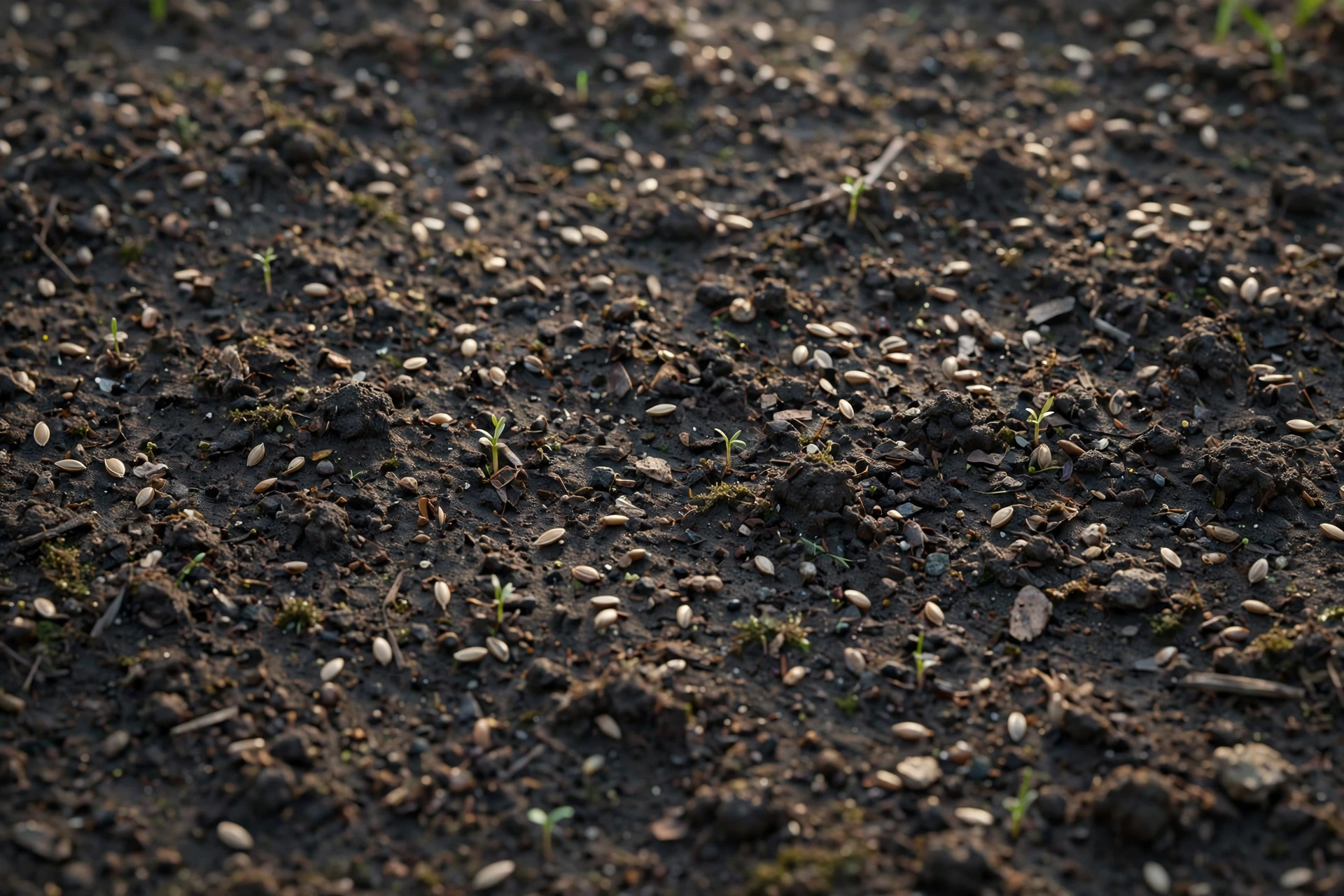
Those open cuts are why scarifying pairs so well with overseeding. Seed scattered over a combed lawn still lands mostly on turf and residue, while seed scattered over a scarified lawn drops into slices where it touches soil, holds moisture, and germinates with far less waste.
The price of that cutting power is recovery time, and you should plan for it honestly. A scarified lawn looks rough for a while, with bare lines where the blades ran deepest, and it needs steady watering and growing weather to knit back together before heat or cold shuts growth down.
The check that decides it: 1/2 inch of thatch
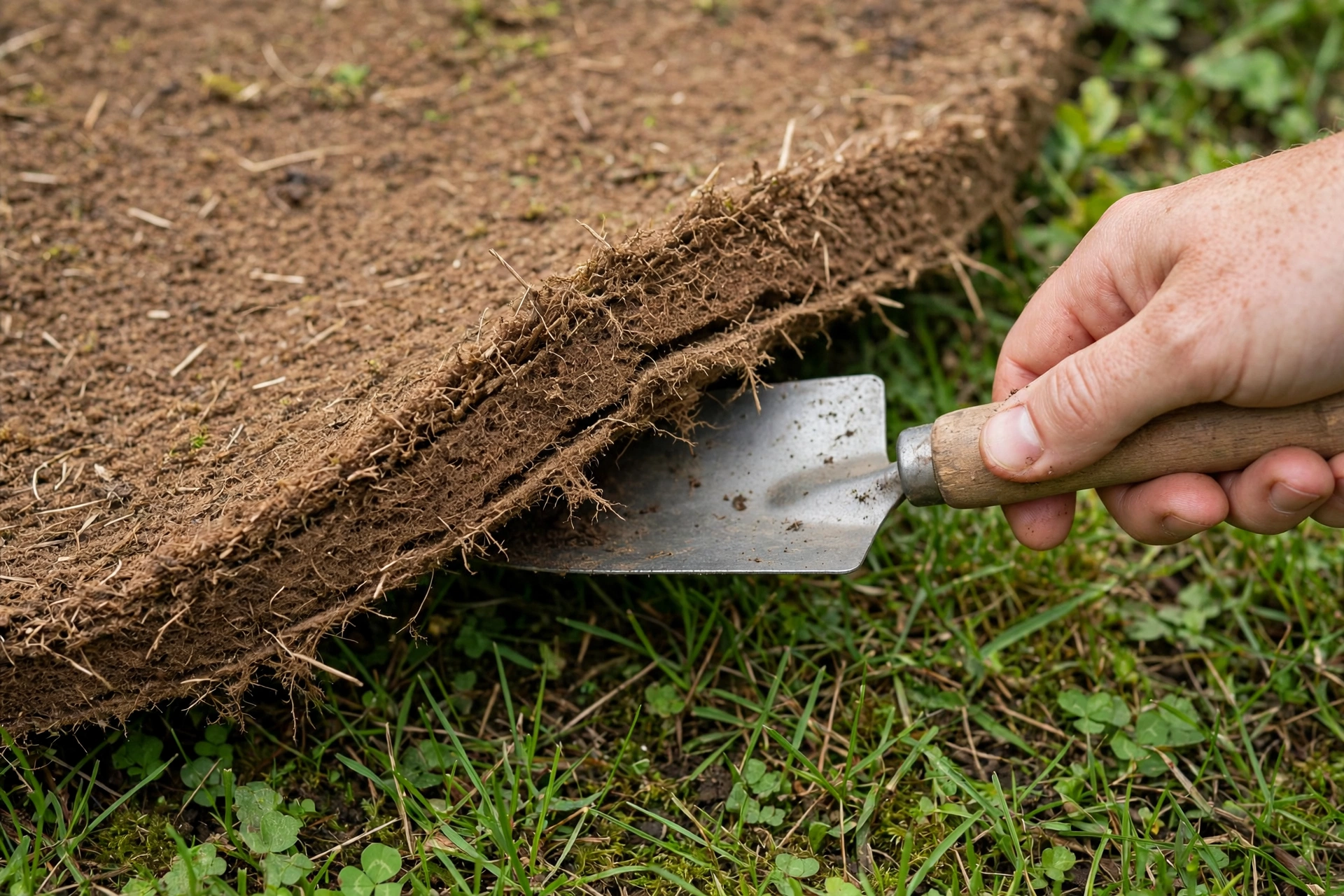
Do not choose by how the lawn looks from the porch, because a thick-looking lawn can carry a thin layer and a tidy lawn can hide a heavy one. Cut a small wedge of turf in two or three places, find the compressed brown layer between the green growth and the soil, and measure it.
Our full diagnostic in what a lawn scarifier is and whether you need one walks through that measurement step by step. Under about 1/2 inch, neither machine has a job to do yet, and a tired lawn with a thin layer needs a different fix entirely.
Just over the line, start with the dethatcher and judge the test strip before going further. Well over the line — or at the line with a history of overseeding that never took — go straight to the scarifier, since combing a layer that heavy spends your afternoon without opening it.
The 2-in-1 shortcut, and its one rule
A growing share of home machines carry both heads, so the choice becomes a sequence instead of a purchase. The WEN DT1516, for example, pairs a tine head with a 20-blade scarifier head in one frame, and the Greenworks DT13B00 swaps between dethatcher and scarifier rollers, so either machine lets you comb first and slice only where the mat survives.
The one rule for that sequence is to earn the second pass. Run the tines over a test strip, rake it, and part the grass to check what is left, because sections that come clean under the tines should never see the blades at all.
If you would rather own a combing-only machine and skip the slicing head entirely, the roundup of the best electric dethatchers for home lawns covers that narrower job. And if the measurement says scarifying is genuinely the job, our roundup of the best lawn scarifiers and 2-in-1 dethatcher-scarifiers compares the machines that do it.
Mistakes that undo the work
Working a dormant or heat-stressed lawn. Both tools wound the turf on purpose, so schedule the pass when grass is actively growing and can repair itself in the weeks that follow.
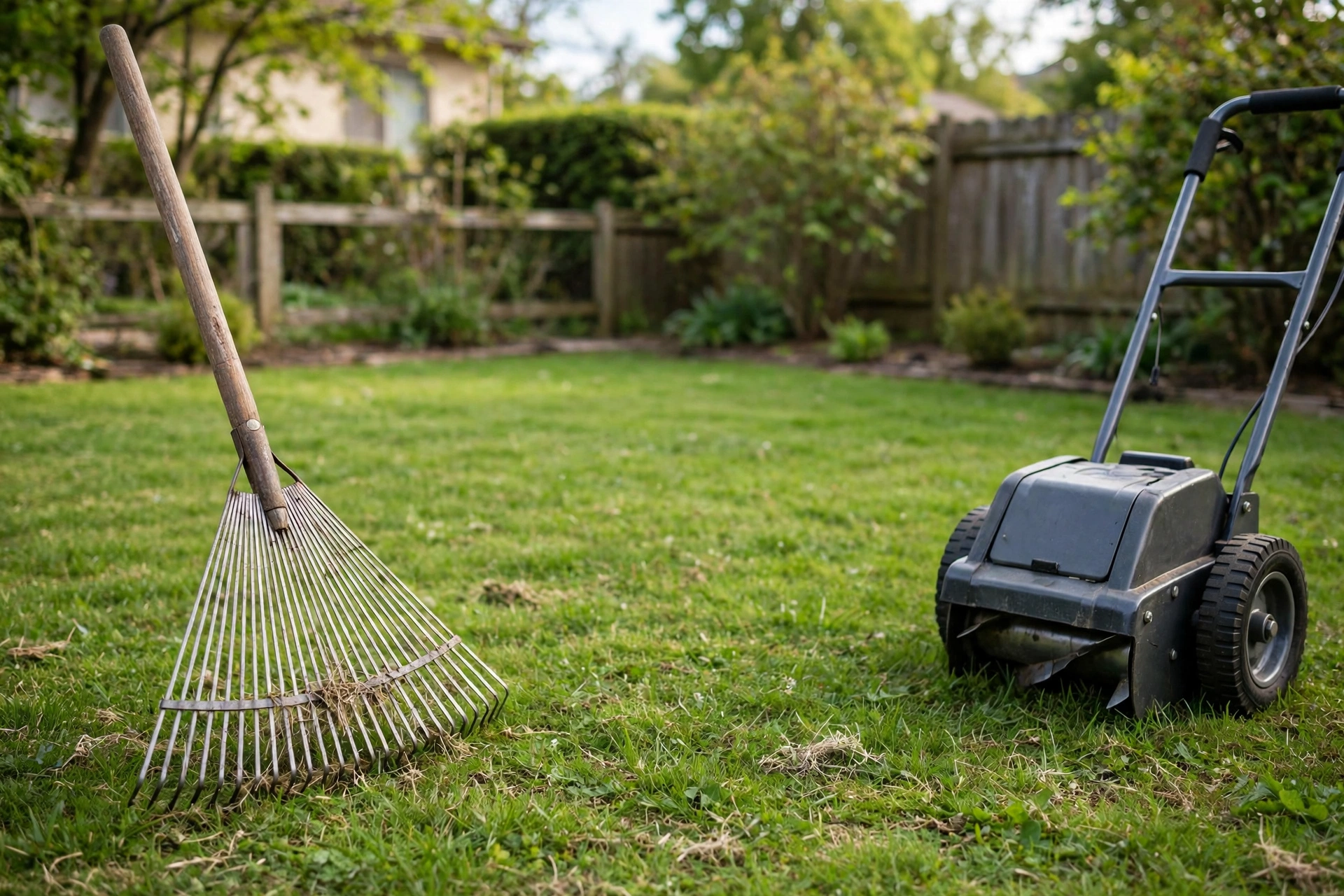
Skipping the rake. Material the machine lifts but you leave lying on the lawn settles straight back into the layer, and a scarifying pass followed by no cleanup and no seed wastes the open cuts you just made.
Going deep everywhere at once. Depth is a per-section decision, since the shady side of a yard and the sunny middle rarely carry the same layer, and a single deep setting applied to both will overwork one of them.
Picture the strip behind the machine as you work, a pale line of opened ground with the debris sitting loose on top of it. That strip should look worked, not scalped, and if green crowns are coming up in the pile, stop and raise the setting before the next pass.
Bottom line
Dethatch first when your thatch sits just over 1/2 inch, and scarify when it runs well over that line or your overseeding keeps failing to reach soil. Measure the layer this week, start with the gentler tool your measurement allows, and let the test strip — not the product name on the box — tell you whether the blades come out.