Landscape & Leisure is reader-supported. When you buy through links on our site, including Botanical Interests seed links, we may earn a commission at no extra cost to you. Prices change, so click through to confirm current pricing.
Two poppy packets can sit side by side on the rack and look like cousins, and in a way they are not even that close. One holds a California poppy that shrugs off dry soil and blooms from spring to frost, and the other holds a corn poppy with tissue-thin petals that wants cool spring soil and a light touch.
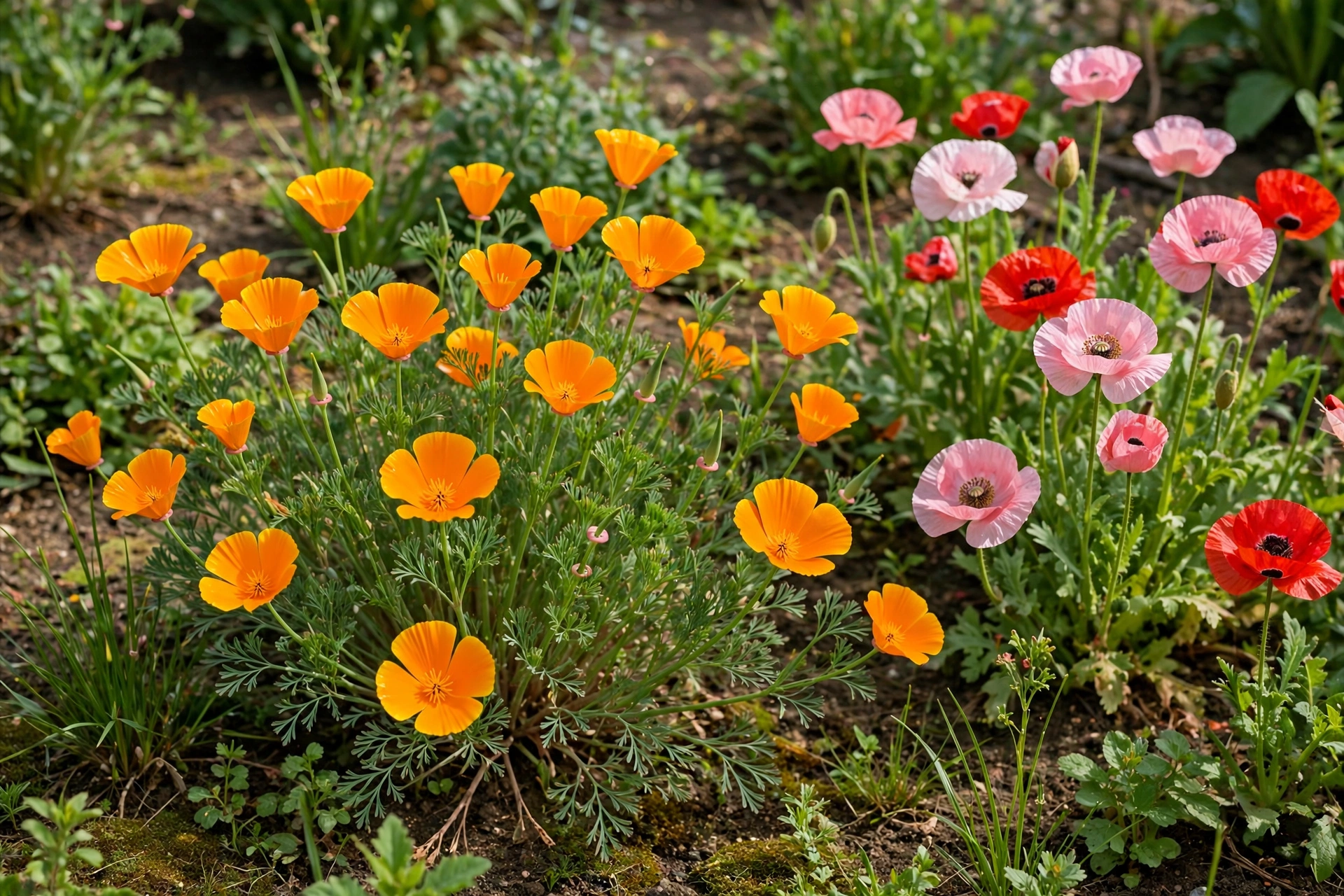
That split is the whole decision here, and it is a kind one, because both sides give you a bed that looks like you planned it on purpose. California poppies are Eschscholzia californica, low and ferny and built for sun and lean soil, while the Shirley and corn poppies are Papaver rhoeas, taller, airier, and happiest sown where they will bloom.
Our growing poppies guide walks through the sowing, thinning, and deadheading every variety below shares, and if a packet ever sits there silent in the bed, our poppy germination troubleshooting guide sorts out why. For companion color, the cosmos varieties roundup pairs beautifully with everything here.
The Varieties at a Glance
| Variety | Type | Flower | Rating | Packet |
|---|---|---|---|---|
| Mother of Pearl | Corn poppy, Papaver | 2″–3″ pink, purple, white | 4.8★ | $3.49 |
| Orange California | California poppy, Eschscholzia | Golden-orange, single | 4.7★ | $2.99–$5.99 |
| Mission Bells California | California poppy, Eschscholzia | 2″–3″ rose, red, orange, white, yellow | 4.6★ | $2.69–$6.49 |
| Shirley Single Blend | Corn poppy, Papaver | 2″–3″ delicate single mix | 4.6★ | $2.69 |
| Black Swan | Poppy | 3″–5″ dark cabernet, semi-double | 4.4★ | $2.69 |
| American Legion | Corn poppy, Papaver | Classic Flanders red | 4.2★ | $2.69 |

California Poppies and Corn Poppies Are Not the Same Plant
Start here and the rest of the list reads itself. California poppies grow 12 to 24 inches tall with fine, ferny foliage, and they tolerate heat and drought once they are established, which makes them the forgiving choice for a dry, sunny slope or a bed you do not water often.
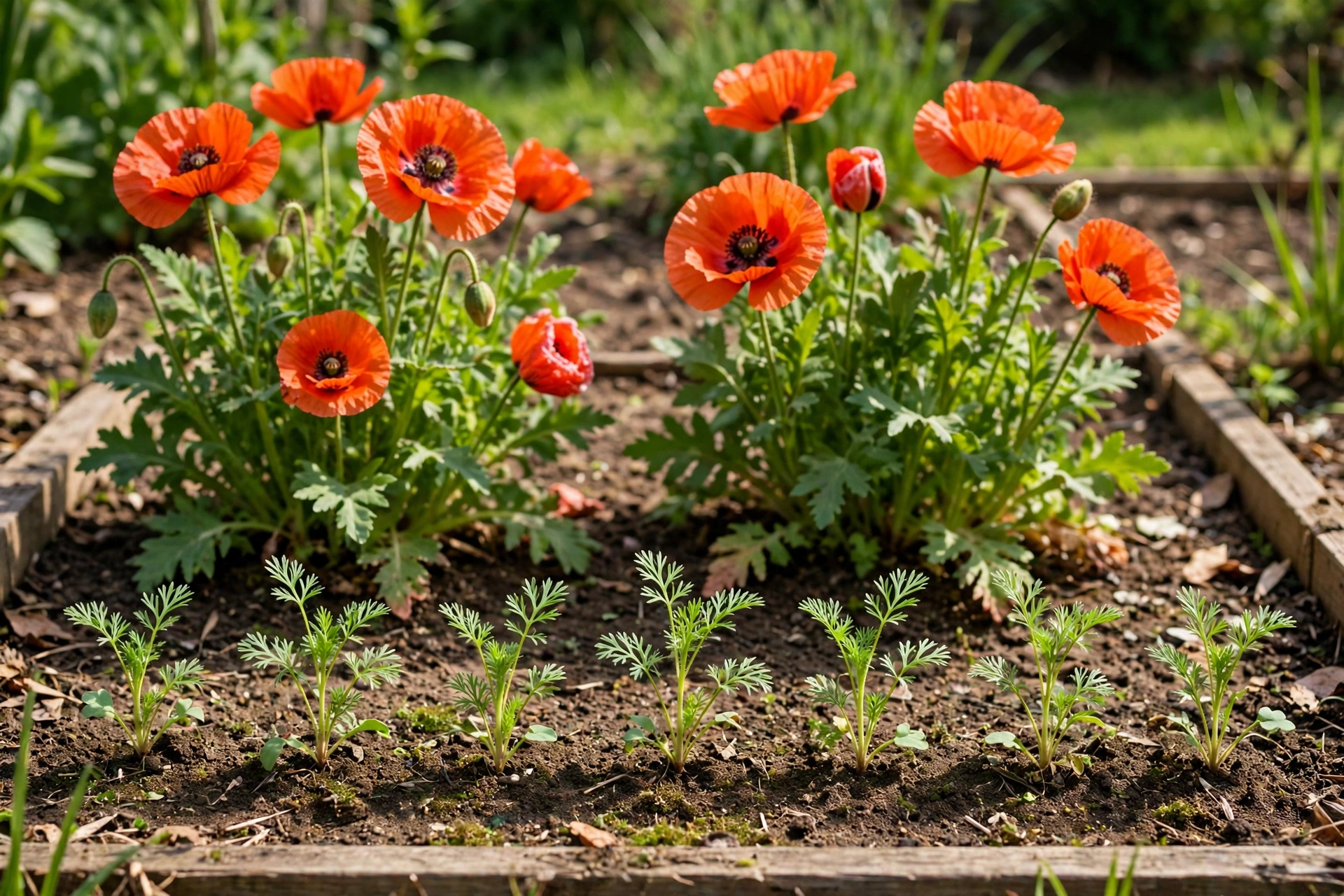
Corn poppies stand taller, over 24 inches for Mother of Pearl, on slender stems that sway in the lightest breeze. Their petals are thinner, their season leans spring into summer, and they reseed freely when you let a few pods ripen, which is either a promise or a warning depending on how tidy you like a border.
Mother of Pearl — the One to Plant First
If you buy one packet, make it this one. Mother of Pearl is a Papaver rhoeas corn poppy with 2- to 3-inch blooms in shades of pink, purple, and white with dark centers, and at 4.8 stars it is the highest-rated poppy in this group.
Press the seed into the surface rather than burying it, sow a group of three seeds every 6 to 8 inches, and thin to one plant every 6 to 8 inches when the seedlings are 1 to 2 inches tall. Germination runs 10 to 15 days, and the plants are drought tolerant and deer resistant once they are going.
- Pros: Highest rating here; soft, glowing color mix that suits almost any border; low maintenance and drought tolerant; seed pods dry nicely for arrangements.
- Cons: Tall plants over 24 inches can lean in an exposed, windy spot, so give them neighbors to lean on.
Mother of Pearl Poppy Seeds
The highest-rated poppy here — pink, purple, and white corn poppies that practically glow in a mass planting.
Orange California — the Dry-Bed Workhorse
This is the golden-orange California poppy that covers hillsides, the state flower of California, and the packet I would hand to anyone with a hot, dry corner that defeats fussier flowers. It is a drought-tolerant heirloom that attracts pollinators, reseeds readily, and asks for almost nothing once it is established.
Owners who scatter it in unirrigated spots report the same pattern: not every seed comes up, and the ones that do keep going through heat that wilts the rest of the bed. Plant it where that toughness matters, in a naturalized area or a wildflower patch, rather than in a bed you intend to keep in neat rows.
- Pros: Exceptionally drought tolerant; reseeds readily for return color; a pollinator favorite; ideal for naturalized and wildflower areas.
- Cons: Reseeding means it will not stay exactly where you put it, so skip it for a tightly edited border.
Orange California Poppy Seeds
The classic golden-orange California poppy — drought tolerant, pollinator-friendly, and happy to reseed.
Mission Bells California — the Color Carpet
Where Orange California gives you one glorious color, Mission Bells gives you the whole sunset at once. Its 2- to 3-inch double and semi-double ruffled flowers come in rose, red, orange, white, and yellow on plants 12 to 24 inches tall, blooming from spring to frost.
Scatter the seed and rake it in lightly, then thin to one plant every 4 to 6 inches when the seedlings are an inch tall. Germination takes 7 to 14 days, sowing runs 4 to 6 weeks before your last frost at soil temperatures of 50 to 60 degrees, and the plants handle both heat and drought while deer leave them alone.
- Pros: The widest color range of any California poppy here; double and semi-double ruffled blooms; long spring-to-frost season; heat and drought tolerant.
- Cons: The organic packet option is sold out, so choose the conventional or large packet if you order this one.
Mission Bells California Poppy Seeds
Ruffled double and semi-double California poppies in rose, red, orange, white, and yellow, spring to frost.
Shirley Single Blend — the Heirloom Charmer
Shirley poppies date to the 1880s, and you can see the age in the best way: delicate 2- to 3-inch blossoms on slender, nodding stems that move with every pass of air. The blend self-sows, so a first planting in a naturalized corner tends to become a returning one.
Water these at the base rather than overhead, because those fine stems flop under a hard spray and then have to pick themselves back up. In a sheltered bed with gentle watering, the effect is all grace and no fuss.
- Pros: True heirloom character from the 1880s; delicate single blooms in a soft mix; self-sows for naturalized areas; very good value in seed count for the price.
- Cons: Slender stems nod and can flop under overhead watering, so this is a base-watering, sheltered-spot flower.
Shirley Single Blend Corn Poppy Seeds
An 1880s heirloom with delicate 2- to 3-inch blossoms on nodding stems — made for naturalized corners.
Black Swan — the Drama Pick
Every bed benefits from one flower that makes people stop mid-sentence, and Black Swan is that flower here. Its finely cut, semi-double blossoms run 3 to 5 inches across in a dark cabernet shade, carried on graceful, curved necks that earn the name, and bees work the blooms steadily while they are open.
Plant it along a path you walk daily or in a large container by a door, because owners consistently note the bloom window is striking but short. You want this one where you will actually see it during its best week, and the seed pods that follow are handsome enough to carry the spot afterward.
- Pros: The largest, most dramatic blooms here at 3 to 5 inches; finely cut dark petals unlike any other poppy in the list; good for bouquets and decorative pods.
- Cons: The bloom display is brief, so it earns its place as an accent, not as your season-long color.
Black Swan Poppy Seeds
Dark cabernet, finely cut 3- to 5-inch semi-double blooms on curved, swan-like necks — plant it by a path.
American Legion — the Flanders Red
American Legion is the classic red corn poppy of Flanders fields, the flower John McCrae’s poem made a symbol of remembrance. Plants grow 12 to 24 inches tall, and the sowing could not be simpler: scatter, rake in lightly, and thin to one plant every 9 inches when the seedlings are 1 to 2 inches tall, with germination in 10 to 15 days.
Sow it 4 to 6 weeks before your last frost, as soon as the soil can be worked, or in fall for bloom the following spring. For a memorial planting or a bold red drift in a meadow bed, this is the honest, uncomplicated choice.
- Pros: The true Flanders red with real history behind it; simple scatter-and-rake sowing; reseeds for return plantings; well-reviewed over many seasons.
- Cons: At 4.2 stars it is the lowest-rated of the carded picks here, and the single red color gives you less variety per packet than the blends.
American Legion Corn Poppy Seeds
The Flanders-field red corn poppy — scatter it in spring or fall for a memorial drift or a meadow bed.
The One I Would Skip for Most Beds
Amazing Grey has a genuinely lovely idea behind it — purple-grey blooms bred over 18 years from a single flower in the Mother of Pearl blend, and a Fleuroselect Novelty award to its name. It is also the lowest-rated poppy here at 3.5 stars, with the most uneven owner reports in the group, so I would let Mother of Pearl carry a first poppy bed and treat Amazing Grey as a second-year experiment for gardeners who love that smoky color enough to accept a patchier stand.
Bottom Line
Plant Mother of Pearl first if you want the surest, softest drift of corn poppies, and plant Orange California first if your bed is dry, hot, and mostly left alone. Add Mission Bells when you want the California poppies in full color rather than a single gold, keep Shirley for a sheltered heirloom corner, and save Black Swan for the path where its brief, dramatic week will not be missed.