Landscape & Leisure is reader-supported. When you buy through links on our site, including Botanical Interests seed links, we may earn a commission at no extra cost to you. Prices change, so click through to confirm current pricing.
The poppy seed in your palm is barely bigger than a grain of sand, and that one fact explains nearly every poppy success and every poppy disappointment. Seed that small cannot fight its way up through an inch of soil, and it does not want to be moved once it sprouts, so the whole craft here is sowing it shallow, in place, and then having the discipline to thin it.
Get those three things right and poppies are close to effortless. Our poppy varieties roundup helps you choose the packet, and if a sowing still comes up empty, our germination troubleshooting guide works through the usual causes in order.
Start Where They Will Bloom
Direct sow, always. Both corn poppies and California poppies are marked not recommended for starting indoors, because their roots resent disturbance and transplanted seedlings sulk or fail. Sow them in the bed, the slope, or the large container where they will flower, and you skip the riskiest step entirely.
That rule feels restrictive until you see how willing the seed is outdoors. A packet scattered at the right moment does the work a tray of transplants never quite manages, and the plants that come up in place grow sturdier for having never been moved.
When to Sow
Spring sowing runs 4 to 6 weeks before your average last frost date, or as soon as the soil can be worked. For California poppies, that window is best at soil temperatures of 50 to 60 degrees, which is cool soil by most flowers’ standards and exactly the point.
Fall sowing is the other door in, and in mild climates it is the recommended one. Seed sown in fall settles in and blooms the following spring, often ahead of a spring sowing, so a bed that disappointed you this year can be quietly re-seeded before winter and forgotten until it flowers.
| Step | Corn poppies (Papaver) | California poppies (Eschscholzia) |
|---|---|---|
| Depth | Press into surface, or scatter and rake in lightly | Scatter and rake in lightly |
| Germination | 10–15 days | 7–14 days |
| Thinning | Thin at 1″–2″ tall to 6″–9″ apart, by variety | Thin at 1″ tall to 1 every 4″–6″ |
| Sow window | 4–6 weeks before last frost, or fall | 4–6 weeks before last frost at 50–60°F soil, or fall |
How to Sow, Step by Step
1. Clear and smooth the surface. Rake the bed level and pick out the coarse clumps, because tiny seed that lands in a deep crack is seed that never sees light. A smooth, fine surface is the closest thing poppies have to a special requirement.
2. Scatter, then barely cover. Corn poppy seed for varieties like Mother of Pearl is pressed into the surface, while American Legion and the California poppies are scattered and raked in lightly. If you can still half-see the seed after raking, you have it right.
3. Water gently and keep it even. Use a soft spray at the base of the bed rather than a hard jet, which washes tiny seed into puddles and bare patches. The surface should stay lightly moist through the germination window — 7 to 14 days for California poppies, 10 to 15 days for corn poppies — and then you can ease off.
There is a particular quiet to a freshly sown poppy bed in early spring, all raked soil and promise, with the ferny first leaves still a week away. It asks for patience rather than fussing, and the gardeners who leave it alone are usually the ones rewarded.
Thinning: the Step Everyone Skips
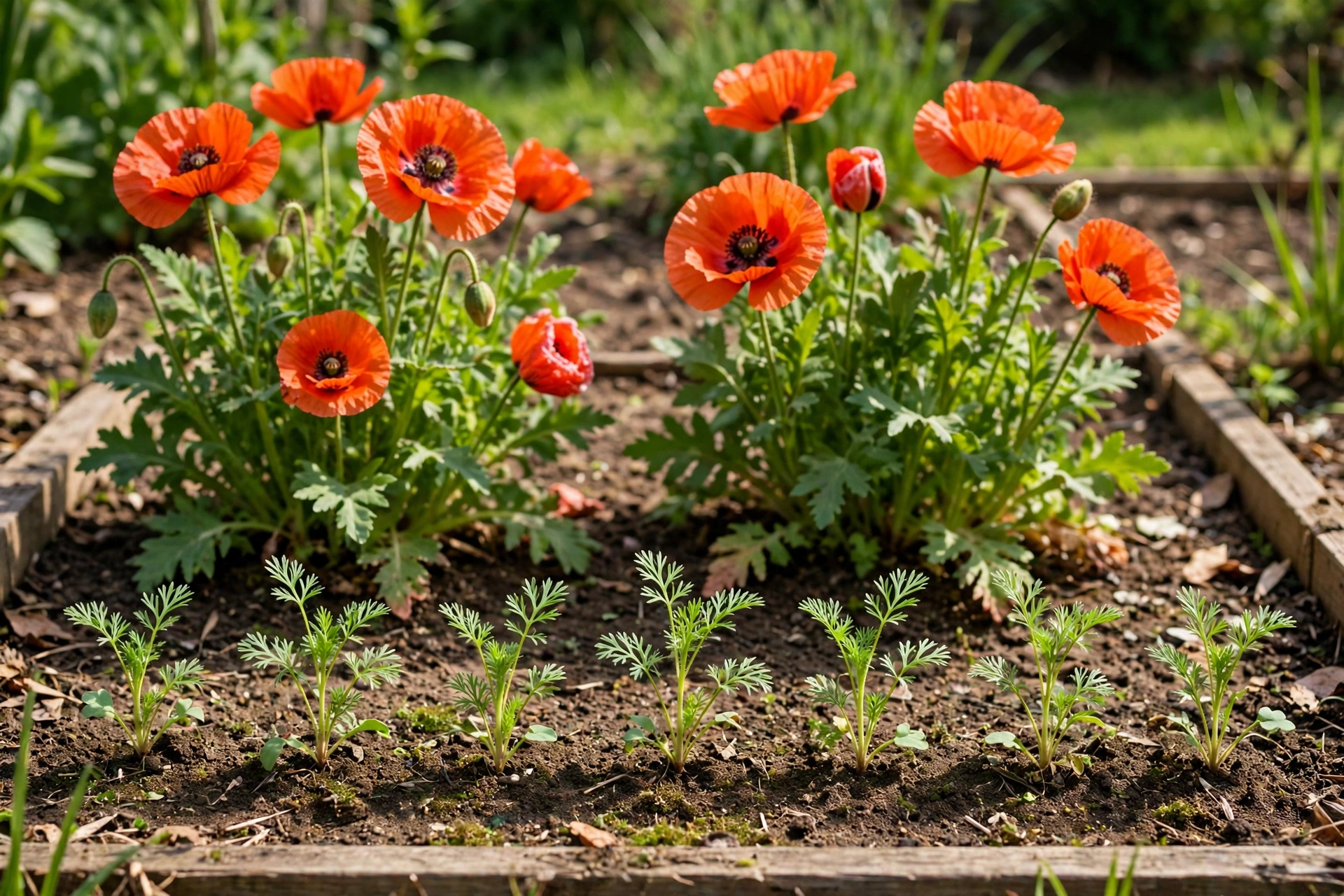
Thin on time. Mother of Pearl is sown in groups of three every 6 to 8 inches and thinned to one plant every 6 to 8 inches at 1 to 2 inches tall. American Legion thins to one every 9 inches, and Mission Bells California thins to one every 4 to 6 inches at an inch tall.
Crowded poppies do not forgive the way crowded lettuce does. Left in a clump, they stretch thin, flop early, and flower small, so pull the extras while they are small enough to come out without tearing the roots of the keeper beside them.
Mother of Pearl Poppy Seeds
The forgiving corn poppy to learn on — press into the surface, thin to 6 to 8 inches, and let it glow.
Deadheading, and When to Stop
Deadhead for more flowers. Corn poppies often reseed, and the packet guidance is plain: remove spent blooms if reseeding is not desired. Snipping faded flowers every few days keeps a bed in bloom longer and keeps the stand where you planted it.
Then let the last pods ripen. Late in the season, leave a handful of pods to dry on the plant. California poppies self-sow readily and corn poppies reseed, so those last pods are next year’s bed already handled, and dried pods hold their shape nicely in a vase long after the petals are gone.
Mission Bells California Poppy Seeds
The California poppy for a full-color carpet — scatter, rake lightly, thin to 4 to 6 inches, spring to frost.
Water and Feeding After They Are Up
Once established, both kinds are drought tolerant, and California poppies are genuinely heat tolerant as well. Water at the base, let the soil dry between waterings, and resist feeding a rich diet, because poppies in lean soil stand straighter and flower harder than poppies that have been pampered.
Full sun is the one non-negotiable. Every variety in this cluster wants it, and a poppy bed that leans and stretches is almost always a bed asking for more light rather than more water.
American Legion Corn Poppy Seeds
The simplest sow in the group — scatter and rake in spring or fall, thin to 9 inches, and enjoy the red.
The Short Version to Take to the Bed
Sow in place, sow shallow, and thin without sentiment. Do those three, in full sun and lean soil, and the poppies handle the rest — start with Mother of Pearl if it is your first bed, because its surface-sown, 6-to-8-inch routine is the easiest version of the whole method to get right.