Landscape & Leisure is reader-supported. When you buy through links on our site, including Botanical Interests seed links, we may earn a commission at no extra cost to you. Prices change, so click through to confirm current pricing.
Open the cupboard where the seed trays live and you already know how this story ends: a stack of thin plastic, half of it cracked along the corners, the rest warped from one season of sun and water. Every spring you buy the cheap ones again, and every spring they fall apart before the seedlings are even out the door. November is the moment to break the cycle, while the garden is quiet and the buying can be deliberate.
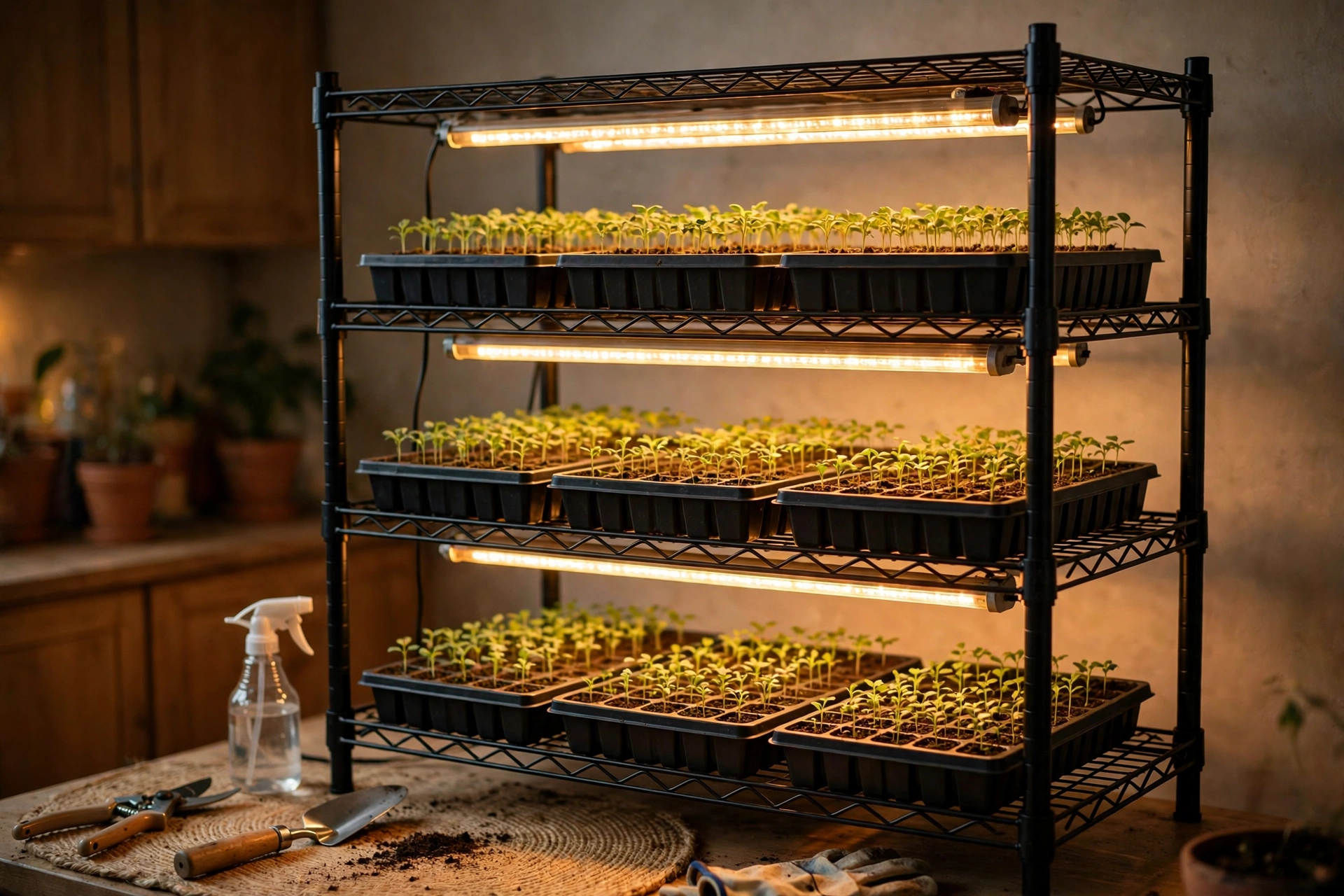
The fix is five pieces that fit together — trays, a bottom tray, a heat mat, and grow bags — all built to be washed, stacked, and used again for years. Botanical Interests carries the Epic Gardening line, and every piece below is in stock. Our seed-starting station guide shows how the pieces fit together on one shelf, and the heat mat comparison settles whether the mat belongs in your setup at all.
Best Overall: Epic 6-Cell Seed Starting Trays
The 6-cell tray is the workhorse of the whole setup, and it earns that title the way good tools do: by not breaking. The plastic is five times thicker than a standard tray, UV-treated and BPA-free, with air-pruning slots on every cell so roots stop circling and branch instead. Each cell is about an inch and a half square and two and a quarter inches deep — room enough for a tomato or pepper seedling to grow on for weeks — and finger holes in the base let you push each plant out without yanking it by the stem.
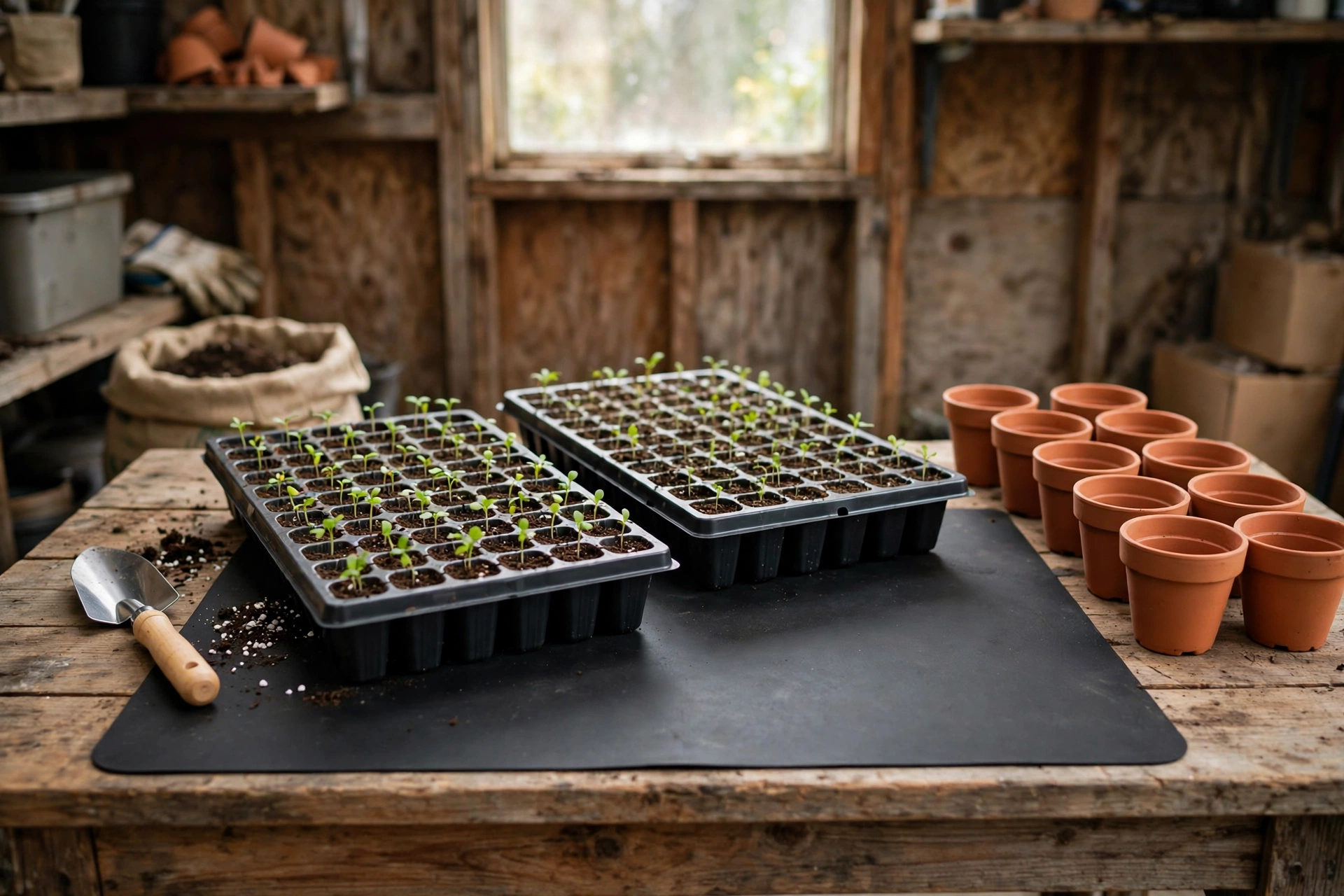
Twelve of these trays fit into one 1020 bottom tray, which turns the set into a classic 72-cell flat you can lift and move as a unit. Gardeners rate them 4.9 from 579 reviews, the biggest review base in this whole roundup. A six-tray pack runs $19.99, which works out to about $3.33 a tray, and the per-tray price drops to $2 if you buy twenty packs at once — the kind of math that makes sense when three gardeners go in together. Wash them with hot, soapy water at the end of the season and they come back next spring looking the same.
Pros: five times thicker than standard trays, with air-pruning slots and finger holes; twelve fit one bottom tray; 4.9 from 579 reviews; multi-pack pricing down to $2 a tray.
Cons: a six-tray pack is more than a one-window gardener needs in a year, so split it with a neighbor or plan on the set lasting a decade.
BEST OVERALL
Epic 6-Cell Seed Starting Trays
The tray everything else is built around — thick, reusable, and sized for a full flat of seedlings.
Best for Big Seedlings: Epic 4-Cell Seed Starting Trays
Some seedlings outgrow a 6-cell tray before they are ready for the garden, and that is where the 4-cell earns its place. Each cell is two and three-eighths inches square, in a choice of three- or four-inch depths, which gives melons, cucumbers, and tomatoes the root room they need to keep growing indoors without stalling. Eight of them fit into one 1020 bottom tray, and the same thick recycled plastic, air-pruning slots, and finger holes carry over from the 6-cell.
The 4-cell also does the job the 6-cell cannot: potting up. When a seedling fills its small cell but the weather is still weeks away from transplanting, moving it into a 4-cell buys time without a shock. Gardeners rate them 4.9 from 458 reviews. The four-inch-deep pack runs $19.99, and the per-tray price falls to $3 at twenty packs.
Pros: deep cells for big-rooted crops like melons and tomatoes; the natural pot-up step from the 6-cell; 4.9 from 458 reviews.
Cons: four plants per tray means you need more trays — and more shelf space — for a big sowing.
BEST FOR BIG SEEDLINGS
Epic 4-Cell Seed Starting Trays
Deep cells for melons, cucumbers, and tomatoes — and the pot-up tray when seedlings outgrow the 6-cell.
Best Value: Epic 1020 Universal Bottom Tray
The least glamorous piece here is also the one everything else depends on. The 1020 bottom tray is the flat your cell trays sit in, and it does two jobs at once: it catches the water, and it lets you water from below, which keeps seedlings’ leaves dry and the mix evenly moist. Twelve 6-cell trays or eight 4-cell trays fit inside one, so a single bottom tray organizes a whole sowing into a unit you can carry to the sink and back.
At $14.99 it is the cheapest piece in the roundup and the one you will use every single day of the season, which is why it is the runner-up even though it never holds a seed itself. Gardeners rate it 4.9 from 414 reviews. If you buy one piece first and build the rest of the setup around it, buy this one.
Pros: holds a full flat of cell trays; makes bottom watering easy; $14.99; 4.9 from 414 reviews.
Cons: it is a tray, not a system — on its own it does nothing, and it needs the cell trays to earn its keep.
BEST VALUE
Epic 1020 Universal Bottom Tray
The $14.99 base the whole setup sits in — and the piece that makes bottom watering effortless.
Best for Heat-Lovers: Epic Seed Starting Heat Mat
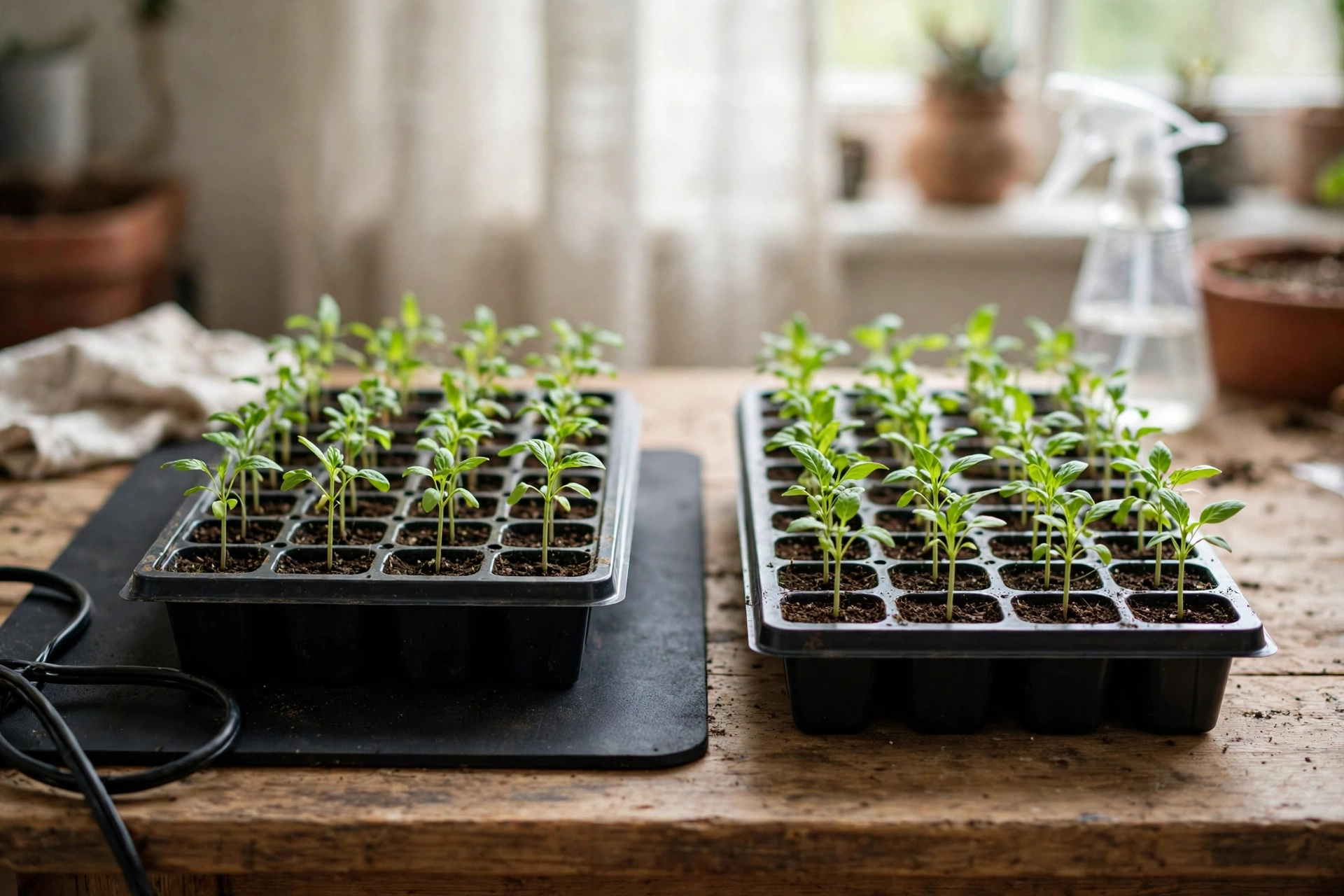
Peppers, eggplant, and tomatoes germinate slowly — or not at all — in a cool room, and that is the whole case for the heat mat. It is a ten-by-twenty-and-three-quarter-inch mat that fits a 1020 tray exactly, draws 20 watts, and lifts the soil ten to twenty degrees above room temperature. Roll it out, set the tray on top, plug it in. Gardeners rate it 4.7 from 50 reviews, and the recurring theme in those reviews is simple: seeds came up faster.
The honest trade-off is control. There is no thermostat and no timer, just one steady setting, so the mat does its job and then you unplug it — once seedlings are up, they grow on without the extra heat. At $29.99 it is the cheapest way to fix the single most common reason heat-loving seeds fail, which is a cold windowsill in March. If peppers and tomatoes are on your list, this is the pick; if you only start lettuce and peas, skip to the comparison below.
Pros: lifts soil 10–20°F on 20 watts; fits a 1020 tray exactly; 4.7 from 50 reviews; $29.99.
Cons: no thermostat or timer — one steady setting, so you manage it by unplugging.
BEST FOR HEAT-LOVERS
Epic Seed Starting Heat Mat
Ten to twenty degrees of bottom heat for peppers, eggplant, and tomatoes — the fix for a cold windowsill.
Best for the Next Step: Epic Grow Bags, Lined
Seedlings eventually outgrow the windowsill, and the lined grow bag is where they go next. The liner holds moisture in the soil while the fabric still air-prunes the roots, so plants build a dense, fibrous rootball instead of circling the pot. Five-gallon bags suit lettuce and herbs; the fifteen-gallon size is the one for peppers, eggplant, and tomatoes. Each bag carries a built-in irrigation strip that keeps drip lines neat, and the fabric is UV-treated for seasons of outdoor use.
Gardeners rate them 4.7 from 193 reviews, with the recurring praise being sturdiness and handles that make a heavy bag easy to move. They run $29.99 to $42.99 depending on size, sold in five-packs. If your garden is a patio, a driveway, or soil you would rather not dig into, these are the pots that let a seedling finish what the trays started.
Pros: liner keeps moisture in while roots air-prune; 5-gallon for herbs, 15-gallon for tomatoes and peppers; 4.7 from 193 reviews; built-in irrigation strip.
Cons: sold in five-packs, so the smallest buy is five bags — more than a two-pot gardener needs.
BEST FOR THE NEXT STEP
Epic Grow Bags, Lined
Where seedlings go when they outgrow the tray — lined for moisture, air-pruned for roots, sized for real crops.
The One to Skip for Now: Epic 16-Cell Trays
The 16-cell tray would be the space-saver of the line — eight of them fit one bottom tray, which recreates a classic 128-cell flat for starting herbs, greens, and brassicas in bulk. But it is out of stock today, so do not build your setup around it. When it comes back, it is worth a look for gardeners who sow a lot of small things; until then, the 6-cell does the same job with fewer, roomier cells.
What Not to Buy: Thin Disposable Trays
The real money pit in seed starting is not any one product. It is the thin, flimsy tray that costs a little less in February and cracks in April. The throwaways never get better at holding water or keeping seedlings upright, and you buy them again every February. If a tray bends when you lift it full of wet mix, walk away — you will be buying its replacement next February.
How the Five Pieces Compare
| Supply | Best for | Price | The one thing to know |
|---|---|---|---|
| Epic 6-Cell Trays | Most seedlings, most gardeners | $19.99 (6-tray pack) | 5× thicker than standard; 12 fit one bottom tray |
| Epic 4-Cell Trays | Melons, cucumbers, tomatoes | $19.99 (4-inch deep) | Deep cells; the pot-up step from the 6-cell |
| Epic 1020 Bottom Tray | Every setup — the base | $14.99 | Makes bottom watering easy; holds a full flat |
| Epic Heat Mat | Peppers, eggplant, tomatoes | $29.99 | Lifts soil 10–20°F; no thermostat, unplug after sprouting |
| Epic Grow Bags, Lined | The move out of the tray | $29.99–$42.99 | 5-gallon for herbs, 15-gallon for tomatoes and peppers |
Bottom Line
Buy the 6-cell trays first, add the 1020 bottom tray underneath them, and put a heat mat under that if peppers, eggplant, or tomatoes are on your list — that trio is the whole setup for most gardeners, and it will still be on your shelf in five years. Add the 4-cell trays when your seedlings need more root room, and the lined grow bags when they are ready to leave the windowsill for good. If your seeds have ever failed to come up, our guide to why seeds fail to germinate covers the other half of the problem — and if you are starting from scratch, our beginner’s guide to starting seeds indoors walks through the whole first season.