This post contains affiliate links. If you buy through them, we may earn a commission at no extra cost to you.
A turnip is a quick crop and a rutabaga is a commitment. That contrast, stated plainly, decides most of this comparison before flavor enters it: turnips finish in 30 to 50 days, while American Purple Top Rutabaga needs 80 to 120 days in the ground — up to four times as long in the same bed.
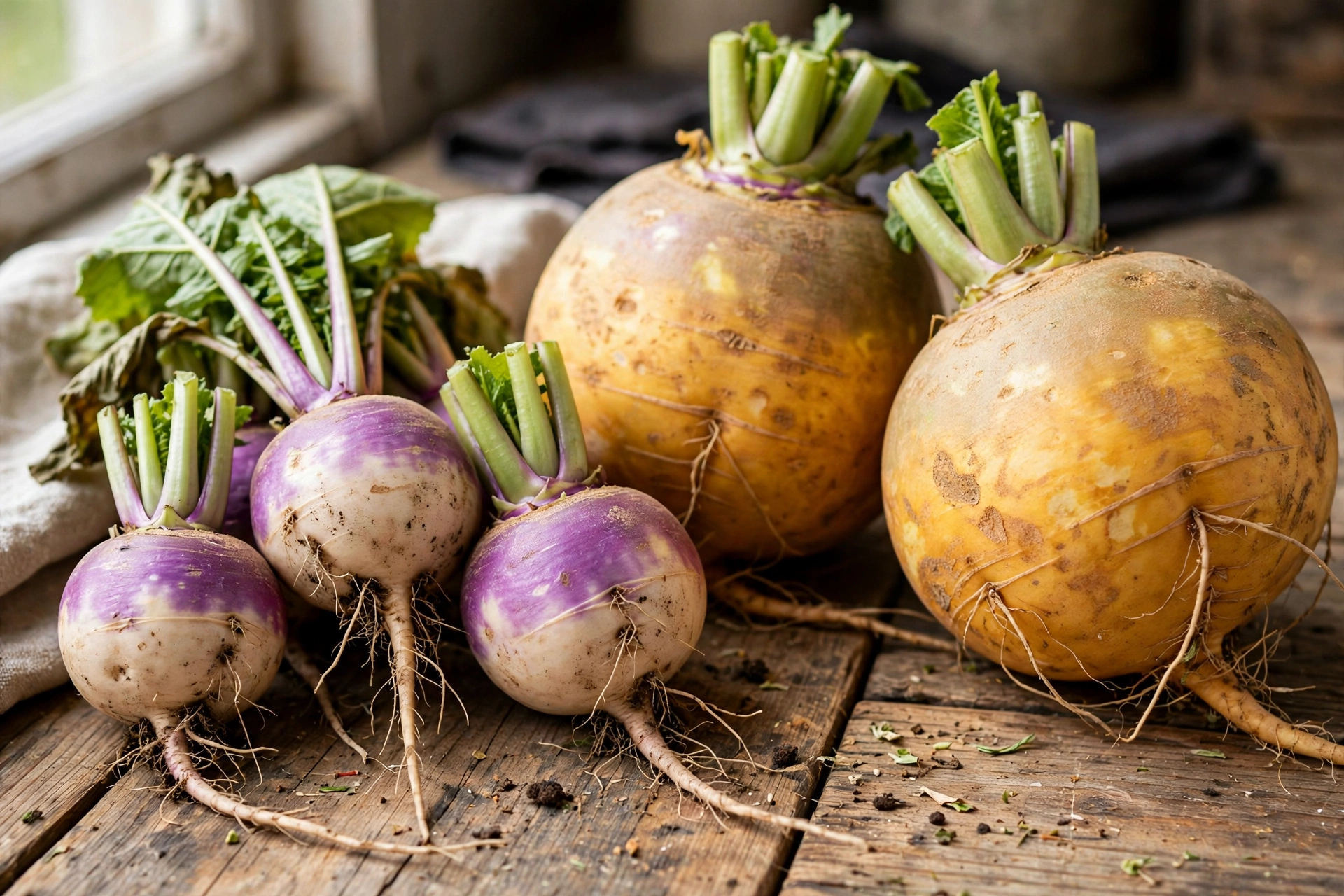
They are not the same plant wearing two names, either. Turnips are Brassica rapa; rutabaga is Brassica napus subspecies rapifera, a different species with yellow flesh under purple shoulders, grown for fall harvest and storage. The turnip varieties are ranked in the turnip roundup; this page settles which species earns the row.
Days, spacing, and harvest size
| Crop | Days | Spacing | Harvest size |
|---|---|---|---|
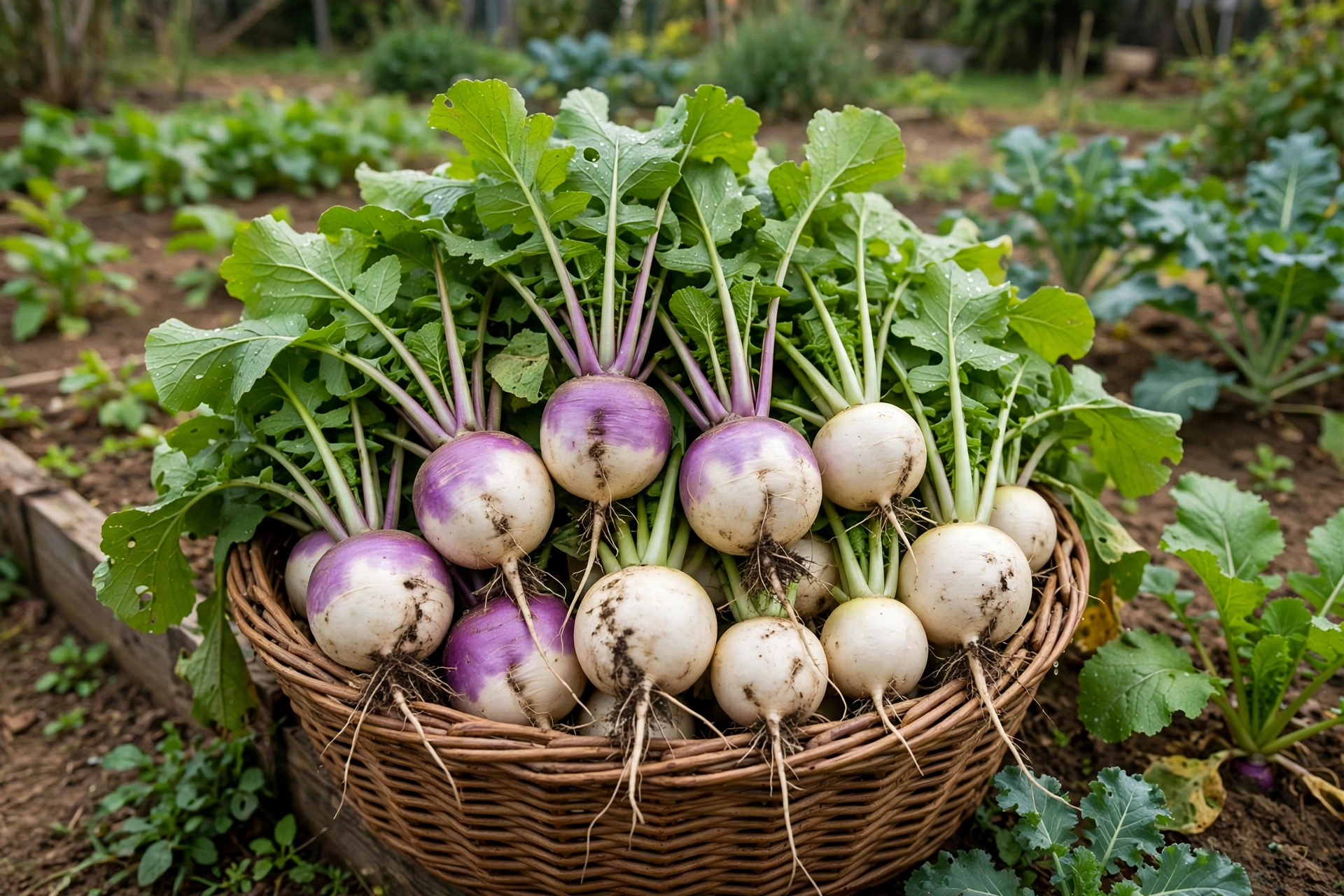
| Turnip White Lady | 30 to 40 days | Thin to 1 every 4 to 6 inches | 2 inches baby, 4 to 5 inches full |
| Purple Top White Globe Turnip | 50 days | Thin to 1 every 4 to 6 inches | 2 inches tender, up to 6 inches for cooking |
| American Purple Top Rutabaga | 80 to 120 days | Thin to 1 every 6 inches, at 4 inches tall | 4 to 6 inches |
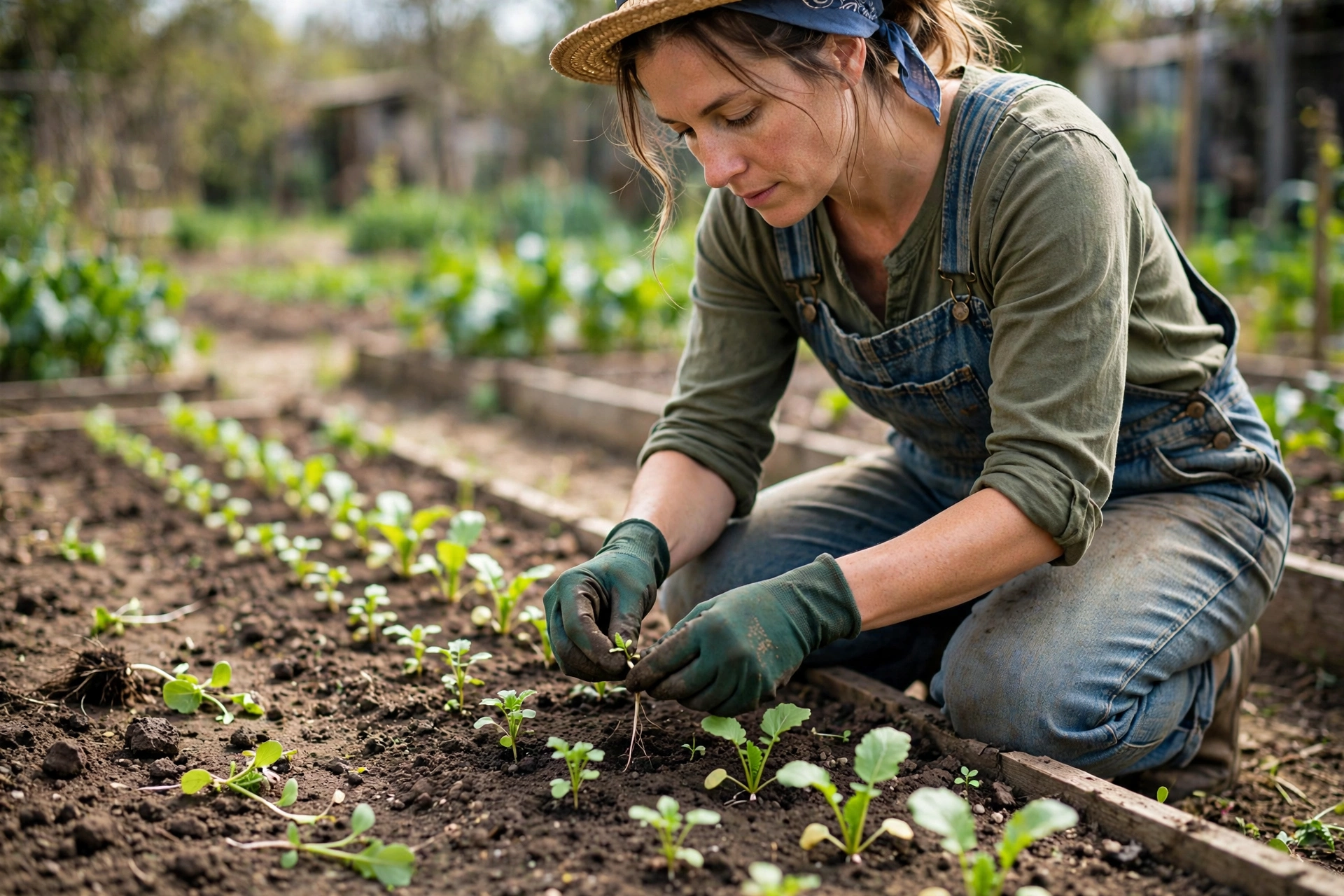
The sowing mechanics rhyme: both go in direct, 1/4 inch deep, in groups of 3 seeds, and neither transplants — rutabaga’s packet says root crops do not transplant well, in so many words. The calendars diverge. Turnips sow 2 to 4 weeks before last frost and again through summer on a 2-week succession; rutabaga for fall harvest sows 3 to 4 months before first fall frost, which means midsummer, and then waits.
Flavor and the job in the kitchen
White Lady is mild and slightly sweet, bred to be eaten raw at baby size as well as cooked. Rutabaga is sweet and mellow in a different register — dense, yellow-fleshed, made for mashing like potatoes and for chunks in soups, stews, and casseroles, per its packet. One is a salad and quick-cooking root; the other is a winter-pot root.
Storage follows the same split. Rutabaga’s packet calls it a great storage crop outright, best harvested in fall after a few light frosts, with the warning not to let the roots freeze in the ground. Turnips are pulled and used on a short clock, with Purple Top the storing exception among them — and that packet is currently out of stock.
Turnip White Lady Seeds
Baby roots in 30 days, mild and slightly sweet raw or cooked — the quick end of this comparison.
American Purple Top Rutabaga Seeds
4- to 6-inch yellow-fleshed roots in 80 to 120 days, rated 4.7 out of 5 across 14 reviews, harvested after light frosts for storage.
Which to grow
Grow turnips when the bed has a short window — spring before warm crops go in, or a late-summer gap — and when the roots will be eaten fresh within days of pulling. Grow rutabaga when the bed can be given up from midsummer to frost and the point is a storing root for winter cooking.
My planting call for most home gardens is White Lady first, because a 30-day crop teaches you whether your household eats this family of roots at all, at almost no cost in bed space. If the answer is yes and storage is the goal, rutabaga gets the long row next season. The turnip routine itself — sowing, thinning, harvest by inches — is in growing turnips.