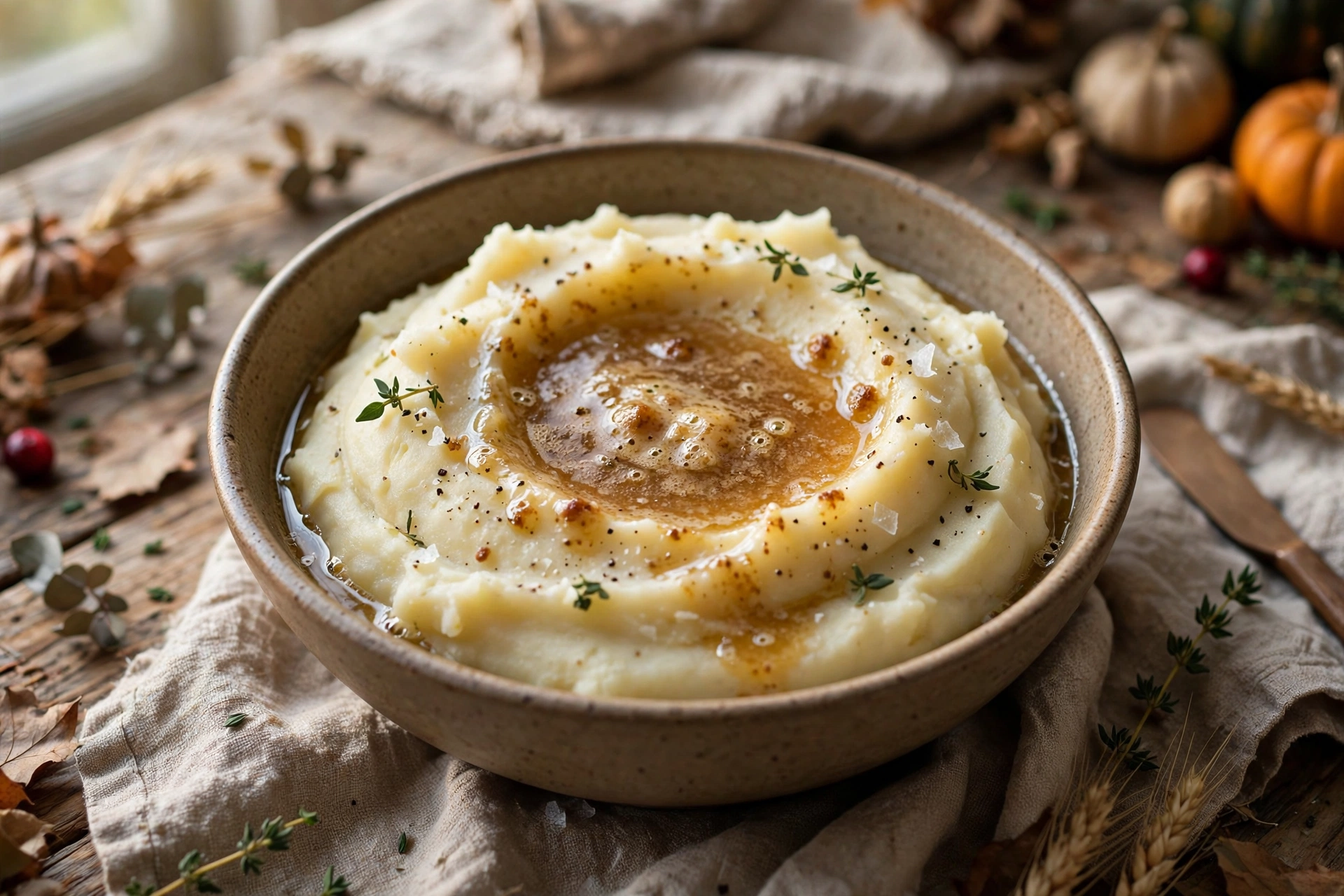
You are standing at the stove with the turkey resting under foil, the gravy not yet started, and a table full of people who have been smelling this meal for two hours. This is the moment mashed potatoes earn their place — and the brown butter is what makes this batch the one people ask about.
Browning the butter takes five minutes and changes the whole dish. The milk solids in butter toast as it cooks, and the flavor goes from plain richness to something nutty and deep that plain melted butter never reaches. Everything else about the method is built to protect the texture: Yukon Golds for their natural butteriness, warm milk so the mash stays hot, and a masher instead of a food processor, because a processor works the starch into glue.
Why this one works
Three choices carry the recipe. Yukon Gold potatoes mash creamy without help, so the sour cream can stay a modest quarter cup — enough for tang, not enough to turn the potatoes into dip. Starting the potatoes in cold water cooks the chunks evenly, so no piece is chalky in the middle while another falls apart. And the butter is browned in a light-colored skillet for a plain reason: you cannot watch milk solids change color in a dark pan, and the difference between amber and burnt is about thirty seconds.

Brown Butter Mashed Potatoes
Ingredients
Method
- Start the potatoes cold. Put the potato chunks in a large pot, cover with cold water by 1 inch, and add the salt. Bring to a boil over high heat, then reduce to a steady simmer and cook 15 to 20 minutes, until a chunk slides off a knife with no resistance.
- Brown the butter. While the potatoes cook, melt the butter in a light-colored skillet over medium heat. It will foam, then the foam will settle and the milk solids will turn amber and smell nutty, about 5 minutes. Pull it off the heat the moment it smells like hazelnuts — brown butter goes from perfect to scorched in under a minute.
- Drain and dry. Drain the potatoes and return them to the hot pot over low heat for 1 minute, shaking gently, so surface water steams off. Wet potatoes make loose mash.
- Mash warm, season warm. Mash the potatoes with a potato masher until mostly smooth. Pour in the brown butter and all its browned bits, then the warm milk, and stir just until combined. Fold in the sour cream and pepper, taste, and add salt a pinch at a time.
- Serve or hold. Spoon into a warm bowl, swirl the top, and scatter chives if using. To hold up to 1 hour, cover the pot and set it over the lowest heat with a splash of milk stirred in before serving.
Make it ahead
Mashed potatoes hold better than their reputation suggests. Make the full recipe up to a day ahead, cool it, and refrigerate it covered. Reheat it in a covered dish at 325°F for about 30 minutes with an extra quarter cup of warm milk stirred in, and it comes back supple. On the day itself, the finished pot holds for an hour over the lowest heat — which is exactly the breathing room a holiday stove needs.
Variations
Garlic brown butter: add two smashed garlic cloves to the butter as it browns and fish them out before pouring; the butter picks up the flavor without raw garlic bite.
Half and half swap: russets can replace half the Yukon Golds for a fluffier, lighter mash. All russets work too, but they drink more milk — add it gradually.
Herb finish: swap the chives for fried sage leaves crumbled over the top, especially alongside roast chicken.
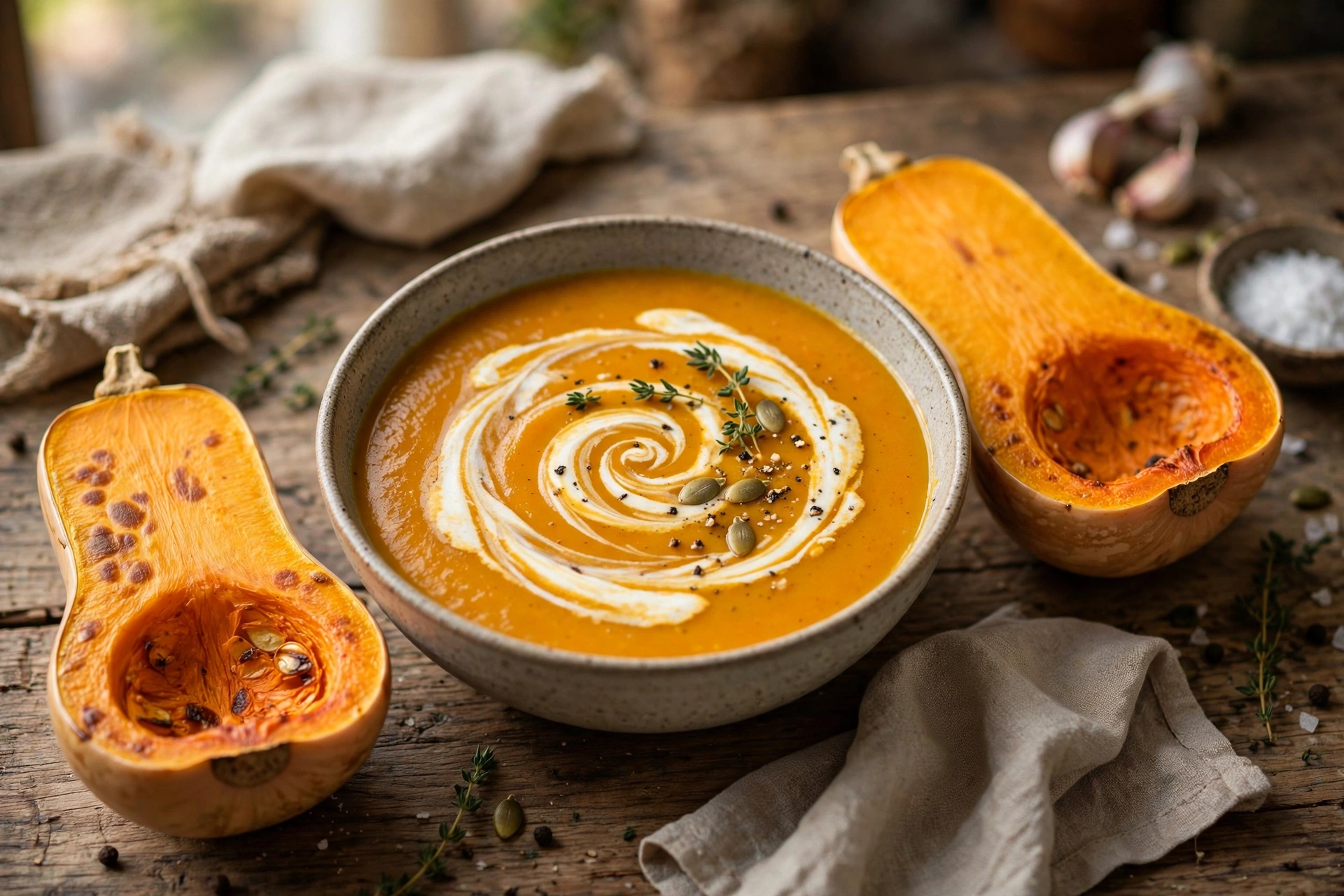
Leftovers keep 3 to 4 days refrigerated and reheat with a splash of milk. They also fry into excellent potato cakes the next morning, crisped in a little of the same brown butter if any survived — which, honestly, it rarely does. And if the holiday table needs one more make-ahead side, a roasted butternut squash soup started the day before takes the pressure off the stove entirely.