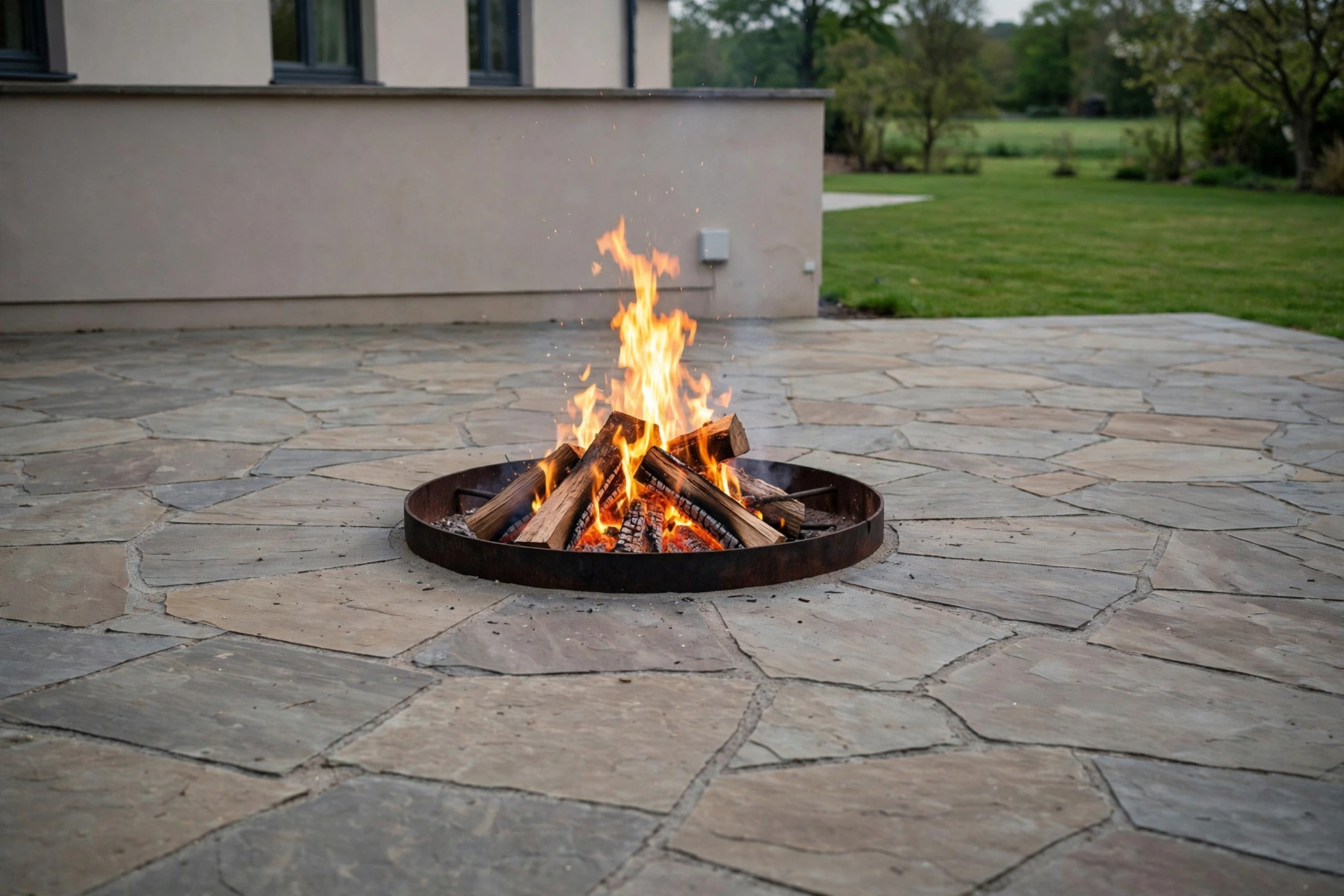
A concrete patio shrugs off a fire pit’s heat. A wood deck cannot: the boards under and around the pit absorb radiant heat burn after burn, embers land in the gaps between boards where nobody sees them, and the structure holding the deck up is made of the same material as the surface.
That difference is why the deck question has a stricter answer than the patio question. A deck is often the nicest place to sit in the yard, which is exactly why this mistake gets made, and the damage it causes builds slowly enough that the first few fires seem to prove it is fine.
What the heat actually does to a deck
Wood does not need a flame touching it to be damaged. Sustained radiant heat from a pit a foot or two above the boards dries and chars the surface over repeated burns, and a single popped ember can sit in a board gap, out of sight, long after the fire looks out.
Composite decking handles the same heat worse in one specific way: it softens and can warp or melt under sustained high temperatures at temperatures solid wood merely chars under. A composite deck is not the safer surface for a fire pit, whatever its reputation for shrugging off weather.
Wood-burning pits: no version of this is safe
A wood fire on a wood deck fails on every count at once. The fuel sparks, the ash holds heat for hours, and the fire cannot be switched off when the wind changes. No pad, mat, or screen turns that combination into a sound one, and most fire pit manufacturers say plainly that their pits belong on a non-combustible surface.
The clearance rules still apply on top of the surface problem. A deck is usually attached to the house, so a pit on it starts well inside the distance our guide to how far a fire pit should be from your house sets at ten feet minimum from anything that can burn.
Propane pits: closer, but still conditional
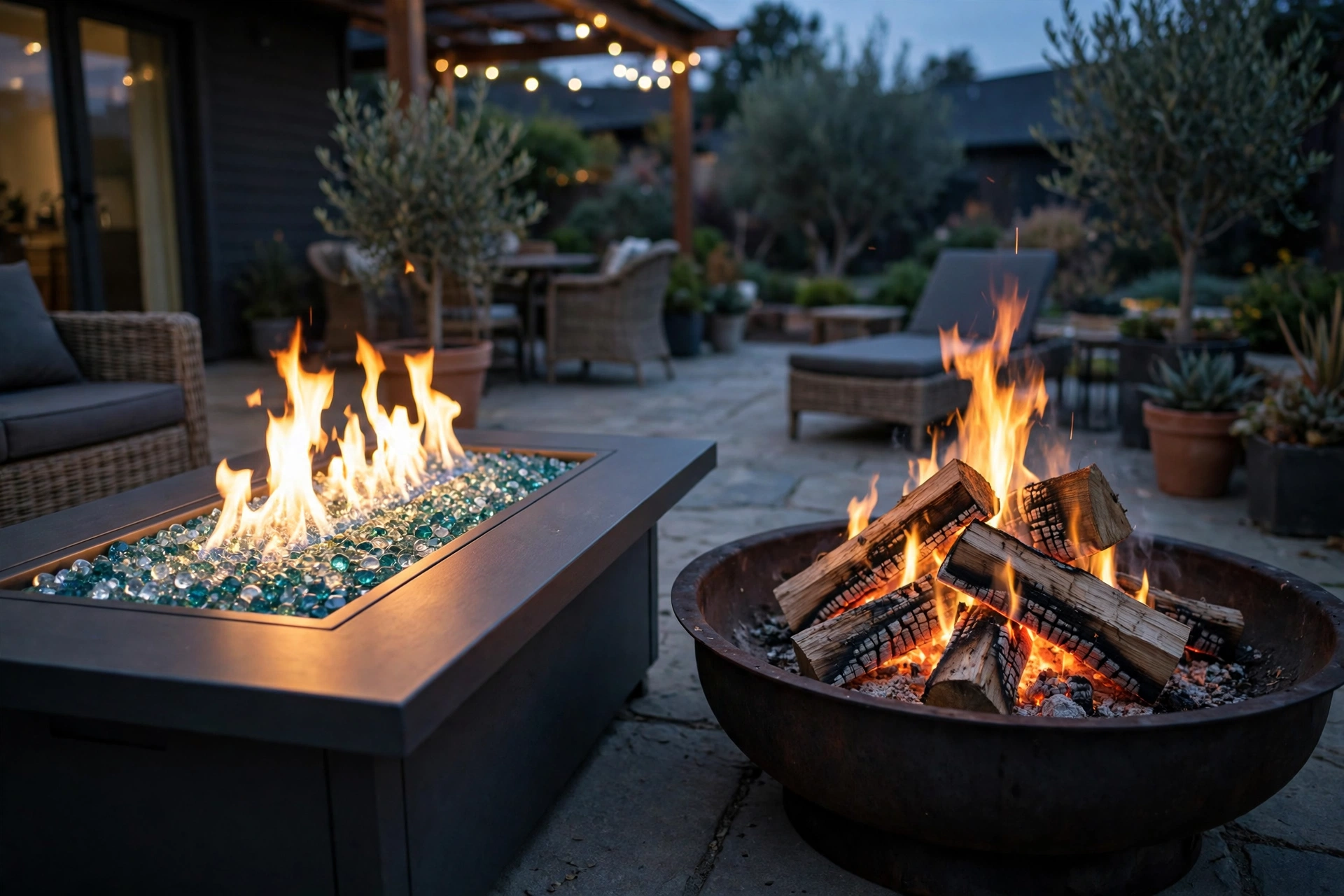
A propane fire table is the only version worth discussing on a deck, because the flame is contained, adjustable, and off the moment the dial turns. Even then, three conditions decide it: the manufacturer has to allow deck use for that model, the pit needs a heat-resistant pad under it that extends past its footprint, and the deck still has to give it real clearance from railings, furniture, and the house wall.
Radiant heat travels downward through the table’s base as well as outward, so the pad is not decoration. Check the boards under it after the first few uses; discoloration is the warning, and it arrives before anything worse does. Our roundup of the best propane fire pit tables covers the table-style models built for patio use.
The better answer: a pad of pavers at grade
Most decks sit a few steps from ground that solves the whole problem. A simple pad of concrete pavers or gravel at the foot of the deck stairs gives the pit a non-combustible surface, honest clearance from the house, and a spot where ash and embers land on material that cannot catch.
It costs less than one replacement deck board, it never needs a second thought on a windy night, and the seating can still spill down from the deck to the fire. A cover, covered in our guide to fire pit cover benefits, keeps the pit itself in shape between burns once it lives outdoors.
The verdict
Keep wood-burning pits off wood and composite decks entirely, with no pad-and-screen exception. Run a propane fire table on a deck only when its manufacturer allows it, on a proper heat pad, with real clearance, and check the boards beneath it as the season goes. Every other fire belongs on pavers, concrete, or gravel at ground level.