You rake the needles off, and a week later the same yellow patch is staring back at you — thin grass, bare dirt, and a fresh carpet of brown needles that seems to grow back overnight. The question is whether the needles are poisoning the soil, and the answer is almost never what people expect.
This is the fuller diagnosis behind a question that comes up every fall — are pine needles bad for your lawn? Short version: a thin scattering does nothing. A thick, matted layer can kill grass outright. The difference is not acid. It is light, air, and water.
What Dying Grass Under Pines Looks Like
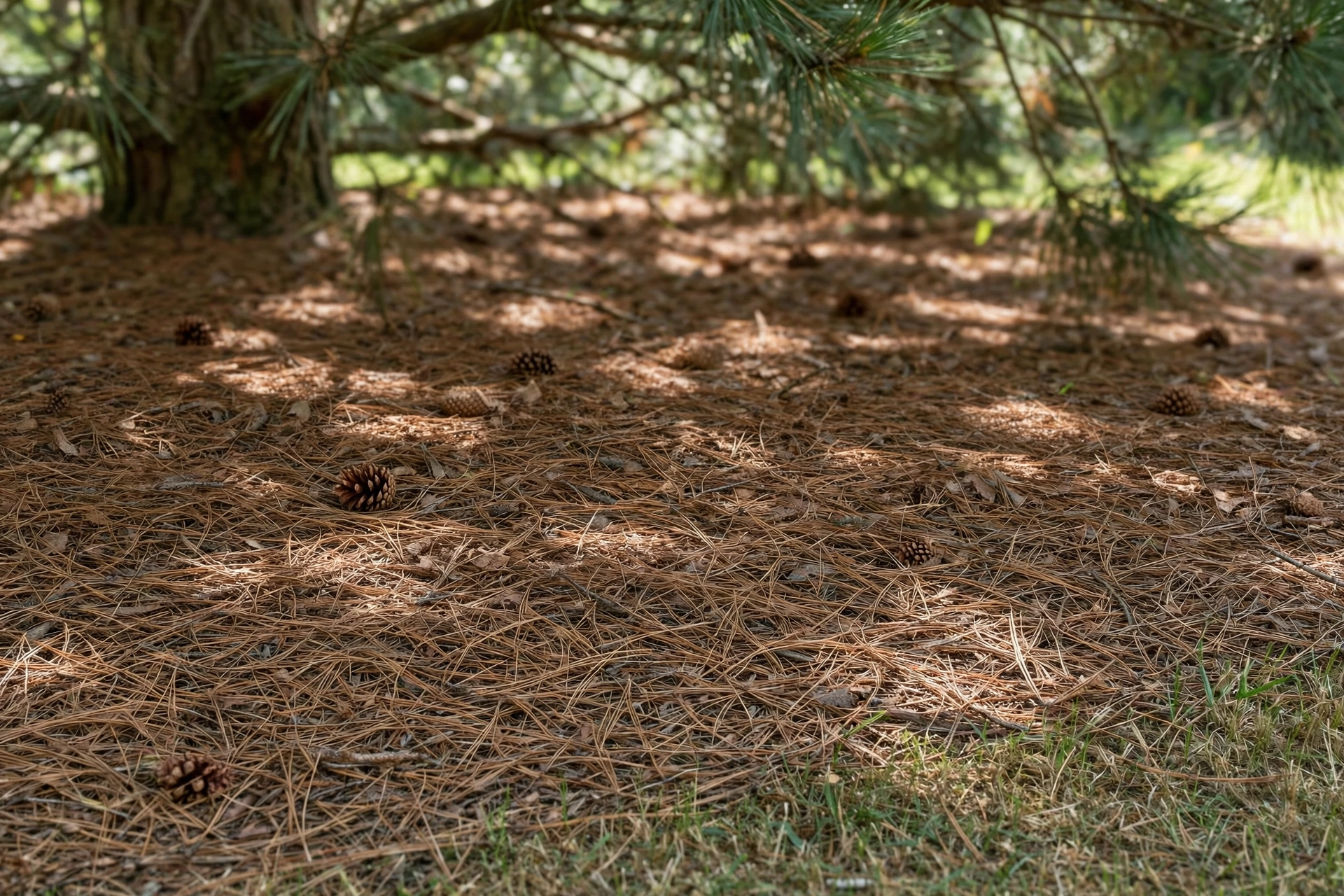
The pattern gives it away. Grass thins first directly under the canopy, where the needles land thickest, and the patch spreads a little wider every year the layer is left in place.
Blades turn pale yellow, then straw-colored, and the turf feels spongy underfoot where the mat is deepest. Pull the mat back and you will usually find flattened, yellowed grass underneath — not bare soil. That flattened grass is the clue that matters: it was smothered, not poisoned.
The Diagnosis: Four Causes, Ranked
Four things can thin grass under a pine. They often show up together, which is why the problem gets blamed on the wrong one. Here they are in the order they usually matter.
1. Smothering and matting — the usual culprit
Fallen needles knit together into a dense mat. That mat blocks sunlight from the blades, keeps air from the soil, and sheds rainwater off to the sides instead of letting it soak in. Grass underneath goes pale and weak, and the longer the mat sits, the less of the lawn comes back.
This is the cause to check first, because it is the one you can fix in an afternoon — and because it explains most of the damage people blame on acid.
2. Shade
A pine holds its canopy all year, and the ground beneath it gets far less sun than the open lawn. Shade-tolerant grasses cope better, but even they thin out when the canopy is dense and the needle layer is thick on top of it.
3. Root competition
Pines feed through shallow roots that spread wide under the canopy, right where grass roots live. The tree takes water and nutrients first, so the grass under it is always running a little short — worse in a dry summer.
4. Soil acidity — mostly a myth
Fresh pine needles are acidic, with a pH of 3.2 to 3.8 according to Oregon State University Extension. That number is what keeps the myth alive.
But the acidity fades as needles break down. Microbes and soil buffers neutralize it, and needles left on the surface have little effect on soil pH. Oregon State’s own guidance is that turning fresh needles straight into the soil might cause a slight, harmless dip — surface mulch does not meaningfully change it. If your grass is dying under a pine, acid is the last suspect on the list, not the first.
How to Tell Which Cause Is Yours
Lift the mat. If the grass underneath is flattened and yellow but the soil smells normal and a soil test comes back in the usual range, smothering did it.
Check the light. If the patch matches the shadow of the canopy on a sunny afternoon and the grass is thin but not matted, shade is doing most of the work.
Check the water. If the patch is worst in dry spells and the soil under the needles is bone-dry even after rain, root competition and the water-shedding mat are working together.
Get a soil test before you buy lime. Your county extension office will test a sample for a small fee, and it settles the acid question with a number instead of a guess. Lime without a test is money spent on the wrong fix.
The Fix
Work in this order. Each step removes one cause, and most lawns only need the first two.
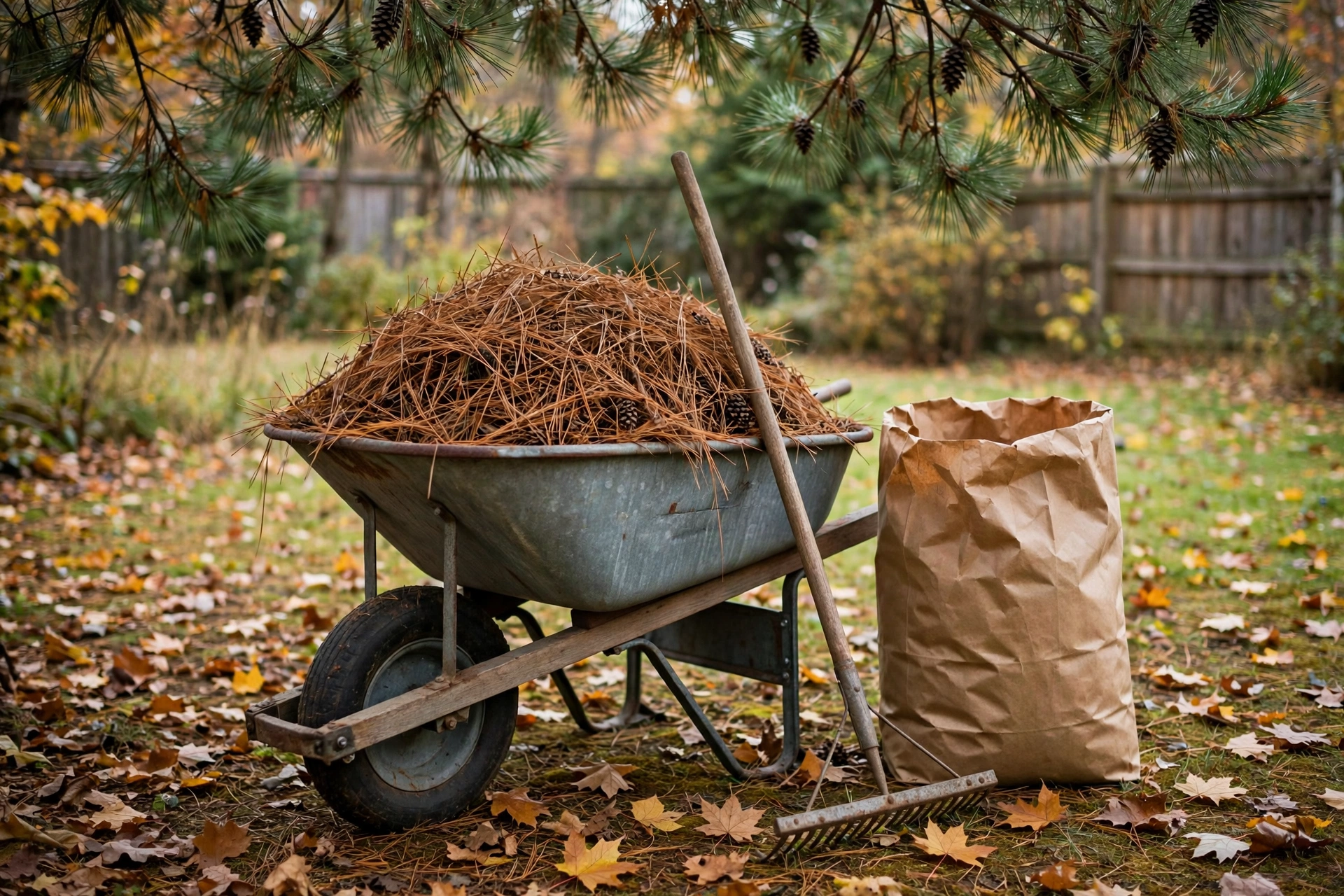
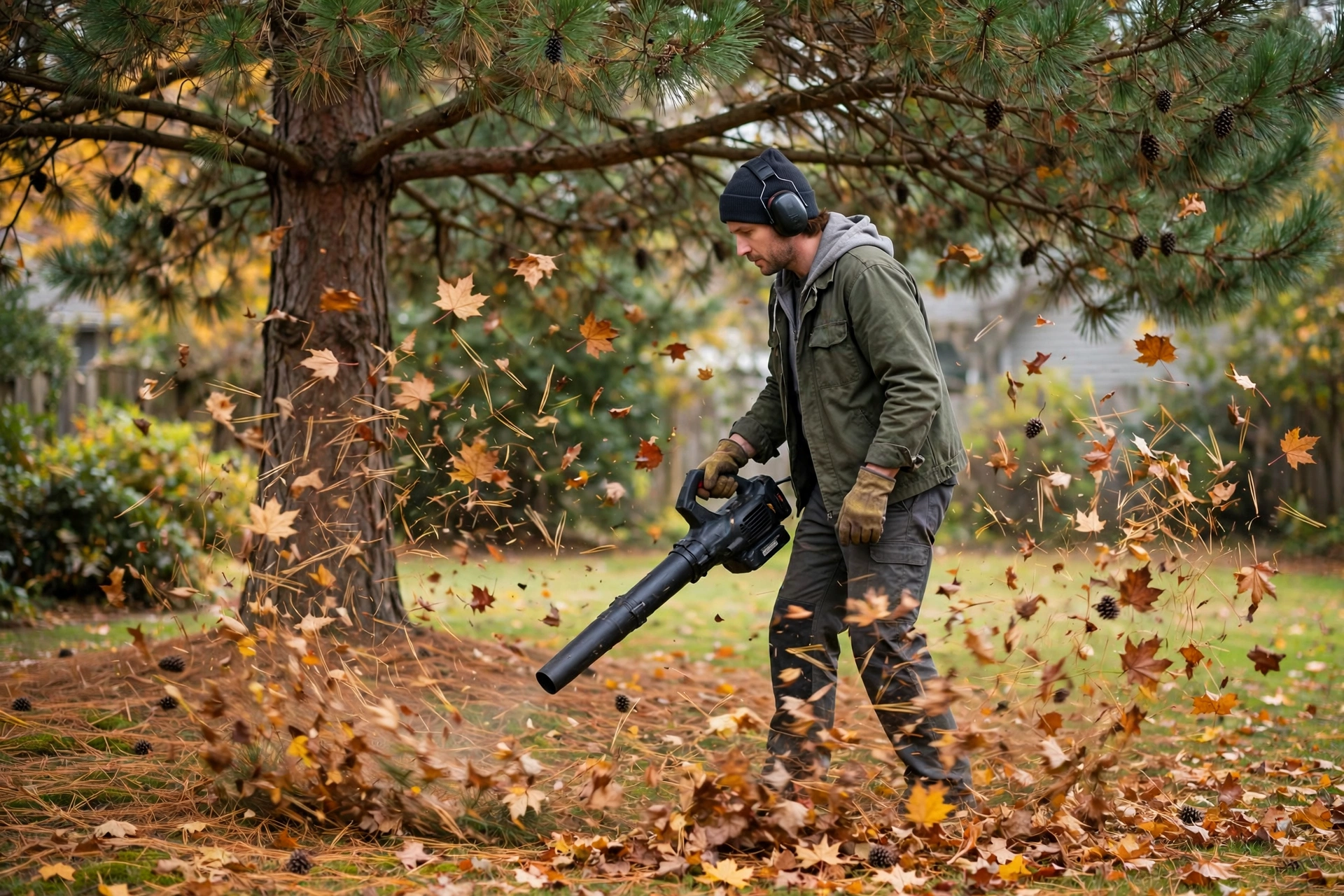
- Clear the mat. Rake the needles off the grass, right down to the blades. A leaf vacuum makes short work of a big drop — see our roundup of the best leaf vacuums for small yards — and a standard rake handles the rest.
- Let the light and air back in. Prune the lowest limbs to open up the canopy, and core-aerate the compacted soil under the tree so air and water can reach the roots again.
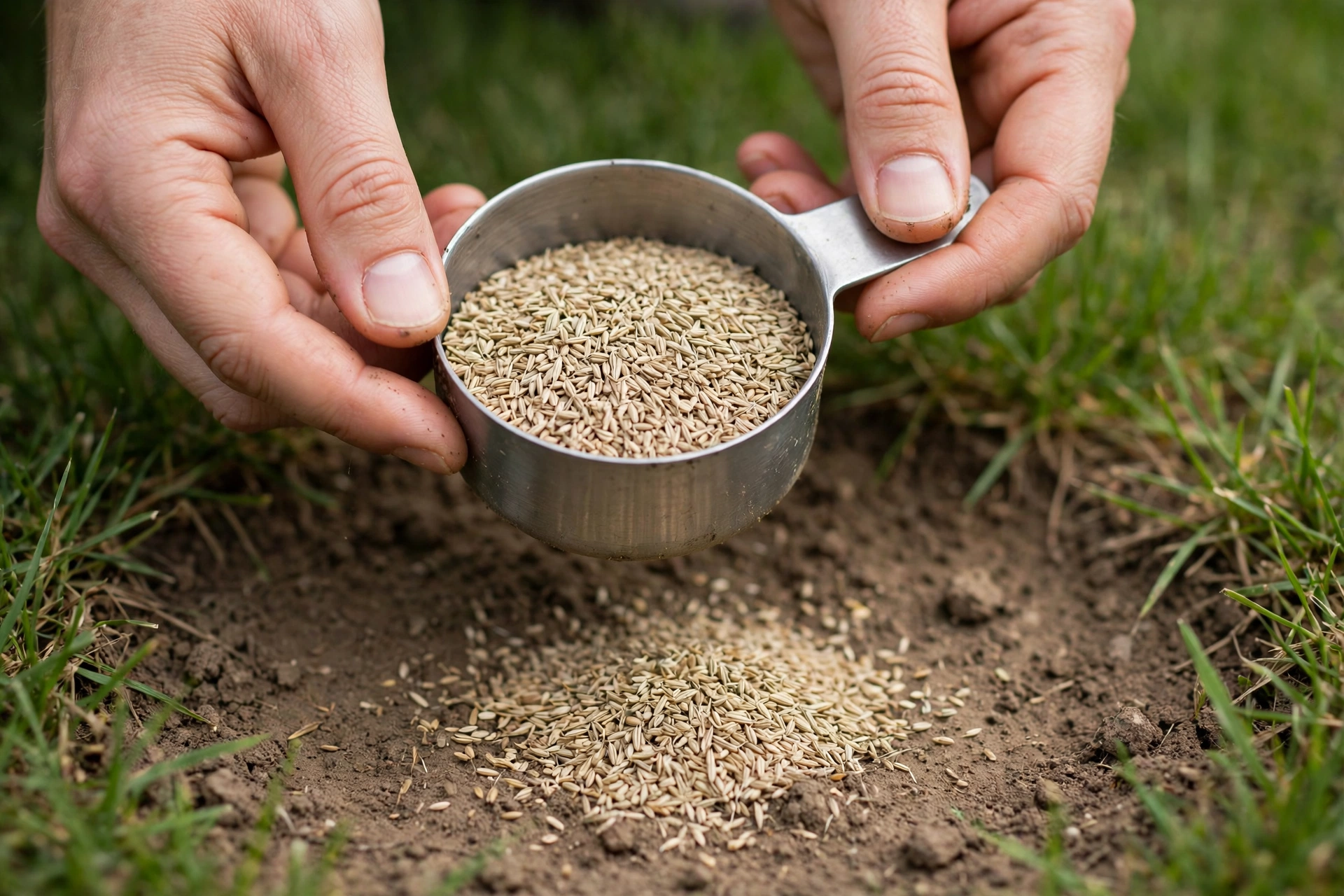
- Feed and overseed the thin spots. Once the mat is gone, overseed with a shade-tolerant grass and water it in. Our pine-needle cleanup guide walks through the methods and the time each one takes.
- Keep it clear. Needles fall all year, with the heaviest drop in late fall. Clear them every few weeks during drop season so a mat never rebuilds.
- Skip the lime unless a soil test says otherwise. If the test shows acidic soil, lime is the fix. If it does not, lime changes nothing and the real problem keeps going.
What Recovery Looks Like
Grass that was only smothered usually greens up within a few weeks of clearing, once light and air return. Overseeded patches take longer — expect new blades within a few weeks and real coverage by the end of the season.
The mistake that undoes it is letting the mat rebuild. One season of neglect puts you back where you started.
Clear the needles first, test the soil second, and only then decide whether the spot needs anything else. In most yards, the rake is the fix — not the lime, and not a new lawn.
Common Questions
Do pine needles make soil acidic?
Fresh needles measure pH 3.2 to 3.8, but the acidity fades as they decompose, and surface needles have little effect on soil pH. A soil test tells you where your lawn actually stands.
Can grass recover after pine needles kill it?
If the roots are alive, usually yes — clear the mat, aerate, overseed, and keep the needles off while it fills in. If the patch is bare dirt with no roots left, reseed it like a new lawn.
Should I use pine needles as mulch instead?
Yes, in garden beds — pine needles make a good, long-lasting mulch. Just keep them off the lawn, where they mat and smother grass.