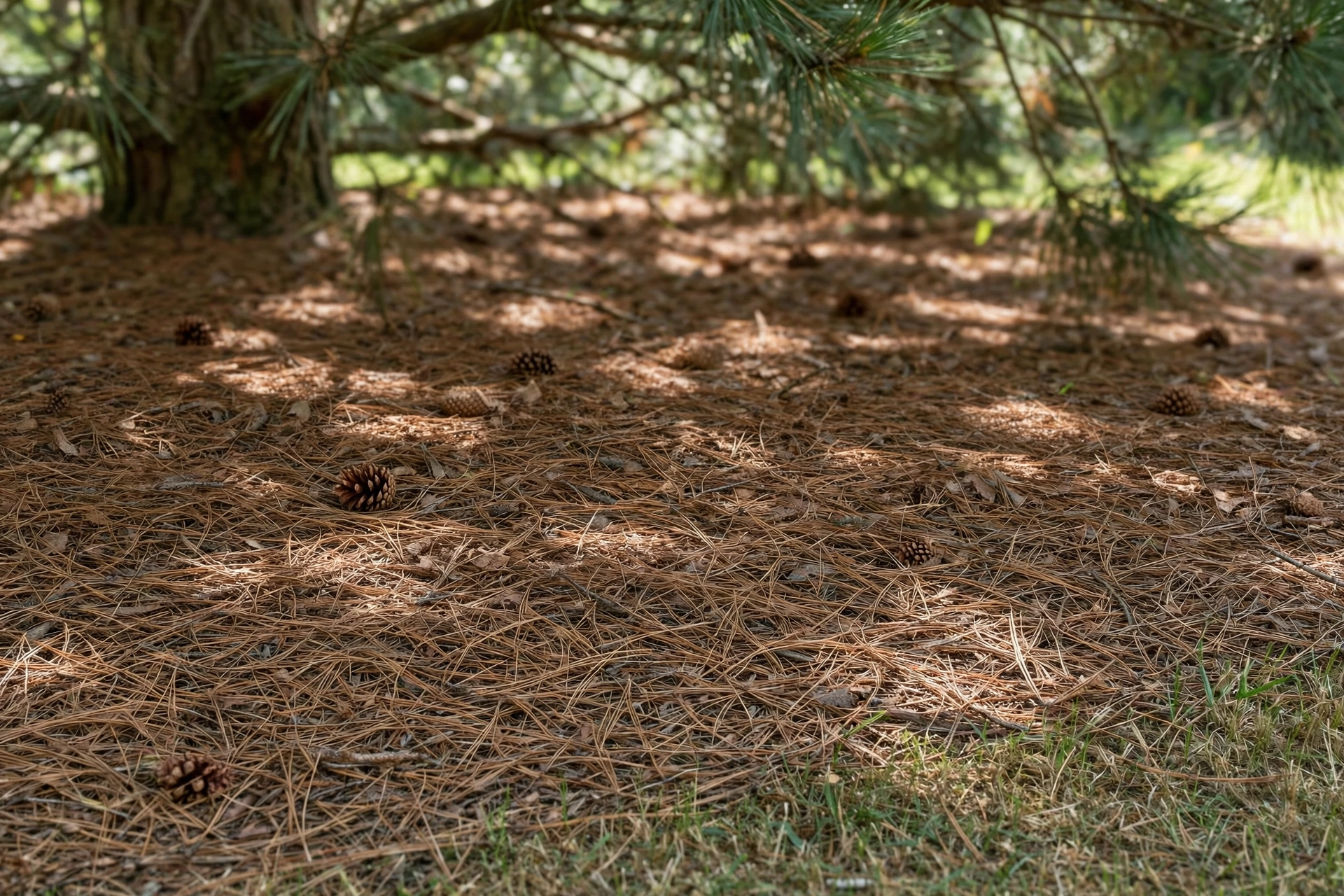
By late fall the pine in the back corner drops a season’s worth of needles in a few short weeks, and the pile on the lawn is suddenly your problem to solve. The good news is that all three ways out — bag, compost, or curbside — work, and the choice comes down to how many needles you have and what your town will take.
Pine needles do not rot away on their own timetable. Each needle wears a waxy coating that shrugs off water and microbes, so a pile left alone can sit for a year or more. That is why the decision matters now, while the drop is fresh and the pile is still manageable.
Start by Gathering Them
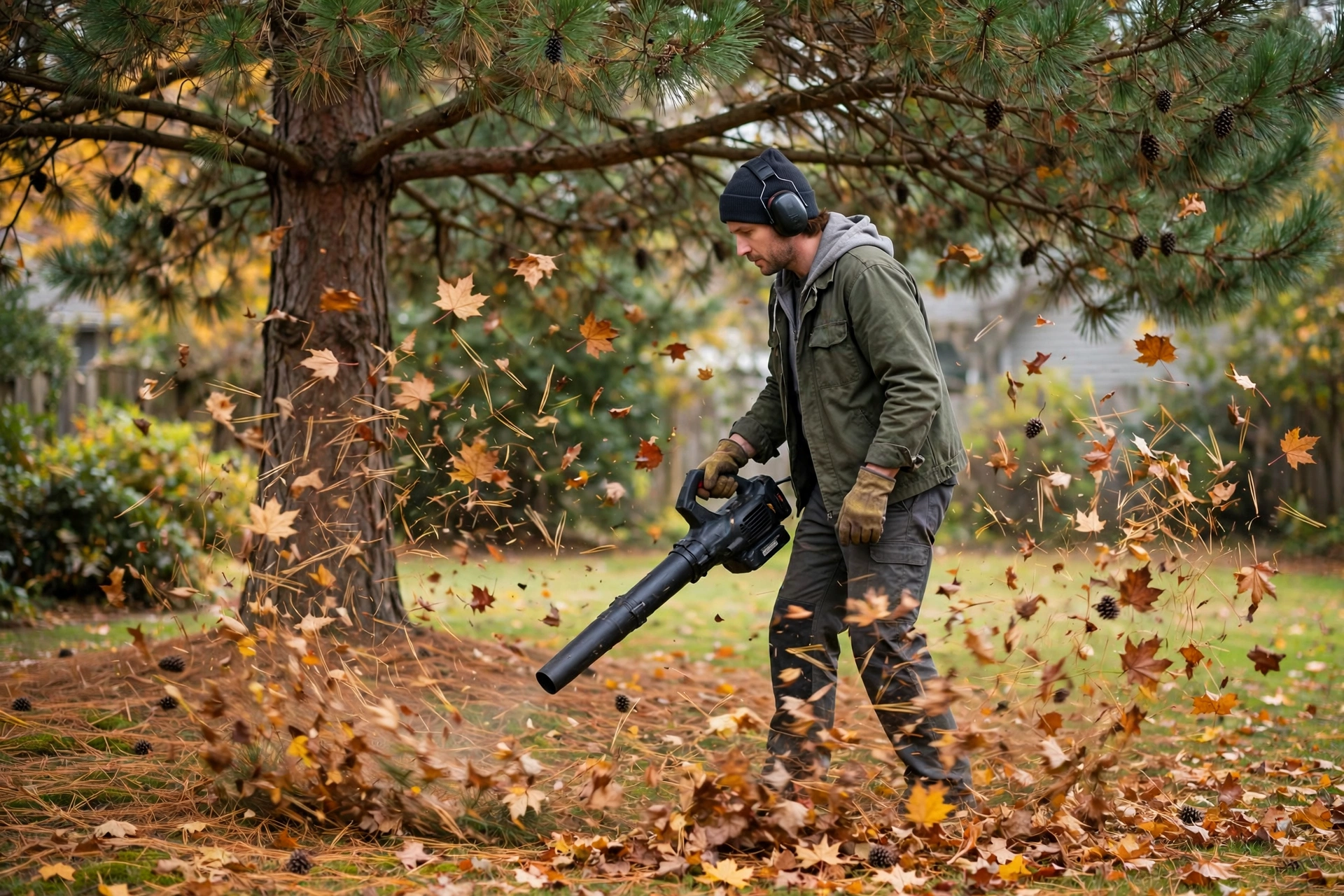
Whatever you do with the needles, you have to collect them first. A leaf blower sized for pine needles moves a big drop fast, and our pine-needle cleanup guide lays out every method and how long each one takes.
Option 1: Bag Them
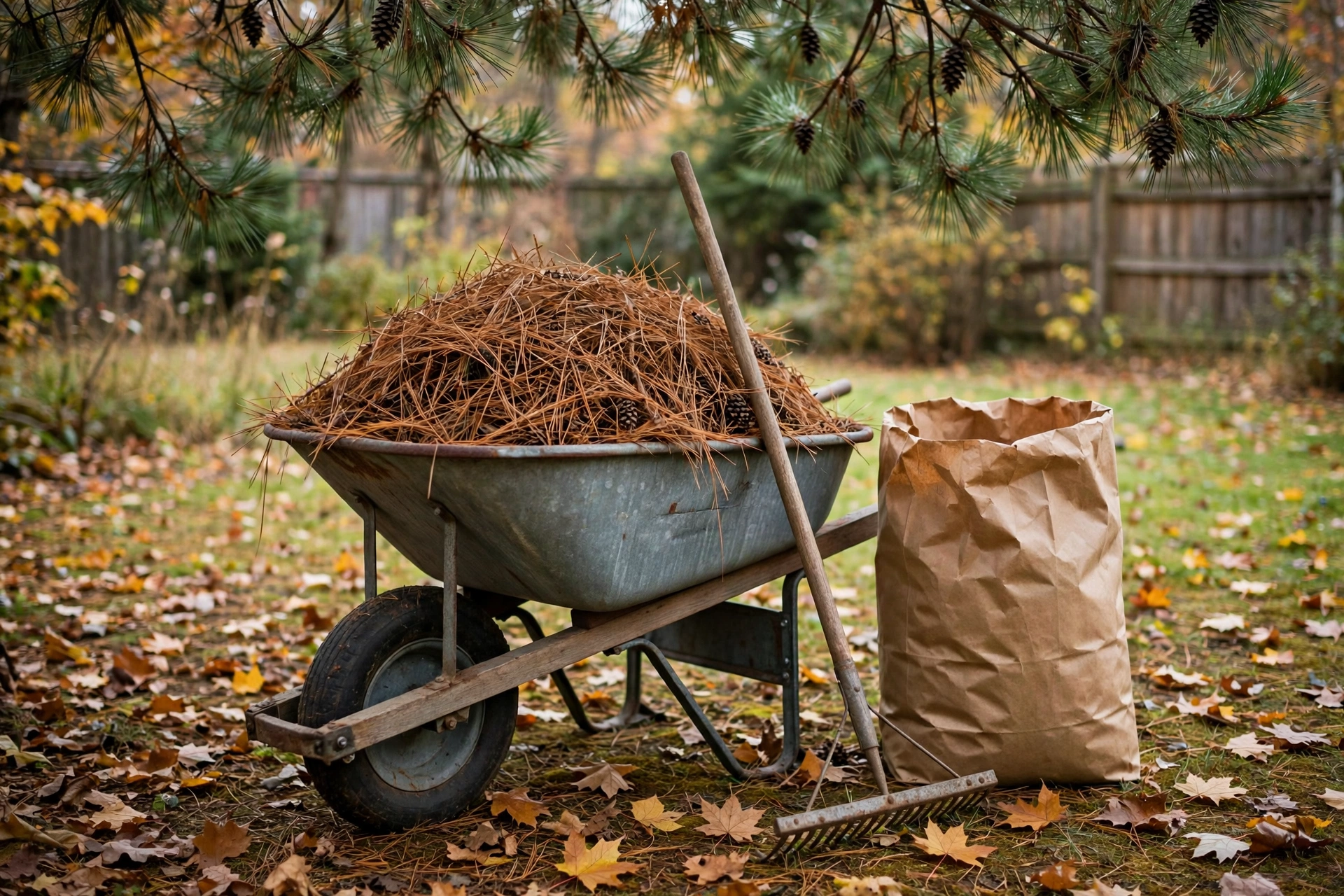
Bagging is the simplest answer when the pile is small or you have nowhere else for it to go. Use paper yard-waste bags — many cities ban plastic bags for yard waste entirely, so paper is the safe default.
Keep each bag light enough to lift comfortably. Gainesville, Florida caps yard-waste bags at 40 pounds, and most haulers have a similar limit even where they do not print one. A bag of dry needles weighs less than you would think; a bag of wet ones does not.
Bagging fits best when your drop is modest, your curbside service takes bagged yard waste, or you are hauling the bags to a drop-off site yourself. A leaf vacuum bags as it goes, which saves a step if bagging is your plan.
Option 2: Compost Them
Pine needles compost, but slowly. The University of Illinois Extension lists their carbon-to-nitrogen ratio at 60:1 to 110:1 — far above the roughly 30:1 a hot pile wants. On their own, they stall a pile; mixed with enough greens, they break down fine.
Shred them first. Run the mower over the pile with the bag on, or feed them through a shredder. Smaller pieces give microbes far more surface to work on. A good rule of thumb is to keep pine needles to about 10 percent of the pile by volume.
Balance them with nitrogen-rich greens — grass clippings, kitchen scraps, fresh manure — and keep the pile damp and turned. Even so, expect the needles to take the better part of a year to disappear. The finished compost comes out near neutral in pH, so the old worry about acidic compost does not hold up.
Composting fits best when you already run a pile and the needle drop is modest. If the pile is mostly needles, bag or curbside is the faster answer.
Option 3: Set Them Out Curbside
Curbside yard-waste pickup is the easiest answer for a big fall drop — if your town offers it. Most cities that collect yard waste take pine needles, but the rules are local, so check yours before you set anything out.
Gainesville, for example, takes bagged needles but will not collect loose piles, and its yard-waste season runs on a published schedule. Your city’s schedule, bag rules, and weight limits will be different — check the city’s waste page or call before your pickup day.
Curbside fits best when the drop is big and your town collects yard waste. If your town does not, bagging and a trip to the drop-off site is the same job with one extra step.
What Not to Do
Do not rake needles into the street. Loose yard waste clogs storm drains, and most cities prohibit it. Do not dump them in the woods or an empty lot either — that is illegal dumping in most places, and the pile does not disappear any faster there.
Do not burn them unless your local rules clearly allow it. Dry needles catch fast and burn hot, and many towns ban open burning outright or seasonally. Do not put yard waste in the household trash where it is banned — many states prohibit yard waste in landfills, so check your state’s rules.
Which Option Fits Your Yard
Small drop, no compost pile, curbside service: bag them in paper and set them out. Big fall drop and a town that collects: curbside, same answer, more bags. Already composting and the drop is modest: shred the needles, mix in greens, and let the pile do the work.
If your city takes yard waste at the curb, that is the easiest answer for a big fall drop — paper bags, pickup day, done. The needles become someone else’s compost, and your lawn gets its light back before winter.