This post contains affiliate links. If you buy through them, we may earn a commission at no extra cost to you.
A curly leaf and a broad leaf get sold as the same vegetable, and a lacy leaf gets a French name and a higher price. All three are Cichorium endivia. Endive, escarole, and frisée are one species sorted by leaf shape, and the shape decides everything that matters: texture in the bowl, whether the leaf survives a soup pot, and how much bitterness arrives with it.
The naming fog is the usual reason gardeners plant the wrong one. This comparison settles it by leaf, then by dish, and ends with the one seed Botanical Interests actually sells for this crop.
The leaf test
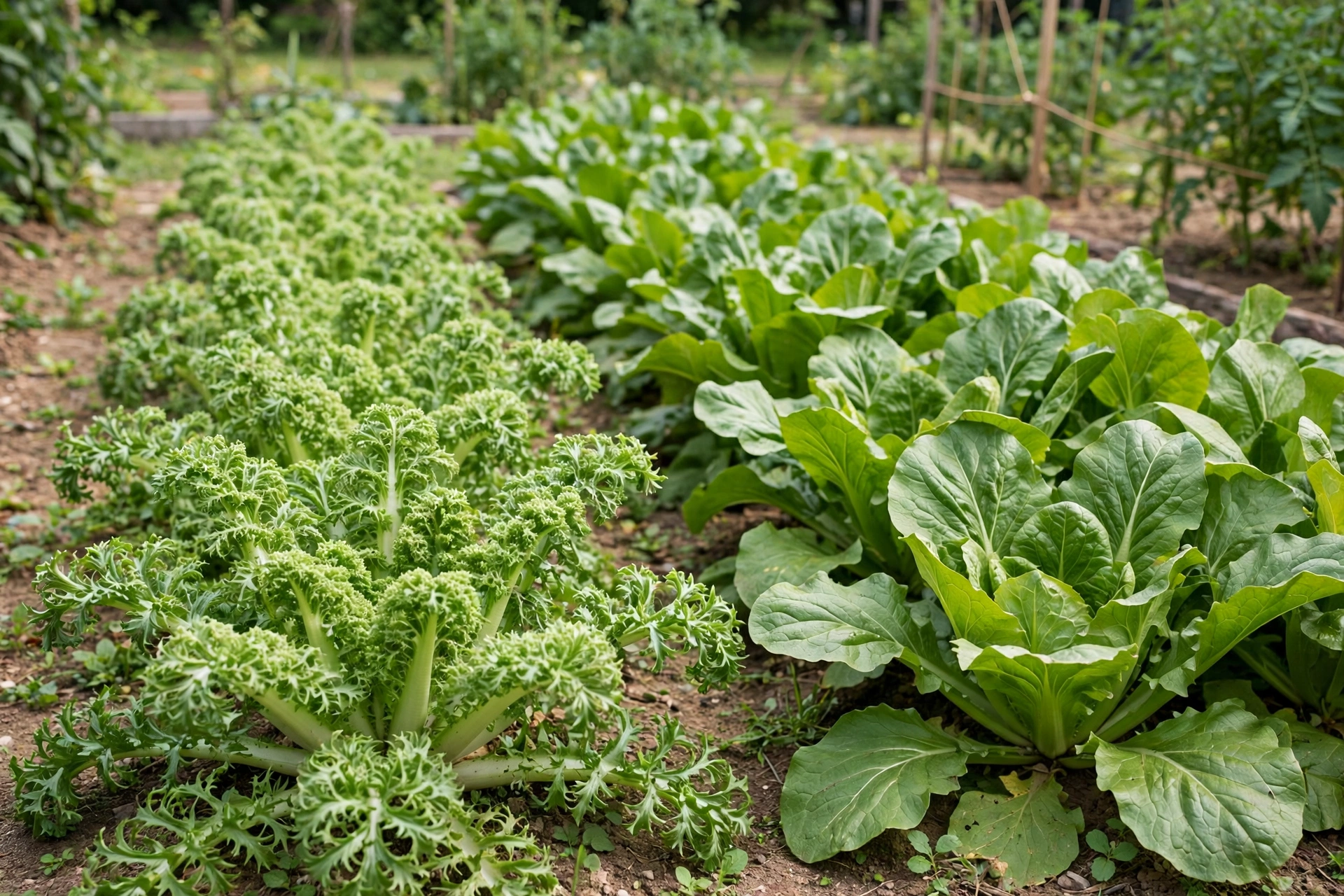
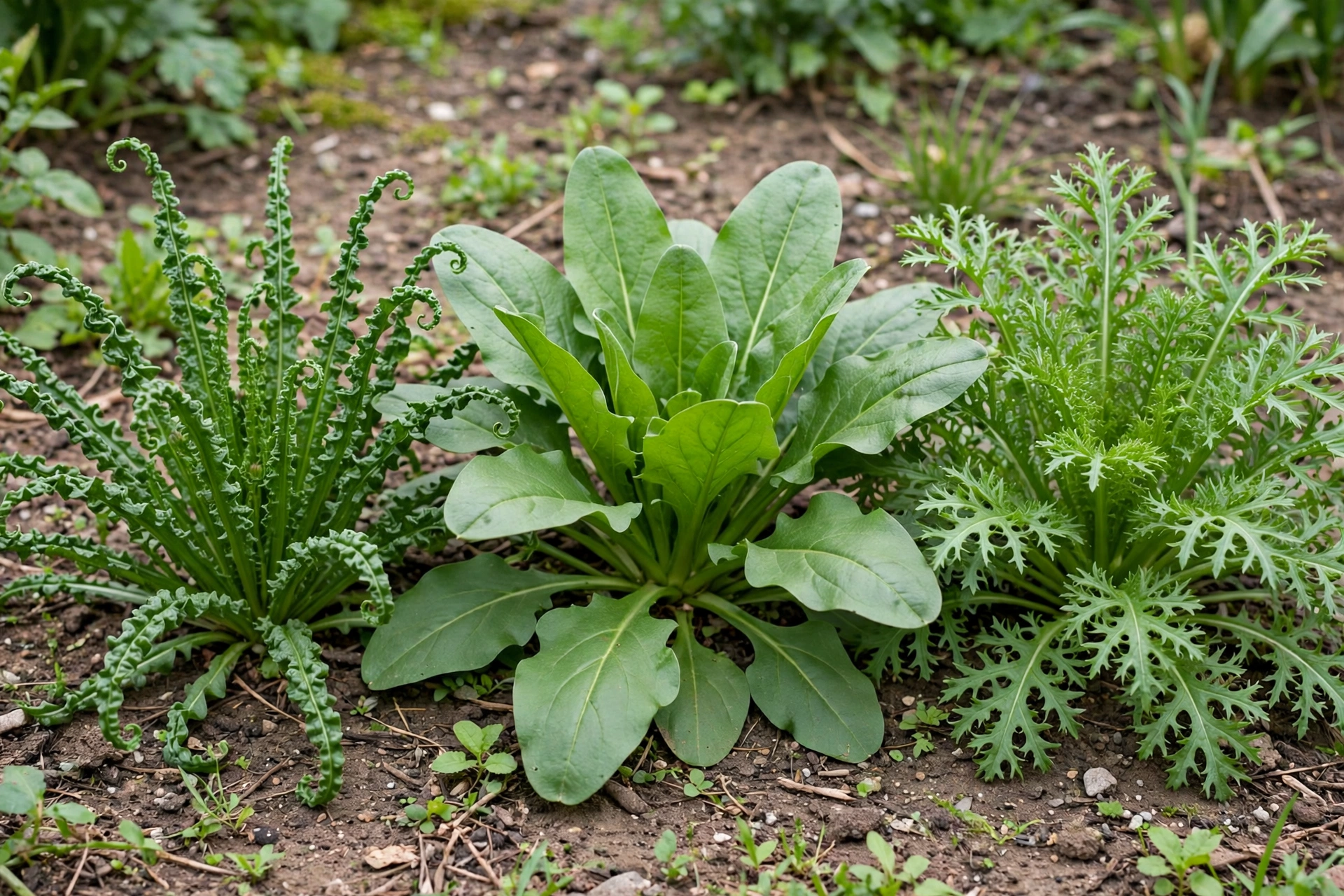
Curly endive has deeply cut, crinkled leaves in a loose rosette. Escarole, the broadleaf Batavian type in Oregon State Extension’s sorting, has broad, slightly crinkled leaves and a heavier heart. Frisée is curly endive selected for the finest cut of all: narrow, lacy leaves with pale ribs.
I sort seed listings by that test and ignore the headline name. A packet picturing broad leaves will cook like escarole whatever the label calls it, and a packet picturing lace will eat like frisée.
| Form | Leaf | Flavor | Best dish |
|---|---|---|---|
| Curly endive | Deeply cut, crinkled | Mildly bitter, crisp | Mixed salads |
| Escarole | Broad, slightly crinkled | Sturdier, more bitter outer leaves, mild heart | Soups and braises |
| Frisee | Finely cut, lacy | Mild, delicate bite | Mesclun and bistro salads |
Raw or cooked decides it
For raw eating, frisée wins without a contest. Its fine leaves carry dressing without wilting into a mat, and the packet for Olesh Tres Fine describes the job exactly: lacy leaves that turn ordinary lettuce salad into an upscale, bistro mesclun, with a mild flavor that blends well with other greens.
For cooking, escarole wins the same way. A broad leaf holds together in broth and wilts into beans and braises without disappearing, while frisée in a hot pot cooks down to almost nothing. Gardeners without an escarole packet can cover the cooked job with the chicory relative in the roundup: Palla Rossa Mavrik radicchio, whose mildly bitter flavor the packet says can be mellowed by grilling or a flash in the pan.
Palla Rossa Mavrik Radicchio Seeds
Chioggia-type red heads with white ribs, 80 to 95 days, sown for fall; flavor sweetens with frost and mellows grilled.
Bitterness, honestly ranked
The outer leaves are the bitter part on every form in this family, and the packet says so for Olesh Tres Fine: discard the outer leaves if they run bitter, because the inner leaves are milder. Escarole concentrates the same pattern in a bigger plant, which is why its blanched heart is the prize and its dark outer leaves go to the pot.
Cool weather is the other lever. The endive packet notes that fall flavor improves after the first couple of light frosts, and the radicchio packet says the same for its heads. Heat does the opposite, pushing all three toward harshness and bolting.
The seed reality
Botanical Interests sells one variety for this whole comparison: Olesh Tres Fine, a frisée, rated 4.5 out of 5 in 11 reviews, ready in 42 to 70 days, sown 1/8 inch deep every 6 inches. There is no standalone escarole packet in the catalog, and pretending otherwise would send readers hunting for a product that is not there.
Escarole does appear as 20 percent of the Italian Amaro Blend microgreens, alongside 20 percent curly endive and 60 percent Italian chicory, ready indoors in 15 to 25 days. That is a tasting portion, not a bed of soup greens, and the varieties roundup treats it that way.
Olesh Tres Fine Endive Seeds
Frisee type with lacy, mild leaves for mesclun, 42 to 70 days, sown 1/8 inch deep every 6 inches; one packet sows 37 feet.
Italian Amaro Blend Microgreens Seeds
Chicory, curly endive, and escarole as microgreens, ready in 15 to 25 days indoors; sow a new flat every 7 to 14 days.
My planting call
Grow frisée if salads are the point, and grow it on the sowing and blanching schedule in the growing guide, with the fall sowing as the main event. Grow escarole only if soups and braises are a weekly habit worth a separate seed source; for most home gardens, radicchio covers the cooked-bitter job from a packet that is in stock here.
The leaf test settles the shopping, too. Lace for the bowl, broad for the pot, and Olesh Tres Fine is the lace. Plant that one first.