This post contains affiliate links. If you buy through them, we may earn a commission at no extra cost to you.
Why did the endive come up bitter and tough instead of lacy and mild? In practice, the usual suspect is temperature, not the seed. Endive is a cool-season crop with a hard ceiling written on the packet: germination wants soil at 60 to 70 degrees F, and soil over 78 degrees F halts it altogether.
Sow into warm summer soil and the row either stalls or bolts toward bitterness. Sow on the cool shoulders of the season and the same packet, Olesh Tres Fine, gives frisée in 42 to 70 days. This guide settles the timing, the thinning, and the blanching step that takes the edge off the heart.
Know the leaf in front of you
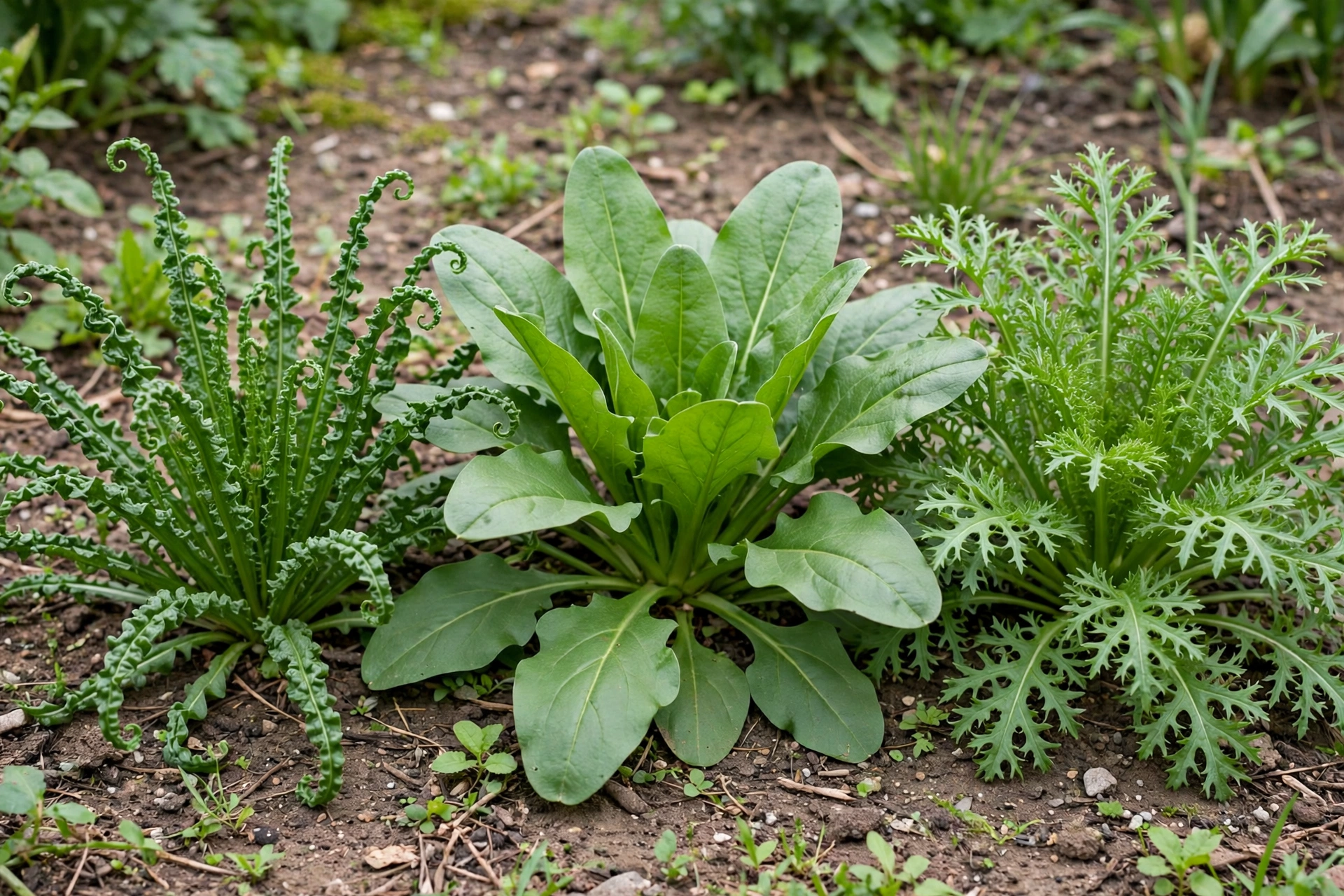
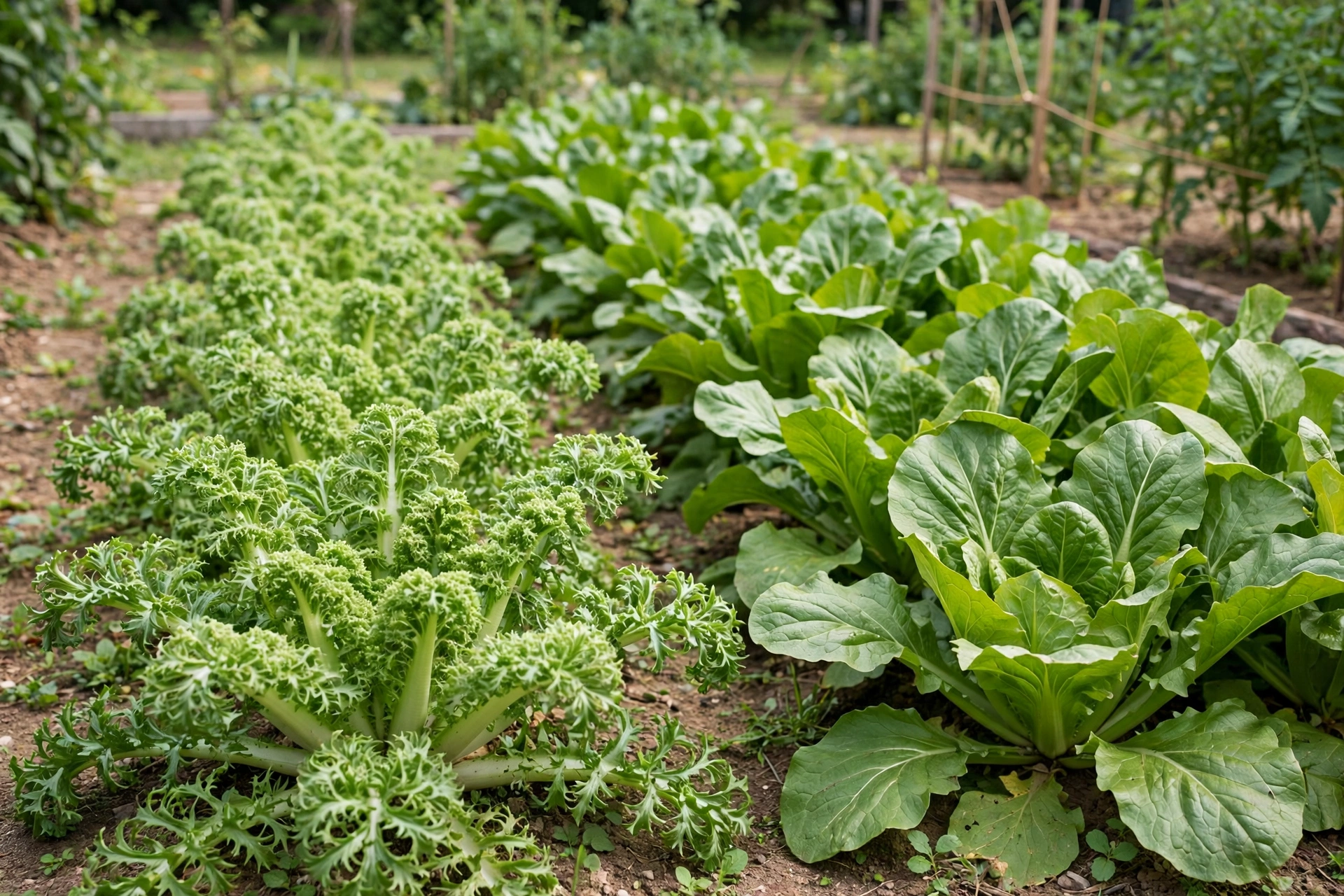
Three forms share this crop, and they do not harvest the same way. Curly endive carries deeply cut leaves. Escarole carries broad, slightly crinkled leaves in a looser rosette. Frisée is the finest cut of the curly group, and it is the form Olesh Tres Fine grows.

The broad leaf tolerates a soup pot. The lacy leaf does not need one, because its bitterness sits mostly in the outer leaves, and those can simply come off at harvest.
Sowing, on the packet numbers
Direct sow 4 to 6 weeks before the average last frost date, as soon as soil can be worked, or 8 to 10 weeks before the average first frost date for the fall crop. Mild climates can sow through fall and winter for cool-season harvest.
Seed goes 1/8 inch deep, a group of 3 seeds every 6 inches, in rows 18 inches apart. Expect emergence in 10 to 14 days. Starting indoors is the packet’s second route: sow 8 to 10 weeks before the last frost date and transplant out 4 to 6 weeks after starting.
| Step | Packet figure | Timing |
|---|---|---|
| Sow | 1/8 inch deep, group of 3 every 6 inches | 4 to 6 weeks before last frost, or 8 to 10 weeks before first frost |
| Germinate | Soil 60 to 70 degrees F; over 78 degrees F halts germination | Emerges in 10 to 14 days |
| Thin | To 1 every 6 inches | When seedlings are 1 inch tall |
| Harvest | Whole head cut at the base at 6 inches across | 42 to 70 days; after the first light frosts for fall crops |
Thinning is not optional
Thin when seedlings are 1 inch tall, to 1 plant every 6 inches. I do this pass even when the row looks sparse, because a crowded frisée rosette stays small and dirty, with soil splashed into leaves that are miserable to wash.
The thinnings are not waste. Young endive leaves are the mildest the plant offers, and a handful goes straight into the salad the same evening.
Olesh Tres Fine Endive Seeds
Frisee type with lacy, mild leaves for mesclun, 42 to 70 days, sown 1/8 inch deep every 6 inches; one packet sows 37 feet.
Check Price at Botanical InterestsBlanching the heart
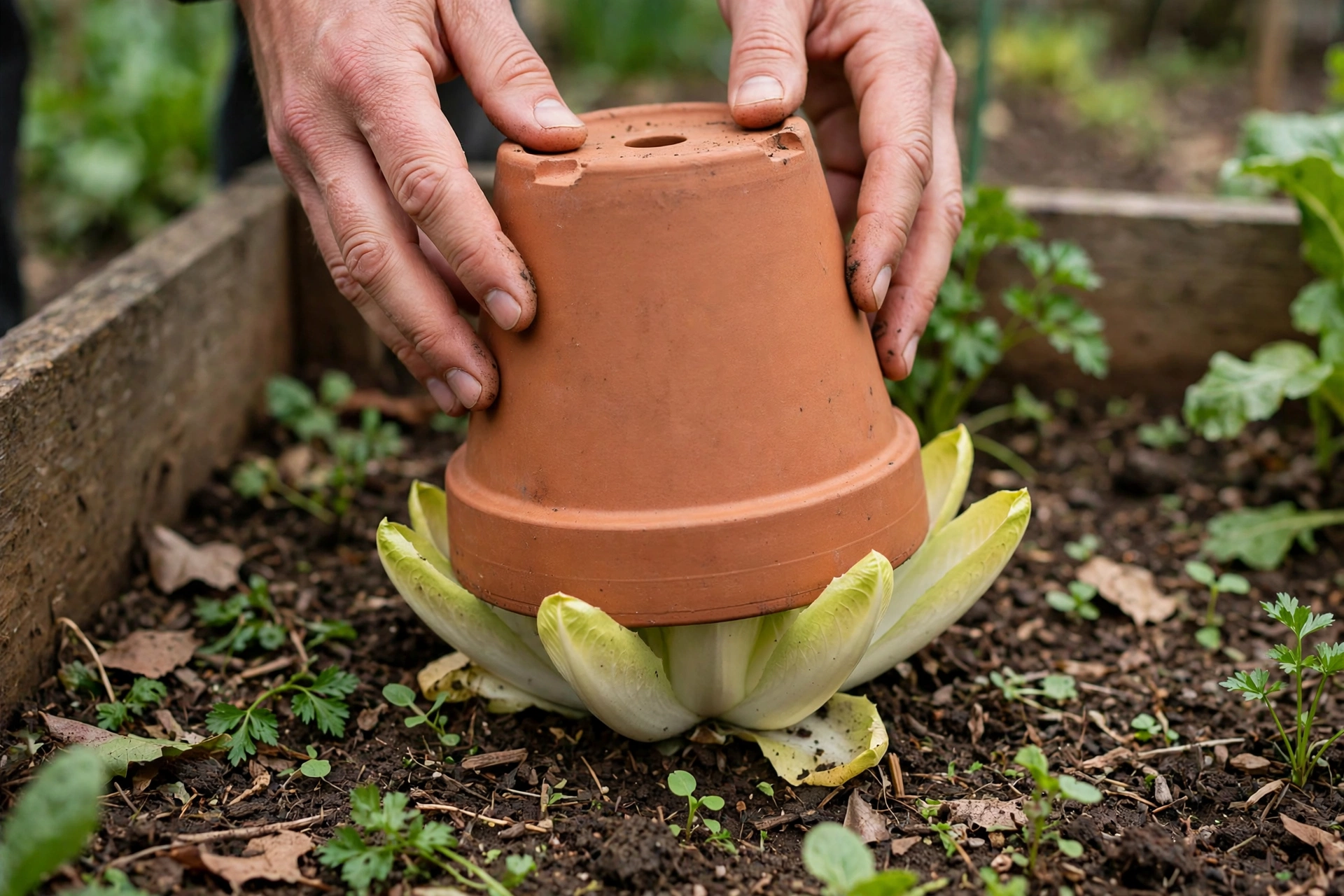
Blanching here means excluding light from the center of the plant for the last stretch before harvest, so the heart pales and sweetens while the outer leaves stay green. The standard method is to gather the outer leaves up over the heart and tie them loosely, or set an inverted pot or cover over the plant, once the rosette is well grown and the leaves are dry.
Dry matters. A wet heart tied shut rots instead of blanching, which is the one way this step goes wrong. I blanch only the heads marked for the next week or so, and I leave the rest of the row cutting as loose leaves.
Escarole hearts blanch the same way, and the broad leaf shows the effect more: a pale, tender center inside a sturdy green rosette. The comparison of endive, escarole, and frisee sorts out which form is worth blanching for which dish.
Harvest: mornings, cold water, and frost
The packet’s harvest notes are specific, and they are right. Harvest in the morning, before temperatures climb above 90 degrees F. Discard the outer leaves if they taste too bitter; the inner leaves are milder. Dunk cut plants in cold or ice water, drain, then store.
Leaves can come off any time, cut-and-come-again, which rescues a spring row when warm weather arrives early and bolting threatens. For whole heads, cut at the base when the plant is 6 inches across. In fall, wait for the first couple of light frosts if the calendar allows: the packet states plainly that flavor improves with light frost.
That frost note is why my main sowing is the fall one. A spring frisée is good. A fall frisée that has sat through two light frosts, its heart blanched pale under tied leaves, is a different vegetable, and it is the one described in the endive and escarole varieties roundup. Growers building the rest of a fall greens bed will find the timing companions in the late-summer vegetables for fall harvest.
Sow cool, thin hard, blanch dry, and let frost finish the seasoning. Do those four things and the bitterness complaint never gets started.