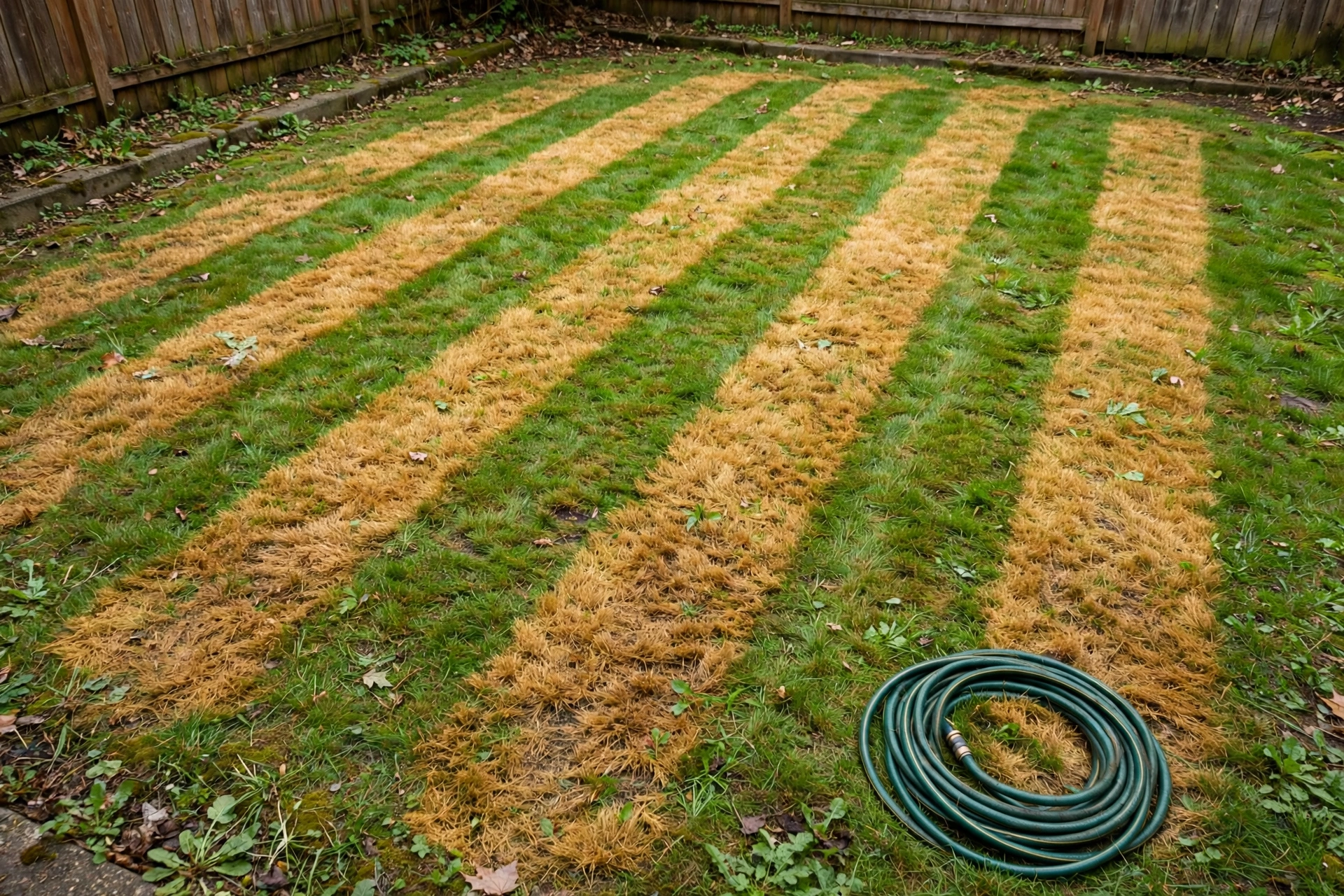
You fed the lawn two days ago, and now there are yellow-brown streaks running exactly where the spreader passed. That pattern — damage that follows your own tracks, appearing within 24 to 48 hours of fertilizing — is fertilizer burn, and the timing matters because grass caught early can recover while grass left dry cannot.
Fertilizer is salt. Applied too heavily, or spilled in one spot, it pulls water out of grass roots instead of feeding them, and the blades dry out from the bottom up.
Confirm It Is Burn, Not Something Else
Check the pattern. Burn follows spreader lines, overlaps, and spill spots. Disease and drought stress spread in circles or follow sun and shade instead, so a pattern that matches your walking route points at the fertilizer.
Check the timing. Burn shows within a day or two of application. Damage that appears a week later, with no recent feeding, has a different cause and needs a different fix.
The Fix: Water, Deeply and Promptly
Water the burned area heavily, starting today. The goal is to dilute the salts and move them down past the roots. Give the affected area about an inch of water, then repeat deep watering over the next several days rather than sprinkling lightly once.
Pick up any visible spill. If granules are still sitting in a pile or a dark line, sweep or vacuum them up before watering, so you are not dissolving the whole spill into one spot.
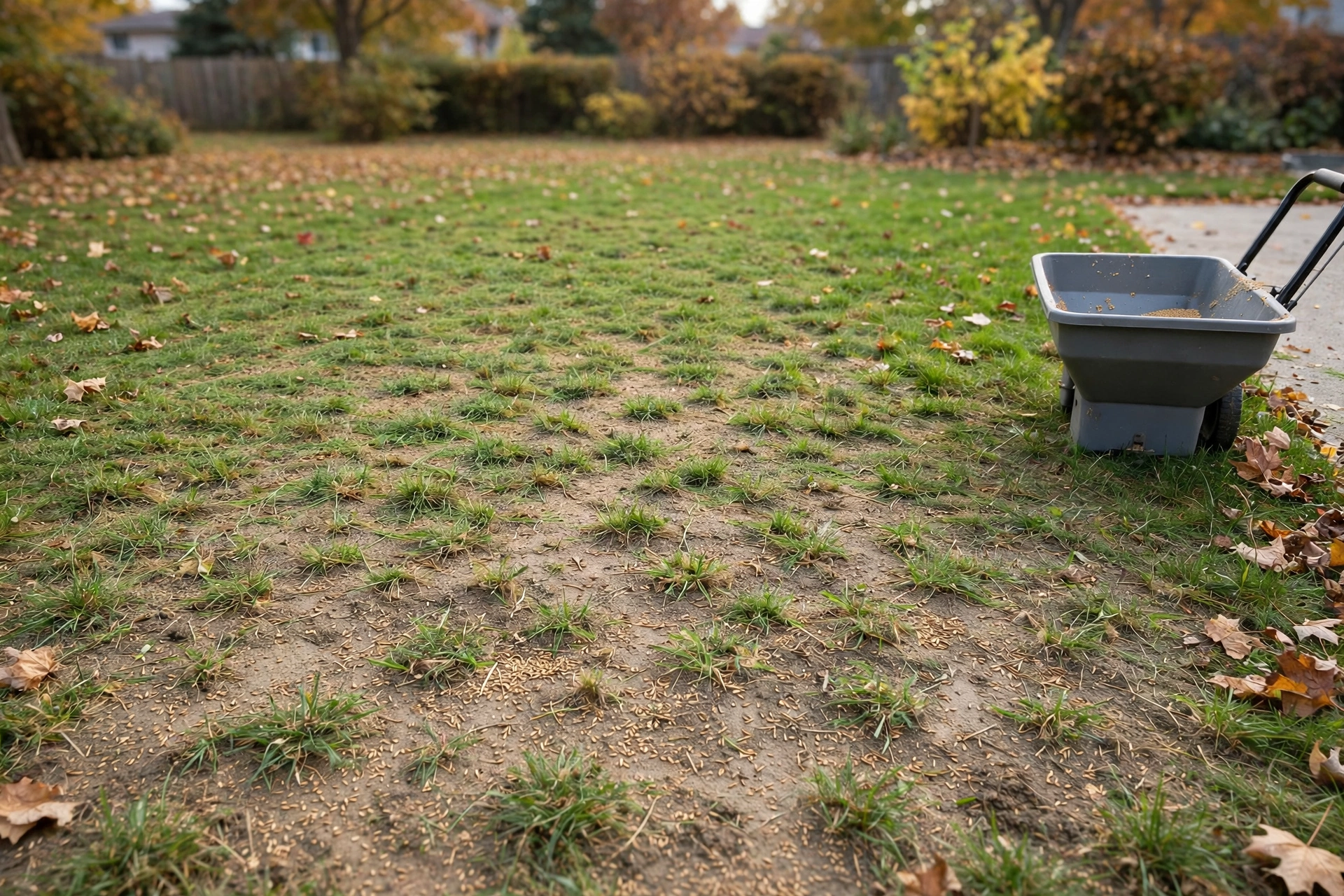
Then wait. Roots that stayed alive push new green growth within one to two weeks. Areas that stay brown and pull up easily after two weeks of watering are dead, and those get reseeded — the same timing rules in our guide to fertilizing after overseeding apply to the repair seed.
Preventing the Next One
Most burn comes from overlap, a spill while filling on the lawn, or a rate set too high. Fill the spreader on pavement, close it before you stop moving, and overlap passes by wheel width only. Choosing the right analysis helps too — our 28-0-3 vs 10-10-10 comparison shows how much actual nitrogen different bags deliver per pass, which is where over-application usually starts.
Water first, judge after two weeks, and reseed only what stayed dead. That sequence saves most burned lawns without reseeding ground that was only thirsty.