Landscape & Leisure is reader-supported. When you buy through links on our site, including Botanical Interests seed links, we may earn a commission at no extra cost to you. Prices change, so click through to confirm current pricing.
Every fall gardener eventually stands in the yard at dusk, looks at a forecast showing 34 degrees, and asks the same question: is tonight the night? Frost is the fall garden’s great divider — it ends some crops, sweetens others, and mostly just confuses everyone about which is which. Here are the answers, organized the way gardeners actually ask them.
For how to time your plantings around the frost date in the first place, see our fall sowing guide, and for the varieties that handle fall best, our roundup of the best vegetables to plant in late summer for fall harvest. Minnesota gardeners can also check our Minnesota frost dates by zone.
What Is a Frost Date, Exactly?
Your average first frost date is the date your area typically records its first night at or below 32°F in fall. It is an average drawn from years of weather records, which means it is a planning tool, not a promise: in any given year, frost may arrive two weeks early or three weeks late. Gardeners who treat the average as a deadline tend to harvest in a panic; gardeners who treat it as a midpoint tend to get a few bonus weeks.
Two related terms matter here. A light frost happens when temperatures dip to about 30–32°F — cold enough to damage tender leaves, but many cool-weather crops sail through it. A hard freeze (also called a killing frost) happens around 28°F and below, and it ends the season for most vegetables that are not specifically hardy. The difference between those two numbers is the difference between “cover the lettuce” and “harvest everything.”
When Is My First Frost?
Frost dates vary enormously by place, and the single most useful thing you can do is look up your own town or county rather than trusting a zone number. Your local Cooperative Extension office and nearby weather stations publish average first-frost dates from climate normals, and those local numbers beat any national map. Still, the broad pattern by zone gives you a starting point:
| Zone | Typical first frost window | What it means for fall crops |
|---|---|---|
| Zones 3–4 | Mid-September to early October | Short fall window — sow early, lean on hardy crops and covers |
| Zone 5 | Mid-October | A solid fall season for greens, roots, and brassicas |
| Zone 6 | Late October | Room for succession sowings into September |
| Zone 7 | Early to mid-November | Long fall; cold frames can carry greens into winter |
| Zones 8–9 | Mid-November to December | Fall is a main season — winter gardening is realistic |
One caution: your USDA zone describes winter cold, not fall frost timing. Two gardens in the same zone can have frost dates weeks apart depending on elevation, nearby water, and whether cold air pools in a low spot. A garden at the bottom of a slope collects cold air like a bowl collects water — if your beds sit low, expect frost earlier than the county average suggests.
Which Vegetables Survive a Light Frost?
This is the question that saves the most fall harvests, because the answer is reassuring: a light frost is not the end of the garden. Extension services divide fall vegetables into two useful groups. Semi-hardy vegetables tolerate a light frost of about 30–32°F — beets, radishes, spinach, Swiss chard, and lettuce among them. Hardy vegetables tolerate several frosts and keep growing until temperatures drop near 20°F — kale, carrots, cabbage, broccoli, cauliflower, and turnips among them.
That distinction changes how you react to a forecast. When a light frost is predicted, you cover the lettuce and the spinach, and you leave the kale and carrots alone — they will be sweeter tomorrow than they were today. When a hard freeze is predicted, you harvest the semi-hardy crops, mulch the root crops, and let the truly hardy ones stand.
How Do I Extend the Season?
Season extension is just a ladder of covers, each rung buying you a little more time. Start with the simplest and climb only as far as your ambition goes.
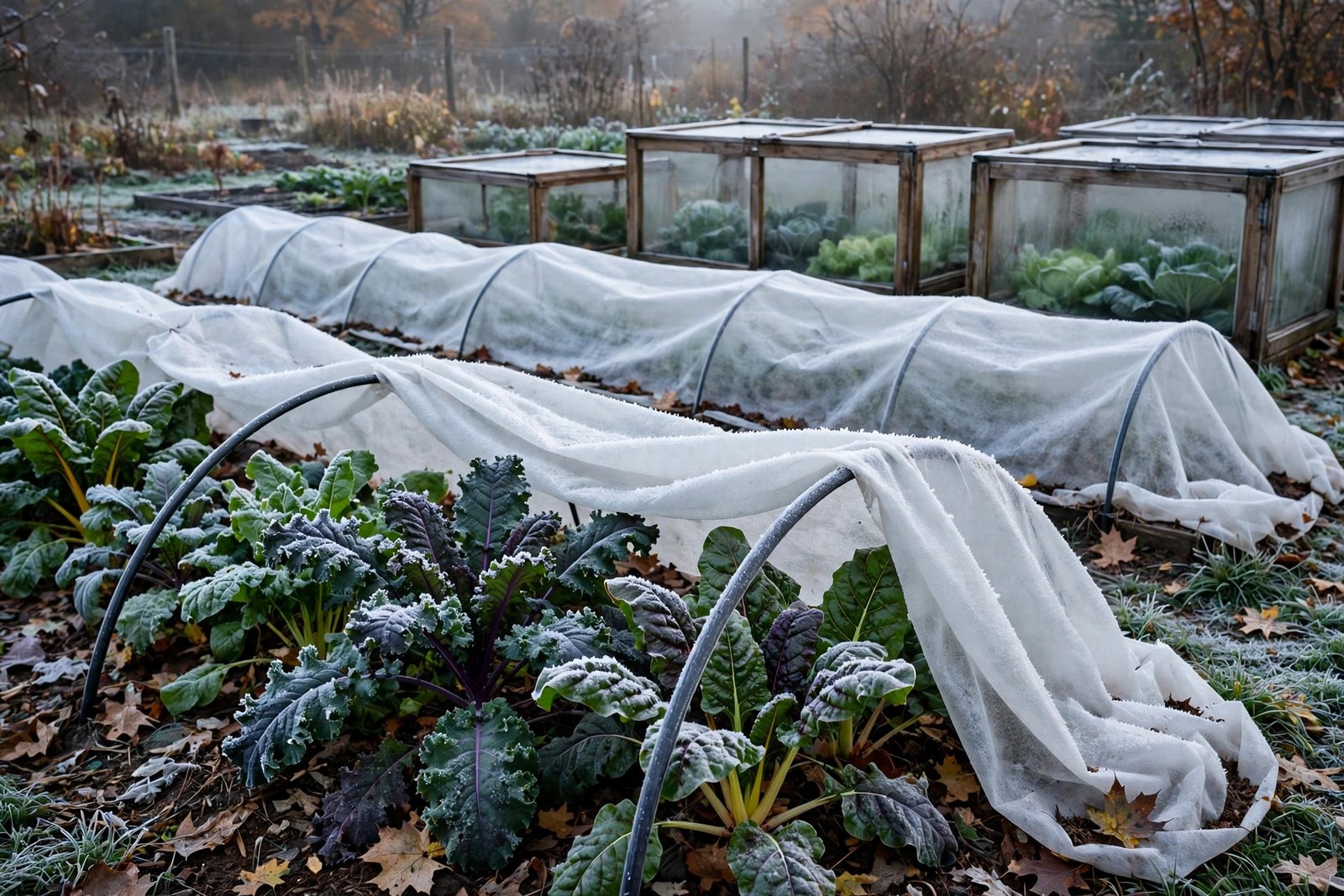
Floating row cover. A lightweight fabric draped over hoops or laid right on the plants, held down at the edges. It buys you a few degrees on a cold night — often the difference between a light frost nipping your lettuce and leaving it untouched — and it goes on in minutes. Pull it back on mild days so plants get light and air, and put it back before dusk when frost threatens.
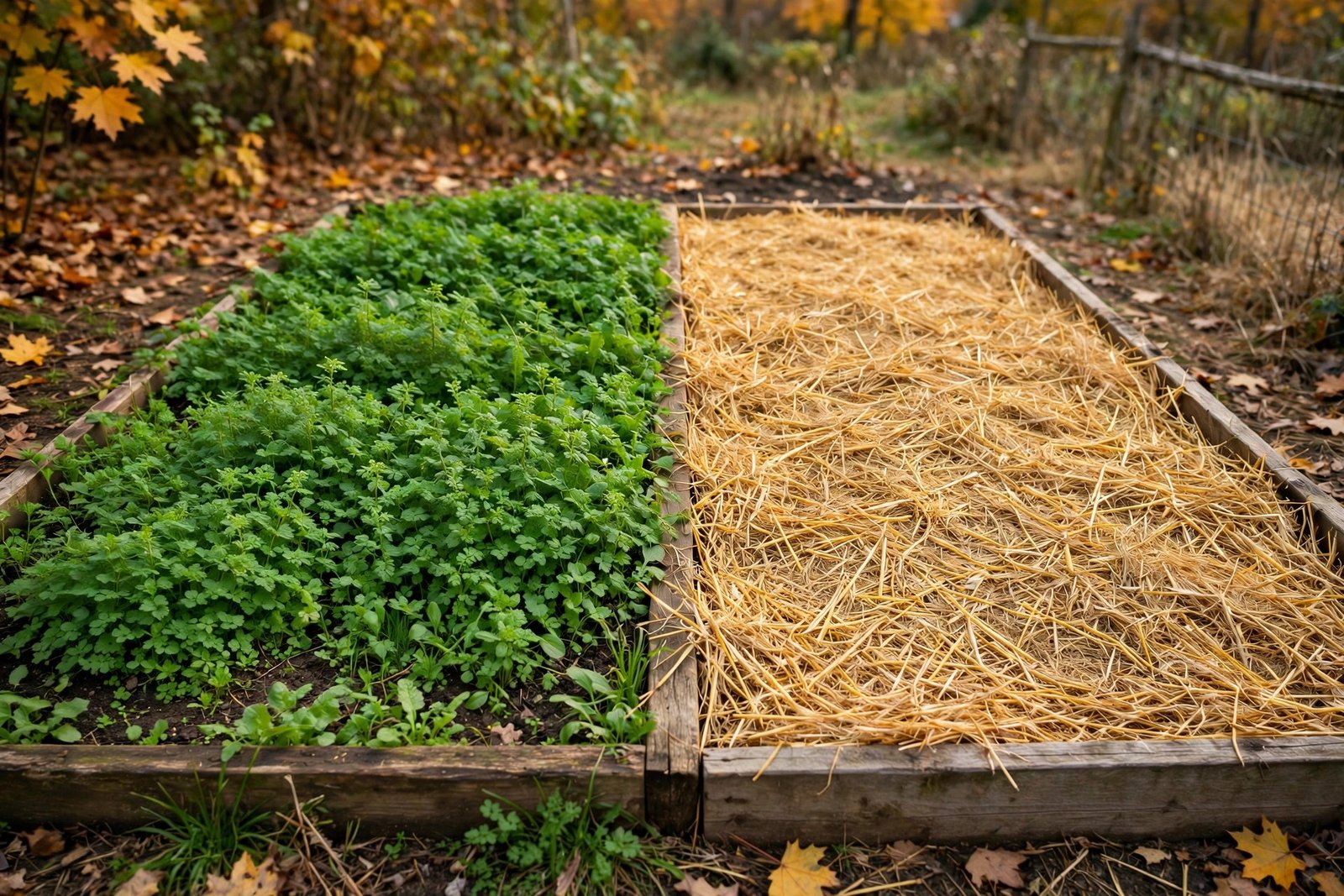
Heavy mulch. For root crops, the best season extender is not a cover at all but a blanket of straw. Carrots and beets left in the ground under a thick layer of mulch keep for weeks after the tops are killed back — you dig roots as you need them, straight through late fall. Nebraska Extension recommends about a foot of straw for this kind of in-ground storage.
Cold frames. A bottomless box with a clear lid, set over a bed. On a sunny day, even a chilly one, a cold frame warms fast — which is both the point and the catch. Vent it on sunny mornings by propping the lid open, then close it before dusk to trap the day’s warmth. A cold frame turns lettuce and spinach into winter crops in mild zones and adds weeks everywhere else.
Low tunnels. Hoops plus greenhouse plastic over a bed, the row-cover idea scaled up. A low tunnel holds several more degrees than fabric alone and shrugs off a hard freeze that would finish unprotected greens. It is the most structure most home gardeners need, and it stores flat in summer.
What Should I Harvest Before a Hard Freeze?
When the forecast shows temperatures headed toward the mid-20s, harvest in this order. First, anything tender that is still hanging on — late beans, peppers, or tomatoes you have been nursing under cover. Second, the semi-hardy crops: lettuce, spinach, beets, radishes, and chard. Third, pull what you want from the root crops, then mulch the rest in place for later digging. Leave the kale standing — it will be there after the freeze, sweeter than before, and it will make you feel clever for knowing the difference.
Three Crops That Earn Their Cover
If you are going to fuss with row cover and cold frames, fuss over the crops that repay it best.
Lacinato Dinosaur Kale is the obvious one. Hardy enough to stand through several frosts unprotected, it turns a row cover into a winter-long harvest in mild zones — and its flavor genuinely improves after cold weather.
Lacinato Dinosaur Kale Seeds
The hardiest green on this list — frost sweetens it, and cover stretches it into winter.
Detroit Dark Red Beet repays a mulch blanket like nothing else. The roots store in the ground under straw long after the tops are gone, so a ten-minute mulching job in October becomes beets in December.
Detroit Dark Red Beet Seeds
Mulch the roots in place and dig them as needed — beets that keep into late fall.
Buttercrunch Lettuce is the one most gardeners give up on too early. It only tolerates a light frost unprotected, but under a row cover or in a cold frame it keeps producing soft leaves weeks past the date you would have written it off — and fresh salad in November feels like a small miracle every single time.
Buttercrunch Butterhead Lettuce Seeds
Buttery leaves that a row cover or cold frame stretches weeks past first frost.
Frequently Asked Questions
Does frost ruin everything in the garden? No. A light frost damages tender plants but leaves semi-hardy and hardy vegetables standing — and improves the flavor of kale, carrots, and other hardy crops.
Should I water before a frost? Yes, if the soil is dry. Moist soil holds heat better than dry soil, so watering the afternoon before a frosty night gives your plants a small but real buffer.
Can I use old bedsheets instead of row cover? Yes, for a night or two — sheets and blankets protect from frost, but they are heavy, block light, and must come off in the morning. Floating row cover fabric is lighter, lets light and water through, and can stay on for days.
What is the single biggest season-extension mistake? Leaving a cold frame closed on a sunny day. The inside can heat up fast enough to cook tender leaves, even when the air outside is chilly. Vent in the morning, close before dusk.
Bottom Line
Look up your own first frost date, learn which of your crops are semi-hardy and which are hardy, and keep a row cover handy for the nights that dip near freezing. Frost is not the end of the fall garden. Handled right, it is the season’s best flavoring — and with a little cover, the harvest keeps going weeks past the date you once thought was the finish line. For planting timing, see our fall sowing guide, and for what to plant, our late-summer planting roundup.