Landscape & Leisure is reader-supported. When you buy through links on our site, including Botanical Interests seed links, we may earn a commission at no extra cost to you. Prices change, so click through to confirm current pricing.
Ask three Minnesota gardeners when the last frost comes and you will get three confident answers, all different, all sincerely meant. The trouble is not that anyone is lying. It is that Minnesota does not have one last frost. It has at least three, spread across three weeks, and the date that matters is the one for your corner of the state.
The dates below are the 50%-probability dates for 32°F from NOAA’s 1991–2020 U.S. Climate Normals, the same figures that anchor our Minnesota planting calendar. For what to plant in each month, see what to plant in March, April, and May in Minnesota; for indoor-start timing, see when to start seeds indoors in Minnesota.
| Band | Anchor station | Last spring freeze | First fall freeze | Frost-free days |
|---|---|---|---|---|
| North — Zones 3–4 | Duluth, MN (1,428 ft) | May 13 | October 1 | 140 |
| Central — Zone 4 | St. Cloud Regional Airport, MN (1,018 ft) | May 7 | September 30 | 144 |
| South — Zones 4b–5 | Minneapolis/St. Paul Airport, MN (872 ft) | April 23 | October 18 | 176 |
What does “last frost date” actually mean?
A last frost date is not the day winter officially ends. It is a probability, calculated from decades of weather records: the date by which, in half of the years on record, the last 32°F freeze has already happened. The other half of the time, it has not. A 50% date is a coin flip, not a guarantee, and the honest way to use it is to plan on the cautious side of it.
That is why the calendar in this article uses 32°F, the temperature at which tender plants are damaged. A light frost at 32°F will finish off tomatoes, peppers, squash, and basil that are already outside. Cool-season crops — peas, spinach, lettuce, radish, carrots, kale — shrug at a light frost and keep growing. The frost date is a deadline for the tender plants, not for the garden as a whole.
What does a 50% frost date mean for my garden?
It means you have a choice to make, and the date itself will not make it for you. Plant tender crops right on the 50% date and you will win about half the years and lose the other half to one more cold night. Plant a week or two after it, and you trade a little growing season for a lot of peace of mind. Most Minnesota gardeners land somewhere in between: tender crops out after the date, with row cover or old bedsheets close at hand for the first cold snap.
Soil temperature is the second check, and University of Minnesota Extension calls it the best indicator for when to plant. Direct-seed peas, spinach, lettuce, and radish when the soil is 40–50°F. Warm-season crops want soil at 50–60°F, and heat-lovers such as tomatoes and peppers do best with still warmer soil. A warm week in April does not mean the soil has caught up — measure it with a thermometer before you trust it.
Why do frost dates differ so much across Minnesota?
Latitude, elevation, and water. Duluth sits higher, at 1,428 feet, and farther north, so its last spring freeze comes May 13 and its season runs 140 frost-free days. St. Cloud, at 1,018 feet, comes in on May 7 with 144 days. Minneapolis–St. Paul, lower and farther south, warms up by April 23 and stays frost-free for 176 days.
Your own yard can run warmer or colder than the airport station that anchors your band. Low spots collect cold air on still nights. Slopes shed it. A garden near a lake, a south-facing wall, or a city heat island can buy you several extra days at each end of the season. Treat the station date as the starting point, then watch your own yard for a season or two and adjust.
Hardiness zones tell a related but different story. Check your exact zone on the USDA Plant Hardiness Zone Map: a zone measures how cold your winters get, which decides whether perennials survive. Frost dates decide when annual vegetables go in. A garden can sit in Zone 4 and still have a frost date weeks away from another Zone 4 garden across the state.
When is it safe to plant tomatoes and peppers?
Tomatoes go out after the last frost — mid-to-late May in the south, late May to early June in the center, early to mid-June in the north — and peppers wait longer still, until early June in the south and mid-June farther north. Extension is blunt about this: wait until after the last frost, in mid-to-late May statewide, before transplanting tomatoes, eggplants, peppers, summer squash, basil, and similar warm-season crops.
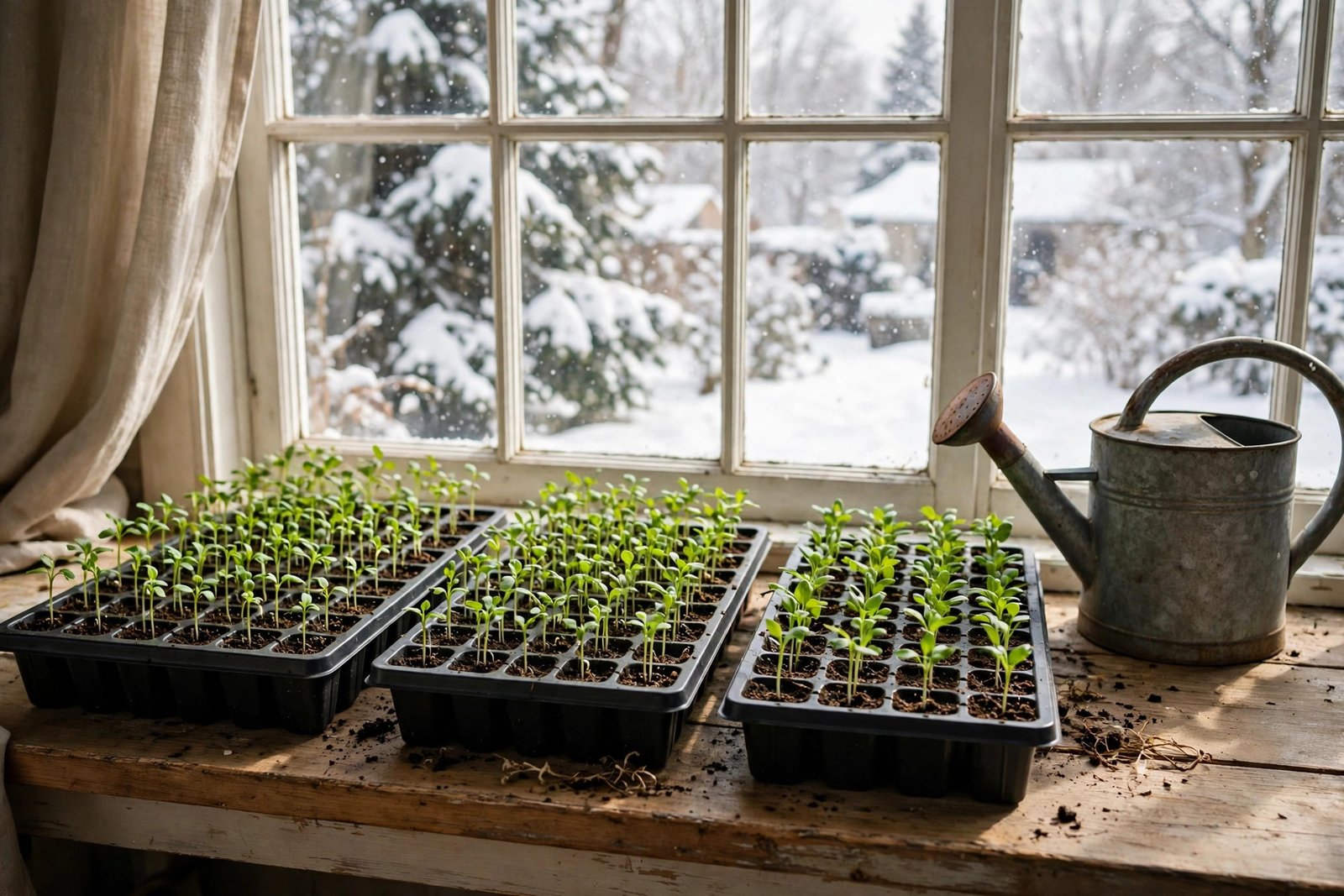
The wait is worth it because peppers and eggplant punish impatience. Set them into cool soil and they stall, and a stalled pepper rarely catches up to one planted two weeks later into warmth. Harden off every transplant before it goes out — our guide to hardening off seedlings walks through the steps — and keep cover handy for the first cold night after planting.
What about the first frost in fall?
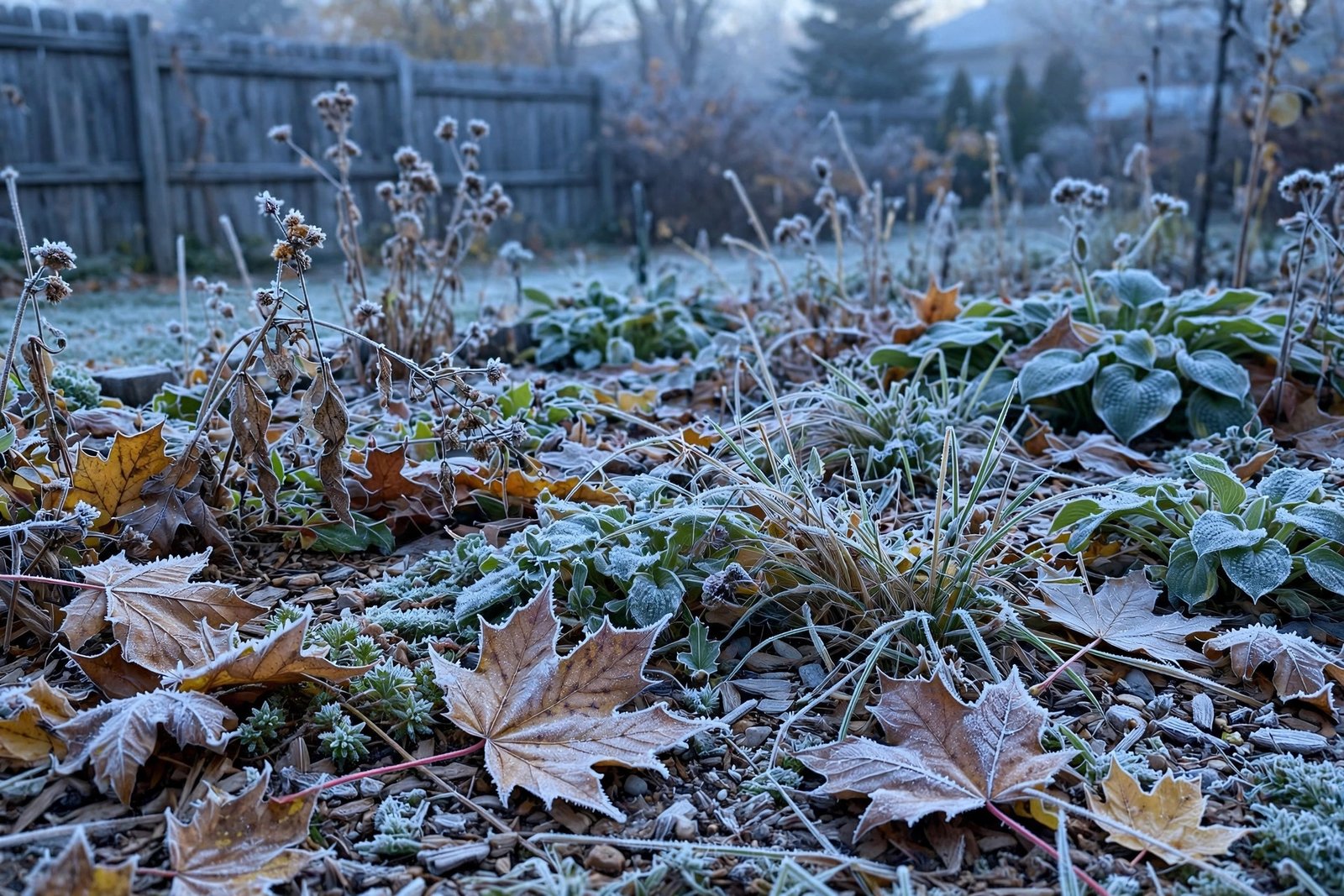
The first fall freeze is the other bookend, and it matters just as much. At the 50% level, it arrives September 30 around St. Cloud, October 1 around Duluth, and October 18 around Minneapolis–St. Paul. Tender crops stop at that freeze. Hardy crops like kale keep going until a hard freeze, and crops like parsnips actually taste better after a light frost.
The fall date is also what makes the spring date matter so much. The north’s 140-day season is not just shorter — it compresses the whole warm-season harvest into August and September. That is an argument for the earliest varieties, not for skipping warm-season crops. A 55-day tomato finishes comfortably in 140 days. An 80-day one is a gamble, and gambles are fine as long as you know you are making one.
Short-season varieties worth planting
When the season is short, days to maturity are the number that matters. These three finish fast enough for every band in the state, including the north.
Glacier Bush Tomato Seeds
The earliest tomato in the Minnesota calendar — plant it first in the north.
Spacemaster 80 Cucumber Seeds
A 62-day cucumber that fits a short season and a small garden.
Cherry Belle Radish Seeds
The fastest crop in the spring garden — sow in April, eat in May.
Long-season crops are not forbidden in the north — they just need choosing with care. Favor 80-day acorn squash over 100-day butternut, earliest sweet corn only, and eggplant started on time indoors. The Minnesota planting calendar gives the day counts and harvest windows for all 25 crops, band by band.
Bottom line
Find your band, note both frost dates, and plan on the cautious side of the spring one. The 50% date is a starting point, soil temperature is the second opinion, and your own yard is the final word. Plant the tender crops after the date, the cool crops before it, and the earliest varieties where the season is shortest — and Minnesota’s three growing seasons will feel less like a puzzle and more like a plan.