Landscape & Leisure is reader-supported. When you buy through links on our site, including Botanical Interests seed links, we may earn a commission at no extra cost to you. Prices change, so click through to confirm current pricing.
A broccoli seed started indoors gets six weeks of controlled warmth before it ever meets the weather. The same seed sown straight into cold garden soil gets whatever April decides to do. Both can work — but they are different crops on different calendars, and mixing the two calendars up is how broccoli ends up buttoning into tiny heads or bolting before it sizes up.
This guide works through the indoor start, the spacing each type actually needs, and how to read a head that is ready. The variety choices behind the timings are in the broccoli varieties roundup, and the stem types get their own decision page in broccoli heads vs broccolini.
Starting Indoors: the 4-to-6-Week Rule
For the heading varieties — Belstar, Waltham 29, Di Cicco — the packets agree: start indoors 4 to 6 weeks before transplanting, with germination in 7 to 14 days at an ideal soil temperature of 70 to 85°F, then cooler growing temperatures around 60°F once the seedlings are up.
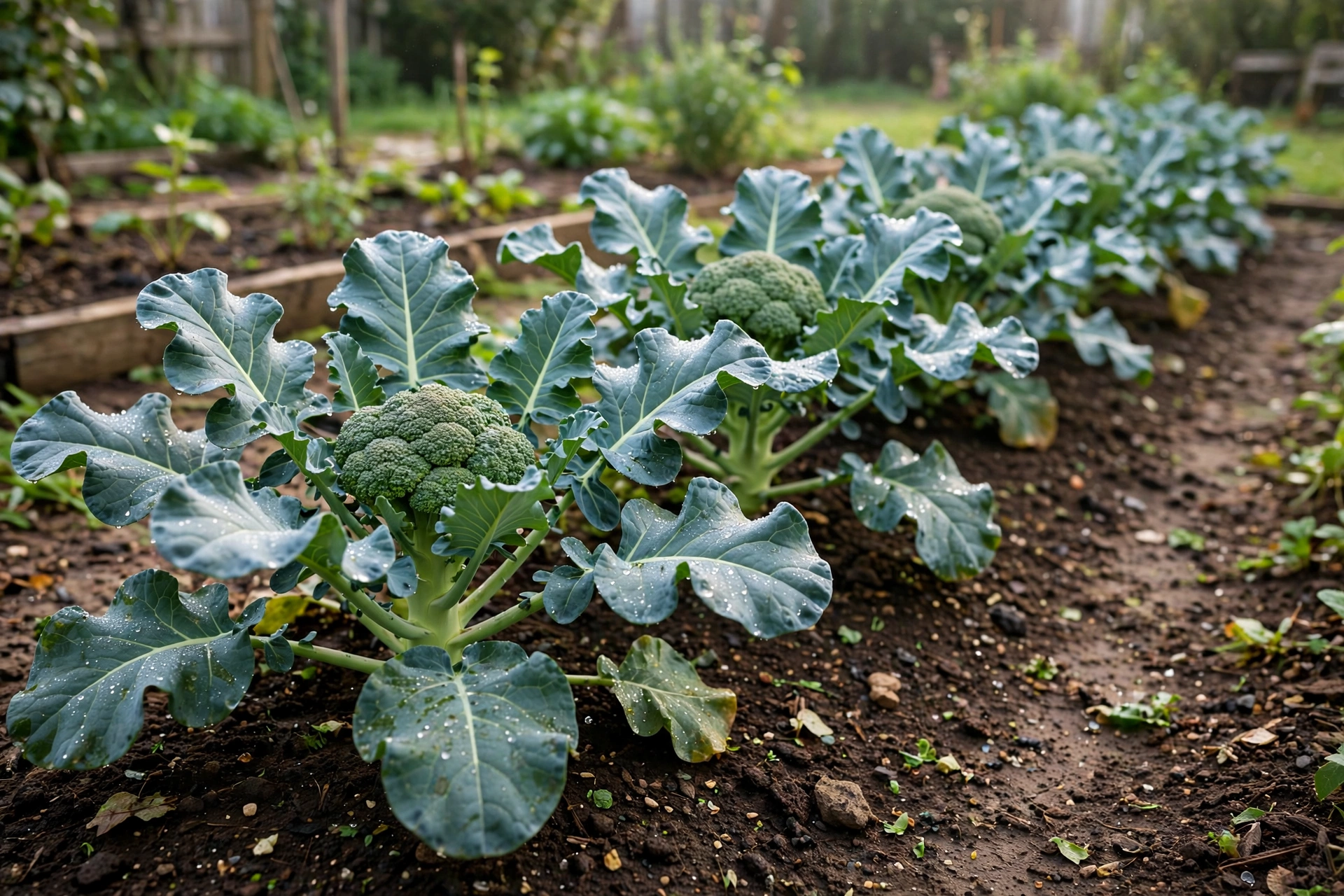
That cool second phase is the part people skip. Seedlings raised warm and soft go outside leggy; seedlings raised cool and bright go outside stocky, and stocky is what survives a cold night in the first week. Transplant Belstar 1 to 2 weeks before your average last frost date — the packet recommends exactly that — because an established broccoli plant tolerates frost that would kill a pepper.
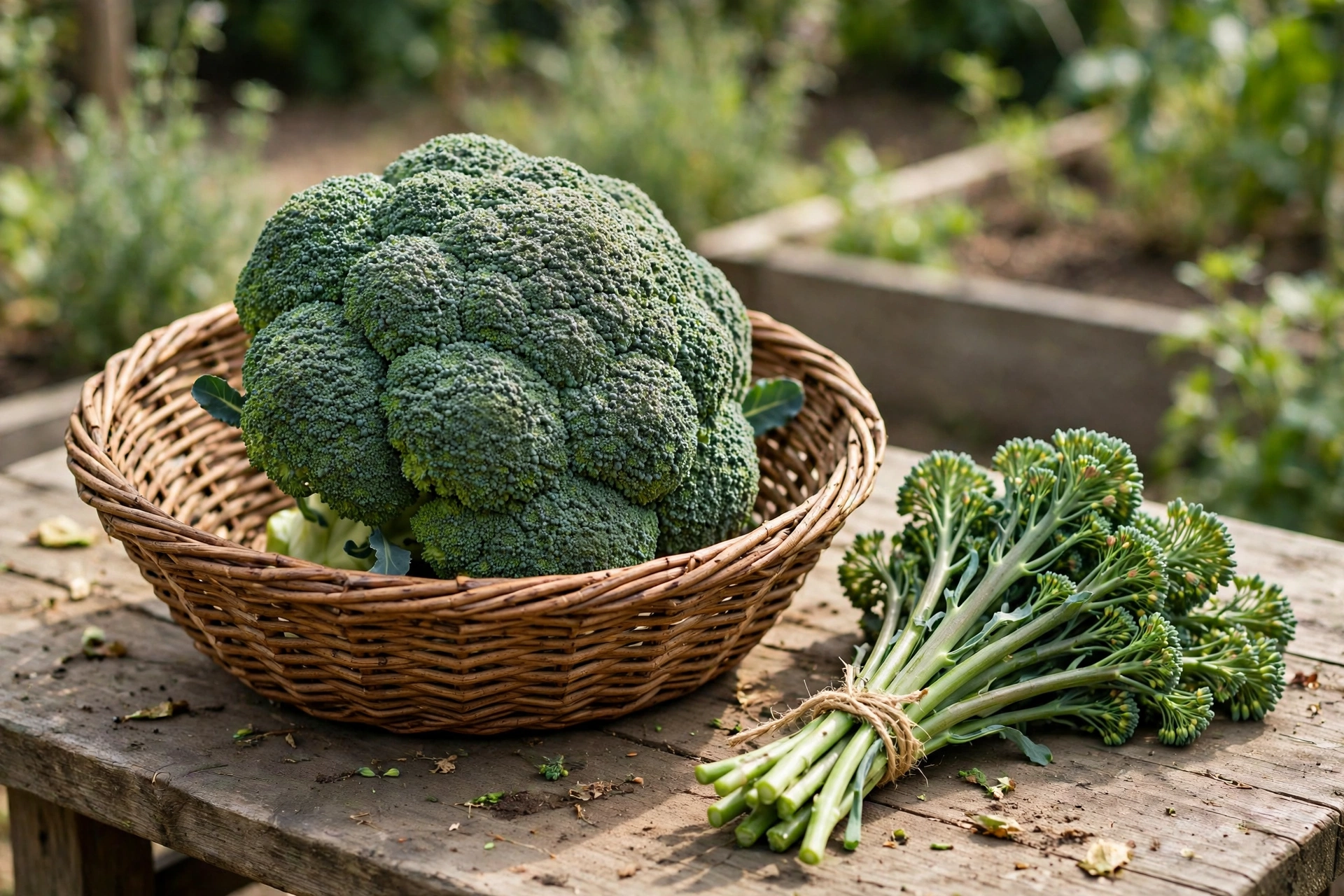
The stem types run shorter: Aspabroc and Rapini both list starting indoors 2 to 4 weeks before the last frost date. They grow fast and resent sitting in a cell, so the shorter indoor stay is a feature, not a shortcut.
Belstar Broccoli Seeds
Transplant-friendly heading variety: start indoors 4–6 weeks out, set out before last frost.
Check Price at Botanical InterestsDirect Sowing, and When It Wins
Direct sowing goes in 4 to 6 weeks before the average last frost date, or whenever the soil reaches at least 40°F — ideally 60 to 85°F for the heading types. Rapini and Aspabroc want a touch more warmth at sowing, at least 50°F, ideally 60 to 75°F.
I direct-sow the fall crop and start the spring crop indoors, as a habit. Spring soil warms slowly and unevenly, which spreads germination out; fall soil is already warm, so a late-summer sowing comes up evenly and then matures into cooling weather, which is the weather broccoli prefers anyway.
Spacing: 18 Inches Is Not 24 Inches
| Variety | Spacing | Depth | Thin at |
|---|---|---|---|
| Belstar | 24 in | 1/8 in | 2 in tall, to 1 every 24 in |
| Di Cicco | 18 in | 1/4 in | 2 in tall, to 1 every 18 in |
| Waltham 29 | 24 in | 1/8 in | 2 in tall, to 1 every 24 in |
| Burgundy | 24 in | 1/8 in | Per packet |
| Aspabroc | 18–24 in | 1/4 in | 2 in tall, to 1 every 18–24 in |
| Rapini | 6–12 in | 1/4 in | 2 in tall, to 1 every 6–12 in |
Crowding is the quiet head-killer. A Belstar plant squeezed to 12 inches still grows leaves — it just spends them on competing instead of on the 6 to 8 inch head the packet promises. Rows sit 24 to 36 inches apart for the heading types, 18 to 24 for Rapini.
Thin without mercy at 2 inches tall, to the spacing in the table. The thinnings are edible, which softens the job, and a bed thinned on time is the difference between heads and a row of handsome leaves.

Reading a Ready Head
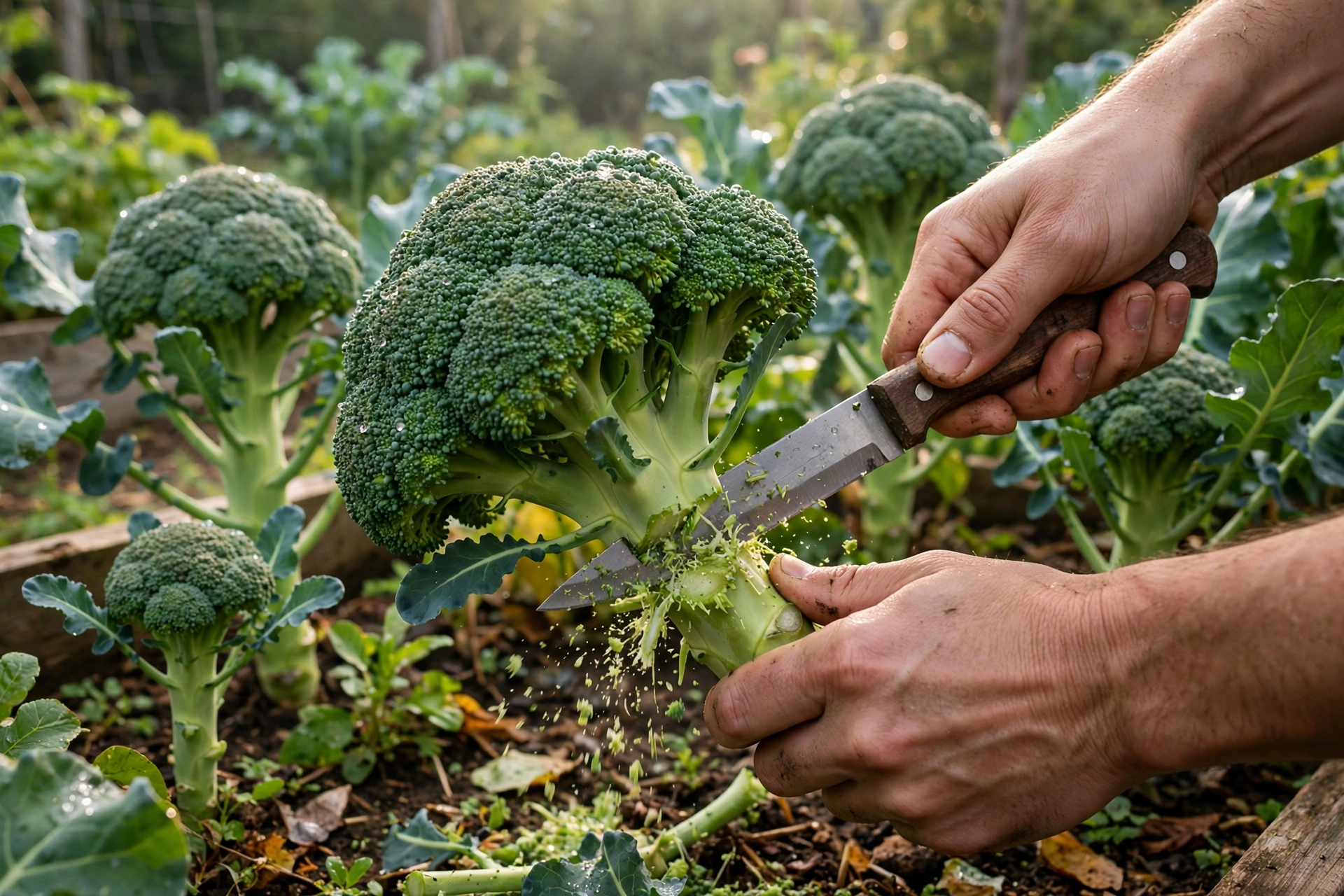
A head is ready when the florets are enlarged but still closed — tight beads, no yellow showing, no looseness when you squeeze gently. That window is shorter than most people expect: a head that looks almost ready on Friday can be flowering by Monday in warm weather.
Cut Belstar at 6 to 8 inches across, Waltham 29 at 4 to 6, and Di Cicco small, at 3 inches. Cutting the main head is not the end of any of these plants — it is the trigger for the side shoots, which is why the Di Cicco plant in the varieties roundup keeps paying out for weeks after its first small cutting.
Di Cicco Broccoli Seeds
Di Cicco’s 3-inch first cut is what switches the plant into its long side-shoot season.
Check Price at Botanical InterestsThe Fall Crop Is the Easier Crop
Every packet here allows a late-summer sowing for fall harvest, and for Waltham 29 the indoor start is counted as 12 weeks before the average first fall frost. Heads maturing into cool weather taste sweeter and hold longer without bolting, and the cabbage worms that plague June are mostly done by September.
If spring broccoli has disappointed you, do not give up on the crop — move it. Sow Waltham 29 in late summer, let it size up in the cool, and use its cold tolerance for the last harvests of the year. For the stem harvest instead, Aspabroc’s fall sowing goes in 8 to 10 weeks before first frost.
Waltham 29 Broccoli Seeds
Cold-tolerant Waltham 29, started 12 weeks before first fall frost, finishes in the cool it prefers.
Check Price at Botanical InterestsBottom Line
Start heading broccoli indoors 4 to 6 weeks out, grow the seedlings cool after they emerge, and give each plant the full spacing its packet asks for. Then cut the main head the day the beads are tight and full — and stay in the bed, because the side shoots are the second harvest most people leave standing.