This post contains affiliate links. If you buy through them, we may earn a commission at no extra cost to you.
The most common way to lose a seed dahlia happens before it ever reaches the garden: the seedling gets teased out of a shared flat, half its fine roots stay behind in the mix, and the plant spends June recovering instead of growing. Both Botanical Interests packets warn about exactly this — dahlia roots are sensitive to disturbance, so the seed goes into a biodegradable pot it never has to leave.
Start there, and the rest of the routine is timing. Dahlias from seed bloom in their first summer, about 90 days from sowing for the Decorative Double blend, and by fall each seedling has built the tuber clump that carries it into year two.
Sowing: 8 to 10 weeks before last frost
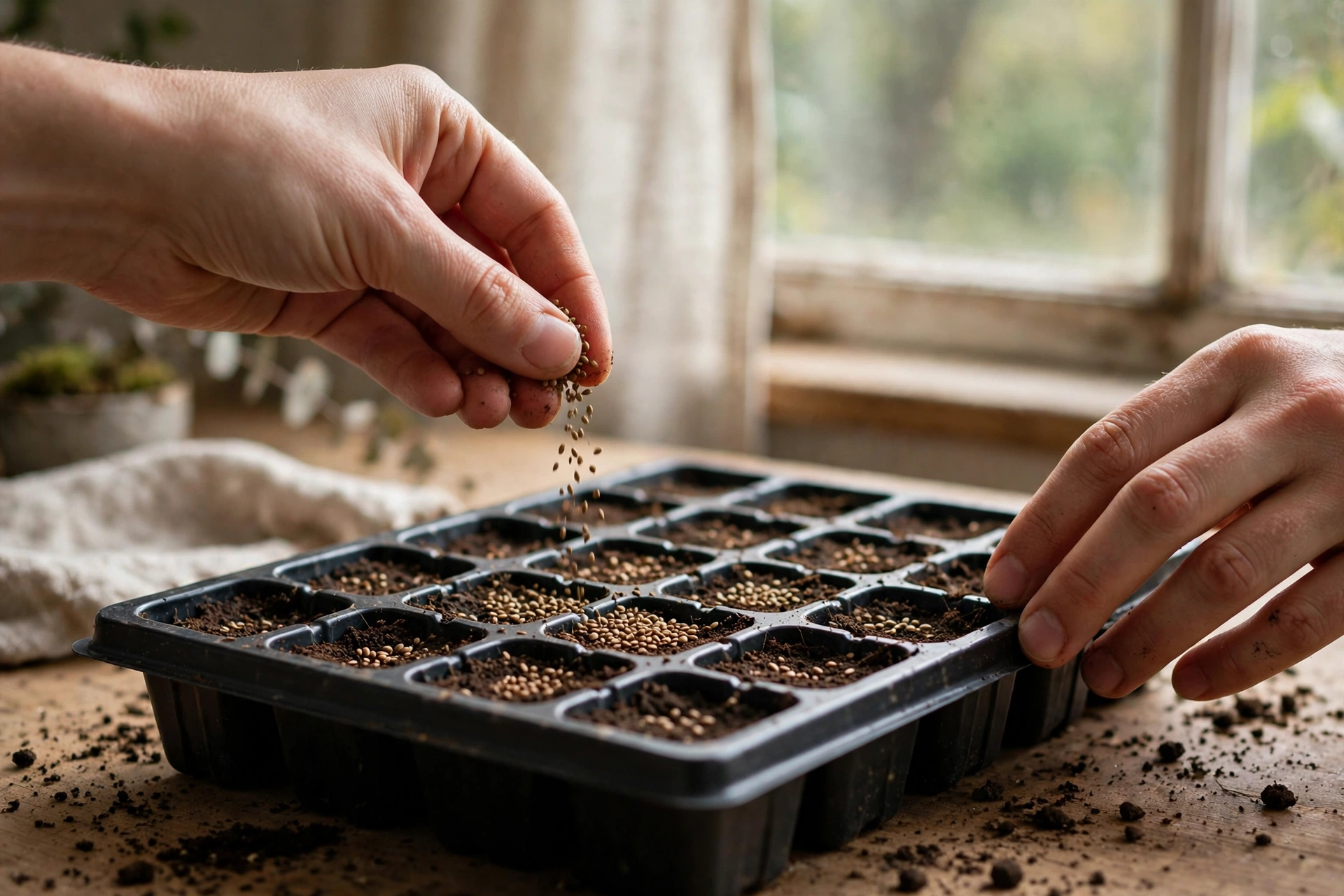
The packets mark the indoor start as recommended, not optional, and the numbers are the same for both blends: sow 1/4 inch deep, 8 to 10 weeks before your average last frost date, and hold the soil at 65 to 70°F for germination. Seedlings emerge in 5 to 20 days — a wide window, so a pot that looks empty on day nine is not a failed pot.
Direct sowing works too, 2 to 4 weeks after last frost, three seeds every 18 to 24 inches, thinned to one plant at that spacing once the seedlings carry two sets of leaves. The cost is the calendar: a direct-sown plant starts its 90-day clock weeks later than an indoor-started one, and in a short season that difference is the difference between a full August and a handful of September flowers.
Decorative Double Blend Dahlia Seeds
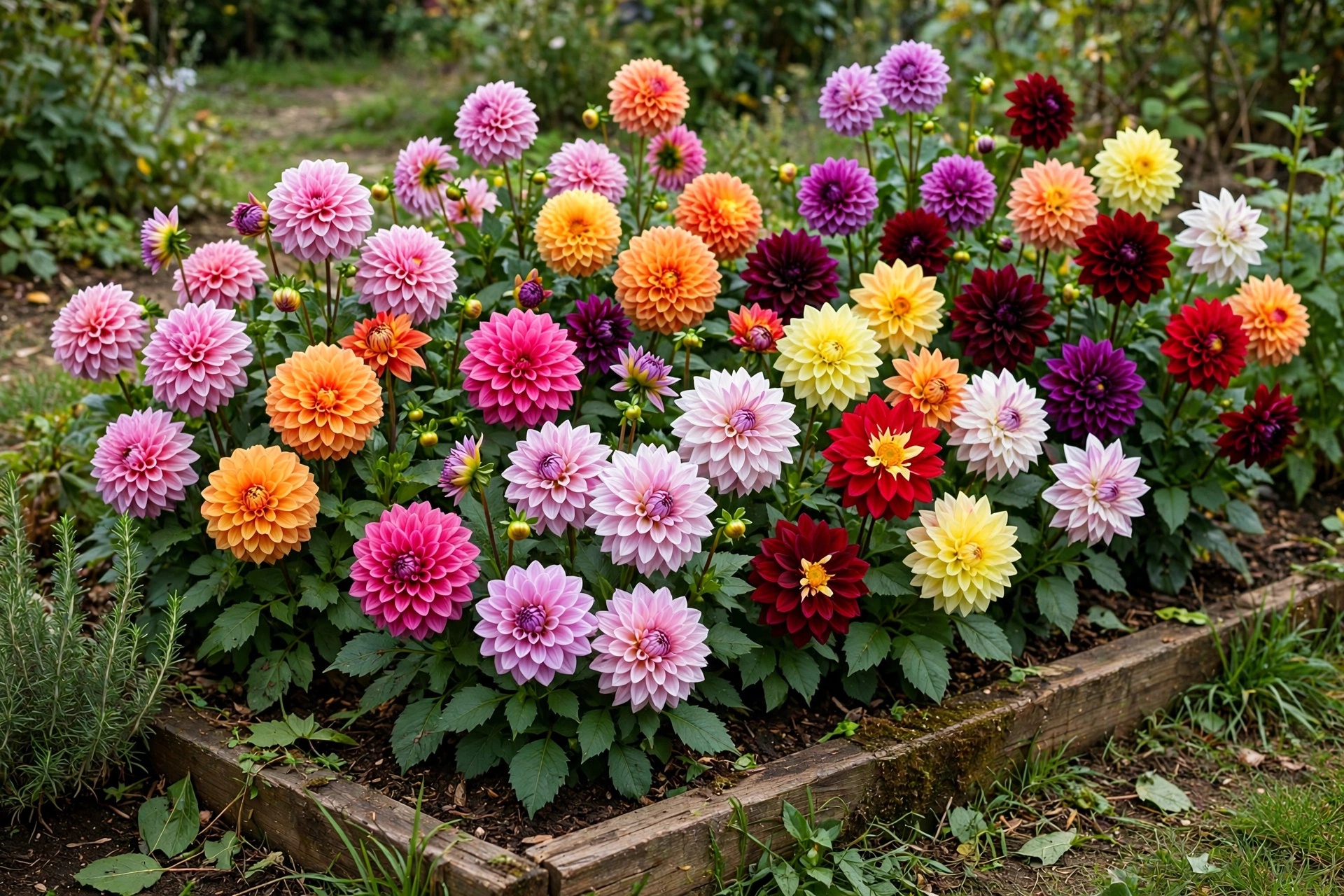
The blend this guide is timed around — blooms about 90 days from sowing, 3-inch doubles on long cutting stems.
Warmth is the germination lever
Sixty-five to seventy degrees is a heated room’s windowsill on a good week and a cold one on a bad week, which is why dahlia sowings stall in unheated spaces. A heat mat under the pots holds the packet’s range without heating the whole room, and it comes off once the seedlings are up and growing — dahlias want warmth to start, not to live in.
Seed Starting Heat Mat
Raises soil temperature 10 to 20°F over ambient — the steady 65 to 70°F the dahlia packets specify for germination.
The pinch
When a seedling reaches about a foot tall with three or four sets of leaves, cut the growing tip out just above a leaf set. Every instinct says leave a healthy plant alone, and every instinct is wrong here: an unpinched dahlia puts its season into one tall central stem with a flower at the top, while a pinched plant branches, and branches are where the bouquet comes from.
The pinch costs about a week. The plant pauses, pushes two or more side shoots from the leaf axils below the cut, and those shoots carry the summer’s flowers on a sturdier, bushier frame. Do it once, early, and then leave the plant alone apart from deadheading — which, on dahlias, is also the harvest, since the packet’s cutting instruction (morning, outer two or three petal layers open) removes spent blooms before they set seed and slow the plant down.
Setting out and staking
Transplant after frost, pot and all, at the packet’s 18- to 24-inch spacing, in full sun. These are tall plants — the catalog class is simply “greater than 24 inches,” and seed dahlias routinely pass three feet — so the stake goes in at planting time, not after the first storm flattens a stem it then has to be tied back onto.
Water at the base and keep the moisture even while buds form. A plant that swings between drought and soaking drops buds, which gardeners then blame on the variety; the variety is usually innocent.
Epic 6-Cell Seed Starting Trays
Individual cells keep each seedling’s roots in its own compartment from sowing day to transplant day.
Lifting the tubers your seedlings made
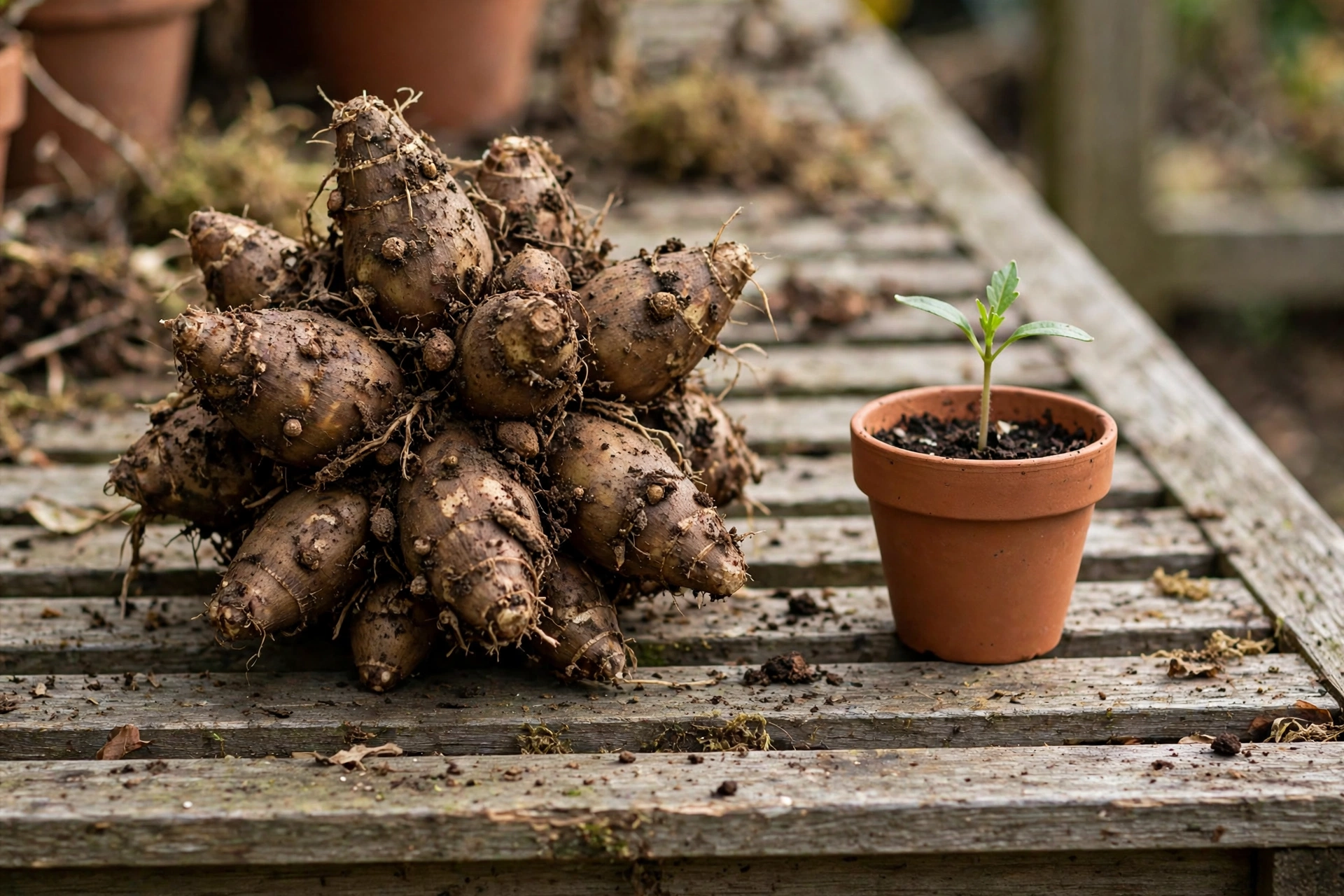
Here is the part seed skeptics miss: a first-year seedling finishes the season with a clump of tubers, and those tubers are true to the plant that made them. The surprise flower you loved in August can be kept, exactly, by keeping its tubers — the seed year is how new named dahlias begin.
In zones 7 to 10 the clumps can stay in the ground. Everywhere colder, lift them: after the first frost blackens the foliage, cut the stems back to a few inches, fork the clump up gently, shake off the soil, and let it dry for a day or two out of direct sun. Store the clumps in a box of barely damp peat moss or vermiculite at 40 to 50°F — a garage wall or unheated basement corner — and check monthly, discarding any tuber that has gone soft before rot spreads to its neighbors.
Replant in spring after frost, eyes up, and the cycle that started with a $2.69 packet is now running on tubers you own. Which starting point suits a new dahlia bed is the subject of dahlias from seed vs. tubers, and the two blends themselves are ranked in the dahlia varieties roundup. For the indoor-start routine this crop shares with other tender flowers, see starting flowers indoors.