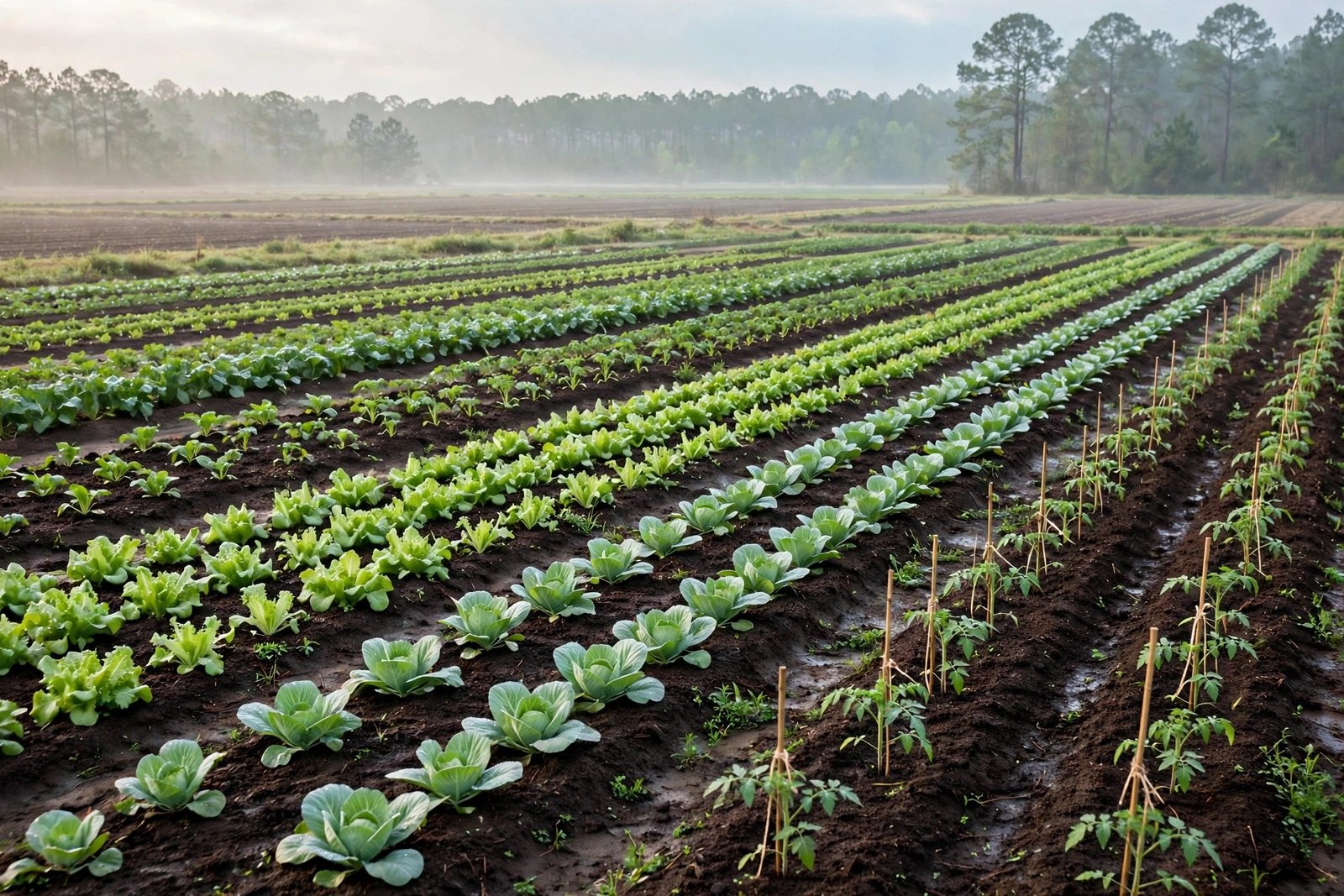
Forty-nine days. That is the difference between the frost-free season at Gulfport-Biloxi Airport, 283 days on the NOAA 1991–2020 normals, and the season at Tupelo Regional Airport, 234 days, in the northeastern hills of the same state.
A planting chart drawn for Jackson mistimes both ends of that spread. Tomatoes set out on the Coast’s schedule near Tupelo meet a median last frost of March 21, and tomatoes held to Tupelo’s schedule in Gulfport give away a month of the longest season in Mississippi.
Mississippi State University Extension answers the spread by drawing the state into five spring planting areas, each one keyed to the median date of its last spring freeze. The dates on this page are Extension’s, area by area, for spring and fall. This calendar is one of the state calendars collected in planting calendars by state.
Five areas, drawn by the last freeze
The spring areas run south to north. Area 1, the Gulf Coast and the far south, has a median last freeze between January 28 and February 15. Area 2, the southern counties, runs February 16 to 28, and Area 3, the center of the state around Jackson, runs March 1 to 15.
Area 4, the north-central counties, runs March 16 to 28. Area 5, the northern hills and the Tennessee line, runs March 29 to April 10. Some counties fall into two areas where local conditions change across the county line, and Extension says so on its map rather than pretending the line is clean.
A median is a coin flip, not a safe date. In half of the years on record, a freeze arrives after the median date, which is why what an average last frost really means is worth settling before a flat of tomatoes rides on it.
These areas are not USDA hardiness zones, and the guide says that plainly too. Mississippi spans Zones 7b in the northeastern corner to 9a on the Coast, but a zone describes the coldest night of an average winter, which is perennial information. Vegetables run on frost dates.
The tables date the transplant, not the seed. Extension’s entries name the age of the plant that goes into the ground: a tomato entry is a plant 6 to 8 weeks old, a pepper the same, a cabbage the same. Count back from the planting date to get the indoor sowing date, the way a planting calendar’s counting works — a tomato transplant dated March 1 on the Coast was sown indoors in January.
Four stations, four different springs
The anchor stations are NOAA’s, at the 50% probability for 32°F on the 1991–2020 normals. Read Tupelo against Gulfport and the state’s whole problem is in one table: 26 days between the two median last frosts, and a first fall frost that reaches the Delta on November 5 but holds off on the Coast until December 3.
| Region | Anchor station | Last spring frost | First fall frost | Frost-free days |
|---|---|---|---|---|
| Northern hills | Tupelo Regional Airport | March 21 | November 10 | 234 |
| Delta | Greenwood Leflore Airport | March 17 | November 5 | 233 |
| Central | Jackson, Hawkins Field | March 6 | November 19 | 258 |
| Gulf Coast | Gulfport-Biloxi Airport | February 23 | December 3 | 283 |
Greenwood is the flat Delta, Tupelo the hills, and the two northern stations sit only four days apart in spring. What separates them is fall: the Delta’s season closes two weeks before Jackson’s does, even though Jackson’s last spring frost comes 11 days earlier.
Spring planting dates: cool-season crops
Cool-season crops carry the longest windows on the Coast, where collards and kale can go in from January 15 to April 1, and the tightest in the north. Several of these crops are dated as transplants, at the ages in the crop name; where no age is given, the seed goes straight into the ground.
Extension spaces repeat sowings rather than planting the whole packet at once: lettuce and arugula every 2 weeks, beets and carrots every 3, radishes every 1 to 2. That spacing is the difference between a harvest and a glut, and it is the whole method of planting in waves instead of all at once.
| Crop | Area 1: Coast | Area 2: South | Area 3: Central | Area 4: North-central | Area 5: North |
|---|---|---|---|---|---|
| Broccoli (plants) | Jan 15–Mar 10 | Jan 15–Mar 10 | Feb 15–Mar 15 | Mar 1–Mar 20 | Mar 15–Apr 1 |
| Cabbage (plants) | Jan 15–Mar 15 | Jan 15–Mar 15 | Feb 5–Apr 1 | Mar 1–Mar 20 | Mar 15–Apr 1 |
| Cauliflower (plants) | Jan 15–Mar 10 | Jan 15–Mar 10 | Feb 15–Mar 15 | Mar 1–Mar 20 | Mar 15–Apr 1 |
| Collards | Jan 15–Apr 1 | Jan 15–Apr 1 | Feb 1–Apr 1 | Feb 15–Apr 1 | Mar 1–Apr 1 |
| Kale | Jan 15–Apr 1 | Jan 15–Apr 1 | Feb 1–Apr 1 | Feb 15–Apr 1 | Mar 1–Apr 1 |
| Mustard greens | Jan 15–Mar 1 | Feb 1–Mar 15 | Feb 15–Apr 1 | Mar 1–Apr 15 | Mar 15–Apr 15 |
| Head lettuce (plants) | Jan 15–Apr 1 | Jan 15–Apr 1 | Feb 1–Apr 10 | Feb 15–Apr 15 | Mar 1–Apr 15 |
| Leaf lettuce | Jan 15–Apr 1 | Jan 15–Apr 1 | Feb 1–Apr 10 | Feb 15–Apr 15 | Mar 1–Apr 15 |
| Spinach | Jan 15–Mar 1 | Feb 1–Mar 10 | Feb 15–Mar 20 | Mar 1–Apr 1 | Mar 10–Apr 10 |
| Swiss chard | Jan 15–Mar 1 | Feb 1–Mar 15 | Feb 15–Apr 1 | Mar 1–Apr 15 | Mar 15–Apr 15 |
| English peas | Jan 15–Mar 1 | Feb 1–Mar 5 | Feb 10–Mar 15 | Feb 20–Mar 25 | Mar 1–Apr 1 |
| Irish potatoes | Jan 20–Mar 1 | Jan 25–Mar 10 | Feb 1–Mar 15 | Feb 15–Mar 20 | Feb 20–Apr 1 |
| Beets | Jan 15–Mar 15 | Feb 1–Mar 15 | Feb 15–Apr 1 | Mar 1–Mar 20 | Mar 15–Apr 1 |
| Carrots | Jan 15–Mar 1 | Feb 1–Mar 15 | Feb 15–Apr 1 | Mar 1–Apr 15 | Mar 15–Apr 20 |
| Radishes | Jan 15–Apr 15 | Feb 1–Apr 15 | Feb 15–Apr 15 | Mar 1–May 1 | Mar 15–May 1 |
| Turnips | Jan 15–Mar 1 | Feb 1–Mar 15 | Feb 15–Apr 1 | Mar 1–Apr 15 | Mar 15–May 1 |
| Dry bulb onions (sets or plants) | Jan 15–Feb 15 | Jan 15–Feb 20 | Feb 1–Mar 1 | Feb 15–Mar 15 | Mar 1–Apr 1 |
| Green onions | Jan 15–Mar 1 | Jan 20–Mar 5 | Feb 1–Mar 15 | Feb 15–Apr 1 | Mar 1–Apr 15 |
| Cilantro | Jan 15–Feb 15 | Feb 1–Mar 1 | Feb 15–Mar 15 | Mar 1–Apr 1 | Mar 15–May 15 |
| Parsley (plants) | Jan 15–Mar 1 | Feb 1–Mar 15 | Feb 15–Apr 1 | Mar 1–Apr 15 | Mar 15–Apr 15 |
Soil temperature sets the floor under these dates. Irish potatoes sprout consistently once the soil passes 40°F, radishes and turnips want 50°F, and spinach germinates above 45°F. A January date on the Coast is a soil-temperature date as much as a calendar one.
Spring planting dates: warm-season crops
The Coast’s tomato window is the sharpest number in the spring tables: March 1 to 15, two weeks, and then it closes. Extension’s reasoning is heat, not frost — plant later and high temperatures can keep tomato flowers from setting fruit at all. Area 2 gets March 10 to April 5, and the window widens as you move north, because the north’s problem is the opposite one.
| Crop | Area 1: Coast | Area 2: South | Area 3: Central | Area 4: North-central | Area 5: North |
|---|---|---|---|---|---|
| Sweet corn | Feb 25–Mar 15 | Mar 1–Apr 1 | Mar 20–Apr 15 | Apr 1–Apr 20 | Apr 5–May 1 |
| Cucumbers | Mar 15–Jul 1 | Mar 25–Jun 20 | Apr 1–Jun 15 | Apr 10–Jun 10 | Apr 15–Jun 5 |
| Melons (cantaloupe, watermelon) | Mar 1–May 15 | Mar 15–May 20 | Apr 1–May 15 | Apr 10–Jun 1 | Apr 15–Jun 1 |
| Summer squash | Feb 15–May 15 | Mar 15–May 20 | Apr 1–May 25 | Apr 10–Jun 1 | Apr 15–Jun 1 |
| Winter squash and pumpkins | Mar 15–May 15 | Mar 25–May 20 | Apr 1–Jun 1 | Apr 10–Jun 5 | Apr 15–Jun 15 |
| Snap beans | Mar 15–Jun 15 | Mar 20–Jun 10 | Mar 25–Jun 1 | Apr 1–May 14 | Apr 10–May 20 |
| Lima beans | Mar 15–Jul 15 | Mar 20–Jul 1 | Mar 25–Jun 25 | Apr 1–Jun 20 | Apr 10–Jun 15 |
| Southern peas | Mar 1–Jun 15 | Mar 15–Jun 15 | Apr 10–Jun 25 | Apr 15–Jul 1 | Apr 20–Jul 15 |
| Peanuts | Mar 15–May 15 | Mar 20–May 20 | Apr 1–May 25 | Apr 10–Jun 1 | Apr 15–Jun 1 |
| Eggplant (plants) | Mar 25–Jun 20 | Apr 1–Jun 10 | Apr 10–Jun 5 | Apr 15–Jun 1 | Apr 20–May 20 |
| Peppers (plants) | Mar 20–May 15 | Apr 1–May 15 | Apr 10–May 15 | Apr 15–Jun 1 | Apr 20–Jun 1 |
| Tomatoes (plants) | Mar 1–Mar 15 | Mar 10–Apr 5 | Apr 1–May 1 | Apr 15–Jun 15 | Apr 20–Jul 1 |
| Okra | Mar 15–May 15 | Apr 1–May 20 | Apr 10–May 25 | Apr 15–May 25 | May 1–Jun 1 |
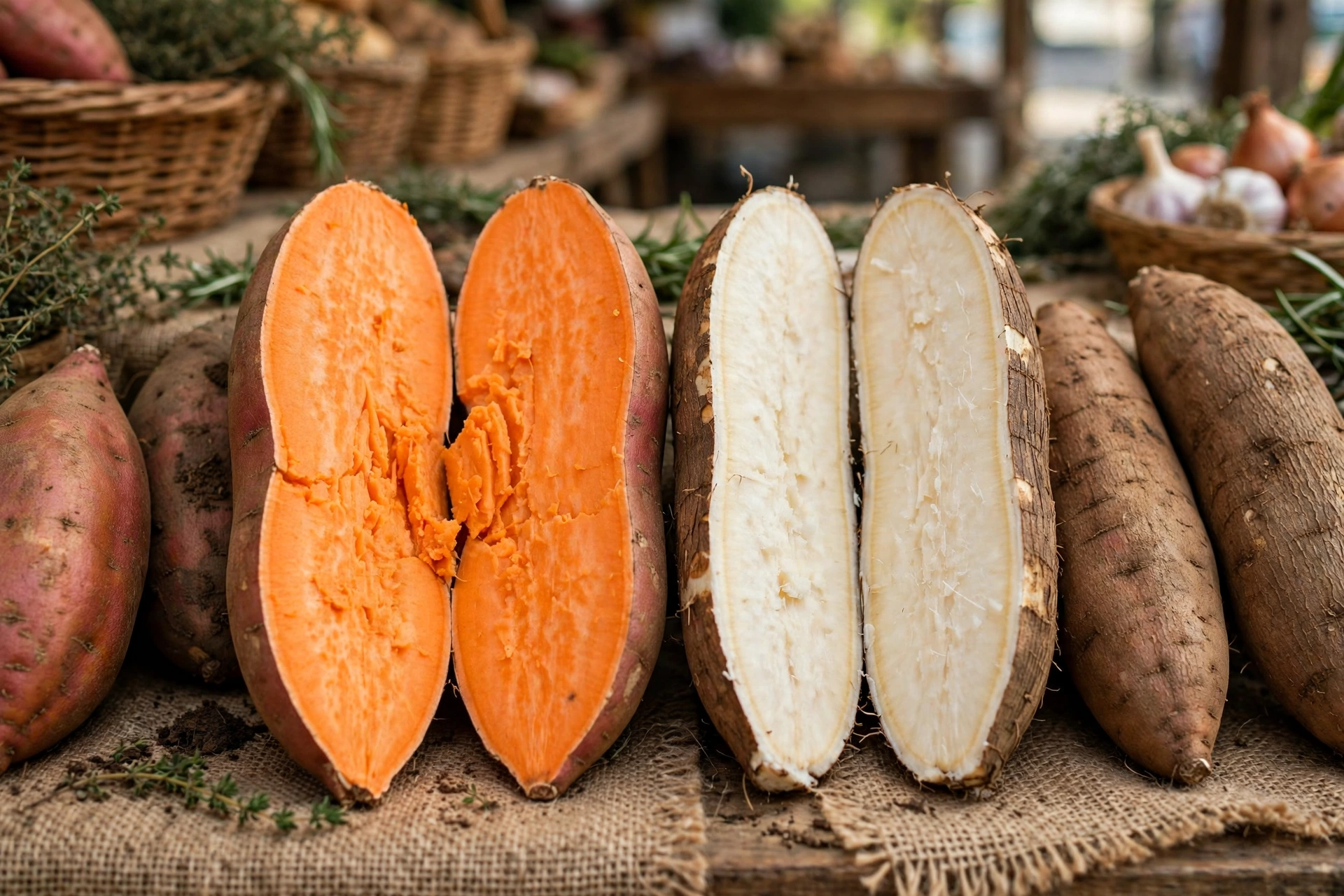
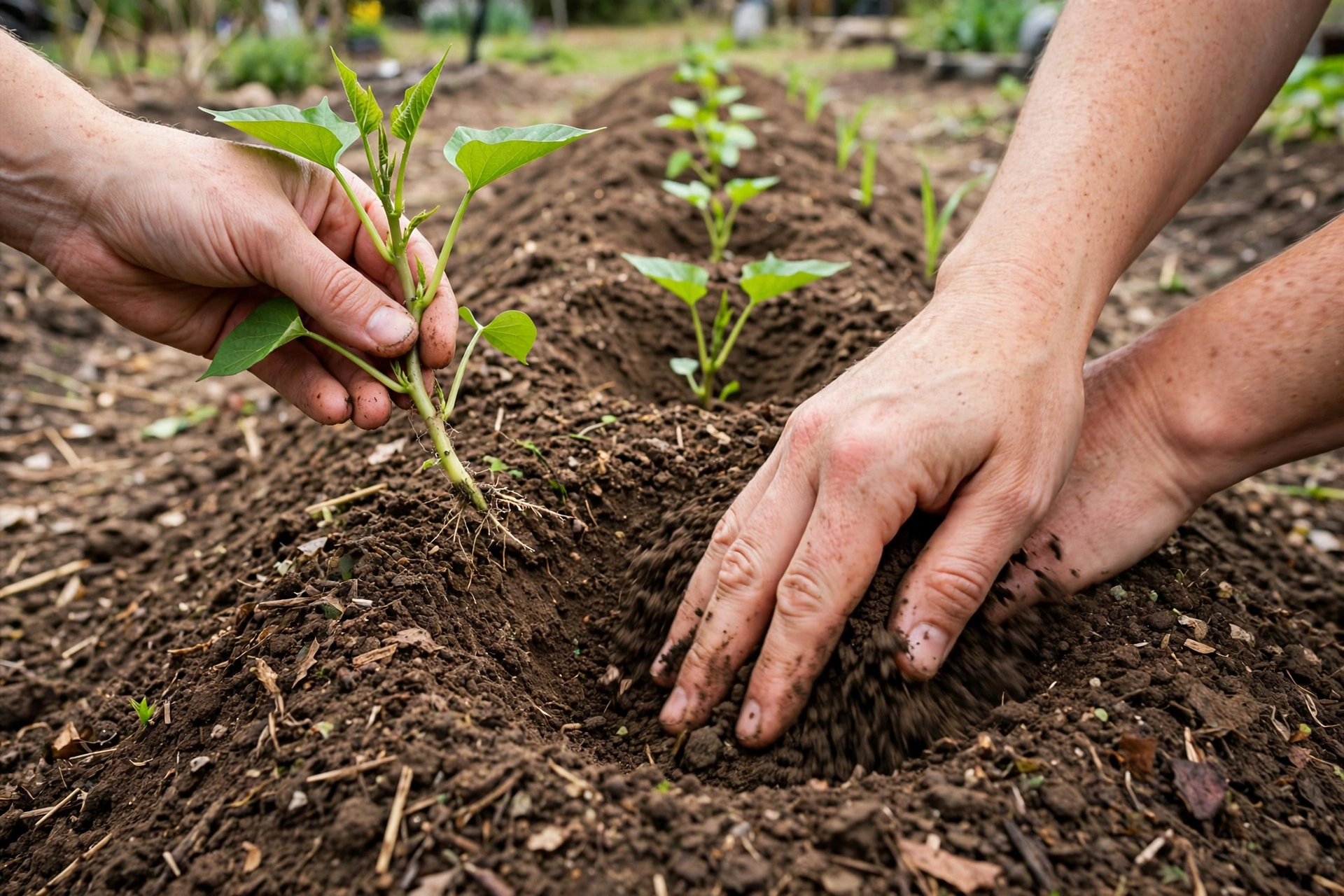
| Sweet potatoes (slips) | Apr 15–Jun 15 | Apr 20–May 20 | Apr 25–May 25 | May 1–Jul 1 | May 5–Jul 1 |
| Basil (plants) | Mar 15–Aug 1 | Mar 20–Jul 15 | Apr 1–Jul 10 | Apr 10–Jun 25 | Apr 20–Jul 1 |
Sweet corn wants soil above 50°F, and supersweet types want 70°F, which is why the corn dates trail the last frost instead of matching it. Peppers can go in ahead of their window where the soil holds consistently above 60°F. Okra, the crop most associated with this state, is one of the last in everywhere: May 1 in the northern hills, and even on the Coast it waits until March 15.
What to plant, month by month
January. On the Coast and in the south, onion sets, leeks and shallots go in from mid-month, and Chinese cabbage transplants start on January 1 in Area 1. Everywhere else, January belongs to seed orders and a soil test.
February. Central Mississippi sets out broccoli, cabbage and cauliflower transplants from mid-month and sows peas, beets and carrots. Irish potatoes are going in statewide by now; they started in late January in the south.
March. The tomato race starts. The Coast’s whole spring window is March 1 to 15, Area 2 opens on March 10, and sweet corn follows, from late February on the Coast to March 20 in the center of the state.
April. Central Mississippi transplants tomatoes from April 1 and peppers from April 10, while the northern hills set out their first tomatoes on April 20. Sweet potato slips start on the Coast on April 15.
May. Warm-season planting finishes in the north, with okra from May 1 in Area 5 and sweet potatoes from May 5. Southern gardeners keep sowing southern peas and lima beans; both run into the summer.
June. The fall garden opens in the north, where pumpkins and winter squash for a fall harvest go in from June 1. Spring tomatoes carried into summer need steady water and a close watch for disease.
July. Fall tomatoes, peppers and eggplant are transplanted, starting July 15 in the north and later as you move south. Rutabagas start on July 25 in the north, and okra’s short fall window opens.
August. Brassicas come back: broccoli and cabbage transplants from mid-August in the north, later toward the Coast. Fall carrots and beets start on August 15 in the north, and fall snap beans go in statewide.
September. Spinach, mustard, turnips and lettuce are sown across the state, and the Coast keeps sowing all three into November. Fall English peas start on September 1 in the north.
October. Garlic goes in, from October 1 in the north to late October on the Coast, for a spring harvest. Strawberry plants are set out statewide this month.
November. The Coast and the south still sow radishes, turnips and greens. In the north, the standing crops are collards and kale, and both taste better after the first frost touches them.
December. On the Coast, radish sowing runs to December 5 and turnips to December 1. After the first hard freeze, clear out the warm-season debris, store the stakes, and take the soil test that sets up January.
The fall garden, planted in summer heat
Mississippi State draws the fall map separately, in four bands keyed to the first freeze: the north from October 28 to November 6, then November 7 to 16, November 17 to 26, and the far south from November 27 to December 21. The bands run in the opposite direction from spring, because fall frost walks south.
Fall planting is not a rerun of spring. Cooler temperatures and shorter days slow bolting, so broccoli, kale and spinach often come out of a fall planting with better flavor and texture than the same crops in spring, and Chinese cabbage and rutabagas, which struggle in spring heat, are fall crops here by preference.
Getting seed to germinate in August heat takes its own handling. Water the soil a day or two before planting, cover the seed with a moistened mix that will not crust, such as peat moss and vermiculite, and watch the row daily until the seedlings are up. Transplants set out in extreme heat may need a few days of shade to get through it.
| Crop | North | North-central | South-central | Coast and far south |
|---|---|---|---|---|
| Garlic (cloves) | Oct 1–Nov 10 | Oct 10–Nov 15 | Oct 15–Nov 20 | Oct 25–Dec 5 |
| Broccoli (plants) | Aug 15–Sep 15 | Sep 1–Sep 20 | Sep 10–Oct 1 | Sep 20–Oct 10 |
| Cabbage (plants) | Aug 15–Sep 25 | Sep 1–Oct 10 | Sep 15–Oct 15 | Oct 1–Oct 20 |
| Cauliflower (plants) | Aug 15–Sep 5 | Sep 1–Sep 15 | Sep 10–Oct 1 | Sep 15–Oct 10 |
| Collards | Aug 1–Oct 10 | Aug 15–Oct 20 | Sep 1–Nov 1 | Sep 15–Nov 15 |
| Kale | Aug 1–Oct 10 | Aug 15–Oct 20 | Sep 1–Nov 1 | Sep 15–Nov 15 |
| Mustard greens | Sep 1–Oct 10 | Sep 10–Oct 15 | Sep 15–Nov 1 | Oct 1–Nov 15 |
| Lettuce (head and leaf) | Aug 15–Sep 20 | Sep 1–Oct 1 | Sep 10–Oct 15 | Sep 20–Nov 1 |
| Spinach | Sep 1–Oct 10 | Sep 10–Oct 20 | Sep 20–Nov 1 | Oct 1–Nov 15 |
| English peas | Sep 1–Oct 1 | Sep 10–Oct 15 | Sep 15–Nov 1 | Oct 1–Nov 15 |
| Beets | Aug 15–Sep 25 | Sep 1–Oct 5 | Sep 10–Oct 20 | Sep 20–Nov 1 |
| Carrots | Aug 15–Sep 25 | Sep 1–Oct 5 | Sep 10–Oct 20 | Sep 20–Nov 1 |
| Radishes | Sep 1–Nov 10 | Sep 10–Nov 15 | Sep 20–Nov 20 | Oct 1–Dec 5 |
| Turnips | Sep 1–Oct 20 | Sep 10–Nov 1 | Sep 20–Nov 15 | Oct 1–Dec 1 |
| Rutabagas | Jul 25–Sep 1 | Aug 5–Sep 15 | Aug 15–Oct 1 | Sep 1–Oct 15 |
| Snap beans | Aug 1–Aug 10 | Aug 5–Aug 20 | Aug 10–Aug 25 | Aug 15–Sep 1 |
| Southern peas | Jul 1–Aug 1 | Aug 1–Aug 20 | Aug 10–Sep 1 | Sep 1–Sep 15 |
| Cucumbers | Jul 15–Aug 1 | Jul 20–Aug 10 | Jul 25–Aug 15 | Aug 1–Aug 20 |
| Tomatoes (plants) | Jul 15–Aug 1 | Jul 20–Aug 5 | Jul 25–Aug 10 | Aug 1–Aug 15 |
| Peppers (plants) | Jul 15–Aug 1 | Jul 20–Aug 5 | Jul 25–Aug 10 | Aug 1–Aug 15 |
| Okra | Jul 1–Jul 15 | Jul 10–Jul 25 | Jul 15–Aug 1 | Jul 20–Aug 10 |
Warm-season crops hold a second, shorter season inside the fall tables: tomatoes, peppers and cucumbers replanted in July and August, snap beans in August, okra in July. The windows are tight in the north and widen toward the Coast, and the guide’s instruction is to choose quick-maturing varieties, because the northern first freeze arrives in the October 28 to November 6 band whether the fruit is ripe or not.
On the Coast in the first week of December, radishes can still go into the ground. That same week in Tupelo, the standing garden is garlic, collards, and the carrots left in the row for pulling as needed. Same state, 49 days apart, each garden on its own calendar.
Sources
Mississippi State University Extension, Mississippi Vegetable Gardener’s Guide, Publication 3616 (2025) — the governing planting dates (Tables 6 and 7), the spring and fall planting-area maps (climate data from the PRISM Climate Group, Oregon State University, 1991–2023), soil-temperature and fall-gardening guidance. extension.msstate.edu/sites/default/files/publications/P3616_web.pdf
Mississippi State University Extension, vegetable garden planting tips — germination soil temperatures and planting practice. extension.msstate.edu/lawn-and-garden/vegetable-gardens/tips
NOAA National Centers for Environmental Information, U.S. Climate Normals 1991–2020 — last spring frost, first fall frost and frost-free season at the 50% probability for 32°F, for the Tupelo Regional Airport, Greenwood Leflore Airport, Jackson Hawkins Field and Gulfport-Biloxi Airport stations.